Rivian Recalling Vehicles in 2026: Should You Still Buy an R1S or R1T?
Headlines about Rivian recalling vehicles can spook prospective buyers — and rightly so. A recall signals a safety or compliance issue that the manufacturer must address. But context matters. Every major automaker issues recalls, and what separates a responsible EV maker from a risky one is how quickly, transparently, and effectively those recalls are resolved. In this guide, we examine Rivian's 2026 recall landscape alongside the full ownership picture for the R1S SUV and R1T truck: real-world range, charging performance, pricing after federal tax credits, and whether these electric adventure vehicles still earn a recommendation.
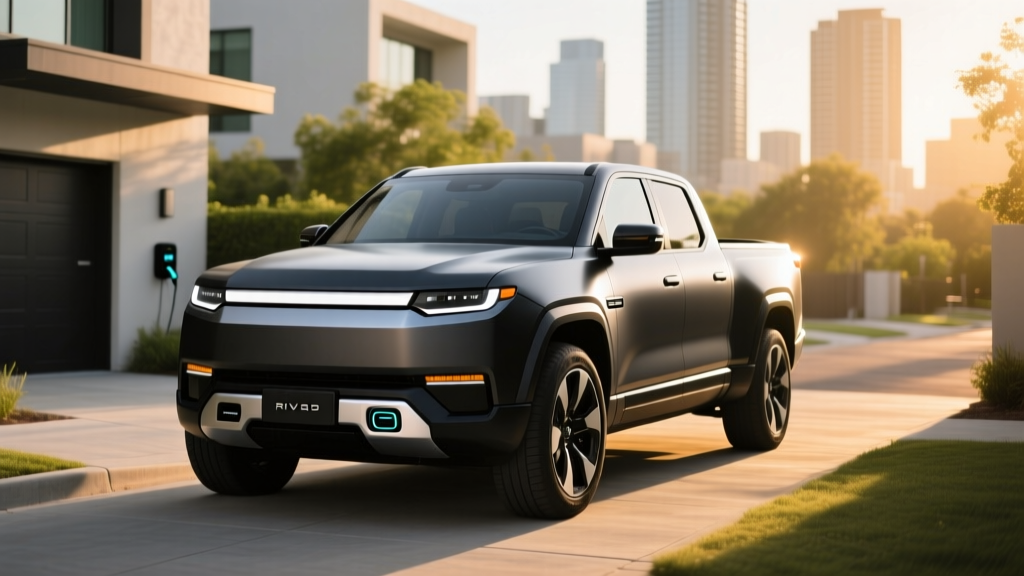
Rivian's R1 platform — both the three-row R1S and the pickup R1T — received significant updates for the 2025 model year with the introduction of the "Gen 2" architecture, including the dual-motor Enduro and the tri-motor performance variants. Those updates carry into 2026 with revised battery options, improved software stability, and expanded NACS charging compatibility. Let's look at the numbers.
Rivian R1S and R1T: 2026 Spec Overview
| Spec | R1S (Dual-Motor, Standard Pack) | R1T (Dual-Motor, Standard Pack) |
|---|---|---|
| EPA Range | 270 miles | 270 miles |
| Battery Capacity (usable) | ~92 kWh (NMC lithium-ion) | ~92 kWh (NMC lithium-ion) |
| Max DC Fast Charge | 200 kW (peak) | 200 kW (peak) |
| 10–80% DC Charge Time | ~30 minutes | ~30 minutes |
| Level 2 Home Charge Rate | 11.5 kW (~25 mi/hr) | 11.5 kW (~25 mi/hr) |
| 0–60 mph | 4.5 seconds | 4.5 seconds |
| Horsepower | 533 hp | 533 hp |
| Drivetrain | AWD (dual-motor) | AWD (dual-motor) |
| Efficiency | 2.0 kWh/mi (50 MPGe combined) | 2.0 kWh/mi (50 MPGe combined) |
| Max Towing Capacity | 7,700 lbs | 11,000 lbs |
| Battery/Powertrain Warranty | 8 years / 175,000 miles | 8 years / 175,000 miles |
| Base MSRP | $75,900 | $69,900 |
Larger battery packs (Max Pack, ~141 kWh usable) push EPA range to approximately 410 miles for the R1S and 420 miles for the R1T, though at a significant price premium and with DC fast-charge times that stretch to roughly 45 minutes from 10–80% due to the larger energy volume. The Max Pack uses NMC chemistry as well, optimized for energy density over cycle life — a trade-off worth understanding if you plan to keep the vehicle past the warranty period.
Real-World Range: What the EPA Sticker Doesn't Tell You
EPA estimated range for the 2026 R1S Dual-Motor Standard Pack is 270 miles. In real-world highway driving at 70–75 mph, expect approximately 225–245 miles before needing to charge. In cold weather (below 32°F), range can drop to 195–215 miles due to battery resistance and cabin heating demands. The Max Pack variant (EPA ~410 mi) delivers roughly 340–365 miles on the highway in moderate temperatures — enough for most road-trip legs between DC fast-charger stops.
Rivian's boxy, truck-based aerodynamics work against highway efficiency. Where a sleeker crossover like the Hyundai Ioniq 5 might lose 8–10% of its EPA range on the interstate, the R1 platform can shed 12–18% at sustained highway speeds. Towing cuts range dramatically — expect a 40–55% reduction when pulling a loaded trailer near the R1T's 11,000-lb max rating. If towing is a regular use case, the Max Pack is nearly mandatory, and even then, plan charging stops every 150–180 miles under load.
On the positive side, Rivian's heat pump (standard on Gen 2 models) recovers significant efficiency in cold weather compared to resistive heating. Owners in northern climates report the Gen 2 heat pump reduces cold-weather range loss by roughly 5–8 percentage points versus the Gen 1 system.
Charging Performance: DC Fast and Home Level 2
| Charging Level | Power / Rate | Miles Added per Hour |
|---|---|---|
| Level 1 (120V standard outlet) | ~1.4 kW | ~3–4 mi/hr |
| Level 2 (240V, 48A home charger) | 11.5 kW | ~25 mi/hr |
| DC Fast Charge (peak) | 200 kW | ~140 mi in 20 min (10–80%: ~30 min) |
Rivian's DC fast-charging curve on the Standard Pack peaks near 200 kW but sustains above 150 kW only through roughly 40% state of charge. Beyond 60% SoC, the curve tapers progressively — a common characteristic of NMC chemistry managed for long-term battery health. The 10–80% time of approximately 30 minutes is competitive with the Ford F-150 Lightning's extended-range pack but trails the Hyundai Ioniq 5's 800V architecture, which can achieve 10–80% in roughly 18 minutes at a 350 kW charger.
For 2026, Rivian has adopted the NACS (North American Charging Standard) connector natively on new vehicles, granting access to Tesla Supercharger stations via built-in compatibility — no adapter required on newly produced units. This dramatically expands the Rivian charging network footprint for road trips, particularly in rural and mountain-west corridors where Supercharger stations often outnumber Electrify America or EVgo locations.
At home, the 11.5 kW onboard charger replenishes the Standard Pack from empty in roughly 8–9 hours — practical for overnight charging on a dedicated 60A circuit with a hardwired Level 2 unit. Home installation costs typically range from $800 to $2,500 depending on panel capacity and conduit run length. If your home electrical panel is at or near capacity (common with 100A service), a panel upgrade to 200A can add $1,500–$3,000 to the project.
What Rivian Recalling Events Mean for Buyers
As of early 2026, Rivian has issued several recalls across its production history, tracked publicly through NHTSA's recall database. Common recall themes for the R1S and R1T have included:
- Software-related drive-system alerts — addressed via over-the-air (OTA) updates without requiring a service-center visit.
- Seat-belt fastener and restraint-system inspections — requiring a brief service appointment for verification or part replacement.
- Electrical system connector inspections — related to early-production Gen 1 units, largely resolved in subsequent manufacturing runs.
It's important to contextualize: Ford, GM, Hyundai, and Tesla all carry active recalls across their lineups. The NHTSA database shows that recall frequency often correlates with production volume and platform newness. Rivian, as a younger manufacturer scaling production, has experienced higher per-unit recall rates than legacy automakers — a pattern consistent with Tesla's early production years.
What matters for buyers is resolution speed and communication. Rivian's OTA-capable architecture means many recalls are patched remotely, and the company's service model — combining mobile service vans with a growing network of service centers — has improved turnaround times through 2025 and into 2026. Before purchasing, check the specific VIN against the NHTSA recall lookup tool to confirm any open recalls have been addressed. For used Rivian purchases, this step is non-negotiable.
Rivian's battery warranty covers 8 years or 175,000 miles (whichever comes first) with a capacity retention threshold of 70% — competitive with industry standards. The general vehicle warranty runs 5 years / 60,000 miles. Rivian does not currently offer an LFP (lithium iron phosphate) battery option; all packs use NMC chemistry, which provides higher energy density but has a marginally shorter cycle life than LFP under heavy charge-discharge cycling.
Pricing, Trims, and Federal Tax Credit Eligibility
| Model / Configuration | Base MSRP | §30D Federal Credit | Effective Price (if eligible) |
|---|---|---|---|
| R1T Dual-Motor Standard Pack | $69,900 | Up to $7,500 (see caveats) | ~$62,400 |
| R1T Dual-Motor Max Pack | $83,900 | Up to $7,500 | ~$76,400 |
| R1S Dual-Motor Standard Pack | $75,900 | Up to $7,500 | ~$68,400 |
| R1S Tri-Motor Max Pack | $99,900 | Up to $7,500 | ~$92,400 |
The federal EV tax credit under IRS §30D offers up to $7,500 for qualifying new clean vehicles, but eligibility hinges on several requirements that change periodically:
- MSRP cap: Vans, SUVs, and pickup trucks must have an MSRP at or below $80,000. This means the R1T Standard Pack ($69,900) and R1S Standard Pack ($75,900) qualify on price, but Max Pack and Tri-Motor trims exceeding $80,000 do not.
- Buyer income limits: Modified adjusted gross income must not exceed $300,000 (joint filers), $225,000 (head of household), or $150,000 (individual). Verify against current-year IRS thresholds.
- Battery sourcing requirements: A portion of the credit depends on critical minerals and battery components sourced from the U.S. or free-trade-agreement partners. These thresholds tighten annually. Confirm current-year compliance on the IRS clean vehicle credit page.
- Point-of-sale transfer: As of 2024, buyers can transfer the credit to the dealer at purchase, reducing the upfront cost rather than waiting for a tax refund. This option remains available in 2026.
Because Rivian's MSRP cap compliance is trim-dependent, buyers targeting the credit should focus on Standard or Large Pack configurations priced under $80,000 and confirm eligibility with their tax professional before finalizing a purchase. Never assume the full $7,500 applies — battery-sourcing rules can reduce or eliminate the credit even when MSRP and income requirements are met.
Tech, Interior, and Ownership Experience
Rivian's interior blends premium materials with utilitarian functionality. The R1S offers seating for up to seven across three rows, with approximately 105 cu ft of total cargo volume (behind the first row) and a front trunk (frunk) providing 11 cu ft of lockable storage. The R1T's 4.5-foot bed is shorter than a full-size truck's but includes the innovative Gear Tunnel — a pass-through storage compartment behind the cab that adds 11.7 cu ft of secure, weather-sealed space.
The 15.6-inch center touchscreen runs Rivian's proprietary infotainment system, which has improved substantially through OTA updates. Wireless Apple CarPlay and Android Auto are standard. The digital driver display and head-up projection provide speed, range, and navigation info without requiring eyes off the road.
Rivian's driver-assistance suite, branded Rivian Driver+, includes adaptive cruise control, lane-centering assist, and automatic emergency braking. This is a SAE Level 2 system — the driver must remain engaged, hands on or near the wheel, at all times. It is not autonomous or self-driving. In highway testing, Driver+ performs competently but does not match the hands-free capability of GM's Super Cruise or Ford's BlueCruise on mapped highways. Rivian has not announced a hands-free Level 2+ feature as of early 2026.
Rivian Driver+ is a Level 2 driver-assistance system. It requires continuous driver supervision. It does not make the vehicle self-driving. The driver is legally and operationally responsible for the vehicle at all times.
Pros, Cons, and Who Should Buy a Rivian
- Best-in-class off-road capability for an EV (ground clearance up to 14.9 in, quad-motor tank turns on Tri-Motor)
- Native NACS access to Tesla Supercharger network (2026 models)
- Gear Tunnel (R1T) and frunk provide unmatched adventure storage
- Strong towing capacity (11,000 lbs R1T) with integrated trailer brake controller
- OTA software updates continuously improve vehicle function
- 8-year / 175,000-mile battery warranty
- Highway efficiency suffers due to boxy aerodynamics — real-world range trails EPA by 12–18% at speed
- DC fast-charge curve tapers noticeably above 60% SoC
- Recall history is above average for the segment — verify VIN before purchase
- No hands-free highway driving assist (competitors offer this)
- Service center network still expanding — rural owners may face longer wait times
- Tax credit eligibility limited to trims under $80,000 MSRP
Who the Rivian R1S/R1T suits best: Active-lifestyle families and outdoor enthusiasts who need genuine off-road capability, towing capacity, and cargo versatility in an electric platform. The R1S works well for families needing three-row seating with electric running costs. The R1T is ideal for truck buyers who tow boats or trailers on weekends and want daily-driver refinement during the week. Neither is the right choice for buyers prioritizing maximum highway range per dollar or hands-free driving technology.
Frequently Asked Questions
Is Rivian recalling vehicles in 2026, and is it safe to buy one?
Rivian has issued recalls throughout its production history, as all automakers do. The NHTSA recall database provides a VIN-specific lookup to confirm whether any open recalls exist on a particular vehicle. Many Rivian recalls have been resolved via OTA software updates. Check your VIN at nhtsa.gov/recalls before purchasing, especially for used or early-production Gen 1 units.
What is the real-world range of the Rivian R1S and R1T?
The EPA rates the Dual-Motor Standard Pack at 270 miles. In mixed highway driving at moderate temperatures, expect 225–245 miles. Cold weather and towing reduce range significantly — plan for 195–215 miles in freezing conditions and 120–160 miles when towing near max capacity. The Max Pack (EPA ~410 mi) provides a more comfortable buffer for road trips.
How fast does the Rivian charge at home and on DC fast chargers?
At home on a Level 2 charger (11.5 kW), the Standard Pack gains roughly 25 miles of range per hour, fully replenishing overnight. On a DC fast charger, peak rate is 200 kW, achieving a 10–80% charge in approximately 30 minutes. The charging curve tapers above 60% SoC, so charging from 80–100% adds considerable time — plan to charge to 80% on road trips and move on.
Does the Rivian R1S or R1T qualify for the $7,500 federal tax credit?
Trims with an MSRP at or below $80,000 may qualify, subject to buyer income limits and battery-sourcing requirements under IRS §30D. The Standard Pack R1T ($69,900) and R1S ($75,900) fall under the cap. Max Pack and Tri-Motor trims exceeding $80,000 do not. Confirm current-year eligibility at irs.gov and consult a tax professional.
Is the Rivian worth buying versus the Ford F-150 Lightning or Tesla Model X?
If off-road capability, adventure storage (Gear Tunnel, frunk), and build quality are priorities, the Rivian platform holds a clear edge over the F-150 Lightning in refinement and the Model X in utility. If maximum highway range, hands-free driving, or lower entry price are more important, the Lightning (lower MSRP, strong range) or a three-row Hyundai Ioniq 9 may better fit your needs. Test-drive all contenders and compare real-world efficiency, not just EPA stickers.
What is Rivian's battery warranty, and should I worry about degradation?
Rivian covers the battery and drive unit for 8 years or 175,000 miles, guaranteeing at least 70% capacity retention during that period. NMC chemistry typically shows 5–10% degradation in the first 50,000 miles before stabilizing. Avoid routinely charging to 100% or depleting below 10% to maximize long-term battery health — Rivian's software allows you to set custom charge limits.