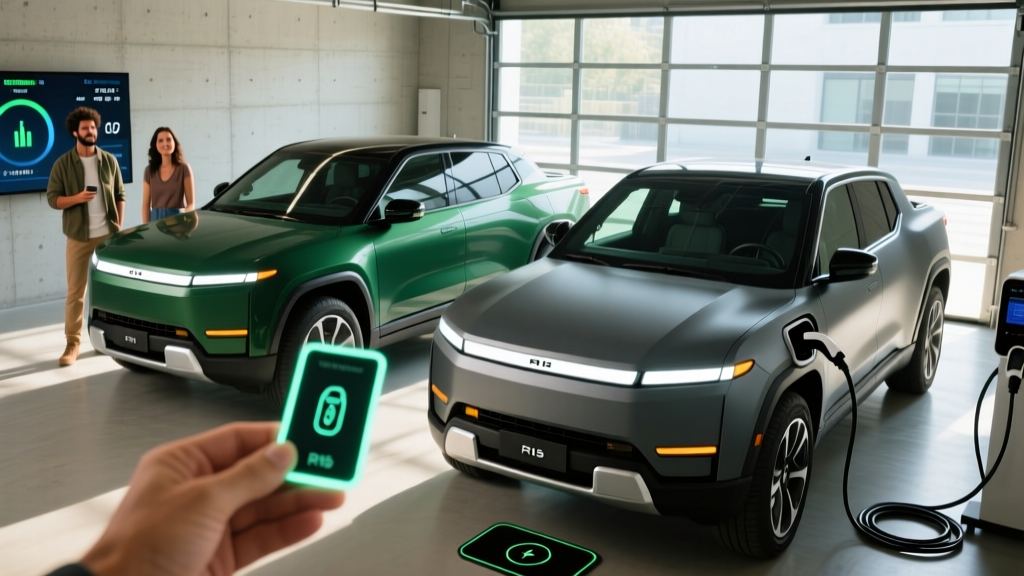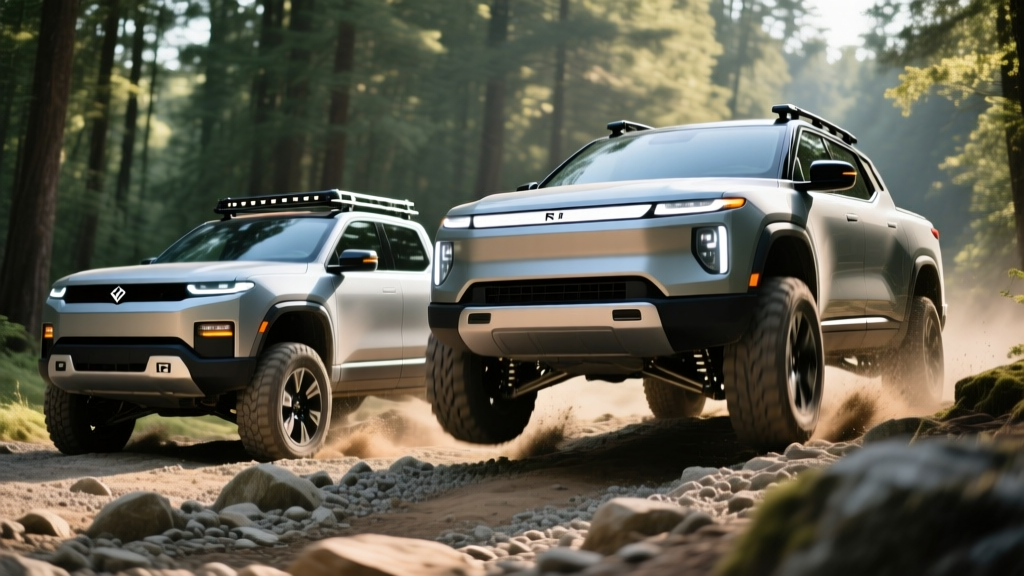
The idea of a Rivian rally car sounds like an oxymoron to some — a heavy, battery-electric truck tearing through dirt stages and gravel roads? Yet Rivian's R1T pickup and R1S SUV have quietly proven themselves in some of the most grueling off-road events on the planet, including class finishes at the Rebelle Rally and the Pikes Peak International Hill Climb. With dual-motor and quad-motor powertrains delivering up to 1,025 horsepower, adjustable air suspension, and sophisticated torque vectoring, Rivian's Gen 2 platform makes a compelling case for electric off-road performance.
This profile examines the 2026 Rivian R1T and R1S through the lens of rally and off-road competition readiness — covering range, charging, battery tech, performance figures, pricing, and whether these electric adventure vehicles can genuinely compete when the pavement ends.
2026 Rivian R1T and R1S: Platform Overview
Rivian refreshed both the R1T and R1S for the 2025 model year with its Gen 2 architecture, and the 2026 models carry forward those substantial upgrades. The Gen 2 platform introduced a new electrical architecture, enhanced thermal management, a redesigned battery pack with LFP (lithium iron phosphate) chemistry on the Standard pack, and the headline Tri-Motor and Quad-Motor powertrain options.
For off-road and rally use, what matters most is the combination of instant torque delivery, individual wheel torque vectoring, and a low center of gravity from the skateboard-style battery pack. Unlike internal-combustion rally cars that rely on complex mechanical differentials, Rivian's multi-motor setups can redirect torque to any wheel in milliseconds — an inherent EV advantage on loose surfaces.
| Spec | R1T (Dual-Motor) | R1T (Quad-Motor) | R1S (Dual-Motor) | R1S (Quad-Motor) |
|---|---|---|---|---|
| Drivetrain | AWD (2 motors) | AWD (4 motors) | AWD (2 motors) | AWD (4 motors) |
| Horsepower | 533 hp | 1,025 hp | 533 hp | 1,025 hp |
| 0-60 mph | 4.5 sec | 3.0 sec | 4.6 sec | 3.1 sec |
| Battery (usable) | 92 kWh (LFP) / 109 kWh (NMC) | 141 kWh (NMC) | 92 kWh (LFP) / 109 kWh (NMC) | 141 kWh (NMC) |
| EPA Range | 270-352 mi | 328 mi | 261-341 mi | 321 mi |
| Max DC Charge | 200 kW | 220 kW | 200 kW | 220 kW |
| 10-80% DC Time | ~27-34 min | ~42 min | ~27-34 min | ~42 min |
| Level 2 Rate | 11.5 kW (~25 mi/hr) | 11.5 kW (~25 mi/hr) | 11.5 kW (~25 mi/hr) | 11.5 kW (~25 mi/hr) |
| Ground Clearance | Up to 14.9 in | Up to 14.9 in | Up to 14.9 in | Up to 14.9 in |
| Towing Capacity | 11,000 lbs | 11,000 lbs | 7,700 lbs | 7,700 lbs |
Real-World Range: What Rally Stages and Dirt Roads Do to Your Battery
EPA sticker: Up to 352 miles (R1T Dual-Motor Max Pack, NMC) / 328 miles (Quad-Motor)
Real-world highway (70 mph): Expect ~280-310 miles from the Max Pack; ~260-280 from the Quad-Motor
Off-road / rally pace: Aggressive driving on dirt can cut range by 40-60% — plan for 130-180 miles of hard off-road use before needing a charge
Cold weather (below 32°F): 15-25% range reduction is typical; preconditioning helps but costs energy
For anyone considering a Rivian as a rally platform, range under competition conditions is the critical variable. The EPA cycle is a mixed city-highway test that bears little resemblance to sustained high-speed gravel running. In EPA testing, the R1T Dual-Motor with the Max Pack achieves 352 miles — impressive for a 7,000+ pound truck. But at rally pace, energy consumption spikes dramatically.
Off-road, the Rivian's weight (approximately 6,700-7,150 lbs depending on configuration) works against it. Every acceleration event on loose surface demands significant energy to overcome inertia and rolling resistance from soft terrain. Owners who have campaigned R1Ts in events like the Rebelle Rally report energy consumption in the range of 3.5-5.0 kWh/mile during competitive stages — compared to roughly 0.45-0.55 kWh/mile in normal highway driving. That means a 141 kWh Max Pack might deliver only 140-180 miles of hard rally use.
The practical implication: a Rivian rally build works best for events with defined stages and charging opportunities at base camp, or for recreational off-roading where you can return to a trailhead charger. It is not suited for ultra-endurance events like the Dakar Rally without significant support infrastructure.
Charging Speed: Pit Stops and Base Camp Power
| Charge Level | Connector | Power | Rate (approx.) |
|---|---|---|---|
| Level 1 (120V) | NACS (Tesla standard) | 1.4 kW | ~3 mi/hr |
| Level 2 (240V home) | NACS | 11.5 kW | ~25 mi/hr |
| DC Fast Charge | NACS (native) | 200-220 kW peak | ~140 mi in 20 min (Dual-Motor) |
| DC Fast (CCS adapter) | CCS1 via adapter | ~150-180 kW | Varies by station |
Rivian transitioned to the NACS (North American Charging Standard) connector for the Gen 2 platform, giving R1T and R1S owners native access to Tesla's Supercharger network — a significant advantage for off-road adventurers who often find themselves in areas where Electrify America or EVgo coverage is sparse. The Rivian Adventure Network, the company's own charging network targeting outdoor destinations, continues to expand with chargers positioned near trailheads and national parks.
The DC fast-charging curve tells a more nuanced story than the peak kW number suggests. The Dual-Motor with the Standard LFP pack peaks around 200 kW and sustains strong charging rates through about 60% state of charge (SoC), then tapers. The Large (NMC) pack charges at roughly 200 kW peak, while the Max pack reaches 220 kW. Expect a 10-80% charge in approximately 27-30 minutes for the Standard and Large packs, and 40-42 minutes for the 141 kWh Max pack — the larger battery simply takes longer despite the higher peak rate.
For rally use, the charging reality means you need strategic planning. A 30-minute pit stop at a DC fast charger can restore roughly 150-180 miles of range — enough for several more competitive stages if you're managing energy carefully. The Rivian's thermal management system actively conditions the battery during navigation to a charger, which helps maintain peak charge rates upon arrival.
Performance and Off-Road Capability
The Quad-Motor R1T and R1S represent the performance pinnacle of Rivian's lineup, with four independent motors — one at each wheel — producing a combined 1,025 horsepower and enabling a 3.0-second 0-60 mph time in the R1T. That's supercar acceleration from a truck weighing over 7,000 pounds, and it's a capability that translates directly to rally stages where explosive acceleration out of corners can define a run.
More important than straight-line speed for rally use is the torque vectoring. Each wheel's motor can be independently controlled, sending precise torque to maximize grip on loose surfaces. This system reacts in milliseconds — far faster than any mechanical limited-slip differential or torque-vectoring axle found on combustion rally cars. On gravel, the Rivian can effectively "steer" itself by overdriving the outside wheels, creating a yaw moment that helps rotate the truck through corners.
The air suspension offers 14.9 inches of maximum ground clearance in Off-Road mode, with the ability to raise or lower the vehicle automatically based on terrain. For rally stages, this adjustability means you can run lower for high-speed dirt roads (reducing center of gravity and improving stability) or raise up for rock crawling sections. The suspension travel is generous, though serious rally competitors often upgrade to aftermarket coilover systems for more consistent damping under sustained high-frequency impacts.
Drive modes include All-Purpose, Sport, Snow, Off-Road, and a customizable mode. The Off-Road mode engages specific throttle mapping, suspension height, stability control thresholds, and regenerative braking settings optimized for loose surfaces. Rally drivers will want to explore the customizable mode to tailor regen levels — aggressive regen on gravel can destabilize the rear axle during lift-off, so dialing it back is usually preferred.
Pricing, Trims, and Federal Tax Credit Eligibility
| Configuration | Base MSRP | §30D Credit Eligible? | Effective Price (est.) |
|---|---|---|---|
| R1T Dual-Motor (Standard, LFP) | $69,900 | Yes (if sourcing requirements met) | ~$62,400* |
| R1T Dual-Motor (Large, NMC) | $75,900 | Partial — depends on critical minerals | ~$68,400-$72,150* |
| R1T Tri-Motor (Max, NMC) | $99,900 | Yes (under $80K truck cap? No — over cap) | $99,900 (no credit) |
| R1T Quad-Motor (Max, NMC) | $105,900 | No — exceeds $80,000 truck MSRP cap | $105,900 |
| R1S Dual-Motor (Standard, LFP) | $74,900 | Yes (if sourcing met) | ~$67,400* |
| R1S Dual-Motor (Large, NMC) | $79,900 | Yes — under $80K SUV cap | ~$72,400* |
*Tax credit estimates assume buyer meets IRS §30D income requirements (AGI ≤ $150K single / $300K joint) and that battery component and critical mineral sourcing thresholds are satisfied. The §30D credit is up to $7,500 and can be transferred to the dealer at point of sale for an immediate price reduction. Always verify current-year rules with a tax professional.
The MSRP cap matters significantly for Rivian buyers: under §30D, trucks and vans are capped at $80,000 MSRP, while SUVs are also capped at $80,000. This means the R1T Dual-Motor Standard and Large packs qualify, but the Tri-Motor and Quad-Motor variants do not. The R1S SUV follows the same cap. For rally-minded buyers, this creates a cost-benefit decision: the Quad-Motor's superior off-road capability comes at a price premium that also forfeits the federal credit.
Who Should Consider a Rivian as a Rally Platform?
- You want instant torque vectoring without mechanical differentials
- Your events have charging infrastructure at base camp or nearby DC fast chargers
- You value a quiet, zero-local-emission platform for environmentally sensitive trails
- You want daily-driver comfort with weekend rally capability in one vehicle
- Budget allows $70,000-$106,000 for the platform before modifications
- You need 300+ miles of sustained off-road range without charging stops
- You're competing in ultra-endurance events (Dakar, Baja 1000) without support crews
- Vehicle weight under 5,000 lbs is critical for your class
- You need extensive aftermarket rally suspension and roll-cage integration (EV battery packaging complicates this)
The Rivian makes the most sense as a rally platform for amateur and semi-professional competitors in events like the Rebelle Rally (which has seen Rivian class wins), TREC (Trans-Americas Rally Expedition Challenge), or club-level rallycross where stages are short and charging can be managed. It's also compelling for overlanding enthusiasts who want to explore remote trails with the confidence of AWD, high ground clearance, and the ability to power camp equipment via the truck's outlet.
Professional rally teams running WRC or top-tier national championships will continue to choose purpose-built combustion or hybrid rally cars — the weight and range constraints of a production EV truck are simply too limiting at the elite level. But for the growing world of electric off-road competition and adventure rallying, the Rivian is arguably the most capable production vehicle available.
Battery Technology, Warranty, and Longevity Under Stress
Rivian offers two battery chemistries in the 2026 R1T and R1S. The Standard pack uses LFP (lithium iron phosphate) cells — known for excellent cycle life, thermal stability, and tolerance for regular 100% charging. LFP is a smart choice for the Standard pack because it can handle the deep discharge and rapid recharge cycles common in off-road use without significant degradation concerns. The Large and Max packs use NMC (nickel manganese cobalt) chemistry, which offers higher energy density (more range per pound) but prefers to stay between 20-80% SoC for daily use.
For rally applications, the LFP Standard pack has an underrated advantage: you can charge it to 100% before every event without guilt, and the chemistry's inherent thermal stability provides an extra margin of safety under the high-load, high-temperature conditions of competitive driving. The trade-off is lower total capacity (92 kWh usable vs. 141 kWh in the Max pack) and therefore shorter range between charges.
Rivian's battery and powertrain warranty covers 8 years or 175,000 miles for the battery (with a capacity retention threshold of 70% over that period) and 8 years or 175,000 miles for the drive unit. This is among the more generous warranties in the EV truck segment. However, competitive use (rally racing) may fall outside normal warranty coverage — Rivian, like most manufacturers, excludes damage from motorsport use. Check your specific warranty terms before campaigning the vehicle.
Key Competitors for Off-Road EV Use
The Rivian R1T doesn't have many direct electric rivals in the off-road truck space. The closest comparisons include:
- Ford F-150 Lightning: Lower starting price (~$55K), similar towing, but less ground clearance (13.1 in max) and no quad-motor torque vectoring. Better for budget builds; less capable on technical terrain.
- GMC Hummer EV: Quad-motor (3 motors on some trims), CrabWalk capability, 350+ mile range, but significantly heavier (~9,000 lbs) and starting above $98K. A more extreme off-road platform but less practical daily.
- Chevrolet Silverado EV Trail Boss: GM's Ultium platform, competitive range, but limited off-road geometry compared to Rivian's air suspension.
- Toyota Tacoma i-FORCE MAX (hybrid): Not a BEV, but worth noting — the hybrid Tacoma offers proven off-road capability, unlimited range via gas, and a massive aftermarket. The default choice for serious competition where charging infrastructure is absent.
Pros, Cons, and Verdict
- Instant torque vectoring at each wheel — a genuine competitive advantage on loose surfaces
- Up to 1,025 hp and 3.0-sec 0-60 from a production truck
- 14.9 inches of adjustable ground clearance via air suspension
- NACS native charging + Supercharger network access
- LFP battery option with excellent cycle life for heavy-use applications
- Quiet operation ideal for environmentally sensitive areas
- Daily-driver comfort with weekend rally capability
- Weight (6,700-7,150 lbs) is a fundamental limitation for sustained rally pace
- Off-road range under hard use can drop below 150 miles
- Quad-Motor and Tri-Motor trims exceed the §30D MSRP cap — no federal credit
- Limited aftermarket for dedicated rally suspension and roll-cage integration
- Competitive motorsport use may void powertrain warranty
- High entry price ($70K-$106K) before any rally modifications
The Rivian R1T and R1S represent a genuine new category: production electric trucks that can credibly compete in amateur and adventure-class rally events while serving as comfortable daily drivers. The torque vectoring is not a gimmick — it's a physics-based advantage that combustion drivetrains can't easily replicate. For the right use case — defined stages, charging access, and a driver who appreciates the unique characteristics of electric power — the Rivian is the most compelling rally-capable EV on the market.
Frequently Asked Questions
What is the real-world range of a Rivian during off-road rally use?
Under aggressive off-road driving, expect 130-180 miles from the 141 kWh Max Pack and 80-120 miles from the 92 kWh Standard LFP pack. This compares to EPA-rated ranges of 270-352 miles under normal mixed driving. Energy consumption on loose surfaces at speed can reach 3.5-5.0 kWh/mile, compared to roughly 0.45-0.55 kWh/mile on the highway.
How fast does the Rivian charge at a DC fast charger?
The Dual-Motor with Standard or Large pack peaks at approximately 200 kW, achieving a 10-80% charge in roughly 27-34 minutes. The Quad-Motor with the Max Pack peaks at 220 kW but takes approximately 42 minutes for 10-80% due to the larger 141 kWh battery. Home Level 2 charging at 11.5 kW adds approximately 25 miles per hour.
Does the Rivian R1T qualify for the federal EV tax credit?
The R1T Dual-Motor trims under the $80,000 MSRP cap for trucks can qualify for up to $7,500 under IRS §30D, provided the buyer meets income limits ($300K joint / $150K single AGI) and the vehicle satisfies battery component and critical mineral sourcing requirements. The Tri-Motor and Quad-Motor R1T variants exceed the MSRP cap and do not qualify. The R1S SUV follows the same $80,000 cap. Always verify current-year eligibility with a tax professional.
Is the Rivian better than a gas truck for rally racing?
It depends on the event format. For short-stage rallycross or adventure rallies with charging access, the Rivian's instant torque vectoring and low center of gravity are genuine advantages. For ultra-endurance events like Baja or Dakar, gas and diesel trucks still dominate due to unlimited range and rapid refueling. The Rivian excels where stages are defined and support infrastructure exists.
Can I modify a Rivian for serious rally competition?
Yes, but the aftermarket is still developing. Companies like Rivian itself (through its R1 Shop), as well as third-party outfitters, offer upgraded skid plates, all-terrain tires, and suspension enhancements. However, integrating a full FIA-spec roll cage around the battery pack is complex, and competitive motorsport use may affect your factory warranty. The EV architecture limits some traditional rally modifications (no exhaust routing, different weight distribution considerations).
What is Rivian's battery warranty for off-road and competition use?
Rivian covers the battery for 8 years or 175,000 miles with a 70% capacity retention threshold, and the drive unit for 8 years or 175,000 miles. However, damage resulting from competitive motorsport use may not be covered under the standard warranty. Recreational off-roading is generally covered; organized racing and timed competition events may not be. Review your warranty documentation carefully.