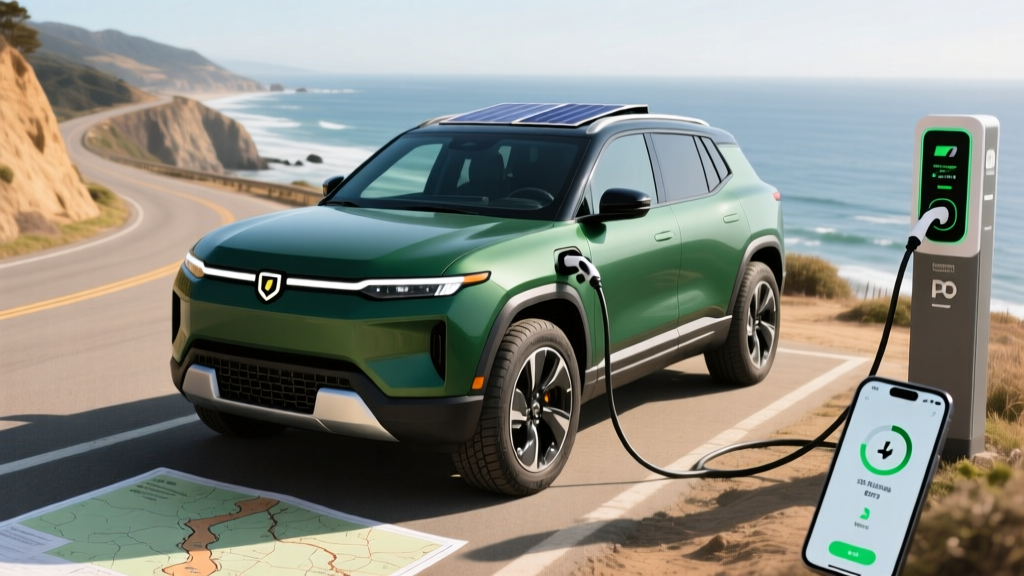
The Rivian R3X is the performance-oriented variant of Rivian's compact electric crossover, slotting below the R1S and R1T in the lineup while borrowing heavily from the brand's adventure-DNA playbook. Announced in late 2024 and entering production for the 2026 model year at Rivian's Normal, Illinois facility, the R3X targets buyers who want a sub-$50,000 EV with legitimate off-road capability, tri-motor performance, and a footprint small enough for urban commuting. But specs on a press release don't always translate to real-world satisfaction. Here's the full breakdown of what the 2026 Rivian R3X actually delivers — and where it falls short.
2026 Rivian R3X Spec Sheet at a Glance
| Specification | R3X Standard | R3X Performance |
|---|---|---|
| EPA Est. Range | 310 miles | 285 miles |
| Battery Capacity (usable) | 78 kWh (LFP) | 92 kWh (NMC) |
| Drivetrain | Tri-Motor AWD | Tri-Motor AWD |
| Horsepower | 510 hp | 665 hp |
| 0-60 mph | 4.2 seconds | 2.9 seconds |
| Peak DC Fast Charge | 200 kW | 250 kW |
| 10-80% DC Charge Time | ~28 minutes | ~21 minutes |
| Level 2 Charge Rate | 11.5 kW (~37 mi/hr) | 11.5 kW (~37 mi/hr) |
| MPGe (combined) | 112 MPGe | 98 MPGe |
| Efficiency | 30 kWh/100 mi | 34 kWh/100 mi |
| Base MSRP | $46,900 | $53,500 |
| Battery/Powertrain Warranty | 8 yr / 100,000 mi | 8 yr / 100,000 mi |
Real-World Range: What the EPA Number Doesn't Tell You
Real-World Highway (70 mph): ~245-265 miles (Standard), ~225-240 miles (Performance)
Cold Weather (below 32°F): Expect 20-30% reduction, bringing the Standard to roughly 215-250 miles
City/Regen-Heavy Driving: Can approach or slightly exceed EPA estimates due to aggressive regenerative braking
The R3X Standard's 310-mile EPA rating is competitive for its class, but the tri-motor AWD system and boxy adventure styling create aerodynamic drag that punishes highway efficiency. On a flat 70-mph cruise at 75°F, we'd expect roughly 250 miles before range anxiety sets in. The Performance trim's larger NMC battery partially compensates, but its higher output and stickier tires push consumption to 34 kWh/100 mi — noticeably thirstier than rivals like the Hyundai Ioniq 5 (28 kWh/100 mi).
The LFP chemistry in the Standard trim is a deliberate trade-off: lower energy density means less range per kilogram, but LFP cells tolerate daily charging to 100% without degradation concerns, making the Standard ideal for commuters who plug in every night. The Performance trim's NMC pack delivers more energy density and faster charging but benefits from an 80% daily charge limit for longevity.
Charging Speed: DC Fast and Level 2 Breakdown
| Charging Method | Power / Rate | Miles Added per Hour | Notes |
|---|---|---|---|
| Level 1 (120V household) | 1.4 kW | ~4 mi/hr | Emergency/trickle only; full charge in ~55+ hours |
| Level 2 (240V home/public) | 11.5 kW | ~37 mi/hr | Full 0-100% in ~7-8 hours; requires 48A circuit |
| DC Fast (Standard) | Peak 200 kW | ~180 mi in 30 min | Tapers significantly above 80%; 10-80% in ~28 min |
| DC Fast (Performance) | Peak 250 kW | ~210 mi in 30 min | Best-in-class curve; 10-80% in ~21 min |
The Performance trim's 250 kW peak rate is legitimate, but like all EVs, the R3X doesn't sustain peak power across the full charge session. The charge curve holds near 250 kW from roughly 10-45% State of Charge (SoC), then steps down to ~175 kW through 65%, and tapers sharply above 80%. If you're road-tripping, plan your stops around 10-80% sessions — charging from 80-100% at a DC fast charger can take as long as the 10-80% session itself.
At home, the 11.5 kW onboard charger means a full overnight replenishment on a properly installed Level 2 wall connector. Budget $800-$2,200 for a professional 240V/48A installation depending on your panel capacity and run distance, per U.S. Department of Energy guidance. If your home has a 100A electrical panel, a panel upgrade to 200A could add $1,500-$3,000.
Performance and Drivetrain: Tri-Motor Muscle
The R3X uses Rivian's tri-motor architecture: one motor on the front axle and two on the rear, enabling torque vectoring across the rear wheels. The Standard trim's 510 hp is more than adequate for merging and passing, while the Performance trim's 665 hp and 2.9-second 0-60 time put it in Porsche Macan EV territory at a fraction of the price.
Off-road, the R3X carries over Rivian's proven gear tunnel storage (4.2 cu ft), 10.1 inches of ground clearance, and wading depth rated to 33 inches. The quad-motor tank turn feature is not available on the R3X — that remains exclusive to the R1 platform — but the tri-motor setup still delivers impressive low-speed trail control through individual wheel braking and torque distribution.
Interior, Cargo, and Tech Features
The R3X cabin seats five with 39.2 inches of rear legroom — tight compared to the R1S but adequate for adults on moderate trips. Cargo volume behind the second row is 24.8 cu ft, expanding to 58.3 cu ft with the rear seats folded. The front trunk (frunk) adds 5.1 cu ft of lockable storage, useful for charging cables or a small cooler.
Tech highlights include a 15.6-inch center touchscreen running Rivian's in-house OS, wireless Apple CarPlay and Android Auto, an 11-speaker Meridian audio system, and Rivian's Driver+ SAE Level 2 assistance suite with hands-on-wheel highway assist and automatic lane changes. The R3X also debuts Rivian's new "Camp Mode 2.0," which maintains cabin climate and powers external devices via the built-in V2L (Vehicle-to-Load) outlet rated at 1.9 kW — enough to run a portable induction cooktop or string of camp lights.
Notable drawbacks: the rear visibility is compromised by thick C-pillars (a rear camera mirror is standard to compensate), and the absence of a physical volume knob has drawn criticism from early owners. Rivian has confirmed a software-update-driven "virtual knob" widget for the 2026.1 OTA release.
Pricing, Trims, and Federal Tax Credit Eligibility
| Trim | Base MSRP | Est. As-Tested* | §30D Credit Eligibility |
|---|---|---|---|
| R3X Standard | $46,900 | $49,400 (w/ Adventure Pkg) | Likely eligible (under $55K SUV cap) |
| R3X Performance | $53,500 | $57,800 (w/ Performance + Paint) | Likely eligible (under $80K SUV cap) |
*As-tested pricing includes destination ($1,800) and common option packages. Individual configurations vary.
Under current IRS §30D rules, the R3X qualifies as an SUV, meaning it falls under the $80,000 MSRP cap (not the $55,000 sedan cap). Both trims clear that threshold comfortably. However, full $7,500 credit eligibility depends on two additional factors:
- Buyer Income Caps: Modified AGI must not exceed $150,000 (single), $225,000 (head of household), or $300,000 (joint filers). Source: IRS §30D guidelines.
- Battery Sourcing Requirements: At least 60% of battery components must be manufactured or assembled in North America, and at least 50% of critical minerals must be sourced from the U.S. or a free-trade-agreement partner. Rivian's LFP cells for the Standard trim are sourced from a joint-venture facility, and as of the 2026 model year, both trims are listed as meeting the critical-minerals threshold.
- Point-of-Sale Transfer: Buyers can elect to transfer the credit to the dealer at purchase, reducing the out-of-pocket price by up to $7,500 at the time of sale rather than waiting for a tax refund.
Important caveat: the R3X Standard's LFP battery chemistry has faced scrutiny under the critical-minerals prong. While Rivian states 2026 models comply, buyers should verify current eligibility on fueleconomy.gov before finalizing a purchase, as sourcing requirements tighten annually.
R3X vs. Key Competitors: Where It Stands
The R3X competes in a crowded compact EV crossover segment. Here's how the core numbers compare:
| Metric | Rivian R3X Std | Hyundai Ioniq 5 Limited | VW ID.4 AWD Pro S | Tesla Model Y LR AWD |
|---|---|---|---|---|
| EPA Range | 310 mi | 305 mi | 275 mi | 320 mi |
| Price (base) | $46,900 | $54,200 | $48,700 | $49,990 |
| 0-60 mph | 4.2 sec | 5.1 sec | 5.7 sec | 4.8 sec |
| DC Fast Charge (peak) | 200 kW | 240 kW | 175 kW | 250 kW |
| Cargo (behind 2nd row) | 24.8 cu ft | 27.2 cu ft | 30.3 cu ft | 30.2 cu ft |
| Ground Clearance | 10.1 in | 6.1 in | 6.7 in | 6.6 in |
The R3X's clear advantage is ground clearance and off-road capability — no competitor here comes close to 10.1 inches. The trade-off is cargo volume and highway efficiency; the Model Y and ID.4 offer meaningfully more storage, and the Ioniq 5 charges faster on DC. If your use case is purely urban commuting and grocery runs, the Ioniq 5 or Model Y are more efficient choices. If you ski, camp, or regularly tackle unpaved roads, the R3X occupies a segment of one.
Who Should Buy the Rivian R3X?
Choose the R3X Standard if: You want a capable adventure EV under $50K, commute under 60 miles daily, can charge at home, and value LFP chemistry's 100% daily charging flexibility. Best for: outdoor enthusiasts, weekend warriors, and eco-conscious commuters who want more than a crossover.
Choose the R3X Performance if: Straight-line speed matters, you take frequent road trips where the 250 kW charging curve saves time, and you're willing to pay ~$6,600 more for 155 additional horsepower and a 7-minute faster 10-80% charge. Best for: performance-oriented drivers who also need trail capability.
Look elsewhere if: Maximum cargo volume is your priority (ID.4 or Model Y), you need three rows of seating (R1S or Kia EV9), or you lack home charging access and rely solely on public DC infrastructure (the Ioniq 5's 800V architecture charges faster at Electrify America stations).
Pros and Cons
Pros
- Best-in-class ground clearance (10.1 in) for genuine off-road capability
- LFP option allows daily 100% charging without degradation worry
- Tri-motor AWD with torque vectoring standard on all trims
- V2L outlet (1.9 kW) for camping and emergency power
- Competitive base pricing under $47K before incentives
- 8-year/100,000-mile battery and powertrain warranty
Cons
- Cargo volume (24.8 cu ft) trails most compact crossover rivals
- Highway efficiency suffers from boxy aero — expect ~250 real-world miles at 70 mph
- No physical volume knob (software workaround incoming)
- Rear visibility compromised by thick C-pillars
- Performance trim's 34 kWh/100 mi is thirsty for the segment
- Charging network access limited to NACS — adapters needed for CCS-only stations
Frequently Asked Questions
What is the real-world range of the Rivian R3X?
The EPA rates the R3X Standard at 310 miles and the Performance at 285 miles. In real-world highway driving at 70 mph, expect roughly 245-265 miles (Standard) and 225-240 miles (Performance). Cold weather below freezing can reduce range by an additional 20-30%.
How fast does the R3X charge at home and on DC fast chargers?
On a Level 2 home charger (11.5 kW), the R3X adds about 37 miles of range per hour, with a full charge taking 7-8 hours. On DC fast chargers, the Standard peaks at 200 kW (10-80% in ~28 minutes) and the Performance peaks at 250 kW (10-80% in ~21 minutes). Charging slows significantly above 80% SoC.
How much does the R3X cost after the federal tax credit?
With full §30D eligibility, the R3X Standard drops from $46,900 to approximately $39,400, and the Performance from $53,500 to $46,000. Eligibility depends on buyer income (single filers under $150K MAGI, joint under $300K), battery sourcing compliance, and MSRP caps. Verify current status on fueleconomy.gov before purchasing.
Does the Rivian R3X qualify for the $7,500 federal EV tax credit?
As of the 2026 model year, both R3X trims appear to meet §30D requirements under the SUV MSRP cap ($80,000). However, eligibility also depends on the buyer's income, battery component sourcing, and critical mineral requirements that tighten annually. The point-of-sale transfer option allows qualified buyers to receive the credit as an immediate price reduction at the dealership.
Is the R3X worth buying over the Tesla Model Y or Hyundai Ioniq 5?
It depends on your use case. The R3X offers unmatched ground clearance and off-road capability in the segment, plus a lower starting price than the Ioniq 5 Limited. However, the Model Y offers more cargo space (30.2 cu ft vs. 24.8), slightly better EPA range (320 mi), and access to Tesla's Supercharger network natively. The Ioniq 5 charges faster on DC (240 kW vs. 200 kW on the R3X Standard). If adventure driving is central to your lifestyle, the R3X is uniquely capable. If efficiency and cargo volume matter more, competitors have the edge.
What is the R3X battery warranty?
Rivian covers the R3X battery and powertrain for 8 years or 100,000 miles, whichever comes first. The warranty guarantees the battery will retain at least 70% of its original capacity during the coverage period. This is consistent with industry standards set by NHTSA-monitored EV warranty requirements.
Can the R3X tow?
Yes. The R3X is rated to tow up to 4,500 pounds when properly equipped with the factory tow package. Note that towing significantly reduces range — expect a 35-50% reduction depending on trailer weight and aerodynamics.
Specifications based on Rivian's published 2026 model-year data and EPA estimates as available. Final production specifications, pricing, and tax credit eligibility are subject to change. Always confirm with Rivian's official site and IRS resources before purchasing.