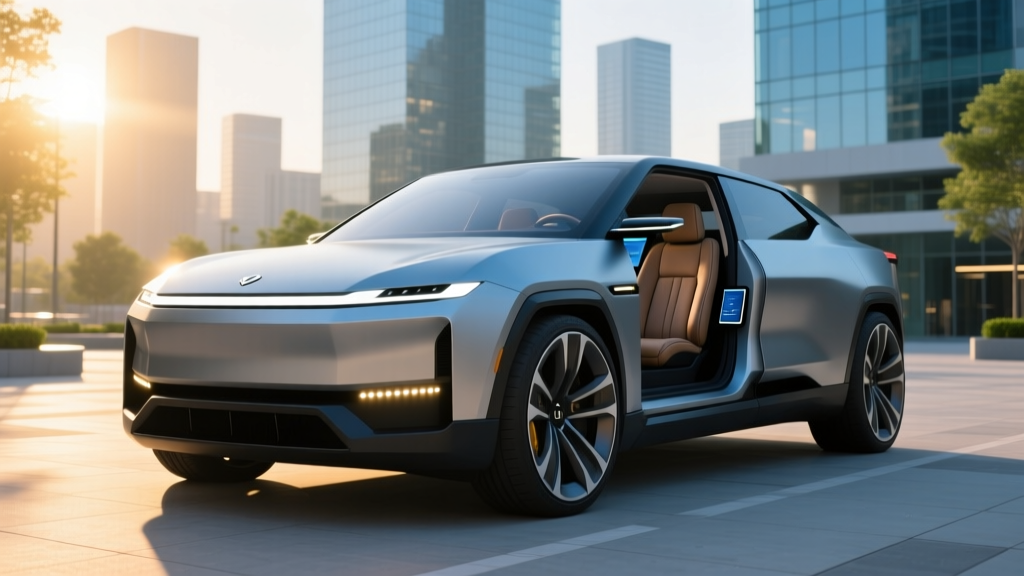
The Rivian R3X sits at the top of Rivian's upcoming compact EV lineup — a performance-oriented, rally-inspired variant of the smaller R3 platform first teased in March 2024 and confirmed for production at Rivian's Normal, Illinois facility. With preorders opening in waves through 2025 and deliveries expected to begin in early-to-mid 2026, the R3X targets buyers who want sub-$50,000 pricing with genuine off-road capability and a tri-motor powertrain. Here's what the data actually shows — and what you should know before putting down a deposit.
Range Reality Check
EPA Estimated Range: ~300+ miles (Rivian target, final EPA certification pending at launch)
Real-World Expectation: Expect 250–275 miles in mixed highway driving at 70+ mph. Cold-weather testing on similar Rivian platforms suggests a 15–25% reduction in freezing temperatures, dropping effective range to roughly 210–240 miles. City driving with regenerative braking recovers closer to the EPA sticker.
Rivian R3X Core Specifications
| Specification | Rivian R3X (Preliminary) |
|---|---|
| Drivetrain | Tri-Motor AWD |
| Horsepower | ~600+ hp (estimated) |
| 0–60 mph | ~3.0 seconds (target) |
| Battery Capacity | ~85–95 kWh usable (estimated) |
| Battery Chemistry | NMC (Nickel Manganese Cobalt) — expected for performance trims |
| EPA Range (Target) | 300+ miles |
| Max DC Fast Charge | ~200–250 kW (peak) |
| 10–80% DC Charge Time | ~22–28 minutes (estimated) |
| Level 2 Home Charging | ~11.5 kW (~25–30 mi/hr) |
| Charging Port | NACS (native Tesla Supercharger access) |
| Ground Clearance | ~8.5+ inches (estimated, rally-tuned suspension) |
| Cargo Volume | ~25 cu ft rear + frunk (estimated) |
| Base MSRP (Target) | ~$45,000–$48,000 |
| Battery/Powertrain Warranty | 8 years / 100,000 miles (Rivian standard) |
Note: All specifications are preliminary based on Rivian announcements and platform projections. Final EPA-certified figures will be confirmed closer to delivery. Rivian has not yet published official kWh or peak charge rate data for the R3X specifically.
Charging Speed: DC Fast, Level 2, and What It Means
Charging speed is where compact EVs often disappoint, but the R3X is positioned to match or exceed the R1S and R1T Gen 2 architecture. Here's the projected breakdown:
| Charging Level | Power (kW) | Miles Added per Hour | Typical Use Case |
|---|---|---|---|
| Level 1 (120V household) | ~1.4 kW | ~3–4 mi/hr | Emergency / overnight trickle |
| Level 2 (240V home) | ~11.5 kW | ~25–30 mi/hr | Daily home charging |
| DC Fast Charge (peak) | ~200–250 kW | ~600+ mi/hr (at peak) | Road trips, 10–80% in ~25 min |
Charging curve reality: Peak kW is never sustained across the full session. Expect the R3X to hold its maximum charge rate between 10–50% State of Charge (SoC), then taper progressively. Above 80%, charging slows dramatically to protect the NMC cells — a 10–80% session of ~25 minutes may stretch to 40+ minutes for 10–95%. For road trips, plan stops around the 80% mark to minimize time at the charger.
Rivian has transitioned to the NACS connector across its lineup, meaning the R3X will have native access to Tesla Superchargers (now the largest DC fast-charging network in the US) without an adapter. This is a significant advantage over CCS-only vehicles still relying on Electrify America or similar networks with historically lower uptime.
Performance and Drivetrain: The Tri-Motor Advantage
The R3X's tri-motor layout (one front, two rear) is borrowed from the R1T/R1S Quad-Motor architecture but with one fewer motor to balance cost and performance. The result: estimated 600+ horsepower, torque vectoring across the rear axle, and a 0–60 mph time targeting approximately 3.0 seconds. That puts the R3X in the same acceleration bracket as a Porsche Cayenne Turbo GT — in a compact crossover expected to start under $48,000.
The rally-tuned suspension and projected 8.5+ inches of ground clearance position the R3X for genuine light off-road use — gravel roads, snow, forest service trails — without the body-on-frame bulk of the R1T. Think of it as Rivian's answer to the Subaru WRX ethos, electrified.
Pricing, Trims, and Federal Tax Credit Eligibility
| Trim | Est. Base MSRP | After $7,500 §30D Credit | Eligibility Notes |
|---|---|---|---|
| R3 (base, single/dual motor) | ~$35,000–$38,000 | ~$27,500–$30,500 | Most likely to qualify — below MSRP cap |
| R3 (dual motor AWD) | ~$40,000–$43,000 | ~$32,500–$35,500 | Below $80K SUV cap; income limits apply |
| R3X (tri-motor performance) | ~$45,000–$48,000 | ~$37,500–$40,500 | Below cap; battery sourcing TBD at launch |
The R3X should fall comfortably under the IRS §30D MSRP cap of $80,000 for SUVs/pickups (or $55,000 for sedans — classification depends on how the EPA categorizes the R3X at launch). However, qualifying for the full $7,500 credit requires meeting all of the following:
- Buyer income cap: Modified AGI ≤ $150,000 (single) or ≤ $300,000 (joint filing)
- MSRP cap: Vehicle base price must not exceed $80,000 (SUV/truck) or $55,000 (sedan)
- Battery sourcing: Critical minerals and battery components must meet phased percentage thresholds from US or FTA-partner countries — these thresholds increase annually through 2029
- Final assembly: Must occur in North America (Rivian's Normal, IL plant qualifies)
- Point-of-sale transfer: As of 2024+, buyers can transfer the credit to the dealer at purchase, reducing the purchase price directly rather than waiting for a tax refund
Key uncertainty: Rivian has been working to localize battery cell sourcing, but the R3X's specific cell supplier and critical-mineral supply chain have not been publicly confirmed as of early 2026. Battery sourcing requirements are the most common reason EVs lose partial or full credit eligibility. Check the fueleconomy.gov credit tracker once the R3X receives official EPA certification.
Interior, Cargo, and Daily Practicality
The R3 is Rivian's smallest platform — roughly comparable in footprint to a Volvo XC40 or Hyundai Kona Electric. Expect the R3X to offer:
- Rear cargo: ~25 cu ft behind the second row (comparable to the Hyundai Ioniq 5 with seats up)
- Front trunk (frunk): Small but functional — suitable for charging cables, a grocery bag, or a daypack
- Seating: 5 passengers across two rows; rear legroom should accommodate adults comfortably on shorter trips
- Infotainment: Rivian's in-house software (the same system praised in R1S/R1T reviews), featuring a 15.6-inch center display, native navigation with route-based battery preconditioning, and over-the-air updates
The R3X adds rally-inspired styling cues — likely including roof rails, skid plates, all-terrain tire options, and exterior lighting signatures distinct from the standard R3. Rivian's software also includes a camp mode, pet mode, and gear tunnel compatibility (if adapted from the R1 platform).
Driver Assistance and Safety
Rivian's driver-assistance suite is branded Rivian Driver+ and operates at SAE Level 2 — meaning it combines adaptive cruise control and lane-centering but requires continuous driver supervision. It is not autonomous driving. Expect:
- Adaptive cruise with stop-and-go
- Lane-keeping assist and lane-change assist
- Automatic emergency braking, blind-spot monitoring
- Highway assist on mapped roads
Safety ratings from NHTSA and IIHS will not be available until after production begins and crash testing is completed.
Pros and Cons: The Honest Take
Pros
- Tri-motor performance at a sub-$50K price point is unprecedented
- Native NACS = direct Tesla Supercharger access, no adapter needed
- Genuine off-road capability in a compact footprint
- Rivian's software and OTA update track record is strong
- US-built, strong chance of full or partial §30D tax credit
- 8-year/100,000-mile battery warranty matches industry standard
Cons
- Final EPA range, kWh, and charge specs not yet certified — preorder involves uncertainty
- Cargo space will be modest compared to R1S or midsize competitors
- Rivian's production ramp history (R1T/R2 delays) suggests possible delivery timeline slippage
- Battery sourcing for §30D credit not yet confirmed
- No hands-free driving system to match Ford BlueCruise or GM Super Cruise hands-free zones
- Service center network still expanding — rural owners may face longer drive for warranty work
Rivian R3X vs. Key Competitors
The R3X doesn't have a direct rival — no other compact EV offers a tri-motor AWD layout with off-road tuning at this price. But buyers cross-shopping will consider:
- Hyundai Ioniq 5 N: ~600 hp, performance-tuned, but dual-motor, lower ground clearance, and no off-road pretense. ~$66K MSRP.
- Tesla Model Y Performance: Faster charging (250 kW sustained), Supercharger network, but aging platform and no rally capability. ~$52K.
- Volvo EX40 (Polestar-flavored): Similar size, premium interior, but single/dual motor only and slower DC charging.
- Subaru Solterra / Toyota bZ4X: Off-road credibility but ~220-mile range and slow charging make them hard to recommend.
The R3X threads a needle: performance-car acceleration, compact-crossover practicality, and light off-road chops — at a price that undercuts most of these rivals.
Who Should Preorder the R3X?
Preorder the R3X if: You want a compact performance EV with AWD and off-road capability, you live in an area with winter weather or unpaved roads, and you're comfortable with a 6–12 month delivery wait and preliminary specs.
Wait or look elsewhere if: You need maximum cargo space, you want confirmed EPA range and tax credit eligibility before committing, or you prioritize hands-free highway driving features over performance.
Frequently Asked Questions
What is the real-world range of the Rivian R3X?
Rivian targets 300+ miles EPA, but real-world highway driving at sustained speeds will likely yield 250–275 miles. In freezing temperatures, expect a 15–25% reduction, bringing effective range to roughly 210–240 miles. Final EPA numbers will be published closer to delivery.
How fast does the R3X charge at home and on the road?
At home on a 240V Level 2 charger, expect ~11.5 kW (roughly 25–30 miles of range per hour), meaning a full charge takes about 8–9 hours overnight. On DC fast chargers, the R3X is projected to peak at 200–250 kW, reaching 10–80% in approximately 22–28 minutes.
How much does the Rivian R3X cost after tax credits?
With an estimated base MSRP of $45,000–$48,000, a qualifying buyer could pay as little as $37,500–$40,500 after the $7,500 federal credit. Eligibility depends on buyer income, battery sourcing compliance, and MSRP classification — all subject to confirmation at launch.
Does the R3X qualify for the $7,500 federal EV tax credit?
It is expected to qualify based on MSRP (under the cap), North American assembly (Normal, IL), and buyer income limits. However, the battery critical-mineral and component sourcing requirements have not been publicly confirmed for the R3X. Check IRS and fueleconomy.gov for the final determination before purchase.
Is the R3X worth preordering over waiting?
Preordering secures your place in the production queue — Rivian typically fulfills reservations in order. Given the R2's production ramp timeline, early R3X reservations may deliver in early-to-mid 2026, while later orders could push into 2027. The deposit is typically refundable, so the financial risk is low.
What is Rivian's battery warranty on the R3X?
Rivian's standard battery and powertrain warranty is 8 years or 100,000 miles (whichever comes first), consistent across its lineup. This matches the industry standard set by Hyundai, Tesla, and Ford for EV battery coverage.