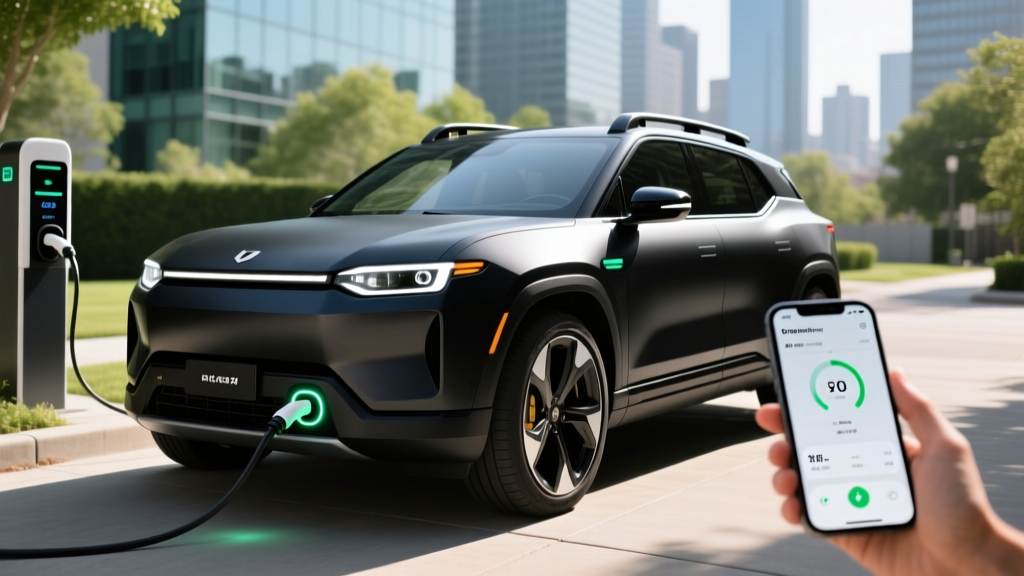
Rivian's compact crossover lineup is generating significant interest as the automaker expands beyond the R1T and R1S into more accessible segments. Among the most anticipated entries is the Rivian R3 X, a performance-oriented variant of the upcoming R3 platform that promises to blend Rivian's signature adventure capability with a smaller footprint and a more approachable price point. This preview compiles everything Rivian has confirmed or strongly indicated about the R3 X as of early 2026, alongside our analyst projections for specs, pricing, and real-world usability.
Rivian R3 X at a Glance: Projected Specifications
The R3 X sits at the top of the planned R3 lineup as a dual-motor, all-wheel-drive performance trim. Based on Rivian's statements and the engineering patterns established in the R1S and R1T, here is what we expect:
| Specification | Projected Figure |
|---|---|
| Drivetrain | Dual-motor AWD |
| Battery Capacity (usable) | ~75–85 kWh (estimated) |
| Battery Chemistry | LFP (Standard) / NMC (Max pack, expected) |
| EPA Range (est.) | ~300+ miles (Max pack target) |
| Peak DC Fast Charge | ~200–250 kW (projected) |
| 10–80% DC Charge Time | ~25–30 minutes (projected) |
| Level 2 Home Charge Rate | ~11.5 kW (~28–32 mi/hr) |
| Horsepower | ~450–500 hp (dual-motor est.) |
| 0–60 mph | ~4.5 seconds (projected) |
| Charging Port | NACS (native Tesla Supercharger access) |
| Base MSRP (est.) | ~$55,000 (projected) |
Range and Efficiency: What to Expect in the Real World
Rivian CEO RJ Scaringe has publicly stated that the R3 platform targets a 300+ mile EPA range for its highest-capacity battery option. The R3 X, as the dual-motor performance variant, will likely sacrifice a modest amount of range compared to a single-motor R3 base model due to the added weight and drag of the second motor, plus stickier performance tires.
EPA Estimate (projected): ~300 miles (Max pack, dual-motor R3 X)
Highway driving (70–80 mph): Expect ~240–270 miles. Compact crossovers with boxy styling tend to see 15–20% range loss at sustained highway speeds due to aerodynamic drag.
Cold weather (below 32°F / 0°C): Expect ~210–250 miles. Battery chemistry slows in cold temperatures, and cabin heating draws significant energy. Rivian's heat pump system (confirmed for the R1 platform and expected for R3) will mitigate this somewhat compared to resistive heating, but a 20–30% reduction is normal for any EV in deep winter.
Combined real-world expectation: Plan for ~250–270 miles in mixed driving in temperate conditions.
Efficiency for a dual-motor compact crossover in this class typically lands between 105–115 MPGe (roughly 29–32 kWh per 100 miles). Rivian's skateboard architecture and thermal management system have proven competitive in the R1 lineup, and the R3's smaller, lighter platform should yield comparable or slightly better efficiency figures.
Charging Speed: DC Fast Charging and Home Level 2
Charging speed is one of the most critical ownership factors, and Rivian has been steadily improving its architecture. The R1S and R1T Gen 2 models support peak DC fast charging around 200–220 kW, and the newer R3 platform is expected to match or modestly exceed this with an improved charge curve.
| Charging Level | Power | Speed / Time |
|---|---|---|
| Level 1 (120V household) | ~1.4 kW | ~3–4 miles per hour |
| Level 2 (240V home/workplace) | ~11.5 kW | ~28–32 miles per hour (full charge in ~8–9 hrs) |
| DC Fast Charge (peak) | ~200–250 kW | 10–80% in ~25–30 min (projected) |
A critical nuance buyers should understand: peak kW is not sustained kW. A 250 kW peak rating means the vehicle can accept that rate at a low state of charge (typically 10–30% SoC) under ideal thermal conditions. As the battery fills, the charge rate tapers — often significantly above 80%. This is why the 10–80% time is the most practical metric. On a road trip, you'll typically charge from 10–80% at a DC fast station, then move on. Charging from 80–100% can take as long as the 10–80% session due to taper, so it's rarely worth the wait unless you need every last mile.
The R3 X is expected to ship with a native NACS (North American Charging Standard) port, giving it direct access to Tesla's Supercharger network — now the largest and most reliable DC fast-charging network in North America. This is a significant advantage over vehicles still equipped with CCS1 connectors that require adapters for Supercharger access.
Performance and Drivetrain
The R3 X's dual-motor all-wheel-drive layout follows the formula Rivian perfected with the R1T and R1S: independent motors on each axle providing instant torque, precise traction control, and strong straight-line performance. Rivian's Gen 2 drive units are more compact and efficient than the original R1 motors, and the R3 X should benefit from this evolution.
With a projected 450–500 horsepower and a curb weight likely between 4,500–5,000 lbs (substantially lighter than the ~7,000 lb R1T), a 0–60 mph time in the mid-4-second range is realistic. That puts the R3 X in the same performance bracket as the Tesla Model Y Performance and the BMW iX xDrive50, but in a more compact package.
Rivian has also emphasized off-road capability across its lineup. The R3 X is expected to offer respectable ground clearance, approach/departure angles suitable for light trail use, and Rivian's software-defined drive modes (including snow, sand, and all-terrain settings). It won't replace a Wrangler for hardcore rock crawling, but it should comfortably handle forest roads, snowy passes, and campsite access.
Pricing, Trims, and Federal Tax Credit Outlook
Rivian has indicated the broader R3 lineup will start in the $45,000 range for a single-motor base model, with the R3 X positioned as the premium dual-motor performance variant. Based on Rivian's current trim strategy (Adventure, Ascend for the R1 series), here is our projected pricing structure:
| Configuration | Est. MSRP | §30D Credit Eligible? |
|---|---|---|
| R3 (single-motor, Standard battery) | ~$45,000 | Likely yes (under $80K SUV cap) |
| R3 (dual-motor, Max battery) | ~$52,000 | Likely yes |
| R3 X (dual-motor, Max battery, performance) | ~$55,000–$60,000 | Likely yes (under $80K SUV cap) |
Federal tax credit (IRS §30D) considerations for 2026:
- MSRP cap: SUVs, vans, and pickups must have an MSRP at or below $80,000. The R3 X should clear this comfortably.
- Buyer income cap: Modified adjusted gross income (MAGI) must not exceed $150,000 (single), $225,000 (head of household), or $300,000 (joint). Check IRS §30D guidelines for current-year limits.
- Battery sourcing requirements: The full $7,500 credit requires meeting both critical minerals and battery component sourcing thresholds, which tighten annually. Rivian has been working to localize its supply chain, but the exact credit amount ($3,750 or $7,500) will depend on the specific battery pack and model year. The credit may also be transferred to the dealer at point of sale as an immediate price reduction.
- Consult a tax professional before relying on credit eligibility — rules change, and individual circumstances vary.
Interior, Cargo, and Practicality
The R3 slots below the midsize R1S in Rivian's lineup, making it a compact crossover roughly comparable in exterior dimensions to the Volvo EX40 or the Tesla Model Y. Rivian has shown concept images suggesting a spacious, upright cabin with a focus on outdoor utility.
Projected interior dimensions based on the vehicle's class and Rivian's packaging approach:
- Seating: 5 passengers (2-row configuration)
- Cargo volume (behind rear seats): ~25–30 cu ft (estimated, class-competitive)
- Cargo volume (rear seats folded): ~55–65 cu ft (estimated)
- Front trunk (frunk): Expected, likely 5–8 cu ft — useful for charging cables, groceries, or gear you want separated from the cabin
- Roof rails: Confirmed by Rivian concept imagery; expect a dynamic roof load rating suitable for a rooftop tent or cargo box
Rivian's infotainment system in the R1 series runs on a custom, Linux-based platform with over-the-air updates, and the R3 X should receive the latest generation of this software. Expect a large central touchscreen (likely 15+ inches), a digital instrument cluster, wireless Apple CarPlay/Android Auto, and Rivian's integrated navigation with route-based battery preconditioning for DC fast charging. The R3 X should also feature Rivian's Driver+ system, a Level 2 driver-assistance suite with adaptive cruise control, lane centering, and automatic emergency steering. Note: Driver+ is a Level 2 system per SAE classification — the driver must remain engaged and hands-on at all times. It is not autonomous driving.
Warranty Coverage
Rivian's current warranty structure for the R1 series provides a strong baseline for what R3 X buyers can expect:
- Battery & Drive Unit Warranty: 8 years / 175,000 miles (whichever comes first), with a capacity retention threshold of 70% minimum over that period. This is among the most generous in the industry — Tesla offers 8 years / 120,000 miles on the Model Y, for comparison.
- Limited Vehicle Warranty: 5 years / 60,000 miles bumper-to-bumper
- Roadside Assistance: Typically included for the duration of the limited warranty
The 70% capacity retention guarantee over 8 years/175,000 miles is the key number. If the battery degrades below 70% of its original usable capacity within that window, Rivian would be responsible for repair or replacement. In practice, modern LFP and NMC packs with active thermal management typically retain 85–90%+ capacity at 100,000 miles, so hitting the 70% threshold would indicate an abnormal defect rather than normal aging.
Competitive Positioning: R3 X vs. the Compact EV Crossover Field
The R3 X will enter a crowded and rapidly evolving segment. Here is how it is likely to stack up against key competitors available or announced by 2026:
- Native NACS port — direct Supercharger access without adapters
- Rivian's proven adventure-oriented design DNA (ground clearance, roof rails, frunk)
- Industry-leading battery/drivetrain warranty (8yr/175K mi)
- OTA-capable, custom software platform
- Strong brand loyalty and community (Rivian owners are notably engaged)
- Unproven at high-volume production — Rivian's manufacturing ramp has historically faced delays
- Service center network still expanding; coverage in rural areas may lag
- No established long-term reliability data for the R3 platform yet
- Premium pricing vs. rivals like the Hyundai Ioniq 5 or Kia EV6
- Wait times could be significant if demand outstrips initial production capacity
The Tesla Model Y remains the sales benchmark in this segment, offering strong range, the best charging infrastructure, and aggressive pricing. The Hyundai Ioniq 5 and Kia EV6 offer 800V architectures with extremely fast 10–80% charging (~18 minutes at 350 kW chargers). The Volvo EX40 provides premium interior quality. The R3 X's differentiation will come from its adventure utility, Rivian's brand cachet, and native Supercharger integration — but it needs to deliver on production timelines and service infrastructure to compete effectively.
Who Should Consider the Rivian R3 X?
Best fit: Active individuals and couples who want a compact EV that can handle weekend adventures — trailhead access, ski trips, camping — without the size and cost of a full-size R1S or R1T. The R3 X is ideal for buyers who value build quality, outdoor utility, and brand identity, and who have reliable home charging.
Less ideal for: Budget-first shoppers who prioritize lowest cost per mile (the Ioniq 5 or a base Model Y may offer better value). Also not the best pick for buyers in areas with no nearby Rivian service center, or those who need three-row seating (wait for a potential R3 long-wheelbase variant or consider the R1S).
Road trip viability: With ~300 miles of projected EPA range and native Supercharger access, the R3 X should be a competent road-trip vehicle. Plan for charging stops every 200–240 miles on highway drives (a comfortable real-world buffer), with 20–25 minute fast-charge breaks at Superchargers.
Frequently Asked Questions
When will the Rivian R3 X be available to order?
Rivian has targeted R3 production to begin after the standard R3 variant. As of early 2026, Rivian has not announced a firm order date or delivery timeline for the R3 X specifically. Based on the company's production sequencing, late 2026 or early 2027 deliveries are a reasonable estimate, but this is subject to change. Monitor Rivian's official site for updates.
Will the R3 X qualify for the $7,500 federal EV tax credit?
The R3 X's projected MSRP (~$55,000–$60,000) falls well under the $80,000 SUV cap for §30D eligibility. However, the actual credit amount ($3,750 or $7,500) depends on battery component and critical mineral sourcing requirements, which tighten each year. Buyer income limits also apply. Check the latest rules at IRS.gov and consult a tax professional before making a purchase decision based on the credit.
What is the real-world highway range of the R3 X?
With a projected EPA range of ~300 miles, expect roughly 240–270 miles at sustained highway speeds (70–80 mph) in temperate weather. In cold conditions (below freezing), plan for 210–250 miles. These are estimates based on comparable dual-motor compact crossovers; Rivian's final EPA certification may differ.
Does the R3 X use NACS or CCS for charging?
Rivian has transitioned to the NACS connector for its newer vehicles, and the R3 X is expected to feature a native NACS port. This provides direct access to the Tesla Supercharger network without an adapter — a meaningful convenience and reliability advantage for road-trip charging.
How does the R3 X compare to the Tesla Model Y Performance?
The Model Y Performance offers similar dual-motor AWD performance, slightly longer EPA range (~320 miles), and the lowest pricing in the segment. The R3 X differentiates with its adventure-oriented design (higher ground clearance, roof rails, frunk), Rivian's brand identity and community, and a more generous battery warranty. The Model Y wins on charging infrastructure maturity and price; the R3 X wins on outdoor utility and design distinctiveness.
Will Rivian's service network support the R3 X?
Rivian has been expanding its service center and mobile service fleet, but coverage remains thinner than legacy automakers or Tesla in many regions. Before ordering, check whether a Rivian service center or mobile service coverage exists in your area. Rivian's mobile service vans handle many routine repairs and recalls on-site, but collision repair and major drivetrain work may require a trip to a fixed facility.