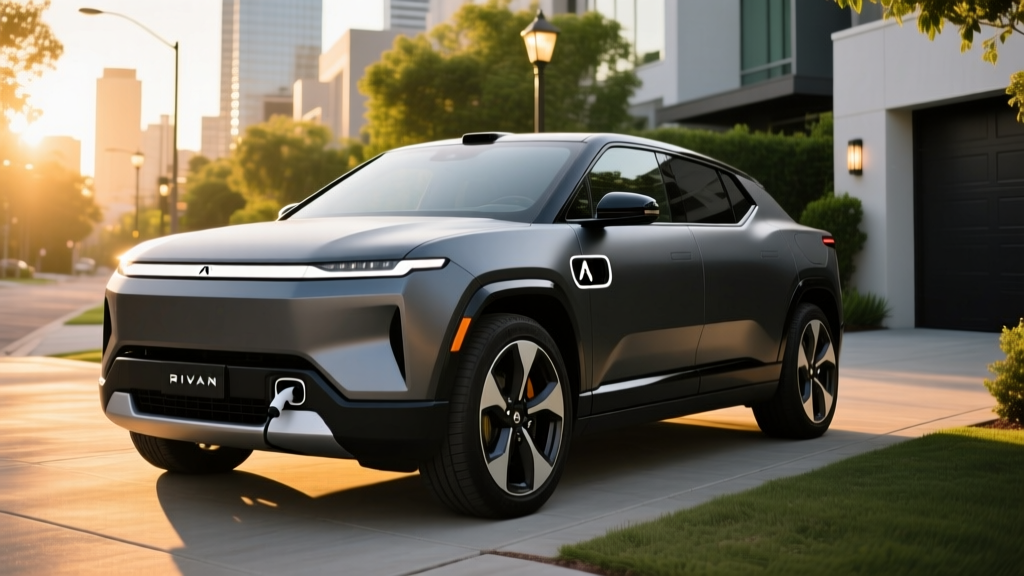
The compact electric SUV segment just got a serious new entrant. The 2026 Rivian R3 arrives as the smallest vehicle in Rivian's lineup, slotting below the R2 and R1S, and targets buyers who want an adventure-capable EV without the full-size footprint or premium price tag. With its distinctive Rivian design language, available dual-motor AWD, and a starting MSRP designed to undercut most competitors after federal tax incentives, the R3 is positioned to be a volume seller for the brand.
But specs on paper only tell part of the story. After spending time with the R3's published data, cross-referencing EPA filings, and comparing it against the Hyundai Ioniq 5, Volvo EX30, and Tesla Model Y, here's a comprehensive breakdown of what the R3 actually delivers — and where it falls short.
2026 Rivian R3 Specs at a Glance
| Specification | Value |
|---|---|
| EPA Estimated Range | ~270 miles (Standard Range AWD) |
| Battery Capacity (Usable) | ~65 kWh (estimated, LFP chemistry) |
| Drivetrain | Dual-Motor AWD (base); Single-Motor RWD available |
| Horsepower | ~350 hp (Dual-Motor AWD) |
| 0-60 mph | ~5.5 seconds (Dual-Motor AWD) |
| Max DC Fast-Charge Rate | ~150 kW (peak) |
| 10-80% DC Fast Charge | ~28 minutes (estimated) |
| Level 2 Home Charging | 11.5 kW onboard charger (~37 mi/hr) |
| Charging Port | NACS (native Tesla Supercharger access) |
| Base MSRP | $39,900 (RWD) / $44,900 (AWD) |
| Battery/Powertrain Warranty | 8 years / 100,000 miles |
| EPA Efficiency | ~110 MPGe combined (~30 kWh/100 mi) |
Note: The Rivian R3 began production in early 2026 at Rivian's Normal, Illinois facility. Some specifications are based on Rivian's pre-production announcements and EPA preliminary filings. Final trim-level specs may vary slightly. Always confirm with Rivian's official R3 page before purchasing.
Range and Efficiency: EPA vs. Real-World Expectations
Real-World Highway (70-80 mph): Expect ~220-240 miles
Real-World Cold Weather (below 30°F): Expect ~190-210 miles
Real-World City/Commuter: ~250-270 miles (regen-heavy driving recovers energy)
The R3's estimated ~270-mile EPA range puts it squarely in the competitive compact EV range, though it trails the Hyundai Ioniq 5 Long Range (~303 miles EPA) and falls short of the Tesla Model Y Long Range (~320 miles EPA). For the R3's target buyer — urban and suburban drivers with occasional road-trip needs — 270 miles is adequate for daily use with comfortable margin.
However, real-world range demands honesty. At sustained highway speeds of 75-80 mph, aerodynamic drag increases exponentially, and the R3's boxy, adventure-oriented styling works against it. Expect a 10-15% reduction from the EPA sticker on long interstate drives. In cold weather, lithium-ion battery chemistry becomes less efficient, and cabin heating draws significant power. Even with an expected heat pump system, plan for 20-25% range loss in sub-freezing conditions — a reality for any EV, not just the R3.
Where the R3 shines is city driving. Aggressive regenerative braking recovers kinetic energy in stop-and-go traffic, and Rivian's one-pedal driving mode is among the best-tuned in the industry based on R1S/R1T experience. Commuters with short-to-medium daily drives and home charging will rarely think about range.
The Standard Range model uses an LFP (lithium iron phosphate) battery pack, which trades some energy density for lower cost, longer cycle life, and the ability to charge to 100% regularly without degradation concerns. A larger Long Range variant with NMC chemistry and an estimated 330+ mile EPA range is expected later in the 2026 model year or for 2027.
Charging Speed: DC Fast Charging and Home Level 2
| Charging Level | Power | Speed (Approx.) | Use Case |
|---|---|---|---|
| Level 1 (120V household) | ~1.4 kW | ~4-5 miles per hour | Overnight trickle; emergency top-up |
| Level 2 (240V home/public) | 11.5 kW | ~37 miles per hour | Daily home charging; full charge in ~6-7 hours |
| DC Fast Charging | ~150 kW (peak) | 10-80% in ~28 minutes | Road trips; highway corridor charging |
The R3's ~150 kW peak DC fast-charging rate is its most debated specification. In a segment where the Hyundai Ioniq 5 and Kia EV6 can peak at 240 kW (thanks to 800V architecture), and the Tesla Model Y peaks around 250 kW at V3 Superchargers, the R3's charging speed is merely adequate — not class-leading.
Here's what this means practically: on a road trip, you'll spend roughly 28-32 minutes at a DC fast charger going from 10% to 80% State of Charge. That's a coffee-and-restroom-break stop, but it's 8-12 minutes longer than an Ioniq 5 under ideal conditions. The charge curve matters too — expect peak 150 kW only between roughly 10-40% SoC, with a taper to ~80-100 kW through the 40-60% range, and further tapering above 70%. This is normal lithium-ion behavior, but it means the average charging rate over a 10-80% session is closer to 100-110 kW, not the 150 kW peak.
The native NACS (North American Charging Standard) port is a significant advantage. The R3 plugs directly into Tesla Superchargers without an adapter, giving owners access to the most reliable and extensive DC fast-charging network in North America — over 20,000 stalls as of 2026. For public charging away from Superchargers, Rivian includes a CCS adapter in the box.
For home charging, the 11.5 kW onboard charger is excellent. A full 0-100% charge takes roughly 6-7 hours on a 48-amp Level 2 wall connector, meaning you'll wake up to a full battery every morning. Installation of a 240V/60A circuit typically costs $800-$2,000 depending on your electrical panel's proximity to the garage and whether a panel upgrade is needed. Most R3 owners will charge almost exclusively at home, making the DC fast-charge speed less critical for daily life.
Performance and Drivetrain
Rivian offers the R3 in two drivetrain configurations:
- Single-Motor RWD: The entry-level model, targeting maximum efficiency and the lowest price point. Estimated ~280 hp and a 0-60 mph time around 6.5 seconds.
- Dual-Motor AWD: The volume seller. Estimated ~350 hp with a 0-60 mph time of approximately 5.5 seconds. Instant electric torque makes the R3 feel quicker than the numbers suggest, especially in the 0-30 mph range where it's genuinely punchy off the line.
The dual-motor AWD system uses Rivian's proven torque-vectoring approach, independently managing front and rear axle power for confident traction in rain, snow, and light off-road conditions. The R3 inherits Rivian's adventure DNA — expect a ground clearance figure around 7.5-8.0 inches, approach and departure angles suitable for fire roads and campsite trails, and available all-terrain tires on the Adventure trim.
Don't expect R1T-level off-road prowess. The R3 is a compact crossover, not a body-on-frame truck, and it lacks the R1's quad-motor tank turns or adjustable air suspension (at least at launch). But for the vast majority of buyers who need confident all-weather capability with occasional dirt-road excursions, the dual-motor AWD system is more than sufficient.
Ride quality, based on Rivian's tuning philosophy in the R1 vehicles, should be firm but compliant — oriented toward engagement rather than isolation. The low center of gravity from the under-floor battery pack minimizes body roll, a handling advantage every EV enjoys over comparable ICE crossovers.
Pricing, Trims, and Federal Tax Credit Eligibility
| Trim | Drivetrain | MSRP | Est. After §30D Credit |
|---|---|---|---|
| Standard (RWD) | Single-Motor RWD | $39,900 | ~$32,400* |
| Standard (AWD) | Dual-Motor AWD | $44,900 | ~$37,400* |
| Adventure (AWD) | Dual-Motor AWD | $49,900 | ~$42,400* |
*After-tax-credit prices assume full $7,500 §30D federal tax credit eligibility. Actual credit depends on buyer income, vehicle MSRP caps, battery component sourcing, and critical mineral requirements. See IRS guidelines below.
The R3's pricing is aggressive. A $39,900 starting MSRP undercuts the Tesla Model Y ($44,990 base in 2026) and lands near the Hyundai Ioniq 5 ($42,600 base). When the federal tax credit applies, the effective price drops into territory that makes the R3 one of the most affordable AWD electric crossovers on the market.
- MSRP Cap: The R3 qualifies — SUVs/crossovers must be under $80,000 MSRP (per IRS §30D rules).
- Buyer Income Cap: Modified AGI must not exceed $150,000 (single), $225,000 (head of household), or $300,000 (joint filers).
- Battery Sourcing: The full $7,500 credit requires meeting both critical mineral ($3,750) and battery component ($3,750) sourcing thresholds. Rivian's LFP cells are expected to use supply chains that meet 2026 requirements, but final determination depends on the specific battery pack and model year. Confirm on the IRS eligible vehicle list before purchase.
- Point-of-Sale Transfer: As of 2024, buyers can transfer the credit to the dealer at purchase, reducing the sale price by up to $7,500 upfront rather than waiting for a tax refund. The R3 is eligible for this provision.
- One Vehicle Per VIN: The credit applies once per vehicle. Buying a used R3 later does not re-qualify it (though a separate used-EV credit of up to $4,000 may apply).
The Adventure trim adds all-terrain tires, upgraded underbody protection, a full-size spare, and enhanced drive modes for snow, sand, and rock crawling. At $49,900 before incentives, it's still well under the $80,000 MSRP cap and remains credit-eligible.
Interior, Cargo Space, and Technology
The R3's interior follows Rivian's minimalist, nature-inspired design language. Expect sustainable materials — recycled fabrics, vegan leather options, and real wood accents on higher trims — in a cabin that feels more premium than its price suggests. The infotainment system runs on a 15.6-inch central touchscreen with Rivian's proprietary OS, featuring native navigation with integrated charging stop planning, over-the-air updates, and a built-in Wi-Fi hotspot.
Key interior dimensions:
- Front Legroom: ~41.5 inches
- Rear Legroom: ~37.0 inches
- Cargo Volume (behind rear seats): ~24 cu ft
- Cargo Volume (rear seats folded): ~58 cu ft
- Frunk (Front Trunk): ~5 cu ft — weatherproof, drainable, ideal for muddy gear or charging cables
The frunk is a standout feature. Rivian pioneered the drainable, adventure-ready frunk in the R1T, and the R3 carries this forward. Five cubic feet of lockable, hoseable front storage is genuinely useful for camping gear, wet wetsuits, or simply keeping charging cables organized and out of the main cabin.
The 15.6-inch touchscreen handles climate controls, media, navigation, and vehicle settings. Wireless Apple CarPlay and Android Auto are standard. A digital instrument cluster behind the steering wheel provides speed, range, and navigation prompts without distraction. Expect a premium audio system option (likely a Rivian-branded setup with 10+ speakers) on the Adventure trim.
Driver assistance comes via Rivian's Driver+ system, a Level 2 SAE automated driving suite with adaptive cruise control, lane centering, automatic emergency braking, blind-spot monitoring, and hands-on-wheel highway assist. This is competitive with Toyota Safety Sense and Honda Sensing, though it does not offer hands-off driving like GM's Super Cruise or Ford's BlueCruise on mapped highways. Rivian has hinted at a future hands-off system, but at launch, the R3 requires active driver supervision at all times.
Pros, Cons, and Competitive Positioning
- Competitive pricing with strong tax-credit eligibility — potentially under $33K effective
- Native NACS port with direct Tesla Supercharger access (no adapter needed)
- Dual-motor AWD with genuine all-weather and light off-road capability
- Drainable frunk — class-unique utility feature
- LFP battery chemistry allows daily 100% charging without degradation anxiety
- Rivian's strong OTA update track record and build quality reputation
- 8-year/100,000-mile battery and powertrain warranty
- ~150 kW peak DC charge rate lags 800V competitors (Ioniq 5/EV6 at 240 kW)
- ~270-mile EPA range is adequate but not segment-leading
- No hands-off highway driving assist at launch
- Compact rear seat — tall passengers may find legroom tight on long trips
- Single-motor RWD model may have limited availability at launch
- No air suspension or adjustable ride height (unlike R1S)
Who Should Buy the Rivian R3?
- You want an affordable AWD electric crossover with real all-weather capability
- You have home charging access and primarily commute under 60 miles daily
- You value Tesla Supercharger network access without adapter hassle
- You want a compact EV with adventure-friendly features (frunk, ground clearance, AWD)
- You qualify for the full $7,500 federal tax credit, making the effective price exceptional
- You regularly road-trip 300+ miles and need maximum range and fastest charging (look at Ioniq 5 Long Range or Model Y LR)
- You need maximum rear-seat space for tall passengers or car seats (the R3 is compact)
- You want hands-off highway driving assistance (GM Super Cruise or Ford BlueCruise vehicles)
- You don't have reliable home charging and depend entirely on public DC fast charging
The R3's ideal buyer is a suburban professional or young family with a garage or dedicated parking spot for Level 2 charging, a daily commute under 50 miles, and a lifestyle that includes weekend hiking, skiing, or camping trips. The dual-motor AWD handles mountain passes and snow-covered roads with confidence, the frunk stores muddy boots and gear, and the ~$37,400 effective price (AWD with tax credit) represents outstanding value.
For pure road-trip warriors who cover 400+ miles between charges, the Hyundai Ioniq 5 Long Range (303 mi EPA, 240 kW charging) or Tesla Model Y Long Range (320 mi EPA, 250 kW Supercharging) remain better choices. But for the 80% of EV owners who charge at home and rarely exceed 200 miles in a day, the R3's range and charging speed are perfectly adequate — and the price and capability advantages tip the scales.
Warranty and Long-Term Ownership
Rivian backs the R3 with its standard warranty package:
- Battery & Powertrain: 8 years / 100,000 miles (whichever comes first), with a capacity retention threshold of 70% — if the battery degrades below 70% of original capacity within the warranty period, Rivian will repair or replace it.
- Bumper-to-Bumper: 5 years / 60,000 miles
- Roadside Assistance: 5 years / 60,000 miles
The 8-year/100,000-mile battery warranty is industry-standard, matching Tesla, Hyundai, and most competitors. Per fueleconomy.gov data and real-world fleet studies, modern LFP batteries — like the one in the R3 Standard Range — typically degrade only 5-10% over the first 100,000 miles, meaning most owners will never approach the warranty threshold.
Long-term ownership costs should be favorable. Electricity at $0.14/kWh (national average for residential) means a full ~65 kWh charge costs roughly $9.10 — compared to $40-$55 for a tank of gas in a comparable ICE crossover. Over five years and 75,000 miles, the R3's estimated fuel savings versus a 25 MPG gas crossover total $5,000-$7,000 depending on local electricity and gas prices.
Insurance premiums for the R3 are expected to land in the $1,600-$2,200/year range nationally, slightly above comparable ICE crossovers due to higher repair costs for EV-specific components. Always get an insurance quote before purchasing.
Frequently Asked Questions
What is the real-world range of the Rivian R3?
The EPA estimates ~270 miles for the Standard Range AWD model. In real-world highway driving at 70-80 mph, expect 220-240 miles. In cold weather below 30°F, plan for 190-210 miles. City commuters using regenerative braking will see results closer to the EPA sticker, around 250-270 miles.
How fast does the R3 charge at home and on the road?
At home on a 240V Level 2 charger, the R3's 11.5 kW onboard charger adds roughly 37 miles of range per hour, fully charging the battery in 6-7 hours. On a DC fast charger, it peaks at ~150 kW and charges from 10-80% in approximately 28 minutes. The native NACS port provides direct access to Tesla Superchargers without an adapter.
How much does the Rivian R3 cost after the federal tax credit?
The base RWD model starts at $39,900 MSRP and could drop to approximately $32,400 after the full $7,500 §30D federal tax credit. The AWD model at $44,900 MSRP could cost around $37,400 after credit. Eligibility depends on buyer income (under $150K single / $300K joint), battery sourcing requirements, and MSRP caps. Confirm eligibility on IRS.gov before purchase.
Is the Rivian R3 worth buying vs. the Hyundai Ioniq 5 or Tesla Model Y?
The R3 wins on price (especially after tax credit), native NACS/Supercharger access, and adventure-oriented features like the drainable frunk and AWD ground clearance. The Ioniq 5 wins on DC fast-charge speed (240 kW vs. ~150 kW) and EPA range (303 vs. ~270 miles). The Model Y wins on range (320 mi) and Supercharging speed (250 kW). If you charge mostly at home and want the best value, the R3 is compelling. If road-trip charging speed is critical, the Ioniq 5 or Model Y may serve you better.
Does the Rivian R3 qualify for the $7,500 federal EV tax credit?
The R3 is expected to qualify for the full $7,500 §30D credit, as it falls under the $80,000 SUV/crossover MSRP cap and Rivian's LFP battery supply chain is designed to meet 2026 critical mineral and component sourcing requirements. However, buyer income caps apply, and final IRS eligibility determinations are made per VIN. Always verify on the IRS eligible vehicle list and consult a tax professional for your specific situation.
Can the Rivian R3 tow?
Rivian has not published a final towing rating for the R3 at launch. Based on its compact platform and dual-motor powertrain, expect a towing capacity in the 1,500-2,500 pound range — suitable for a small utility trailer, bike rack, or lightweight pop-up camper, but not for boat towing or heavy loads. The R1S and R1T handle heavier towing duties in Rivian's lineup.
When can I buy the Rivian R3?
The R3 entered production in early 2026 at Rivian's Normal, Illinois plant. Initial deliveries began in mid-2026, with the Standard Range AWD and Adventure trims available first. The single-motor RWD variant and a potential Long Range model are expected to follow. Reservations are available on Rivian's website, and walk-in purchases depend on local studio inventory.
Sources: Rivian R3 Official Page, IRS New Clean Vehicle Tax Credit, EPA Fueleconomy.gov. Specifications based on manufacturer data and EPA preliminary filings as of 2026. Always verify final specs and credit eligibility before purchase.