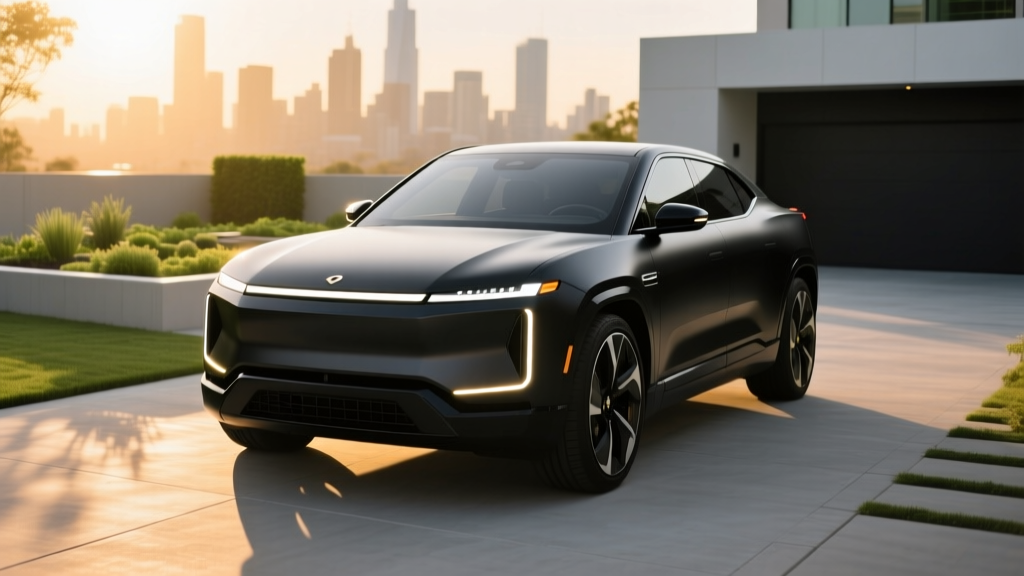
The Rivian R3 is the most anticipated compact electric crossover in the US market — a smaller, more affordable sibling to the R1S and R2 that aims to bring Rivian's adventure-vehicle DNA to a sub-$50,000 price point. But with production timelines shifting across the EV industry, buyers want one answer: when does the Rivian R3 come out?
As of early 2026, the R3 remains an announced but not yet on-sale model. Below, we break down every confirmed and projected detail — from the Georgia production timeline to preliminary battery specs, estimated range, charging speeds, and federal tax credit eligibility — so you can decide whether to wait or cross-shop alternatives like the Tesla Model Y, Hyundai Ioniq 5, or Rivian's own R2.
Rivian R3 Release Date: What We Know in 2026
Rivian first unveiled the R3 alongside the R2 in March 2024. The company confirmed the R3 will be built at its upcoming second production facility in Stanton, Georgia, a plant that broke ground in 2024 with an annual capacity target of 400,000 vehicles.
Here's the projected timeline based on Rivian's public statements and industry reporting:
- 2024–2025: Georgia factory construction and tooling installation
- Late 2025 / Early 2026: Pilot and pre-production R3 builds
- Mid-to-Late 2026: Production begins, with first customer deliveries expected Q4 2026 or early 2027
- 2027: Full-rate production and broader market availability
Rivian has not opened reservations for the R3 as of this writing. If you're tracking the question of when the Rivian R3 comes out, expect the next major update to arrive alongside Rivian's Q2 or Q3 2026 earnings call, where CEO RJ Scaringe typically provides production milestones.
Estimated Specs: Range, Battery, and Efficiency
The R3 rides on a derivative of Rivian's new midsize platform (shared with the R2), which uses a 400-volt architecture and supports both single-motor RWD and dual-motor AWD configurations. Rivian has targeted a starting price around $45,000, which strongly suggests a smaller battery pack than the R2's estimated 92 kWh unit.
| Spec | R3 Standard (RWD) | R3 Dual-Motor (AWD) |
|---|---|---|
| Battery Capacity (usable) | ~68 kWh (estimated) | ~78 kWh (estimated) |
| Chemistry | LFP (likely for base) | NMC (for energy density) |
| EPA Range (est.) | ~270 miles | ~315+ miles |
| Efficiency (est.) | ~120 MPGe / 28 kWh/100mi | ~110 MPGe / 31 kWh/100mi |
| Horsepower | ~250 hp | ~400 hp |
| 0–60 mph (est.) | ~7.0 sec | ~4.5 sec |
| Drivetrain | Single-motor RWD | Dual-motor AWD |
Even if the AWD R3 achieves an EPA estimate of ~315 miles, real-world results will vary. On sustained highway driving at 75 mph, expect roughly 260–280 miles before needing to charge. In cold weather (below 30°F), range can drop 15–25% due to cabin heating demands and reduced battery efficiency — putting winter range closer to 235–265 miles. LFP chemistry in the base RWD model may be more resilient to cold degradation but typically offers lower energy density, meaning fewer total miles.
Charging Speed: DC Fast, Level 2, and NACS Compatibility
Rivian has committed to the North American Charging Standard (NACS) connector for all future vehicles, meaning the R3 will arrive with a native Tesla-style charge port — no adapter needed at Superchargers. This is a significant advantage for road-trippers who rely on the Tesla Supercharger network, which remains the most reliable DC fast-charging ecosystem in the US.
| Charging Level | Power / Rate | Speed (Miles Added) | Notes |
|---|---|---|---|
| Level 1 (120V household) | ~1.4 kW | ~4 mi/hr | Emergency/trickle only |
| Level 2 (240V home) | ~11.5 kW (est.) | ~33 mi/hr | Full charge overnight (~7–8 hrs) |
| DC Fast Charge (peak) | ~175 kW (est.) | ~150 mi in 15 min | 10–80% in ~28 min (est.) |
Understanding the charge curve: The peak DC rate of ~175 kW (estimated) will only be sustained between roughly 10–40% state of charge (SoC). Above 60%, the charge rate tapers significantly — a battery-protection measure. If you're road-tripping and charge from 20% to 80%, expect the session to take around 25–30 minutes at a capable 250 kW Supercharger or Electrify America station. Charging from 80–100% on DC will be very slow and is not recommended for routine use.
At home on a 48-amp Level 2 charger (the most common residential setup), the R3 should add roughly 33 miles of range per hour of charging. A full overnight session easily replenishes daily driving needs. Installation of a Level 2 home charger typically costs $800–$2,000 including equipment and electrician labor, depending on your panel capacity and run distance.
Pricing, Trims, and Federal Tax Credit Outlook
Rivian has targeted a starting MSRP of approximately $45,000 for the R3, positioning it below the R2 (expected from ~$52,500) and squarely in the compact EV crossover segment. Here's a projected trim breakdown:
| Trim | Est. MSRP | After Est. Tax Credit | Key Features |
|---|---|---|---|
| R3 Standard (RWD) | ~$45,000 | ~$37,500* | ~68 kWh, ~270 mi range, base ADAS |
| R3 Dual-Motor (AWD) | ~$52,000 | ~$44,500* | ~78 kWh, ~315 mi range, AWD |
| R3 Adventure / Launch | ~$57,000 | ~$49,500* | Off-road package, premium interior |
*Tax credit figures assume full $7,500 §30D eligibility. Actual credit depends on buyer income, battery sourcing, and MSRP caps. See details below.
Does the Rivian R3 Qualify for the Federal EV Tax Credit?
The R3 is designed to qualify for the IRS §30D Clean Vehicle Credit, which offers up to $7,500 in tax savings — now available as a point-of-sale transfer to the dealer, effectively reducing your purchase price at signing. However, eligibility depends on several rules that apply at the time of purchase:
- MSRP Cap: SUVs/crossovers must have a base MSRP under $80,000. The R3 clears this easily at ~$45,000–$57,000.
- Buyer Income Cap: Adjusted gross income must not exceed $150,000 (single), $225,000 (head of household), or $300,000 (joint filers).
- Battery Component Sourcing: A percentage of battery components must be manufactured or assembled in North America (threshold increases annually).
- Critical Minerals: A percentage of critical minerals must be sourced from the US or free-trade-agreement partners (threshold increases annually).
- Final Assembly: Must occur in North America — the R3's Georgia factory satisfies this.
Because the R3 won't reach customers until late 2026 or 2027, the specific battery-sourcing thresholds in effect at delivery time will determine the exact credit amount ($3,750 or $7,500). Consult IRS.gov §30D guidance and a tax professional before relying on credit estimates.
Interior, Cargo, and Technology
The R3 is a compact crossover — smaller than the midsize R2 and significantly smaller than the R1S. Think of it as Rivian's answer to the Volvo EX30, MINI Countryman SE, or a slightly taller Hyundai Kona Electric.
Dimensions and Space (Estimated)
- Seating: 5 passengers across two rows
- Cargo (behind rear seats): ~22 cu ft (est.)
- Cargo (rear seats folded): ~50 cu ft (est.)
- Front trunk (frunk): Expected — Rivian has included frunks on all models
- Rear legroom: ~36 inches (est.) — adequate for adults on shorter trips
Tech and Driver Assistance
The R3 will feature Rivian's latest infotainment platform, likely centered on a 13–15-inch touchscreen with native navigation, over-the-air (OTA) updates, and integrated trip planning that accounts for charging stops. Expect:
- Wireless Apple CarPlay and Android Auto
- Rivian's Driver+ system (Level 2 ADAS with highway assist and lane-centering)
- 360-degree camera system for trail navigation
- Phone-as-key functionality
- Integrated camp kitchen and gear-tunnel accessories (Adventure trims)
Warranty and Long-Term Ownership
Rivian's current warranty structure for the R1T and R1S provides a strong baseline for what to expect on the R3:
- Battery warranty: 8 years / 175,000 miles (expected to meet or exceed this)
- Powertrain warranty: 8 years / 175,000 miles
- Bumper-to-bumper: 5 years / 60,000 miles
- Battery degradation threshold: Typically 70% capacity retention during the warranty period
If the R3 uses LFP chemistry in the base trim, owners can expect slower long-term degradation compared to NMC — LFP cells typically retain 90%+ capacity after 1,000 full charge cycles. LFP also tolerates routine charging to 100% without accelerated wear, making it ideal for daily commuters who need maximum range each morning.
Rivian's service network has expanded significantly since 2022, with mobile service vans and dedicated service centers in most major US metros. However, rural owners may still face longer wait times for body-shop or high-voltage repairs compared to legacy automakers.
Rivian R3 vs. Competitors: Is It Worth the Wait?
If the R3's timeline doesn't align with your purchase plans, several compact electric crossovers are available now or arriving sooner:
| Vehicle | Est. Range | Est. Starting Price | Availability |
|---|---|---|---|
| Rivian R3 | ~270–315 mi | ~$45,000 | Late 2026 / 2027 |
| Tesla Model Y (Juniper) | 310–340 mi | ~$44,990 | Available now |
| Hyundai Ioniq 5 | 303 mi (Long Range) | ~$42,600 | Available now |
| Volvo EX30 | 264 mi | ~$36,350 | Available now |
| Kia EV5 (upcoming) | ~300 mi (est.) | ~$38,000 (est.) | 2026 |
- Wait for the R3 if: You want Rivian's adventure-oriented design, native NACS/Supercharger access, a frunk, and a compact crossover with genuine off-road capability. You can hold off on purchasing until late 2026 or 2027.
- Buy now if: You need a vehicle within months, prioritize proven reliability data, or want to lock in current tax-credit rules before potential legislative changes. The Tesla Model Y and Hyundai Ioniq 5 offer excellent range and charging today.
Pros, Cons, and Final Takeaway
✅ Projected Pros
- Native NACS port — full Supercharger access without adapters
- Sub-$45K starting price (before credit) makes it highly accessible
- Rivian's adventure DNA: frunk, gear integration, off-road chops
- Strong OTA update track record from Rivian
- LFP battery option for long-term durability
- Qualifies for up to $7,500 federal tax credit (if sourcing rules met)
❌ Projected Cons
- Not available until late 2026 or 2027 — long wait
- All specs are preliminary; final range/charging may differ
- Compact size means limited rear-seat and cargo room vs. R2
- Rivian's service network still growing — rural coverage gaps
- New Georgia factory may face early production-quality ramp issues
- No hands-free driving capability (Level 2 only)
The Rivian R3 is shaping up to be one of the most compelling compact EVs when it arrives — blending affordability, Supercharger compatibility, and Rivian's outdoorsy character. But with delivery still 12–18 months away, it's a vehicle for patient buyers. If your current car can wait, the R3 could be worth holding out for. If you need wheels now, the Model Y and Ioniq 5 are proven alternatives that won't leave you guessing.
Frequently Asked Questions
When does the Rivian R3 come out?
Rivian targets production start in mid-to-late 2026 at its Stanton, Georgia factory, with first customer deliveries expected in Q4 2026 or early 2027. Full-rate production is anticipated in 2027. Reservations have not yet opened as of early 2026.
How much will the Rivian R3 cost?
Rivian has targeted a starting MSRP of approximately $45,000 for the base single-motor RWD trim. A dual-motor AWD variant is expected around $52,000, with a fully loaded Adventure or Launch Edition potentially reaching $57,000. All trims should fall under the $80,000 MSRP cap for the federal tax credit.
What is the real-world range of the Rivian R3?
The R3's EPA range is not yet certified. Based on platform estimates, the AWD variant may achieve ~315 miles EPA, while the RWD base model could land around ~270 miles. Real-world highway range at 75 mph will likely be 10–15% lower (~260–280 mi for AWD). Cold weather (below 30°F) can reduce range an additional 15–25%.
How fast does the Rivian R3 charge?
Estimated DC fast-charging peaks at ~175 kW, enabling a 10–80% charge in approximately 25–30 minutes at a capable station. On a Level 2 home charger (240V, 48A), the R3 should add roughly 33 miles of range per hour, fully recharging overnight in 7–8 hours. The native NACS connector provides seamless access to Tesla Superchargers.
Does the Rivian R3 qualify for the $7,500 federal tax credit?
The R3 is designed to qualify for the IRS §30D Clean Vehicle Credit (up to $7,500), available as a point-of-sale transfer. Eligibility depends on buyer income (under $150K single / $300K joint), MSRP under $80,000, and battery-sourcing/critical-mineral requirements that tighten annually. Because the R3 won't ship until late 2026 or 2027, the sourcing rules in effect at delivery will determine the exact credit. Always verify at IRS.gov.
Is the Rivian R3 worth waiting for vs. buying a Tesla Model Y or Hyundai Ioniq 5?
If you value Rivian's design language, native Supercharger access, adventure features (frunk, off-road modes), and can wait 12–18 months, the R3 is a compelling choice. If you need a vehicle immediately or want established reliability data and service infrastructure, the Tesla Model Y (310+ mi range, ~$44,990) or Hyundai Ioniq 5 (303 mi, ultra-fast 800V charging) are excellent alternatives available today.
What battery chemistry will the R3 use?
Rivian is expected to offer LFP (lithium iron phosphate) in the base RWD trim for cost efficiency and long-term durability, with NMC (nickel manganese cobalt) in the AWD variant for higher energy density and range. LFP batteries degrade more slowly and can be routinely charged to 100% without accelerated wear.
Will the R3 have a frunk?
Yes — every Rivian vehicle to date has included a front trunk, and the R3 is expected to continue this tradition. Frunk volume will be modest given the compact platform but useful for charging cables, groceries, or gear.