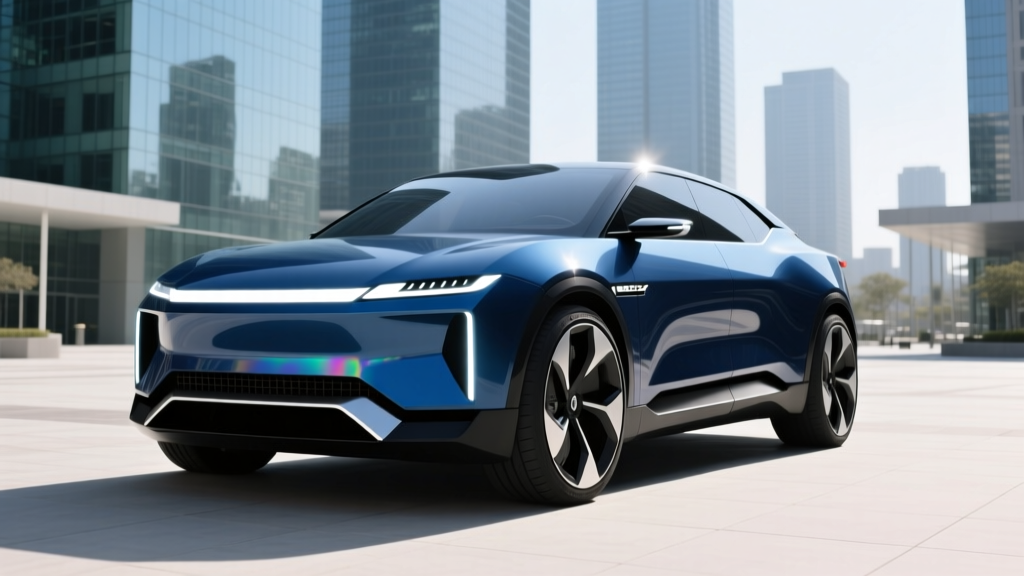
If you've been tracking the compact electric SUV segment, one question keeps surfacing in forums and dealer inquiries alike: when is the Rivian R3 coming out? First unveiled in March 2024 alongside the midsize R2, the R3 is Rivian's bid for a truly affordable, adventure-oriented electric crossover aimed squarely at urban commuters and weekend explorers who don't need the bulk of the R1S or even the R2.
As of early 2026, the Rivian R3 remains in pre-production status. It is not currently available for purchase or reservation fulfillment. Below, we compile every confirmed and estimated specification, the latest production timeline, and what prospective buyers need to know before putting money down.
Rivian R3 Production Timeline: What We Know in 2026
Rivian CEO RJ Scaringe confirmed at the March 2024 reveal that the R3 would follow the R2 into production, targeting a late 2026 to early 2027 start of manufacturing. Production is expected to take place at Rivian's Normal, Illinois facility, potentially on a retooled line alongside R1 vehicles, or at the upcoming Georgia plant if construction timelines align.
As of Q1 2026, Rivian has not opened final configuration or locked pricing for the R3. The company has indicated that reservation holders from the initial 2024 wave will receive configuration invitations in late 2026, with first deliveries anticipated in the first half of 2027. This timeline is subject to supply chain variables, particularly around battery cell availability from Rivian's suppliers.
- Reservation configuration opens: Late 2026
- Production start: Late 2026 – Q1 2027
- First customer deliveries: H1 2027
- Wider retail availability: Mid-to-late 2027
Estimated Range, Battery, and Efficiency
Rivian has not published final EPA-certified range figures for the R3 as of this writing. However, based on the company's stated targeting of a sub-$45,000 starting price and the vehicle's compact footprint (shorter wheelbase than the R2), industry analysts and Rivian's own hints point to the following preliminary specifications:
| Specification | Estimate |
|---|---|
| Battery Capacity (usable) | ~65–75 kWh (estimated) |
| Battery Chemistry | LFP (Lithium Iron Phosphate) expected for Standard; NMC possible for Long Range |
| EPA Range (Standard Range) | ~250–270 miles (estimated) |
| EPA Range (Large Battery) | ~300+ miles (target) |
| Efficiency | ~27–30 kWh/100 mi (est. ~112–124 MPGe combined) |
| Drivetrain | Single-motor RWD (base); Dual-motor AWD (available) |
| Horsepower | ~250 hp (RWD); ~400+ hp (AWD dual-motor, est.) |
| 0–60 mph | ~6.5 sec (RWD); ~4.5 sec (AWD Performance, est.) |
EPA estimates are not yet published. For a ~270-mile EPA target (Standard Range), expect approximately 220–240 miles in real-world highway driving at 70–75 mph, and potentially 180–210 miles in cold weather (below 32°F) without preconditioning. Rivian's heat pump system (expected on all trims) should mitigate some winter losses. The Large Battery variant targeting 300+ miles EPA should yield roughly 260–280 miles on the highway in moderate temperatures.
Charging Speed: DC Fast Charging and Home Level 2
Charging speed is a critical factor for road-trip viability. Rivian has confirmed the R3 will use the NACS (North American Charging Standard) connector natively, granting access to Tesla Supercharger stations without an adapter — a significant advantage over CCS-equipped competitors still relying on adapters.
| Charging Level | Power / Rate | Time / Miles Added |
|---|---|---|
| Level 1 (120V household) | ~1.4 kW | ~3–4 miles per hour |
| Level 2 (240V home, 48A) | ~11.5 kW | ~30–35 miles per hour; full charge in ~7–8 hours |
| DC Fast Charge (peak) | ~175–200 kW (est.) | 10–80% in ~25–30 minutes (est.) |
The R3's LFP battery chemistry (if equipped) has implications for charging behavior. LFP cells tolerate regular charging to 100% better than NMC, meaning daily full charges are less detrimental to long-term battery health. However, DC fast charging curves on LFP tend to taper more aggressively above 80% State of Charge, so plan road-trip stops around the 10–80% window for optimal speed.
Rivian's thermal management system — derived from the R1 platform — is expected to include battery preconditioning when navigating to a charge point, warming the pack to optimal temperature for faster charging. This matters significantly in cold climates, where an un-preconditioned battery can see DC charge rates cut by 30–50%.
Pricing, Trims, and Federal Tax Credit Outlook
Rivian has stated the R3 will start under $45,000, making it one of the most affordable entries in the premium compact electric SUV segment. Here's what we anticipate based on Rivian's pricing strategy with the R2 and current market positioning:
| Trim | Est. MSRP | After Est. §30D Credit |
|---|---|---|
| Standard Range (RWD) | ~$42,000–$44,000 | ~$34,500–$36,500 |
| Large Battery (AWD) | ~$48,000–$52,000 | ~$40,500–$44,500 |
| Performance (Dual-Motor AWD) | ~$55,000–$58,000 | ~$47,500–$50,500 |
Federal Tax Credit Eligibility (§30D)
Whether the R3 qualifies for the full $7,500 federal EV tax credit under IRS §30D rules depends on several factors that will be finalized closer to production:
- MSRP cap: The R3 must be under $80,000 for SUVs/trucks — virtually guaranteed given the sub-$58K top trim estimate.
- Buyer income cap: Modified adjusted gross income must not exceed $150,000 (single), $225,000 (head of household), or $300,000 (joint filers).
- Battery sourcing: Critical minerals and battery components must meet escalating North American/free-trade-agreement thresholds. Rivian's supply chain decisions for the R3's LFP cells — potentially sourced from suppliers with significant Chinese mineral processing — could affect partial or full credit eligibility.
- Point-of-sale transfer: If eligible, buyers can transfer the credit to the dealer at purchase for an immediate price reduction rather than waiting for a tax refund.
Caveat: Battery sourcing requirements tighten annually. By the time the R3 reaches production in late 2026 or 2027, the critical minerals threshold will be higher than in 2024. Buyers should verify eligibility on fueleconomy.gov closer to the on-sale date and consult a tax professional for personal circumstances.
Dimensions, Cargo, and Interior Practicality
The R3 slots below the R2 in size, positioning it as a subcompact-to-compact crossover roughly comparable to the Volvo EX30, Hyundai Kona Electric, and the MINI Countryman SE. Rivian has shown production-intent exterior renders suggesting a short-overhang, upright design optimized for interior volume.
| Dimension | Estimate |
|---|---|
| Length | ~172–176 inches |
| Wheelbase | ~106–108 inches |
| Cargo Volume (rear seats up) | ~22–26 cu ft |
| Cargo Volume (rear seats folded) | ~50–55 cu ft |
| Front Trunk (Frunk) | Expected, ~3–5 cu ft (charging cable storage) |
| Seating | 5 passengers |
| Rear Legroom | ~35–37 inches (est.) |
Rivian's design ethos emphasizes adventure utility. Expect features like integrated tie-down points, a washable cargo area option, and the brand's signature gear tunnel concept scaled down (if packaging allows). The R3's compact dimensions make it ideal for urban parking while still offering enough cargo room for camping gear or a week's groceries for a family of four.
Technology, Driver Assistance, and Safety
The R3 will ride on a next-generation version of Rivian's software-defined vehicle platform. Based on the R2's confirmed tech stack, here's what buyers should expect:
Infotainment and Connectivity
- Central display: ~15-inch landscape touchscreen running Rivian's in-house OS
- Driver display: Compact digital instrument cluster or head-up display
- Wireless Apple CarPlay / Android Auto: Expected (Rivian has historically supported both)
- Over-the-air updates: Full vehicle OTA capability for performance, UI, and feature additions
- Connectivity: 5G embedded modem, Wi-Fi hotspot
Driver Assistance (ADAS)
Rivian's driver-assistance system is a Level 2 system per SAE International classifications. This means the driver must remain attentive, keep hands on or near the wheel, and is fully responsible for vehicle operation at all times. This is not autonomous or self-driving capability.
Expected ADAS features include:
- Adaptive cruise control with stop-and-go
- Lane-centering assist with lane-change capability
- Automatic emergency braking with pedestrian/cyclist detection
- Blind-spot monitoring with rear cross-traffic alert
- Highway assist (hands-on, eyes-on supervised driving)
- 360-degree camera system with trailer-hitch assist
Warranty Coverage
Rivian's existing warranty structure for the R1T and R1S provides a strong baseline for what R3 buyers should expect:
| Coverage | Term |
|---|---|
| Basic Vehicle | 5 years / 60,000 miles |
| Battery & Drive Units | 8 years / 175,000 miles |
| Battery Capacity Retention | Minimum 70% over warranty period |
| Roadside Assistance | 5 years / 60,000 miles (est.) |
The 8-year/175,000-mile battery warranty is competitive with the industry standard (most automakers offer 8 years / 100,000 miles). Rivian's 175,000-mile threshold is notably generous and signals confidence in its pack durability. If the R3 uses LFP chemistry, degradation should be minimal — LFP cells typically retain 90%+ capacity after 1,000 full charge cycles, translating to well over 200,000 miles in most driving patterns.
How the R3 Stacks Up Against Competitors
The compact electric SUV segment is crowded and growing. Here's how the R3 is likely to compare against key rivals expected to be on sale in the same timeframe:
| Model | Est. Range | Est. Starting Price | Connector |
|---|---|---|---|
| Rivian R3 | ~250–300+ mi | ~$42,000 | NACS (native) |
| Volvo EX30 | 265 mi (EPA) | ~$36,000 | NACS (2025+) |
| Hyundai Kona Electric | 261 mi (EPA) | ~$34,000 | NACS (2025+) |
| Tesla Model Y (Standard) | ~300+ mi (EPA) | ~$44,000 | NACS (native) |
| Kia EV5 (if US-bound) | ~280 mi (est.) | ~$38,000 | NACS (2025+) |
✅ Pros
- Native NACS = Supercharger access without adapter
- Rivian's adventure DNA: rugged design, potential off-road modes
- LFP battery option for longevity and 100% daily charging
- Software-defined platform with OTA improvements
- Strong brand reputation for customer satisfaction
- Generous battery warranty (est. 8 yr / 175,000 mi)
❌ Cons
- Not available until 2027 — long wait from reservation to delivery
- Final specs, pricing, and tax credit eligibility unconfirmed
- Rivian's production ramp history (R1T/R1S delays, R2 timeline shifts)
- Compact size may limit rear-seat and cargo space vs. R2/Model Y
- No confirmed towing capacity (may be limited or unavailable)
- Service center network still expanding in many regions
Who Should Wait for the Rivian R3?
- Want a compact, premium electric SUV with genuine adventure capability
- Value native NACS/Supercharger access without adapter hassle
- Can wait until mid-to-late 2027 for delivery
- Prefer LFP battery chemistry for long-term durability and daily 100% charging
- Are drawn to Rivian's software ecosystem and OTA improvement track record
- Need a vehicle within the next 6 months
- Prioritize maximum cargo space or towing (look at R2, Model Y, or Ioniq 5)
- Want guaranteed federal tax credit eligibility today (sourcing rules may shift)
- Live far from a Rivian service center and need established dealer support
Frequently Asked Questions
When is the Rivian R3 coming out?
As of early 2026, Rivian targets production start in late 2026 to early 2027, with first customer deliveries expected in the first half of 2027. Wider retail availability should follow by mid-to-late 2027. These dates are estimates and subject to change based on production readiness and supply chain factors.
How much will the Rivian R3 cost?
Rivian has stated the R3 will start under $45,000. Based on trim stratification, expect a base Standard Range RWD around $42,000–$44,000, a Large Battery AWD around $48,000–$52,000, and a Performance variant around $55,000–$58,000. Final pricing will be confirmed when configurations open in late 2026.
Will the Rivian R3 qualify for the $7,500 federal tax credit?
Eligibility under IRS §30D depends on battery sourcing requirements that tighten each year. The R3's MSRP will be well under the $80,000 SUV cap, and buyer income limits apply ($150K single / $300K joint). However, LFP cell sourcing — particularly critical minerals processing — could affect full or partial credit qualification. Check fueleconomy.gov closer to launch for the definitive answer.
What is the Rivian R3's real-world range?
EPA figures are not yet certified. For the estimated ~270-mile Standard Range variant, expect roughly 220–240 miles in real-world highway driving and 180–210 miles in freezing weather. The Large Battery variant targeting 300+ miles EPA should deliver approximately 260–280 miles on the highway in moderate conditions.
Can I reserve the Rivian R3 now?
Rivian opened initial reservations at the March 2024 reveal (with a refundable deposit). If reservations are still open, you can place a deposit on Rivian's website. However, configuration and firm ordering are not expected until late 2026.
Is the Rivian R3 self-driving?
No. The R3's driver-assistance system will be an SAE Level 2 system, requiring full driver attention and engagement at all times. Features like highway assist and adaptive cruise are driver-supervised convenience tools, not autonomous driving capabilities.