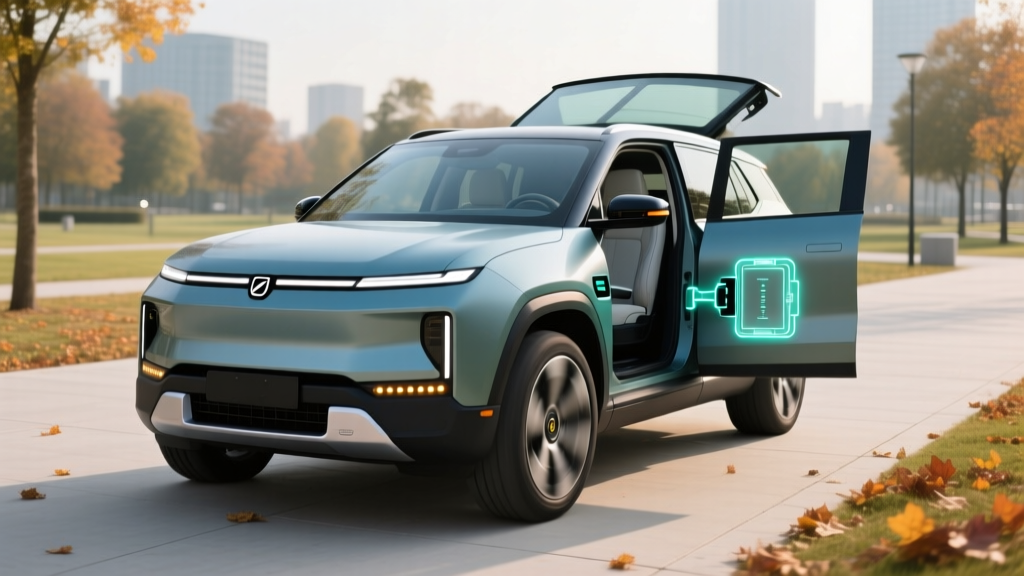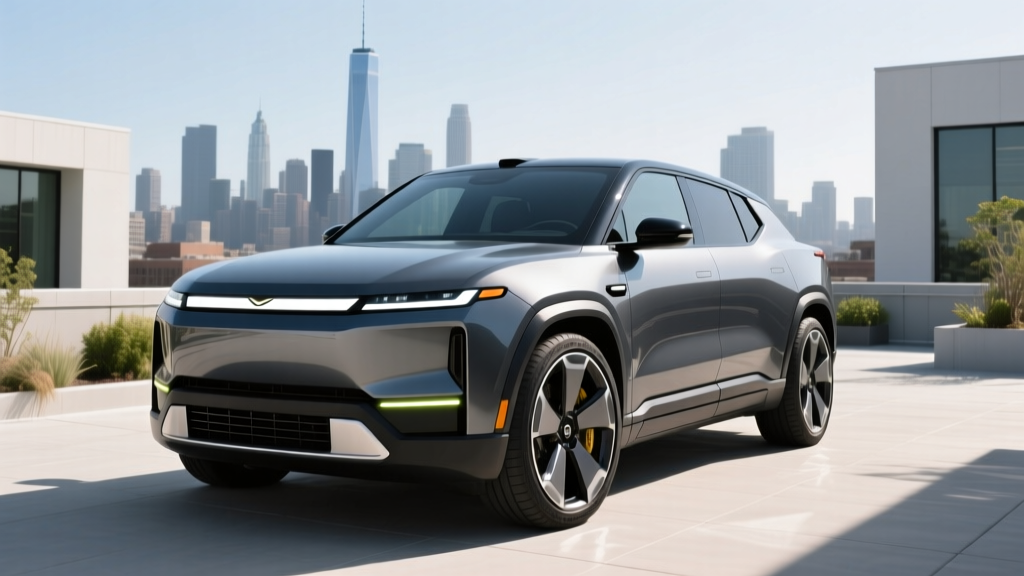
Rivian's R1S and R1T proved the startup could build compelling, adventure-ready electric vehicles. But at starting prices well above $70,000, those models target a narrow slice of the market. The Rivian R3 is the company's answer to that problem: a compact, more affordable electric crossover aimed squarely at the mainstream. If you've been searching for what is Rivian R3 and whether it's worth waiting for, this deep-dive covers every confirmed and projected specification, pricing detail, and ownership factor we know as of early 2026.
The R3 was officially unveiled in March 2024 alongside the even smaller R2 platform, with production slated to begin at Rivian's Normal, Illinois factory in 2026. The R3 is expected to follow the R2 by roughly 12 to 18 months, placing its anticipated on-sale window in late 2026 or early 2027. Because the vehicle has not yet entered production, all specifications below are based on Rivian's official announcements, platform engineering disclosures, and informed projections from the R2 architecture. We will clearly distinguish confirmed data from estimates.
Rivian R3 at a Glance: Projected Specifications
| Specification | Projected / Confirmed |
|---|---|
| Vehicle Class | Compact Electric Crossover (Sub-R2) |
| Platform | Rivian Gen 2 (shared with R2) |
| Battery Chemistry | LFP (Lithium Iron Phosphate) — Standard; NMC possible for Performance trim |
| Battery Capacity (Usable) | ~55–75 kWh (estimated, trim-dependent) |
| EPA Range (Est.) | ~250–330+ miles (depending on battery pack and drivetrain) |
| Drivetrain Options | Single-motor RWD / Dual-motor AWD / Tri-motor AWD (Performance) |
| 0–60 mph (Est.) | ~6.0 sec (single-motor) / ~3.0 sec (tri-motor Performance) |
| Max DC Fast Charge Rate | ~175–225 kW (projected, NACS connector) |
| 10–80% DC Charge Time | ~25–30 minutes (estimated) |
| Level 2 Home Charging | 11.5 kW onboard charger (~35–40 miles/hr) |
| Connector | NACS (Tesla Supercharger native compatibility) |
| Base MSRP (Target) | Starting under $40,000 (Rivian stated goal) |
| Federal Tax Credit (§30D) | Potentially eligible — subject to MSRP cap, income limits, and battery-sourcing rules |
| Battery/Powertrain Warranty | Expected 8 years / 100,000 miles (consistent with Rivian R1 series) |
Note: Because the R3 has not entered production, figures marked "estimated" or "projected" are based on Rivian's platform disclosures and may change. Rivian has confirmed the sub-$40,000 starting price target and the Gen 2 platform architecture. Final EPA certification numbers will not be available until closer to launch.
Range and Efficiency: What to Expect in the Real World
Rivian has stated that the R3 will offer "over 300 miles of range" on its longest-range configuration. Based on the R2's confirmed battery options and the R3's smaller, lighter footprint, we project the following range tiers:
- Standard Range (LFP, ~55 kWh, single-motor RWD): ~250–270 miles EPA
- Extended Range (NMC, ~75 kWh, dual-motor AWD): ~300–330+ miles EPA
EPA range estimates are measured under controlled laboratory conditions. In real-world driving, expect the following adjustments:
- Highway driving (75+ mph): Subtract 10–15% from the EPA sticker. A 310-mile EPA rating may yield ~265–280 miles at sustained highway speeds.
- Cold weather (below 32°F): LFP chemistry is more susceptible to cold-weather range loss than NMC. Expect a 20–30% reduction in extreme cold without preconditioning. With active thermal management and cabin preconditioning, this can be mitigated to ~15% loss.
- City / stop-and-go: Regenerative braking actually improves efficiency in urban driving — you may exceed the EPA combined estimate in heavy traffic.
Rivian's Gen 2 platform includes a heat pump for cabin and battery thermal management, which is critical for preserving range in cold climates and enabling faster DC charging in low temperatures.
Efficiency is projected in the range of 110–125 MPGe combined (roughly 27–30 kWh/100 mi), which would place the R3 competitively against the Hyundai Kona Electric and Volvo EX30. The compact crossover's lighter weight compared to the R1S/R1T should translate into strong efficiency numbers.
Charging Speed and Infrastructure
Charging speed is often the deciding factor for EV buyers who road-trip regularly. Here's what we expect from the R3 based on the Gen 2 platform's electrical architecture:
| Charging Level | Power | Miles Added per Hour | Notes |
|---|---|---|---|
| Level 1 (120V household) | ~1.4 kW | ~4–5 mi/hr | Emergency/trickle only |
| Level 2 (240V home) | 11.5 kW | ~35–40 mi/hr | Full charge overnight (~8–10 hours for larger pack) |
| DC Fast Charge | ~175–225 kW peak | ~10–12 mi/min at peak | 10–80% in ~25–30 min; tapers significantly above 80% |
The R3 will ship with a NACS (North American Charging Standard) connector, giving it native access to Tesla's Supercharger network — over 20,000 stalls in North America — without an adapter. This is a significant practical advantage over vehicles still using CCS1, which require adapters or rely on Electrify America and other networks with more variable uptime.
Charging curve reality check: The peak kW figure (e.g., 225 kW) is only sustained for a portion of the charging session, typically between 10–50% state of charge. Above 80%, the charge rate tapers dramatically to protect battery longevity. Plan your road-trip stops around the 10–80% window for the fastest sessions. A 25-minute 10–80% session is realistic for the R3's projected battery sizes.
For home charging, a Level 2 wall connector on a 60-amp circuit (48 amps continuous) will deliver the full 11.5 kW. Budget $500–$1,500 for a quality Level 2 home charger and professional installation, depending on your electrical panel's proximity to the garage. If your home has a 100-amp service panel, a panel upgrade to 200 amps may be needed — that can add $1,500–$3,000.
Performance, Platform, and Drivetrain
The R3 shares Rivian's Gen 2 platform with the R2, which uses a more compact and cost-efficient version of the skateboard architecture found in the R1 vehicles. Key performance projections:
- Single-Motor RWD: ~250–300 hp, 0–60 mph in approximately 6.0 seconds. This base configuration prioritizes efficiency and affordability.
- Dual-Motor AWD: ~400–450 hp, 0–60 mph in approximately 4.5 seconds. Adds all-weather capability and more passing power.
- Tri-Motor AWD (Performance): ~600+ hp, 0–60 mph in approximately 3.0 seconds. Rivian has confirmed a performance-oriented variant will be available.
Rivian's dual-motor system uses independent front and rear motors with torque vectoring, and the company has a strong track record with off-road capability in the R1T and R1S. While the R3 is a compact crossover — not a body-on-frame truck — expect it to offer respectable ground clearance, approach/departure angles, and Rivian's software-controlled drive modes (Snow, Sand, Rock, etc.).
The Gen 2 platform also uses a structural battery pack, where the battery enclosure contributes to the vehicle's rigidity. This reduces weight and improves handling dynamics compared to a separate battery module.
Interior, Cargo, and Technology
Detailed interior dimensions have not been published by Rivian as of early 2026, but based on the R3's positioning as a compact crossover (smaller than the R2, which itself is smaller than the R1S), we can project the following:
- Seating: 5 passengers across two rows
- Cargo volume (rear seats up): ~22–28 cu ft (estimated)
- Cargo volume (rear seats folded): ~50–58 cu ft (estimated)
- Front trunk (frunk): Confirmed — Rivian has emphasized the frunk as a brand signature, likely 4–6 cu ft
The R3 is expected to feature Rivian's latest-generation infotainment system running on a 15.4-inch center touchscreen, consistent with the refreshed R1 vehicles. Wireless Apple CarPlay and Android Auto, over-the-air (OTA) software updates, and Rivian's integrated navigation with route-based battery preconditioning should all be standard.
On the driver-assistance front, the R3 will ship with Rivian Driver+, the company's Level 2 (SAE) ADAS suite featuring adaptive cruise control, lane-centering, and automated lane changes on divided highways. This system requires continuous driver supervision — it is not a self-driving system and should not be confused with Level 4 autonomy.
Rivian Driver+ is a Level 2 driver-assistance system per the SAE J3016 standard. The driver must keep hands on or near the wheel, monitor the road at all times, and be prepared to take over immediately. It does not replace an attentive driver. Level 4 (true driverless operation in defined areas) is currently only available through commercial robotaxi services like Waymo — not in any consumer vehicle.
Pricing, Trims, and Federal Tax Credit Eligibility
Rivian CEO RJ Scaringe has repeatedly stated that the R3 will start under $40,000 before incentives. Based on the R2's pricing structure and the R3's positioning as a more compact, more affordable option, here's our projected trim breakdown:
| Trim / Configuration | Est. Base MSRP | Est. After Max §30D Credit |
|---|---|---|
| Standard Range RWD | ~$37,500–$39,900 | ~$30,000–$32,400 (if eligible for full $7,500) |
| Extended Range AWD | ~$44,000–$47,000 | ~$36,500–$39,500 |
| Performance Tri-Motor AWD | ~$52,000–$56,000 | ~$44,500–$48,500 |
Federal tax credit (§30D) eligibility is not guaranteed. Under current IRS rules, the R3 must satisfy several requirements to qualify for the up-to-$7,500 new clean vehicle credit:
- MSRP cap: The R3, classified as an SUV/crossover, must have an MSRP at or below $80,000. All projected trims clear this threshold comfortably.
- Buyer income limits: Modified adjusted gross income (MAGI) must not exceed $150,000 (single), $225,000 (head of household), or $300,000 (married filing jointly).
- Battery sourcing requirements: A percentage of critical minerals and battery components must be sourced from the U.S. or free-trade-agreement countries. These thresholds increase annually. Rivian's U.S.-based manufacturing in Normal, Illinois, is a strong positive, but specific cell and mineral sourcing for the R3's battery has not been publicly detailed as of early 2026.
- Point-of-sale transfer: Eligible buyers can transfer the credit to the dealer at purchase, reducing the upfront price rather than waiting for a tax refund.
Consult the IRS clean vehicle credit page and a qualified tax professional before making a purchase decision based on credit eligibility. Rules change, and battery-sourcing compliance is determined on a per-vehicle, per-model-year basis.
Warranty and Long-Term Ownership
Rivian's current warranty structure for the R1 series provides a strong baseline for what to expect with the R3:
- Battery and drive unit: 8 years / 100,000 miles (minimum capacity retention threshold expected at ~70%, consistent with industry norms and Rivian's published warranty terms)
- Limited vehicle warranty: 5 years / 60,000 miles
- Roadside assistance: Expected to be included for the duration of the basic warranty
If the R3 uses LFP (lithium iron phosphate) chemistry in its standard-range pack, buyers should expect excellent cycle life — LFP cells typically degrade more slowly than NMC over thousands of charge cycles. LFP also tolerates regular charging to 100% without the same longevity concerns as NMC, which benefits from an 80% daily charge limit. This is a meaningful ownership advantage for daily commuters who want to maximize usable range without worrying about battery wear.
On the downside, Rivian's service network is still expanding. Unlike Tesla's mature mobile-ranger and service-center infrastructure, Rivian owners in some regions may face longer wait times for warranty repairs. This is improving as the company scales, but it's worth factoring into your ownership calculus, particularly if you live outside a major metro area.
Rivian R3 vs. the Competition
The compact electric crossover segment is heating up. Here's how the R3 is likely to stack up against key rivals expected to be on sale in the same timeframe:
| Attribute | Rivian R3 (Est.) | Volvo EX30 | Hyundai Kona Electric | Kia EV3 (Expected) |
|---|---|---|---|---|
| Starting MSRP | ~$38,000 | ~$36,350 | ~$34,000 | ~$35,000 |
| Max EPA Range | ~330 mi | ~275 mi | ~261 mi | ~300 mi (est.) |
| DC Fast Charge Peak | ~225 kW | 153 kW | ~100 kW | ~150 kW (est.) |
| NACS Native | Yes | No (CCS1) | No (CCS1) | No (CCS1) |
| AWD Available | Yes | Yes (Twin Motor) | No | Likely |
| Frunk | Yes | No | No | Unlikely |
The R3's projected advantages are clear: longer range, faster DC charging, native NACS/Supercharger access, and a frunk — all of which address the most common EV buyer pain points. Its main vulnerability is price: the Hyundai Kona Electric and Volvo EX30 undercut it on MSRP, and the Kia EV3 could arrive at a similar or lower price point.
- You want 300+ miles of range in a compact, affordable crossover
- Native Tesla Supercharger access is a priority for road trips
- You value AWD capability and optional performance trims
- You want a frunk and adventure-oriented design DNA
❌ Consider alternatives if:
- You need a vehicle immediately — the R3 won't be available until late 2026 or 2027
- Your budget is strictly under $35,000 before incentives
- You primarily drive in urban areas where 250 miles of range is sufficient and a lower-priced EV works
The Biggest Pros and Cons
Pros
- Projected 300+ mile range on extended-range trim
- Native NACS — full Supercharger network access from day one
- Sub-$40,000 starting price targets the mainstream buyer
- Multiple drivetrain options (RWD, AWD, Performance)
- LFP battery option for longevity and daily 100% charging
- Frunk adds practical cargo flexibility
- Rivian's OTA software updates and adventure-brand cachet
- Heat pump standard for cold-weather efficiency
Cons
- Not yet available — late 2026 or 2027 production start
- Final specs, EPA certification, and pricing unconfirmed
- Tax credit eligibility uncertain due to battery-sourcing rules
- Rivian's service network still maturing vs. legacy brands
- Compact size may limit rear-seat legroom vs. larger crossovers
- No official towing capacity published yet
- Rivian production ramp history (R1T/R1T delays) may affect early delivery timelines
Frequently Asked Questions
What is the Rivian R3?
The Rivian R3 is an upcoming compact electric crossover from Rivian, positioned below the R2 and significantly below the R1S/R1T in both size and price. It's designed to be Rivian's most affordable vehicle, with a target starting MSRP under $40,000. It shares the Gen 2 platform with the R2 and will be built at Rivian's Normal, Illinois factory.
When will the Rivian R3 be available?
Rivian has indicated the R3 will follow the R2 into production by approximately 12–18 months. With R2 production expected to begin in 2026, the R3's production start is projected for late 2026 or early 2027, with first deliveries following shortly after.
What is the real-world range of the Rivian R3?
Rivian targets 300+ miles of EPA range for the extended-range configuration. In real-world highway driving at 75+ mph, expect roughly 260–280 miles from that pack. In cold weather (below freezing), LFP-equipped models may see a 20–30% reduction without preconditioning. The heat pump and battery thermal management system will help mitigate losses.
How fast does the Rivian R3 charge?
The R3 is projected to support DC fast charging at up to ~225 kW, enabling a 10–80% charge in approximately 25–30 minutes. At home on a Level 2 (240V) charger, the 11.5 kW onboard charger should add roughly 35–40 miles of range per hour, fully replenishing the battery overnight.
Does the Rivian R3 qualify for the federal EV tax credit?
The R3's sub-$80,000 MSRP clears the SUV price cap under IRS §30D rules. However, full $7,500 credit eligibility depends on battery critical-mineral and component sourcing requirements that tighten annually, plus buyer income limits ($150K single / $300K joint). Rivian's U.S. manufacturing is favorable, but specific battery sourcing for the R3 has not been publicly confirmed. Always verify eligibility with a tax professional before purchasing.
Is the Rivian R3 worth waiting for?
If you want a compact EV with 300+ miles of range, native Supercharger access, AWD capability, and a frunk — all near $40,000 — the R3 is arguably the most compelling upcoming option in the segment. However, if you need a vehicle now, the Volvo EX30, Hyundai Kona Electric, and Chevy Equinox EV are already on sale and offer strong value. The R3's primary risk is timeline: Rivian has a history of production delays, and final specs may shift before launch.
Will the R3 have a frunk?
Yes. Rivian has confirmed the R3 will include a front trunk (frunk), continuing a brand signature that adds practical, lockable, weatherproof storage — a feature most competitors in this segment lack.
Sources: Rivian official announcements and press materials; fueleconomy.gov (EPA); IRS.gov (§30D clean vehicle credit rules). All projected specifications are subject to change prior to production. This article reflects information available as of early 2026.