Rivian R3 Pricing: What We Know So Far
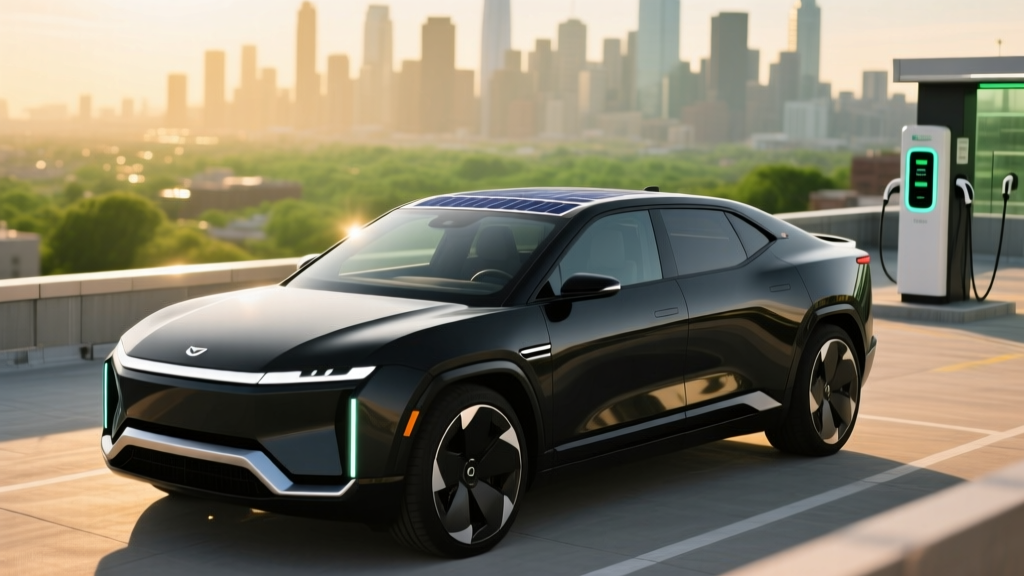
The Rivian R3 is the automaker's most anticipated vehicle yet — a compact electric crossover aimed squarely at the mass market. Announced in March 2024 alongside the larger R2, the R3 is slated to begin production in 2026 at Rivian's Normal, Illinois assembly plant. But the question dominating buyer forums and EV subreddits is straightforward: how much will the Rivian R3 cost?
Rivian CEO RJ Scaringe has publicly targeted a starting price under $45,000 for the R3, with some configurations potentially dipping below $40,000 as battery costs decline and production scales. However, because the R3 has not yet entered production as of early 2026, all pricing, range, and performance figures remain preliminary and subject to change. What follows is the most data-grounded projection available, synthesized from Rivian's official statements, supply-chain reporting, and comparable segment benchmarks.
Projected Rivian R3 Specifications
Based on Rivian's platform architecture disclosures and the R2's confirmed specs (which shares the same mid-size platform, with the R3 as a shorter-wheelbase derivative), here is what we expect from the R3 at launch:
| Attribute | Projected Value |
|---|---|
| Base MSRP (Standard Range RWD) | ~$40,000 – $45,000 |
| Dual-Motor AWD MSRP | ~$45,000 – $50,000 |
| Battery Capacity (usable) | ~75–85 kWh (Standard); ~100+ kWh (Max) |
| Battery Chemistry | NMC (standard); LFP possible on base RWD |
| EPA Range (est.) | ~270 mi (Standard); ~330+ mi (Max Pack) |
| Peak DC Fast Charge | ~200–250 kW (NACS native) |
| 10–80% DC Charge Time | ~22–28 minutes (projected) |
| Level 2 Home Charging | 11.5 kW (~37 mi/hr added) |
| 0–60 mph (Dual Motor) | ~4.5 seconds (est.) |
| Horsepower (Dual Motor) | ~400–500 hp (est.) |
| Drivetrain Options | RWD (single motor) / AWD (dual motor) |
| MPGe (est. combined) | ~110–120 MPGe |
| Cargo Volume | ~25 cu ft (rear seats up); ~55 cu ft (folded) + frunk |
| Battery Warranty | 8 years / 100,000 miles (Rivian standard) |
| NACS Connector | Native (Tesla Supercharger access) |
Real-World Range: Beyond the EPA Sticker
EPA range estimates are calculated under controlled laboratory conditions. In actual driving, range varies substantially based on speed, temperature, terrain, and climate-control use. Based on observed performance from the R1S and R1T — and the R3's smaller, lighter platform — here is what buyers should realistically expect:
EPA Estimated: ~270 miles (Standard Pack) / ~330 miles (Max Pack)
Highway driving (70–75 mph): Expect ~230–250 mi (Standard) / ~280–300 mi (Max)
Cold weather (below 32°F): Expect 15–30% range reduction — potentially ~190–230 mi (Standard)
City/commuter driving: Closest to EPA sticker; regen braking recovers energy in stop-and-go
Note: Rivian's thermal management system and available heat pump (confirmed on R2 platform) should mitigate cold-weather losses compared to older EVs without active battery conditioning.
The R3's smaller frontal area and lower curb weight compared to the R1T/R1S should yield better efficiency per kWh. Rivian's R2 platform targets roughly 3.0–3.5 mi/kWh, which would put the R3 in the upper tier of compact crossover efficiency — competitive with the Hyundai Ioniq 5 and Tesla Model Y.
Charging Speed: DC Fast and Home Level 2
Charging speed is often more important than total range for road-trip usability. The R3 will launch with a native NACS (North American Charging Standard) port, giving it direct access to the Tesla Supercharger network — currently the most reliable and expansive DC fast-charging infrastructure in the U.S.
| Charging Level | Power (kW) | Miles Added per Hour | Notes |
|---|---|---|---|
| Level 1 (120V household) | ~1.4 kW | ~3–4 mi/hr | Emergency/top-up only |
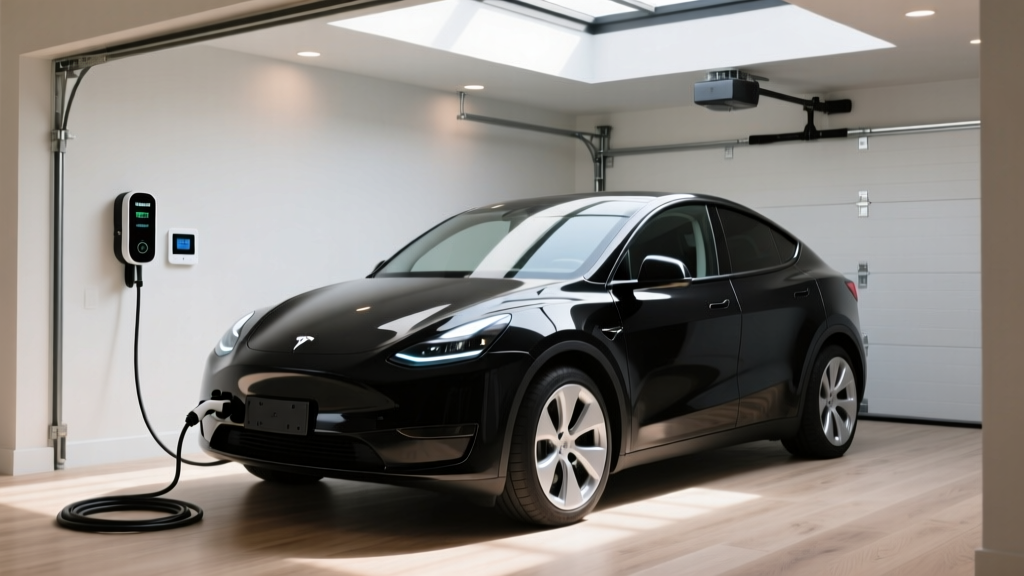
| Level 2 (240V home, 48A) | 11.5 kW | ~37 mi/hr | Full charge overnight (~8 hrs) |
| DC Fast Charge (peak) | ~200–250 kW | ~600+ mi/hr (peak) | 10–80% in ~22–28 min |
Understanding the charge curve: Like all lithium-ion EVs, the R3 will not sustain peak kW for the entire session. Peak rate (~200–250 kW) applies at low state of charge (10–30%). Above 50% SoC, the rate tapers; above 80%, it drops significantly to protect battery health. Plan road-trip stops around the 10–80% window for the fastest experience. Rivian's navigation system should include battery preconditioning — warming the pack before you arrive at a charger to maximize charge speed, a feature confirmed on the R2 platform.
For home charging, a 48-amp Level 2 wall connector on a 60-amp circuit will replenish the Standard Pack from near-empty to full in roughly 8 hours. Installation costs for a Level 2 home setup typically range from $500 to $2,500 depending on panel capacity and run length — factor this into your total purchase budget.
Federal Tax Credit: Does the R3 Qualify?
The federal EV tax credit under IRS §30D offers up to $7,500 for qualifying new EVs — and as of 2024, this credit can be transferred to the dealer at point of sale, functioning as an instant rebate. However, eligibility is not automatic. The R3 must clear three hurdles:
- MSRP Cap: SUVs/crossovers must have an MSRP ≤ $80,000. The R3 (projected under $50K) clears this easily.
- Buyer Income Cap: Modified AGI must not exceed $150,000 (single) / $225,000 (head of household) / $300,000 (joint). Verify your tax situation with a professional.
- Battery Sourcing: Critical minerals and battery components must meet phased-in domestic/free-trade-agreement sourcing thresholds. These requirements tighten annually. Rivian's Georgia battery plant (joint venture with Samsung SDI) is ramping to meet these rules, but final eligibility depends on the specific model year and battery pack configuration.
- Point-of-Sale Transfer: Available since Jan 1, 2024 — you can apply the credit as a down-payment reduction at the dealer rather than waiting for tax filing.
Projected Price After Tax Credit
| Trim | Est. MSRP | With $7,500 Credit |
|---|---|---|
| Standard Range RWD | ~$40,000 | ~$32,500 |
| Standard Range AWD (Dual Motor) | ~$45,000 | ~$37,500 |
| Max Pack AWD (Dual Motor) | ~$52,000 | ~$44,500 |
These projections assume full §30D eligibility. State and local incentives (e.g., California's CVRP, Colorado's $5,000 credit) may stack on top — check your state's energy office for current programs.
Interior, Tech, and Standout Features
Rivian has confirmed the R3 will share the R2's next-generation interior architecture, which represents a significant evolution from the R1T/R1S cabin. Key expected features include:
- 15.4-inch central touchscreen with Rivian's custom OS (no Apple CarPlay/Android Auto — Rivian uses its own integrated navigation, media, and vehicle-control interface)
- Digital driver display with minimalist instrumentation
- Rivian Driver+ — the brand's SAE Level 2 driver-assistance suite including adaptive cruise, lane-centering, and automatic emergency braking. This is not autonomous driving; the driver must remain attentive and hands-on or eyes-on at all times.
- Gear Tunnel option — Rivian's signature cross-vehicle storage pass-through (first seen on R1T) may be adapted for the R3's smaller footprint
- Camp Kitchen compatibility — modular accessories that integrate with Rivian's adventure-oriented ecosystem
- NACS native charging port — no adapter needed for Tesla Superchargers
- Over-the-air (OTA) updates — continuous feature additions and performance improvements post-purchase
Notable drawbacks to consider:
- No Apple CarPlay or Android Auto — a dealbreaker for some buyers who prefer phone-mirrored interfaces
- Rivian's service center network is still expanding; buyers in rural areas may face longer drive distances for warranty work
- Compact crossover cargo space (~25 cu ft behind rear seats) trails the R1S and may not suffice for large families without roof-box supplementation
- As an all-new model on a new production line, early build-quality variability is a realistic risk (as seen with early R1T deliveries)
Who Should Buy the Rivian R3?
- Adventure-oriented commuters who want a compact EV that can handle light trails, ski trips, and weekend camping but fits in a city parking spot
- Current R1T/R1S owners looking for a smaller, more affordable second vehicle in the Rivian ecosystem
- Tesla Model Y cross-shoppers who want Supercharger access but prefer Rivian's design language and outdoor-oriented feature set
- Buyers targeting the $32K–$45K effective price range after federal incentives — a segment with very few compelling EV options today
⛔ Not Ideal For:
- Large families needing 3-row seating (look at R1S or Kia EV9)
- Heavy towing needs (R3 towing capacity expected ~3,500 lbs max — R1T handles 11,000 lbs)
- Buyers who require Apple CarPlay/Android Auto
- Those in areas with no Rivian service center within reasonable distance
Rivian R3 vs. Key Competitors
The compact electric crossover segment in 2026 is increasingly crowded. Here is how the R3 stacks up against its most likely rivals on paper:
| Attribute | Rivian R3 (Proj.) | Tesla Model Y | Hyundai Ioniq 5 |
|---|---|---|---|
| Starting MSRP | ~$40,000 | ~$44,000 | ~$42,000 |
| EPA Range | ~270–330 mi | 310–330 mi | 290–310 mi |
| DC Fast Charge (peak) | ~200–250 kW | 250 kW | 238 kW |
| Connector | NACS (native) | NACS (native) | CCS1 / NACS adapter |
| Adventure Features | High (gear tunnel, camp accessories) | Low | Low (V2L capable) |
| Apple CarPlay | No | No | Yes (wireless) |
The R3's differentiation lies in its adventure-oriented design DNA, native Supercharger access, and Rivian's brand positioning as the "outdoor lifestyle" EV maker. The Model Y wins on proven reliability data and Supercharger network maturity; the Ioniq 5 wins on 800V ultra-fast charging architecture and CarPlay support.
Frequently Asked Questions
When will the Rivian R3 be available to buy?
Rivian has targeted production start for the R3 in 2026, following the R2 launch. Reservations are expected to open before production begins, with deliveries likely in late 2026 or early 2027 depending on trim and configuration priority.
How much will the Rivian R3 cost after the federal tax credit?
If the base Standard Range RWD model launches near $40,000 and qualifies for the full $7,500 §30D credit (subject to battery-sourcing rules and buyer income limits), the effective price could be as low as ~$32,500. This would make it one of the most affordable mainstream EV crossovers on the market.
What is the real-world range of the Rivian R3?
While EPA certification is pending, projections suggest ~270 miles for the Standard Pack and ~330 miles for the Max Pack. In real-world highway driving at 70+ mph, expect roughly 85–90% of the EPA sticker. In sub-freezing temperatures, plan for 15–30% range reduction unless the heat pump and preconditioning are actively mitigating losses.
Does the Rivian R3 qualify for the $7,500 federal EV tax credit?
It is expected to qualify on MSRP grounds (well under the $80,000 SUV cap). Final eligibility depends on battery-component and critical-mineral sourcing requirements under §30D, which tighten each year. Rivian's U.S. battery manufacturing investments are designed to meet these thresholds, but buyers should verify at the time of purchase via fueleconomy.gov and consult a tax professional.
Can the Rivian R3 use Tesla Superchargers?
Yes. The R3 will have a native NACS port, meaning it can plug directly into Tesla Superchargers without an adapter — the same approach Rivian is using for the R2 and has retrofitted to newer R1 vehicles.
Is the Rivian R3 good for towing?
The R3 is a compact crossover and is expected to have a modest towing capacity — likely in the 3,000–3,500 lb range. This is sufficient for a small utility trailer or a pair of jet skis but not for boat or camper towing. Buyers needing serious tow capability should consider the R1T (11,000 lbs) or a full-size electric truck.
What is Rivian's battery warranty on the R3?
Rivian's current standard warranty covers the battery pack and drive unit for 8 years or 100,000 miles, whichever comes first, with a capacity-retention threshold (typically 70% of original capacity). This aligns with the industry standard and federal mandate for emission-related components. Expect the R3 to carry the same coverage.