Rivian R3 Availability: What We Know in 2026
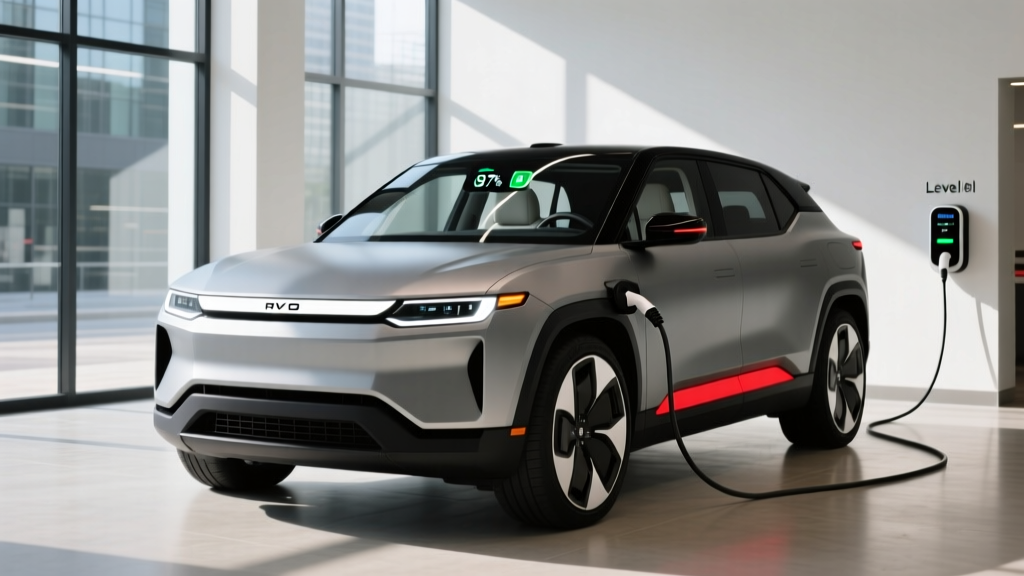
The Rivian R3 is the automaker's most anticipated compact electric SUV, positioned to compete directly with the Tesla Model Y, Volvo EX40, and upcoming Hyundai Ioniq 5 compact variants. But availability has been a moving target since the model's initial announcement. Here's where things stand for buyers tracking Rivian R3 availability in 2026.
Rivian officially unveiled the R3 in March 2024 alongside the R2 and R1T refresh. The company initially targeted late 2026 for R3 production, following the R2's mid-2026 launch from the new Normal, Illinois plant expansion. As of early 2026, Rivian has confirmed that R3 reservations remain open, with customer deliveries expected to begin in late Q3 or early Q4 2026. Production will occur at Rivian's Georgia facility once construction completes, though early units may roll from the expanded Illinois line.
Availability Status: The Rivian R3 is announced and reservable but not yet in customer hands. All specs below are preliminary based on Rivian's official disclosures and may shift before final EPA certification. Do not expect to take delivery until late 2026 at the earliest.
Rivian R3 Preliminary Specifications
| Attribute | Specification |
|---|---|
| EPA Range (est.) | 300+ miles (Standard Battery); 350+ miles (Large Battery) |
| Battery Capacity | ~75 kWh (Standard); ~105 kWh (Large) — chemistry TBD (likely NMC) |
| Drivetrain | Single-motor RWD / Dual-motor AWD / Tri-motor Performance |
| Horsepower | ~300 hp (RWD); ~500 hp (Dual); ~700 hp (Tri-motor) |
| 0-60 mph | ~6.0s (RWD); ~4.5s (Dual); ~3.0s (Tri-motor) |
| Max DC Fast Charge | ~200 kW peak (NACS port, Tesla Supercharger compatible) |
| 10-80% Charge Time | ~25 minutes (estimated at peak) |
| Level 2 Home Charging | 11.5 kW onboard charger (~35 miles/hr) |
| Base MSRP | $45,000 (Standard RWD); $52,000 (Dual AWD) |
| Battery/Powertrain Warranty | 8 years / 100,000 miles (expected, matching R1/R2) |
Rivian has not published final EPA numbers, and the figures above reflect company estimates and engineering targets shared during investor presentations. The EPA's fueleconomy.gov database will list certified range and MPGe once the R3 receives official approval, likely mid-2026.
Real-World Range Expectations
EPA vs. Real-World Range: Rivian targets 300+ miles EPA for the Standard Battery RWD variant. In real-world driving, expect approximately 260-280 miles on highway road trips at 70 mph, and closer to 230-250 miles in cold weather (below 40°F) due to cabin heating demands and battery resistance. The Large Battery AWD variant should deliver ~290-310 real-world highway miles in mild conditions.
Range estimates depend heavily on driving behavior, terrain, and climate. Rivian's R1S and R1T have historically achieved 85-92% of EPA range in mixed driving, which is typical for EVs with boxy aerodynamics. The R3's smaller frontal area and more car-like profile should improve highway efficiency compared to the R1 series, but AWD dual-motor variants will consume more energy than RWD.
For context, a 300-mile EPA rating translates to roughly 3.3-3.5 miles per kWh, or about 28-30 kWh per 100 miles in mixed driving. This would place the R3 in the same efficiency bracket as the Tesla Model Y Long Range (3.8 mi/kWh) but slightly behind the Hyundai Ioniq 5 (3.6 mi/kWh) due to the R3's taller SUV stance.
Charging Speed and Infrastructure
The Rivian R3 will ship with a NACS (North American Charging Standard) port, granting native access to Tesla's Supercharger network — currently the most reliable and expansive DC fast-charging infrastructure in North America. Rivian confirmed in 2024 that all future models would adopt NACS, eliminating the need for CCS-to-NACS adapters that current R1 owners must carry.
| Charging Level | Power | Miles Added Per Hour | Notes |
|---|---|---|---|
| Level 1 (120V) | 1.4 kW | ~4-5 mi/hr | Emergency/trickle only |
| Level 2 (240V, 48A) | 11.5 kW | ~35 mi/hr | Full overnight charge (~9 hrs 0-100%) |
| DC Fast Charge | 200 kW peak | ~150+ mi in 15 min | 10-80% in ~25 min; tapers above 80% |
Charging curve reality: Like all EVs, the R3 will not sustain its 200 kW peak rate for the entire session. Expect peak speeds between 10-50% state of charge, with the rate tapering to ~80-100 kW from 50-80%, and dropping further to ~40 kW above 80%. This is normal lithium-ion behavior to protect battery longevity. For road trips, plan to charge from 10-80% rather than topping to 100%, which wastes time and stresses the battery.
At home, an 11.5 kW Level 2 charger (requiring a 60-amp circuit and hardwired installation) will replenish the Standard Battery from empty in roughly 7 hours, or the Large Battery in about 9-10 hours. Most owners will plug in overnight and wake to a full charge. Installation costs for a Level 2 home setup typically run $800-$2,500 depending on electrical panel capacity and conduit distance — factor this into your purchase budget.
Pricing, Trims, and Federal Tax Credit Eligibility
Rivian has positioned the R3 as its entry-level model, undercutting the R2 and significantly undercutting the R1S/R1T. Here's the expected pricing structure:
- R3 Standard (RWD): $45,000 MSRP — 300-mile range, single motor, base interior
- R3 Dual-Motor AWD: $52,000 MSRP — 330-mile range, dual motor, upgraded suspension
- R3 Large Battery AWD: $58,000 MSRP — 350-mile range, premium interior, advanced driver assist
- R3 Performance (Tri-Motor): $68,000+ MSRP — 320-mile range, ~700 hp, sport tuning
These prices are before destination fees ($1,800 estimated) and before any federal, state, or utility incentives.
Does the Rivian R3 Qualify for the Federal EV Tax Credit?
The R3's eligibility for the $7,500 federal tax credit under IRS §30D depends on several factors that are still being finalized as of 2026. Here's what we know:
- MSRP Cap: SUVs must have an MSRP below $80,000 to qualify. All R3 trims fall well under this threshold.
- Buyer Income Cap: Adjusted gross income must not exceed $150,000 (single), $225,000 (head of household), or $300,000 (joint filers).
- Battery Sourcing Requirements: At least 40% of critical minerals and 50% of battery components must be sourced from the U.S. or free-trade-agreement countries (2026 thresholds). Rivian has been working to localize its supply chain, but final R3 battery sourcing has not been publicly confirmed.
- Assembly: The vehicle must undergo final assembly in North America. Rivian's Illinois and Georgia plants satisfy this requirement.
If the R3 meets all sourcing requirements, buyers can claim the full $7,500 credit — or, as of 2024 rules, transfer the credit to the dealer at point of sale for an immediate price reduction. Always verify eligibility on IRS.gov before purchasing, as battery sourcing rules tighten annually and specific VIN-level eligibility can change.
Estimated After-Credit Pricing: If the R3 qualifies for the full $7,500 credit, the Standard RWD drops to ~$37,500, and the Dual-Motor AWD to ~$44,500. This makes the R3 one of the most affordable long-range electric SUVs on the market — if you meet income requirements and Rivian confirms sourcing compliance.
Interior, Cargo, and Technology
The R3 is a compact SUV, roughly the size of a Subaru Crosstrek or Toyota RAV4, but with EV packaging advantages. Rivian has not published final interior dimensions, but based on the vehicle's exterior footprint and the R2's known specs, expect:
- Front legroom: ~41 inches
- Rear legroom: ~37 inches
- Cargo volume (rear seats up): ~25-28 cubic feet
- Cargo volume (rear seats folded): ~55-60 cubic feet
- Front trunk (frunk): ~5-7 cubic feet (weatherproof, drainable)
The R3 will feature Rivian's latest infotainment system with a 15.6-inch center touchscreen, wireless Apple CarPlay and Android Auto, and over-the-air updates. Rivian's driver-assist suite (branded Rivian Driver+) will include adaptive cruise control, lane-centering, automatic emergency braking, and blind-spot monitoring. This is a Level 2 SAE system, meaning the driver must remain engaged and hands on or near the wheel at all times — it is not autonomous driving.
Unique R3 features are expected to include:
- Camp Mode: Maintains climate control and powers accessories while parked, ideal for car camping
- Vehicle-to-Load (V2L): Powers external devices (laptops, coolers, power tools) via built-in 120V outlets
- Gear Tunnel (optional): A lockable, pass-through storage compartment behind the rear seats (similar to R1T but smaller)
- Removable Bluetooth speaker: Integrated into the center console, can be taken outdoors
Pros and Cons
Pros
- 300+ mile range at a $45K starting price
- Native NACS port — no adapter needed for Superchargers
- AWD and tri-motor performance options
- Rugged design with frunk and V2L capability
- Strong off-road potential (Rivian's DNA)
- Eligible for $7,500 federal credit (if sourcing confirmed)
Cons
- Not available until late 2026 — long wait for reservation holders
- Final EPA range and efficiency not yet certified
- Battery chemistry and sourcing details still TBD
- Rivian's production ramp history (R1 delays, R2 timeline shifts)
- Compact size may not suit families needing 3-row seating
- Insurance costs may be higher than mainstream brands (EV specialty rates)
Who Should Buy the Rivian R3?
The R3 is best suited for:
- Adventure-oriented singles and couples who want a compact SUV with real off-road capability, V2L for camping, and a frunk for gear — but don't need the R1T's size or price.
- Urban and suburban commuters who want a 300-mile EV with fast charging for occasional road trips, but prefer a smaller footprint than the Model Y or R1S for parking and city driving.
- Current R1 owners looking for a second, more affordable EV for daily use, or younger buyers who want into the Rivian ecosystem without spending $75K+.
The R3 is not ideal for:
- Families needing third-row seating (look at the R1S or Kia EV9)
- Buyers who need a vehicle now — the R3's late-2026 timeline means a 6-12 month wait after reservation
- Those prioritizing maximum efficiency over ruggedness (the Hyundai Ioniq 5 and Tesla Model Y are more aerodynamic and slightly more efficient)
Rivian R3 vs. Key Competitors
The R3 enters a crowded compact electric SUV segment. Here's how it stacks up against announced and available rivals:
| Model | EPA Range | Base Price | DC Fast Charge | 0-60 mph |
|---|---|---|---|---|
| Rivian R3 (AWD) | 330 mi (est.) | $52,000 | 200 kW | ~4.5s |
| Tesla Model Y LR | 330 mi | $48,000 | 250 kW | 4.8s |
| Hyundai Ioniq 5 LR AWD | 290 mi | $52,000 | 240 kW | 5.1s |
| Volvo EX40 Twin Motor | 293 mi | $54,000 | 200 kW | 4.7s |
| Ford Explorer EV (AWD) | 310 mi (est.) | $50,000 | 185 kW | ~5.5s |
The R3's differentiators are its rugged design, frunk, V2L capability, and Rivian's adventure-oriented software features (Camp Mode, Gear Guard). The Model Y wins on charging speed and Supercharger network maturity; the Ioniq 5 wins on 800V charging architecture and interior space; the EX40 wins on luxury materials. The R3 carves a niche for buyers who want a compact SUV that can handle light off-roading and outdoor use cases without the bulk of a full-size truck or SUV.
Frequently Asked Questions
When will the Rivian R3 be available for purchase?
Rivian targets late Q3 or early Q4 2026 for initial customer deliveries. Reservations are currently open with a refundable deposit. Expect production to ramp slowly through 2027, with broader availability by mid-2027.
What is the real-world range of the Rivian R3?
Based on Rivian's 300+ mile EPA target for the Standard RWD, expect 260-280 miles in real-world highway driving and 230-250 miles in cold weather. The Large Battery AWD should deliver ~290-310 real-world miles in mild conditions.
How fast does the R3 charge?
The R3 is expected to peak at ~200 kW on DC fast chargers, achieving a 10-80% charge in approximately 25 minutes. At home on a Level 2 (11.5 kW) charger, expect ~35 miles of range per hour of charging.
Does the Rivian R3 qualify for the $7,500 federal tax credit?
Likely yes, but with caveats. The R3's MSRP is well under the $80,000 SUV cap, and it will be assembled in the U.S. Eligibility depends on final battery sourcing compliance and your income (caps at $150K single / $300K joint). Verify on IRS.gov before purchasing.
Is the R3 worth waiting for vs. buying a Model Y or Ioniq 5 now?
If you need a vehicle in 2026 and value proven reliability, immediate availability, and mature charging infrastructure, the Model Y or Ioniq 5 are excellent choices. If you can wait until late 2026 and want a rugged, adventure-focused compact SUV with V2L and a frunk, the R3 offers a unique value proposition — but Rivian's production timeline carries execution risk.
What battery chemistry will the R3 use?
Rivian has not confirmed the R3's battery chemistry. The R1 series and R2 are expected to use NMC (nickel manganese cobalt) for higher energy density. An LFP (lithium iron phosphate) variant for the base R3 is possible to reduce cost, but this would trade range for longevity and lower price. Final chemistry details should emerge in mid-2026.
Can I reserve the R3 now?
Yes. Rivian is accepting refundable reservations on its website. A $1,000 deposit secures your place in line. Priority will likely be given to existing Rivian owners and early reservation holders.
Will the R3 have a front trunk (frunk)?
Yes. Rivian has confirmed the R3 will include a weatherproof, drainable frunk — a signature feature across its lineup. Expect 5-7 cubic feet of secure, lockable storage.