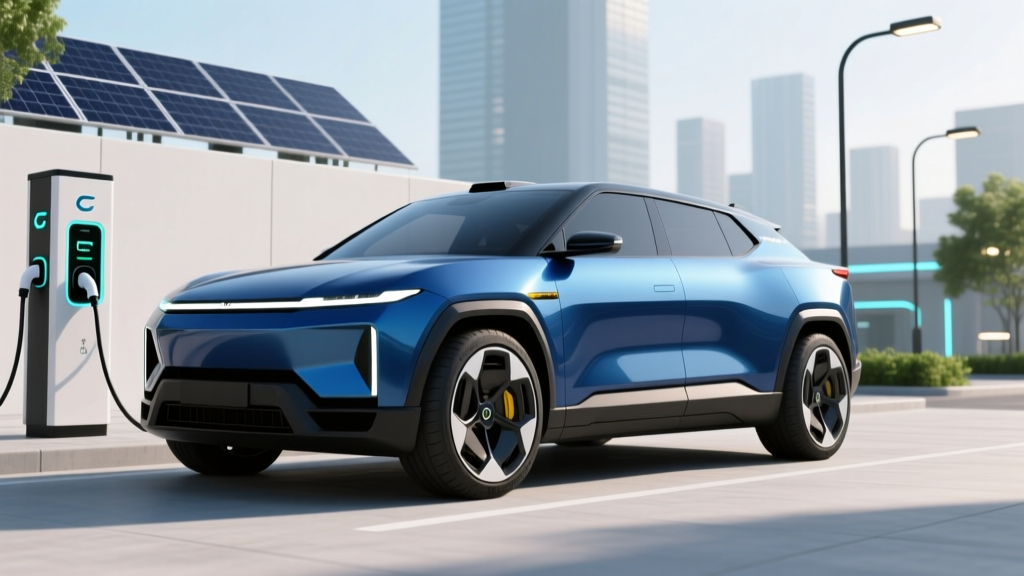
Rivian's R1S and R1T proved the automaker can build compelling, adventure-ready electric vehicles. But those trucks start above $70,000 — well out of reach for most buyers. The upcoming Rivian R2 platform (encompassing the R2 SUV and an expected R2X crossover variant) is the company's bid to crack the mainstream. With a target starting price around $45,000, a new midsize architecture, and production slated to begin at Rivian's Normal, Illinois factory in early 2026, the R2 line could be one of the most important EV launches of the decade.
Here's everything we know — and what remains unconfirmed — about the R2X Rivian platform heading into its production year. Because the vehicle has not yet begun customer deliveries as of this writing, all specifications below are based on Rivian's official announcements, regulatory filings, and engineering disclosures. Treat them as preliminary until EPA certification and final trim sheets are published.
Rivian has targeted an EPA-estimated range of 300+ miles for the R2's largest battery pack (likely the dual-motor AWD configuration). In real-world mixed driving, expect approximately 260–285 miles on a full charge. Highway-heavy trips at 75+ mph will pull that toward the lower end (~245–260 mi), while cold-weather driving (below 30°F) can reduce range by 15–25%, potentially dropping effective range to 210–240 miles in winter conditions. These estimates are based on Rivian's published targets and observed R1 platform behavior; final EPA numbers will be confirmed closer to delivery.
Rivian R2X Platform: What It Is and Where It Fits
The R2 is Rivian's midsize electric platform, smaller and more affordable than the R1S/R1T but larger than a compact crossover. Rivian CEO RJ Scaringe has described it as a vehicle aimed squarely at the Tesla Model Y and upcoming competitors in the $40,000–$55,000 segment. The "R2X" designation in enthusiast and media circles generally refers to a sportier or more rugged variant of the base R2 SUV — potentially with off-road-oriented suspension, higher ground clearance, or a performance-tuned dual-motor setup. Rivian has not officially broken out an "R2X" as a separate model, so we're treating it here as the higher-spec trim of the R2 lineup.
What's confirmed: the R2 rides on a brand-new architecture with a structural battery pack, uses Rivian's second-generation drive units, and will be built on a newly retooled production line in Normal, Illinois — avoiding the costly and delay-prone new-factory ramp that plagued the Georgia plant plan (which Rivian ultimately shelved in mid-2024 to accelerate R2 timing).
Estimated Specs: Range, Battery, and Efficiency
| Specification | Estimated / Target |
|---|---|
| EPA Range (target) | 300+ miles (largest pack, dual-motor AWD) |
| Battery Capacity (usable) | ~85–92 kWh (estimated) |
| Battery Chemistry | NMC (nickel manganese cobalt) — likely; LFP for base RWD possible |
| Efficiency (target) | ~110–120 MPGe combined / ~28–31 kWh/100 mi |
| Drivetrain | Dual-motor AWD (R2X); single-motor RWD (base R2) |
| Horsepower | ~450–500 hp (dual-motor est.) |
| 0–60 mph | ~4.5–5.0 seconds (dual-motor est.) |
| Max DC Fast Charge | ~250 kW (peak) |
| 10–80% DC Charge Time | ~22–28 minutes (est.) |
| Level 2 Home Charging | 11.5 kW (~33 mi/hr added) |
| Charging Port | NACS (Tesla Supercharger compatible) |
| Towing Capacity | ~3,500–4,500 lbs (est.) |
| Seating | 5 passengers |
| Cargo Volume | ~30–35 cu ft (rear seats up); ~65–70 cu ft (folded) — est. |
| Base MSRP (target) | ~$45,000 (base RWD); ~$50,000–$52,000 (R2X AWD) |
| Battery/Powertrain Warranty | 8 years / 100,000 miles (expected, matching R1) |
Chemistry note: Rivian's R1 platform uses NMC (nickel manganese cobalt) cells from Samsung SDI. The R2 is expected to continue with NMC for dual-motor and higher-range trims, given its energy-density advantage. A base single-motor RWD variant could potentially use LFP (lithium iron phosphate) chemistry to hit a lower price point — LFP is cheaper and more durable over thousands of cycles, but trades off ~10–15% energy density and somewhat slower cold-weather charging. Rivian has not confirmed a dual-chemistry strategy for R2, but it's a pattern we're seeing across the industry (Tesla, Ford, and others offer LFP on base trims).
Charging Speed: DC Fast, Level 2, and the NACS Advantage
Charging speed is where the R2 could make a significant leap over the first-generation R1S/R1T. The R1 platform peaked at roughly 200–220 kW on DC fast chargers, with a 10–80% time around 30–35 minutes under ideal conditions. Rivian has indicated that the R2's new architecture targets faster charging, with a peak rate in the 250 kW range.
| Level | Power (kW) | Miles Added per Hour | Notes |
|---|---|---|---|
| Level 1 (120V) | ~1.4 kW | ~3–4 mi/hr | Emergency/trickle only |
| Level 2 (240V, 48A) | 11.5 kW | ~33 mi/hr | Full overnight charge in ~9 hrs |
| DC Fast (peak) | ~250 kW | ~700+ mi/hr (peak) | 10–80% in ~22–28 min |
Charge curve reality check: The 250 kW figure is a peak, not a sustained rate. Expect the R2 to hold near peak output between roughly 10–40% state of charge, then taper progressively. Above 80%, charging slows dramatically — as it does on every EV — to protect battery longevity. If you're road-tripping, plan your stops around 10–80% increments for the best time efficiency. Rivian's navigation system should include battery preconditioning (warming the pack before you arrive at a charger), which is essential for hitting advertised peak rates in cool weather.
NACS compatibility is a major win. Rivian adopted the North American Charging Standard (NACS) for the R2, meaning native access to Tesla's Supercharger network — the most reliable and extensive DC fast-charging network in the U.S. with over 20,000 stalls nationwide. This eliminates the CCS-adapter hassle that early R1 owners faced and puts the R2 on equal charging-infrastructure footing with Tesla vehicles.
Performance, Drivetrain, and Ride Characteristics
The R2X (dual-motor AWD variant) is expected to produce in the neighborhood of 450–500 horsepower, putting it in the same performance bracket as the Tesla Model Y Performance and the Ford Mustang Mach-E GT. A 0–60 mph time in the 4.5–5.0 second range is a reasonable estimate based on Rivian's powertrain trajectory and the R2's lighter, more compact platform versus the R1S.
Rivian has confirmed the R2 uses its second-generation drive units, which are smaller, lighter, and more efficient than the R1's. The structural battery pack (cells integrated into the chassis as a stressed member) lowers the center of gravity and improves torsional rigidity — expect composed handling for an SUV, though it won't be confused with a sports sedan.
For off-road-oriented buyers (a core Rivian audience), the R2X is likely to include features like adjustable ride height, a dedicated off-road drive mode, and underbody protection. Rivian's R1S/R1T have earned strong reputations on trails, and the R2X should continue that tradition — albeit with less ground clearance and wheel articulation than its bigger siblings due to the smaller platform.
Pricing, Trims, and Federal Tax Credit Eligibility
Rivian's stated goal is a starting MSRP of approximately $45,000 for the base single-motor R2, with dual-motor AWD and higher-spec trims (the R2X configuration) landing in the $50,000–$55,000 range before options. A fully loaded R2X with the largest battery, premium interior, and adventure packages could approach $58,000–$60,000.
| Trim | Est. MSRP | §30D Credit Eligible? | Effective Price (if eligible) |
|---|---|---|---|
| R2 Standard (RWD) | ~$45,000 | Likely (under $80K SUV cap) | ~$37,500 |
| R2 Dual-Motor AWD | ~$50,000 | Likely (under $80K SUV cap) | ~$42,500 |
| R2X Adventure (AWD, large pack) | ~$55,000–$58,000 | Likely (under $80K SUV cap) | ~$47,500–$50,500 |
Federal tax credit (§30D) outlook: The R2 should qualify as an SUV under IRS vehicle classifications, meaning it falls under the $80,000 MSRP cap (versus $55,000 for sedans). All projected R2 trims clear that threshold comfortably. However, full $7,500 credit eligibility depends on several factors that may shift between now and delivery:
- Buyer income caps: AGI must not exceed $150,000 (single), $225,000 (head of household), or $300,000 (joint filing). Per IRS §30D rules.
- Battery component sourcing: A percentage of battery components must be manufactured or assembled in North America, and critical minerals must be sourced from the U.S. or free-trade-agreement partners. These thresholds tighten annually. Rivian's supply chain decisions for R2 cells will determine whether it clears the full $7,500 or only the $3,750 partial credit.
- FEOC restriction: Vehicles with battery components from a "foreign entity of concern" (primarily Chinese-linked suppliers) are disqualified entirely. Rivian will need to demonstrate compliant sourcing.
- Point-of-sale transfer: As of 2024, buyers can transfer the credit to the dealer at purchase, reducing the upfront price rather than waiting for a tax refund. This is expected to remain available for 2026 purchases.
Critical caveat: Battery sourcing rules are evolving rapidly. A vehicle that qualifies in January may have different eligibility by December depending on supply-chain changes. Always verify current eligibility on fueleconomy.gov before purchasing, and consult a tax professional for your specific situation.
Interior, Tech, and Driver Assistance
Rivian's R1 interior has been praised for its minimalist-but-functional design, and the R2 is expected to follow a similar philosophy — though with cost-conscious materials appropriate for the price segment. Expect a large central touchscreen (likely 14–15 inches), a digital driver display, and Rivian's custom software stack rather than Android Automotive.
Standout tech features (projected):
- Rivian's Driver+ system (Level 2 ADAS) with highway assist and lane-centering — note this is not autonomous driving; the driver must remain engaged at all times per SAE Level 2 requirements.
- Over-the-air software updates for continuous feature improvement.
- Integrated camp/kitchen mode, pet mode, and adventure-oriented software features that Rivian has pioneered.
- NACS charging port with native Supercharger integration and Plug & Charge capability.
- Front trunk (frunk) for additional cargo — a Rivian hallmark.
- Vehicle-to-load (V2L) capability for powering campsite or job-site equipment (unconfirmed but likely given R1 precedent).
Notable drawbacks to watch for:
- No third-row seating (unlike the R1S) — the R2 is strictly a five-seater.
- Rivian's service center network is still expanding; buyers in rural areas may face longer service drives compared to legacy OEMs.
- Towing capacity (~3,500–4,500 lbs estimated) will trail the R1T's 7,700+ lb rating significantly.
- As a first-year production vehicle, early R2 builds may experience the fit-and-finish issues common to new-model ramps.
How the R2X Rivian Stacks Up Against Competitors
The R2 enters one of the most competitive segments in the EV market. Here's how it's likely to compare against key rivals:
| Vehicle | EPA Range | Peak DC Charge | 0–60 mph | Base MSRP |
|---|---|---|---|---|
| Rivian R2 (R2X AWD) | ~300+ mi (est.) | ~250 kW | ~4.5–5.0s | ~$50,000 |
| Tesla Model Y Long Range AWD | 310–330 mi | 250 kW | 4.8s | ~$48,000–$50,000 |
| Ford Mustang Mach-E Extended Range AWD | 290–312 mi | ~150 kW | 5.1s | ~$48,000 |
| Hyundai Ioniq 5 Long Range AWD | 290 mi | ~240 kW (800V) | 5.1s | ~$50,000 |
The R2's differentiators versus this group will likely be its adventure/off-road capability, Rivian's brand cachet, the frunk, and native Supercharger access. Its biggest challenge: Tesla's manufacturing scale and price-cutting power, and Hyundai/Kia's 800V ultra-fast-charging architecture, which offers arguably the best charge-curve performance in the segment.
Who Should Buy the Rivian R2X — And Who Shouldn't
- You want an adventure-capable electric SUV under $55K with genuine off-road chops.
- You value native Tesla Supercharger access without adapters.
- You want a five-seat EV with a frunk, V2L capability, and thoughtful outdoor-oriented features.
- You're willing to accept first-year production risks for a vehicle from a proven (but still young) EV maker.
❌ Look elsewhere if:
- You need three rows of seating (consider the R1S, Kia EV9, or wait for a larger Rivian).
- You want the absolute fastest DC charging available (Hyundai/Kia's 800V system still leads).
- You need a proven, widespread service network — Rivian is expanding but isn't at Toyota/Ford levels.
- You need to tow more than ~4,500 lbs regularly.
Frequently Asked Questions
What is the real-world range of the Rivian R2X?
Based on Rivian's 300+ mile EPA target, expect approximately 260–285 miles in real-world mixed driving. Highway cruising at 75+ mph will reduce this to roughly 245–260 miles, and cold-weather driving (below 30°F) can drop effective range to 210–240 miles. Final EPA numbers will be published before deliveries begin.
How fast does the R2X charge at home and on the road?
At home on a Level 2 (240V, 48A) charger, the R2 should add approximately 33 miles of range per hour, achieving a full overnight charge in roughly 9 hours. On a DC fast charger, peak rate is estimated at 250 kW, with a 10–80% charge in approximately 22–28 minutes under optimal conditions (warm battery, low state of charge at start).
How much does the Rivian R2X cost after tax credits?
With an estimated MSRP of $50,000–$55,000 for the dual-motor AWD (R2X) configuration, and assuming full $7,500 federal tax credit eligibility under §30D, the effective price drops to approximately $42,500–$47,500. Credit eligibility depends on buyer income, battery sourcing compliance, and MSRP caps — always verify at fueleconomy.gov before purchase.
Is the Rivian R2X worth buying vs. a Tesla Model Y?
If you prioritize off-road capability, a frunk, adventure features, and a less ubiquitous brand identity, the R2X offers a compelling alternative. The Model Y still wins on charging infrastructure maturity (though the R2's NACS port closes this gap), interior space efficiency, and likely lower starting price. Wait for independent reviews and EPA-certified specs before making a final call.
Does the R2X qualify for the $7,500 federal EV tax credit?
It is expected to qualify, as the MSRP falls well under the $80,000 SUV cap. However, full eligibility depends on battery component sourcing and critical minerals requirements that tighten annually. Rivian's cell-supply decisions will determine whether the R2 earns the full $7,500, a partial $3,750, or no credit. Check the IRS clean vehicle credit page for the latest.
What are the biggest pros and cons of the Rivian R2X?
- 300+ mile targeted range
- Native NACS / Supercharger access
- Off-road capability in the EV mainstream segment
- Frunk + V2L expected
- Under $55K for AWD trims
- Strong brand/community following
- Not yet in production — specs are preliminary
- Five seats only (no third row)
- Limited service center footprint
- First-year production risk
- Towing limited to ~4,500 lbs
- Tax credit eligibility not yet guaranteed
When can I order and receive the Rivian R2?
Rivian began accepting reservations (refundable deposits) well ahead of production. Customer production at the Normal, Illinois plant is targeted for early 2026, with initial deliveries likely going to reservation holders who configured early. If you're interested, placing a reservation now is the best path to an early build slot — but be prepared for potential delays, as new-model ramps rarely go exactly to plan.
Disclaimer: The Rivian R2/R2X has not yet entered customer production as of this writing. All specifications, pricing, and feature details in this article are based on Rivian's public announcements, regulatory filings, and industry analysis. Final EPA-certified range, pricing, and tax credit eligibility will be confirmed closer to delivery. Always verify details with Rivian, fueleconomy.gov, and the IRS before making a purchase decision.