Rivian R2: The Compact Electric SUV Sized Right for the Mainstream
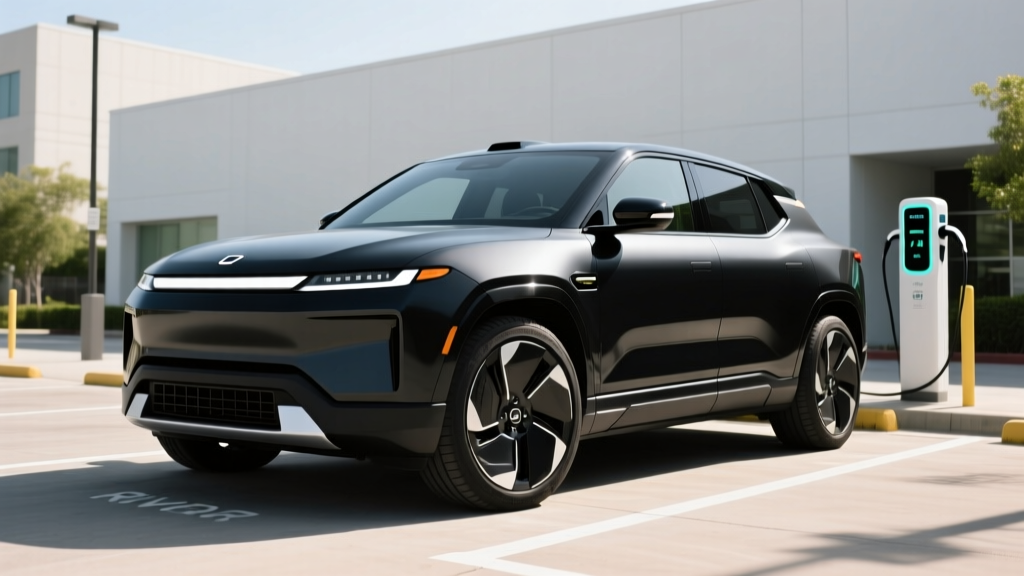
If you've been eyeing the Rivian R1S but can't stomach its 80-plus-inch footprint or six-figure price tag, the Rivian R2 was engineered specifically for you. Announced in March 2024 and entering production in the first half of 2026 at Rivian's Normal, Illinois facility, the R2 slots into the most competitive segment in the EV market — compact and midsize electric crossovers — with a promise of genuine off-road chops, a sub-$45,000 starting price, and dimensions that actually fit a standard American garage.
One of the most-searched questions from prospective buyers? The Rivian R2 width. It's a practical concern: garage clearance, lane positioning, car wash compatibility, and parking-space fitment all hinge on those exterior dimensions. Let's break down every measurement, then move into the specs that matter once you've confirmed it'll fit your life.
The Rivian R2 Standard targets an EPA-estimated 330 miles of range on the dual-motor AWD configuration. In real-world highway driving at 70-75 mph, expect approximately 275–295 miles. In cold weather (below 30°F), plan for a 20–30% reduction, landing around 230–265 miles. A heat pump is standard, which mitigates some cold-weather cabin energy draw.
Exterior Dimensions: Rivian R2 Width, Length, and Garage Fitment
Rivian has published preliminary exterior dimensions for the R2, and they position the vehicle squarely between a Tesla Model Y and a Ford Explorer in footprint. Here's the full dimensional breakdown:
| Dimension | Rivian R2 (Preliminary) | Tesla Model Y | Ford Mustang Mach-E |
|---|---|---|---|
| Width (without mirrors) | ~76.0 in (1,930 mm) | 75.6 in | 74.1 in |
| Width (with mirrors) | ~82.5 in (estimated) | 82.2 in | — |
| Length | ~184.0 in | 187.0 in | 186.7 in |
| Wheelbase | ~113.0 in | 113.8 in | 117.5 in |
| Height | ~66.0 in | 63.9 in | 63.6 in |
| Ground Clearance | ~8.5 in (est.) | 6.6 in | 5.7 in |
The Rivian R2 width of approximately 76.0 inches without mirrors is a deliberate choice. It's roughly half an inch wider than a Model Y — imperceptible in lane positioning — but that extra width accommodates wider track geometry for better stability and gives the R2 its more upright, rugged stance. The taller ride height (66 inches vs. the Model Y's ~64 inches) is where you'll notice the difference: more headroom, more commanding road presence, and genuine ground clearance for trail use.
Garage fitment note: A standard US single-car garage opening is 84–96 inches wide. The R2 at ~82.5 inches with mirrors folded will clear most garages, but if your mirrors don't power-fold (check trim-level specifics), you'll want at least 86 inches of opening width for comfortable daily entry. Standard two-car garages (16+ feet wide) present zero issues.
Powertrain, Battery, and EPA Range
The R2 launches with a new, smaller battery platform developed in-house by Rivian, moving away from the large-format cylindrical cells used in the R1T and R1S to a more cost-effective prismatic cell design. Here's what we know about the powertrain lineup:
| Specification | R2 Dual-Motor AWD (Standard) | R2 Performance (Expected) |
|---|---|---|
| Battery Capacity (usable) | ~85 kWh (preliminary) | ~85 kWh |
| Chemistry | NMC (Nickel Manganese Cobalt) | NMC |
| Drivetrain | Dual-Motor AWD | Dual-Motor AWD |
| Horsepower | ~450 hp (est.) | ~550+ hp (est.) |
| 0–60 mph | ~4.5 sec (est.) | ~3.5 sec (est.) |
| EPA Range (target) | 330 miles | ~300 miles (est.) |
| Efficiency (target) | ~110 MPGe / 30 kWh/100mi | ~100 MPGe (est.) |
Rivian's decision to stick with NMC chemistry rather than LFP (lithium iron phosphate) for the R2 is significant. NMC offers higher energy density, which is critical for hitting 330 miles of range in a physically smaller, lighter vehicle. The trade-off: NMC batteries generally benefit from being charged to 80% for daily use rather than 100%, whereas LFP chemistries tolerate regular full charges better. Rivian's battery management system includes a configurable charge limit to optimize long-term State of Health (SoH).
A single-motor RWD variant has been hinted at for a later release, which could push range above 350 miles and drop the starting price closer to $40,000 — but that configuration is not part of the initial 2026 launch lineup.
Charging Speed: DC Fast Charging and Home Level 2
Charging infrastructure compatibility is where the R2 makes one of its most buyer-friendly moves: native NACS (North American Charging Standard). Unlike the R1 generation, which launched with CCS1 and required adapters for Tesla Supercharger access, the R2 ships with the Tesla-standard NACS port, granting immediate access to over 25,000 Supercharger stalls across North America without any dongle.
| Charging Method | Power / Rate | Time / Range Added |
|---|---|---|
| DC Fast Charge (Peak) | ~200 kW (preliminary) | 10–80% in ~25 minutes (est.) |
| DC Fast Charge (Sustained avg.) | ~140–160 kW | ~180 miles in 20 min |
| Level 2 Home (240V, 48A) | 11.5 kW | ~30 miles per hour of charging |
| Level 2 Home (240V, 32A) | 7.7 kW | ~20 miles per hour of charging |
| Level 1 (120V, 12A) | 1.4 kW | ~3.5 miles per hour |
Charging curve reality check: The peak 200 kW figure is just that — a peak. In practice, the R2's NMC pack will accept maximum charge rate between roughly 10–40% State of Charge (SoC), then taper progressively. Expect the 10–80% session to average around 140–160 kW. This is competitive with the Hyundai Ioniq 5 (which peaks higher at 240 kW but on a smaller battery) and broadly similar to the Tesla Model Y Long Range on V3 Superchargers.
For home charging, a 48-amp Level 2 wall connector on a 60-amp dedicated circuit will replenish the full 85 kWh battery in roughly 8–9 hours — ideal for overnight charging. Budget $800–$2,200 for professional Level 2 installation depending on your electrical panel's proximity to the garage and whether a panel upgrade (200A service) is needed.
Pricing, Trims, and Federal Tax Credit Eligibility
The R2's pricing strategy is arguably its biggest differentiator against the R1S. Rivian has confirmed a target starting MSRP of $45,000 for the base dual-motor AWD, making it one of the few AWD electric SUVs with 300+ miles of range under $50,000.
| Trim | Base MSRP | Est. After §30D Credit | Credit Eligibility |
|---|---|---|---|
| R2 Standard (Dual-Motor AWD) | $45,000 | $37,500 (if eligible) | Likely — under $80K MSRP cap |
| R2 Premium (est.) | $52,000 | $44,500 (if eligible) | Likely — under $80K MSRP cap |
| R2 Performance (est.) | $58,000 | $50,500 (if eligible) | Likely — under $80K MSRP cap |
Federal tax credit (§30D) breakdown: Because the R2 is assembled in Normal, Illinois (a US plant), it clears the North American final-assembly requirement. Its MSRP falls well below the $80,000 SUV/van cap set by the IRS. However, the full $7,500 credit depends on two additional hurdles that remain fluid through 2026:
- Battery component sourcing: A percentage of battery components must be manufactured or assembled in North America. Rivian's new in-house battery line is designed to meet this threshold, but final 2026 compliance depends on supply-chain certification.
- Critical minerals sourcing: A percentage of critical minerals (lithium, nickel, cobalt) must be sourced from the US or a free-trade-agreement country. This requirement tightens annually.
- Buyer income caps: Modified AGI must not exceed $150,000 (single), $225,000 (head of household), or $300,000 (joint). Check your prior-year or current-year AGI against these limits.
- Point-of-sale transfer: As of 2024, eligible buyers can transfer the credit to the dealer at purchase, reducing the upfront price rather than waiting for a tax refund. This option is expected to remain available in 2026.
Always verify current-year eligibility at IRS.gov and consult a tax professional before making a purchase decision based on credit assumptions. Battery-sourcing rules have disqualified several otherwise-eligible models in prior years.
Interior Space, Cargo, and Practicality
Despite being smaller than the R1S, the R2 is engineered as a genuine five-passenger family vehicle. Rivian hasn't released final interior cubic footage, but based on the published exterior dimensions and wheelbase, here are reasonable estimates drawn from the vehicle's segment positioning:
- Front legroom: ~41 inches (est.)
- Rear legroom: ~38 inches (est.)
- Cargo volume (behind 2nd row): ~30–33 cu ft (est.)
- Cargo volume (2nd row folded): ~65–70 cu ft (est.)
- Front trunk (frunk): Yes — Rivian has confirmed a front trunk, likely ~8–10 cu ft, a signature feature carried over from the R1 platform
The frunk is a major practicality win over the Model Y (which has a small frunk) and the Mach-E (minimal frunk space). Combined with a flat load floor and the taller roofline, the R2 should handle bulkier cargo — camping gear, dog crates, strollers — more easily than its lower-slung competitors.
Notable interior features: Rivian has confirmed a minimalist cabin with a large central touchscreen (expected 15+ inches), a digital instrument cluster, and the brand's signature adventure-oriented design language. The R2 will ship with Rivian's latest software stack, including over-the-air updates, native navigation with charge routing, and an integrated camp kitchen accessory option (a Rivian hallmark).
Driver Assistance, Tech, and Safety
The Rivian R2's driver-assistance system (branded Rivian Driver+) is a SAE Level 2 system. This means it provides combined steering, acceleration, and braking assistance, but the driver must remain fully engaged, eyes on road, hands on or near the wheel at all times. It is not a self-driving system. No consumer vehicle sold today offers Level 3+ autonomy without geographic and speed restrictions.
Rivian Driver+ is expected to include:
- Adaptive cruise control with stop-and-go
- Lane-centering assist with lane-change assistance
- Automatic emergency braking with pedestrian detection
- Blind-spot monitoring with rear cross-traffic alert
- Highway assist (hands-on, similar to Tesla Autopilot's base functionality)
Rivian has not announced a hands-free driving mode comparable to GM's Super Cruise or Ford's BlueCruise for the R2 at launch. The system relies on a camera-and-radar sensor suite — no lidar in the base configuration. NHTSA safety ratings are not yet available for the R2 as of early 2026; check NHTSA.gov for updates once crash testing is complete.
Warranty and Long-Term Ownership
Rivian's warranty structure for the R1 generation has been competitive, and the R2 is expected to follow a similar framework:
| Coverage | Expected Terms |
|---|---|
| Basic Vehicle Warranty | 5 years / 60,000 miles |
| Battery & Drive Unit | 8 years / 100,000 miles (minimum 70% capacity retention) |
| Corrosion Perforation | 5 years / unlimited miles (est.) |
| Roadside Assistance | 5 years / 60,000 miles (est.) |
The 8-year/100,000-mile battery warranty with a 70% capacity retention threshold is the industry standard, matching Tesla, Hyundai/Kia, and Ford. For context, real-world degradation data from R1S owners suggests Rivian's thermal management system keeps degradation modest — most R1 owners report 5–8% capacity loss over the first 50,000 miles, well within warranty tolerance. Expect similar or better performance from the R2's next-generation pack.
Pros, Cons, and the Verdict
- Native NACS — no adapter needed for Tesla Superchargers
- Sub-$45K starting price for AWD with 330-mile range target
- Genuine ground clearance (~8.5 in) for light off-road use
- Frunk + tall cargo area for class-leading utility
- US-assembled with strong §30D tax credit eligibility
- Rivian's OTA software and adventure ecosystem
- DC fast charge peak (~200 kW) trails Hyundai/Kia's 800V architecture
- No hands-free highway driving mode at launch
- NMC battery requires 80% daily charge limit for longevity
- Single-motor RWD variant not available at launch
- Real-world range in cold weather drops to ~230–265 miles
- Final EPA certification and safety ratings pending
Choose the R2 if: You want an AWD electric SUV with genuine trail capability, a frunk, and native Supercharger access under $50K — and you value Rivian's adventure brand and software ecosystem.
Look elsewhere if: You prioritize the absolute fastest DC charging (Hyundai Ioniq 5 at 240 kW), need hands-free highway driving (GM Super Cruise), or want a proven multi-year track record before committing to a newer platform.
Frequently Asked Questions
What is the exact Rivian R2 width?
The Rivian R2 measures approximately 76.0 inches wide without mirrors and an estimated 82.5 inches with mirrors deployed. This is comparable to the Tesla Model Y (75.6 in) and slightly wider than the Ford Mustang Mach-E (74.1 in). Mirrors folded, the R2 should fit through standard single-car garage openings (84+ inches).
What is the real-world range of the Rivian R2?
Rivian targets an EPA-estimated 330 miles for the dual-motor AWD. Real-world highway driving at 70–75 mph should yield 275–295 miles. In sub-freezing temperatures, expect 230–265 miles. A standard heat pump helps reduce cold-weather cabin energy draw.
How fast does the R2 charge?
The R2 targets a peak DC fast-charge rate of ~200 kW via its native NACS port, with an estimated 10–80% time of ~25 minutes. Sustained average during that session will be closer to 140–160 kW due to charge-curve taper. At home on a 48A Level 2 charger (11.5 kW), expect ~30 miles of range per hour.
Does the Rivian R2 qualify for the $7,500 federal tax credit?
The R2 is assembled in the US and falls under the $80,000 MSRP cap for SUVs, clearing two major hurdles. However, full $7,500 eligibility depends on 2026 battery-sourcing and critical-minerals requirements (which tighten annually) and buyer income caps ($150K single / $300K joint AGI). Verify at IRS.gov before purchasing. The point-of-sale transfer option should be available, reducing your upfront cost at the dealer.
Is the Rivian R2 worth buying vs. the Tesla Model Y?
It depends on your priorities. The Model Y has a multi-year reliability track record, the densest Supercharger network, and slightly faster DC charging. The R2 offers more ground clearance, a frunk, a more upright SUV driving position, native NACS access to those same Superchargers, and a lower starting price. If adventure capability and brand identity matter, the R2 is compelling. If you want the most proven, data-backed EV in the segment, the Model Y remains the benchmark until the R2 builds its own track record.
When can I buy the Rivian R2?
Rivian began R2 production in the first half of 2026. Reservations opened in 2024 with refundable deposits. If you haven't reserved, check Rivian.com for current availability and estimated delivery windows, which vary by trim and configuration.