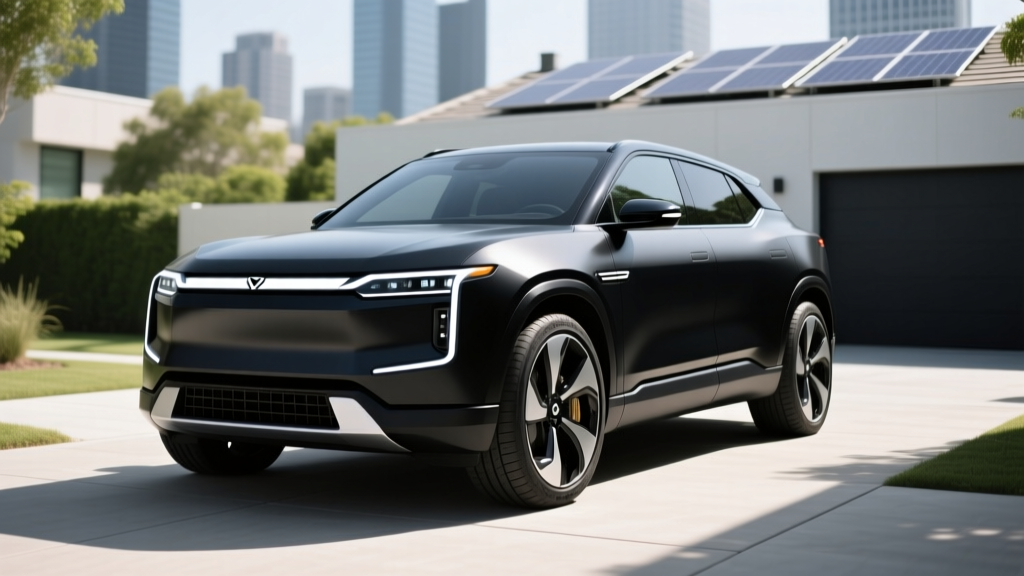
Rivian's R2 is the most anticipated EV launch of the mid-2020s. As a smaller, more affordable sibling to the R1S and R1T, the R2 aims to bring Rivian's adventure-oriented formula to a mainstream price point — starting around $45,000. But for EV buyers doing their homework, one of the most-searched questions is surprisingly specific: what is the Rivian R2 weight?
Vehicle weight matters enormously for electric vehicles. It directly influences energy efficiency (kWh/100mi), tire wear, braking distances, and — critically — how much range a given battery pack can deliver. The R2 is designed to be lighter than the R1S, and that weight reduction is central to Rivian's strategy for hitting competitive range and efficiency numbers on a smaller battery.
Note: The Rivian R2 is an announced vehicle with production expected to begin in early-to-mid 2026 at Rivian's Normal, Illinois facility. All specifications below are based on Rivian's published preliminary data, industry analysis, and informed estimates. Final EPA-certified figures may differ. We will update this profile as confirmed numbers become available.
Why Rivian R2 Weight Matters for Range and Efficiency
The Rivian R1S (2025 model year) carries a curb weight of approximately 6,900 lbs for the Dual-Motor variant — heavy even for a three-row electric SUV. That mass demands a large battery pack (up to 149 kWh usable in the Max Pack) to achieve its EPA-rated 410 miles of range. The R2's entire engineering philosophy centers on shedding that weight.
Rivian CEO RJ Scaringe has indicated the R2 will ride on an entirely new, smaller platform with a shorter wheelbase and narrower track than the R1. The company has also confirmed the R2 will use a structural battery pack — where the battery enclosure serves as a stressed chassis member — eliminating redundant structure and reducing overall mass. Combined with smaller, lighter drive units developed in-house, Rivian targets a significant curb-weight reduction.
Estimated Rivian R2 Curb Weight by Drivetrain
| Configuration | Est. Curb Weight | Comparison: R1S (2025) |
|---|---|---|
| Single-Motor RWD (Standard Pack) | ~4,700–4,900 lbs | N/A (R1S is AWD only) |
| Dual-Motor AWD (Standard Pack) | ~5,000–5,200 lbs | ~6,900 lbs (Dual-Motor) |
| Dual-Motor AWD (Large Pack) | ~5,200–5,400 lbs | ~7,150 lbs (Max Pack) |
These estimates place the R2 in the same weight class as the Tesla Model Y (~4,400 lbs for Long Range AWD) and Ford Mustang Mach-E (~4,700–4,900 lbs depending on trim), but somewhat heavier than the Hyundai Ioniq 5 (~4,500 lbs). The additional mass would come from Rivian's expected emphasis on off-road capability hardware, a more robust suspension, and standard features like an integrated roof rack system.
A lighter R2 means Rivian can deliver competitive range with a smaller, less expensive battery — crucial for hitting that ~$45,000 starting price. It also improves efficiency, which translates directly to lower charging costs per mile.
Battery, Range, and Real-World Efficiency
Rivian has confirmed the R2 will use a new-generation battery pack with next-gen cylindrical cells (likely 46mm-diameter format, similar to what Tesla and other manufacturers are adopting). The chemistry has not been officially confirmed, but industry reporting and Rivian's supplier relationships suggest a mix:
- Standard Pack: Likely LFP (lithium iron phosphate) chemistry — lower energy density but cheaper, longer cycle life, and safer. LFP also allows daily charging to 100% without degradation concerns.
- Large Pack: Likely NMC (nickel manganese cobalt) — higher energy density for maximum range, but typically recommended to charge to 80% for daily use.
Preliminary Battery and Range Specifications
| Spec | Standard Pack (Est.) | Large Pack (Est.) |
|---|---|---|
| Usable Battery Capacity | ~65–75 kWh | ~85–95 kWh |
| Chemistry | LFP (estimated) | NMC (estimated) |
| EPA Est. Range (AWD) | ~270–300 miles | ~330–360 miles |
| Efficiency (AWD) | ~28–30 kWh/100mi | ~26–28 kWh/100mi |
| MPGe (Combined) | ~110–120 MPGe | ~120–130 MPGe |
The EPA estimates above represent mixed driving. In real-world conditions, expect:
- Highway driving (75+ mph): Reduce EPA range by 10–15%. A 330-mile Large Pack AWD may deliver ~280–300 miles at sustained highway speed.
- Cold weather (below 30°F): Expect 20–30% range reduction without preconditioning, or 10–15% with active battery preconditioning and cabin heat pump usage.
- City/commute driving: Often exceeds EPA estimates by 5–10% thanks to regenerative braking recapturing energy.
Rivian's expected standard heat pump (confirmed for the R2 platform) will help mitigate cold-weather losses compared to resistance heating, but physics still applies — cold batteries are less efficient, and cabin heating draws significant power.
For context on how these range estimates compare to certified vehicles, you can cross-reference efficiency data on fueleconomy.gov's EV comparison tool.
Charging Speed: DC Fast Charging and Home Level 2
Charging speed is where the R2's weight and battery architecture decisions become tangible for owners. Rivian has confirmed the R2 will feature the NACS (North American Charging Standard) connector natively — no adapter needed for Tesla Superchargers. This is a significant practical advantage for road-trip charging access.
Estimated Charging Specifications
| Charging Level | Rate | Speed / Time |
|---|---|---|
| Level 1 (120V household) | ~1.4 kW | ~3–4 miles per hour |
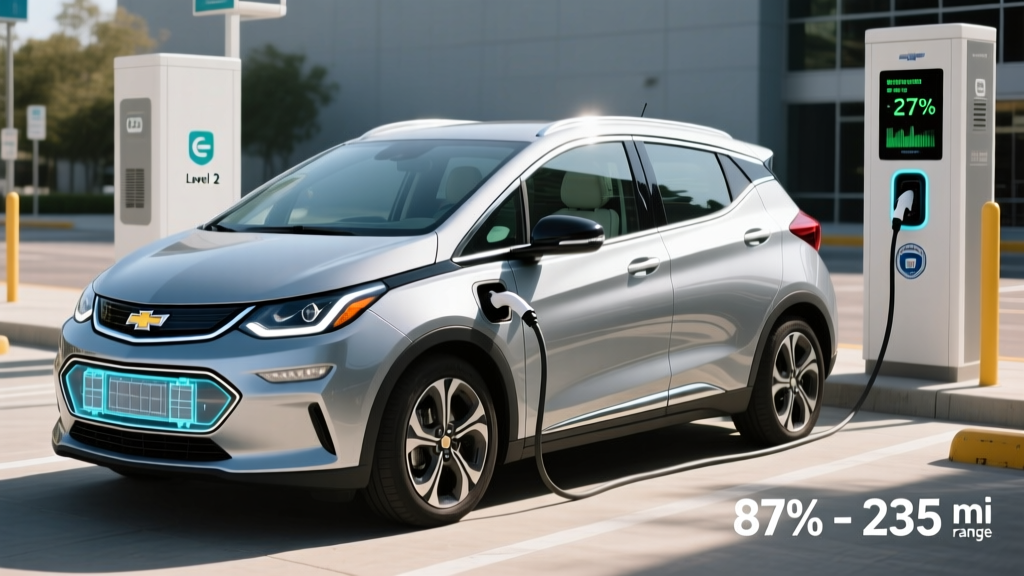
| Level 2 (240V home, 48A) | ~11.5 kW | ~30–35 miles per hour |
| DC Fast Charge (peak) | ~175–200 kW (est.) | 10–80% in ~22–28 min (est.) |
Rivian has not published a confirmed peak DC charge rate for the R2, but the company's next-gen architecture and the use of 46mm-format cells suggest a target in the 175–200 kW range. This would be competitive with the Hyundai Ioniq 5 (which peaks around 240 kW on 800V architecture) and the Tesla Model Y (which peaks around 250 kW on V3 Superchargers but sustains lower averages).
Charge curve reality check: Peak kW is not sustained kW. Even if the R2 peaks at 200 kW, expect the charge rate to taper significantly above 60–70% State of Charge (SoC). The 10–80% time is the practical metric — that's the range you'll typically use on a road trip, charging from a low battery to enough range to reach your next stop. A 22–28 minute 10–80% session is competitive and practical, translating to roughly 200+ miles added in a half-hour stop.
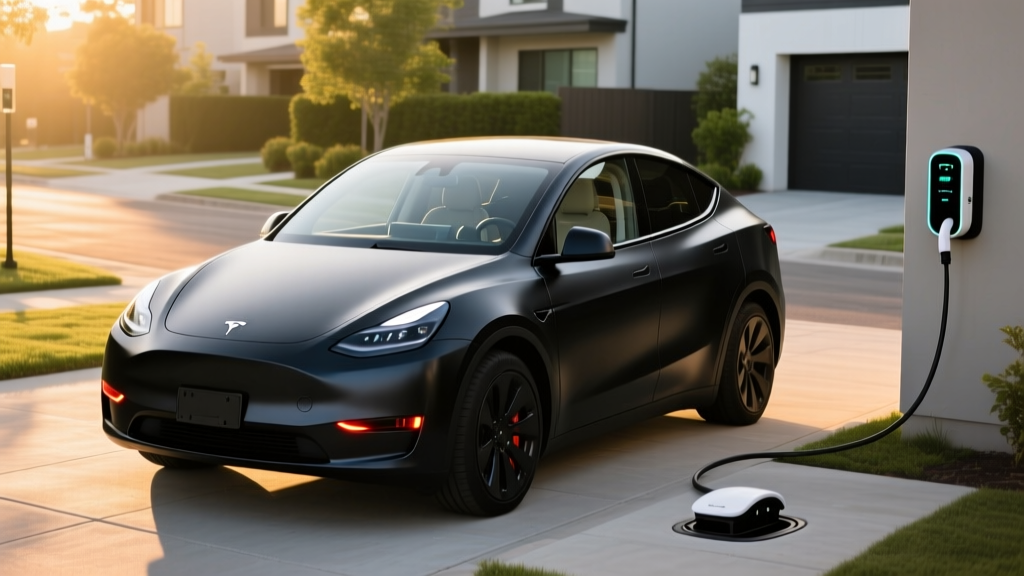
For home charging, a 48-amp Level 2 wall connector on a 60-amp circuit will add roughly a full battery overnight. Most R2 owners with home charging will rarely need public charging except for road trips. If you're planning a home Level 2 install, budget $500–$1,500 for equipment and electrician labor depending on panel proximity — see our home charging guide for a full cost breakdown.
Performance and Drivetrain Options
Rivian has confirmed the R2 will offer both rear-wheel-drive (single-motor) and all-wheel-drive (dual-motor) configurations — a first for the brand, as the R1S and R1T have been exclusively multi-motor AWD.
Estimated Performance Specifications
| Spec | Single-Motor RWD | Dual-Motor AWD |
|---|---|---|
| Horsepower | ~280–330 HP (est.) | ~450–500 HP (est.) |
| Torque | ~330–380 lb-ft (est.) | ~550–600 lb-ft (est.) |
| 0–60 mph | ~6.5–7.0 sec (est.) | ~4.5–5.0 sec (est.) |
| Drivetrain | RWD | AWD (dual-motor) |
| Towing Capacity | ~2,500 lbs (est.) | ~3,500–4,500 lbs (est.) |
The dual-motor AWD variant will carry Rivian's off-road DNA with features like adjustable air suspension (confirmed), underbody protection, and drive modes for sand, snow, and rock crawling. The single-motor RWD is aimed squarely at commuters and buyers in mild climates who don't need AWD traction and want maximum efficiency and the lowest price point.
Rivian's dual-motor system uses independently controlled front and rear motors for precise torque vectoring. Unlike the R1's available tri- and quad-motor setups, the R2's dual-motor keeps cost and weight down while still delivering strong all-weather capability.
Interior, Cargo, and Practical Dimensions
The R2 is positioned as a compact-to-midsize crossover SUV — smaller than the three-row R1S but larger than a subcompact. Rivian has released preliminary exterior and interior dimensions:
| Dimension | Rivian R2 (Preliminary) | Tesla Model Y (2025) | Ford Mach-E (2025) |
|---|---|---|---|
| Length | ~182 in | 187 in | 187 in |
| Wheelbase | ~110 in | 113.8 in | 117.5 in |
| Seating | 5 passengers (2 rows) | 5 passengers | 5 passengers |
| Cargo (behind 2nd row) | ~28–32 cu ft (est.) | 30.2 cu ft | 29.7 cu ft |
| Cargo (seats folded) | ~60–68 cu ft (est.) | 72.1 cu ft | 59.7 cu ft |
| Front Trunk (Frunk) | Yes (est. ~5–7 cu ft) | 4.1 cu ft | 4.7 cu ft |
| Rear Legroom | ~38–40 in (est.) | 41.6 in | 39.4 in |
Rivian's design language emphasizes outdoor utility. Expect features like a powered tailgate, integrated roof rail system (likely standard), and potentially a pass-through for long cargo like skis or kayaks. The frunk (front trunk) is confirmed and will add meaningful sealed, weatherproof storage — useful for muddy gear or charging cables.
Tech and Driver Assistance
The R2 will feature Rivian's latest software stack on a large central touchscreen (likely 15+ inches) with a secondary display for the driver. Rivian's software has been well-received for its clean interface, over-the-air update capability, and integrated trip planning with charging stops.
Driver assistance will include Rivian's Driver+ system — a Level 2 driver-assist suite with adaptive cruise control, lane centering, and highway driving assist. This is not autonomous driving. Per SAE definitions, Level 2 requires the driver to remain fully engaged and supervising at all times. Rivian has not announced a hands-free system comparable to GM's Super Cruise or Ford's BlueCruise, though future OTA updates could expand capabilities.
Pricing, Trims, and Federal Tax Credit Eligibility
Rivian has stated the R2 will start at approximately $45,000 for the single-motor RWD with the Standard battery pack. This positions the R2 against the Tesla Model Y Long Range (~$44,990), Ford Mustang Mach-E Premium (~$43,495), and Hyundai Ioniq 5 SEL (~$46,650).
Estimated Pricing by Trim
| Trim / Config | Est. Base MSRP | Est. After §30D Credit |
|---|---|---|
| RWD Standard Pack | ~$45,000 | ~$37,500* |
| AWD Standard Pack | ~$49,000 | ~$41,500* |
| AWD Large Pack | ~$55,000 | ~$47,500* |
| AWD Large Pack (Adventure trim) | ~$58,000–$62,000 | ~$50,500–$54,500* |
*Tax credit estimates assume full $7,500 eligibility under IRS §30D. Actual eligibility depends on buyer income, vehicle MSRP caps, and battery component/critical mineral sourcing requirements. Consult a tax professional before relying on credit estimates.
Federal Tax Credit Eligibility Checklist (§30D — 2026 Rules)
- MSRP cap: SUVs must be priced at or below $80,000. All R2 trims should clear this easily.
- Buyer income cap: Modified AGI must not exceed $150,000 (single), $225,000 (head of household), or $300,000 (joint).
- Battery sourcing: Increasing percentages of battery components must be manufactured or assembled in North America, and critical minerals must be sourced from the US or free-trade-agreement partners. Rivian's US-based production in Normal, IL is an advantage, but specific cell sourcing will determine exact credit amount ($3,750 for components, $3,750 for minerals, up to $7,500 total).
- Point-of-sale transfer: Buyers can transfer the credit to the dealer at purchase, reducing the purchase price directly rather than waiting for a tax refund.
- Foreign Entity of Concern (FEOC) restriction: Vehicles with battery components from a FEOC (e.g., certain Chinese suppliers) may be disqualified. This is the key variable for Rivian's cell supply chain.
Rivian's US manufacturing footprint gives the R2 a structural advantage over competitors relying on overseas assembly, but battery cell sourcing — particularly for the LFP chemistry likely used in the Standard Pack, which is dominated by Chinese manufacturers like CATL and BYD — could complicate full credit eligibility. Rivian has been working to diversify its cell supply, potentially partnering with Samsung SDI or developing domestic LFP production.
Warranty, Ownership Costs, and Long-Term Outlook
Rivian's current warranty for the R1S/R1T provides a useful baseline for what R2 buyers should expect:
| Coverage | Rivian R1 (Current) | Industry Benchmark |
|---|---|---|
| Basic Vehicle | 5 years / 60,000 miles | Tesla: 4yr/50,000mi |
| Battery Pack | 8 years / 175,000 miles | Tesla: 8yr/120,000mi (LR) |
| Drive Units | 8 years / 175,000 miles | Hyundai: 10yr/100,000mi |
Rivian's battery warranty currently guarantees at least 70% capacity retention over the warranty period. For the R2, expect similar or slightly adjusted terms. The 8-year/175,000-mile battery coverage is among the most generous in the segment, particularly the high mileage cap — important for high-mileage commuters.
On the ownership-cost side, the R2's lower weight and smaller battery should translate to lower tire replacement costs compared to the R1S (which requires expensive, high-load-rated tires), and home charging costs of roughly $0.04–$0.06 per mile depending on local electricity rates — roughly one-third the per-mile fuel cost of a comparable gas SUV.
Who Should Buy the Rivian R2 — and Who Shouldn't
- Outdoor-oriented buyers who want EV efficiency with genuine light off-road capability
- Two-row SUV shoppers priced out of the R1S but wanting Rivian's software and design
- Commuters with home charging who want a ~300-mile daily driver with weekend road-trip range
- Buyers prioritizing NACS/Supercharger access without adapter hassle
- You need three rows of seating (stick with the R1S, Kia EV9, or Tesla Model X)
- You need maximum cargo volume for large-family hauling (Model Y and Ioniq 5 offer more confirmed space)
- You want a proven service network today — Rivian's service infrastructure is still expanding
- You need guaranteed full $7,500 tax credit eligibility — LFP cell sourcing may affect the Standard Pack
Rivian R2 vs. Key Competitors
The R2 enters an increasingly crowded compact/midsize electric crossover segment. Here's how preliminary specs compare to established rivals:
| Spec | Rivian R2 AWD (Est.) | Tesla Model Y LR AWD | Hyundai Ioniq 5 AWD | Ford Mach-E ER AWD |
|---|---|---|---|---|
| Base MSRP | ~$49,000 | $44,990 | $50,600 | $48,995 |
| EPA Range | ~330 mi | 320 mi | 290 mi | 312 mi |
| Battery (usable) | ~85–95 kWh | 75 kWh | 77.4 kWh | 88 kWh |
| Peak DC Charge | ~175–200 kW | ~250 kW | ~240 kW | ~150 kW |
| 0–60 mph | ~4.5–5.0 sec | 4.8 sec | 5.1 sec | 5.1 sec |
| Curb Weight | ~5,100 lbs | ~4,400 lbs | ~4,600 lbs | ~4,900 lbs |
| Native Connector | NACS | NACS | CCS (NACS adapter avail.) | CCS (NACS adapter avail.) |
| Off-Road Focus | Yes | No | No | No |
The R2's key differentiator is its off-road capability and adventure-oriented design in a segment dominated by pavement-focused crossovers. If you don't need that, the Model Y and Ioniq 5 offer proven platforms with wider service networks and faster charging today. The R2's value proposition hinges on delivering Rivian quality and capability at a significantly lower price than the R1S.
Frequently Asked Questions
What is the estimated Rivian R2 weight?
Based on platform analysis and Rivian's engineering targets, the R2 is estimated to weigh between 4,700 lbs (single-motor RWD, Standard Pack) and approximately 5,400 lbs (dual-motor AWD, Large Pack). This is roughly 1,500–1,700 lbs lighter than the R1S, enabled by a smaller platform, structural battery pack, and lighter drive units.
When will the Rivian R2 be available to buy?
Rivian has targeted early-to-mid 2026 for the start of R2 production at its Normal, Illinois facility. Reservations opened in 2024, with deliveries expected to follow production ramp-up. Exact timing may shift based on supply chain and factory readiness.
Does the Rivian R2 qualify for the $7,500 federal EV tax credit?
The R2 should qualify for at least a partial credit under IRS §30D, given its US manufacturing and sub-$80,000 MSRP. Full $7,500 eligibility depends on battery cell and critical-mineral sourcing rules, particularly for the LFP Standard Pack variant. Buyers should verify eligibility at the time of purchase and consult a tax professional, as sourcing requirements tighten annually.
How fast does the Rivian R2 charge?
Estimated peak DC fast-charging is 175–200 kW, translating to a 10–80% charge in approximately 22–28 minutes. At home on a 48-amp Level 2 charger (240V), expect roughly 30–35 miles of range added per hour, or a full charge overnight. The R2 will use the NACS connector natively for Tesla Supercharger compatibility.
Is the Rivian R2 a good family vehicle?
The R2 is a two-row, five-passenger SUV — suitable for families of up to four comfortably. If you need third-row seating, the R2 is not the right choice; consider the Rivian R1S, Kia EV9, or Tesla Model X instead. Cargo space is competitive with the Model Y and Mach-E, and the frunk adds useful sealed storage.
Will the R2 have a front trunk (frunk)?
Yes. Rivian has confirmed the R2 will include a front trunk, adding weatherproof storage for charging cables, gear, or groceries. Estimated volume is 5–7 cubic feet based on the vehicle's proportions.
This article will be updated with confirmed EPA, pricing, and specification data once Rivian publishes final production figures and the vehicle undergoes EPA certification. Last updated: 2026.