The Partnership That Could Reshape the Compact EV Market
When Volkswagen Group and Rivian announced their joint venture in mid-2024, the automotive industry took notice. The deal — structured around a new technology company combining Rivian's zonal electrical architecture and software stack with VW's manufacturing scale — was never just a financial transaction. For buyers watching the Rivian R2 Volkswagen partnership unfold, the real question is practical: what does this collaboration mean for the vehicles you can actually buy in 2026?
The Rivian R2, a compact electric SUV slated for production in the first half of 2026 at Rivian's Normal, Illinois facility, is the first vehicle to emerge under this deepened alliance. Volkswagen's investment (totaling up to $5.8 billion across the JV and direct equity) accelerates Rivian's path to profitability while giving VW access to a proven EV software platform for future models. But the R2 itself must stand on its own specs, pricing, and ownership proposition.
Below is a data-driven profile of what we know about the 2026 Rivian R2 as it approaches launch — including how the VW partnership influences its architecture, and how it stacks up against the Tesla Model Y, Hyundai Ioniq 5, and Ford Mustang Mach-E.
Platform Architecture: What the VW Partnership Actually Changes
The Rivian-Volkswagen joint venture, operating under the name Car Software Organization (building on VW's existing software division), focuses on three core pillars:
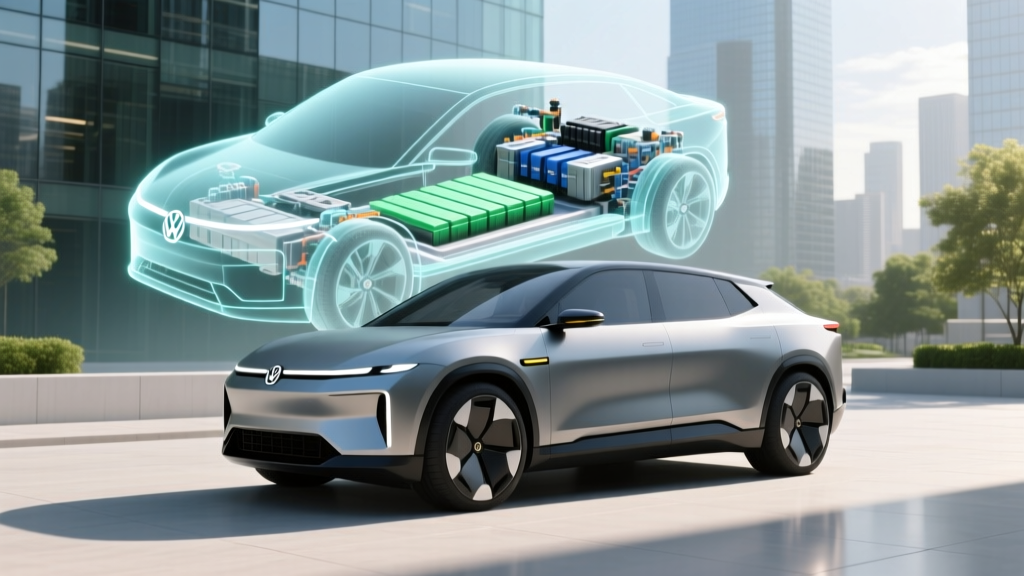
- Zonal electrical/electronic (E/E) architecture: Rivian's approach replaces dozens of distributed ECUs with a handful of high-performance zone controllers — reducing wiring harness weight by roughly 20 kg and enabling over-the-air updates across nearly every vehicle system.
- Software-defined vehicle platform: A unified middleware layer that future VW Group EVs (across Audi, Porsche, VW, and potentially Scout brands) will adopt, replacing the troubled CARIAD stack.
- Shared development costs: Rivian gains capital efficiency; VW gains a competitive software foundation without starting from scratch.
For the R2 buyer, this means the vehicle debuts with a mature, field-tested software architecture — the same stack refined through three years of R1T and R1S production and hundreds of OTA updates. VW's involvement does not dilute the R2's identity; it validates and funds its technology roadmap.
Range, Battery, and Efficiency: Preliminary Specs
Rivian has confirmed the R2 will offer multiple battery configurations. Based on pre-production disclosures and supply-chain reporting, here are the anticipated specifications for the launch variants:
| Variant | Battery (usable kWh) | Chemistry | EPA Range (est.) | MPGe (est.) | kWh/100mi |
|---|---|---|---|---|---|
| Standard Range AWD | ~75 kWh | LFP | ~270 mi | ~110 MPGe | ~30 |
| Large Battery AWD | ~100 kWh | NMC | ~330 mi | ~115 MPGe | ~29 |
| Max Pack AWD (if offered) | ~120 kWh | NMC | ~380+ mi | ~112 MPGe | ~30 |
The EPA sticker is a starting point, not a guarantee. Based on R1S/R1T real-world data and the R2's lighter, more aerodynamic platform:
- Highway driving (70-75 mph): Expect 10-15% below EPA — roughly 295-300 miles for the Large Battery AWD.
- Cold weather (below 32°F): LFP chemistry loses 20-30% range in deep cold; NMC variants fare better at 15-20% loss. Preconditioning via the Rivian app mitigates this significantly.
- City/regen-heavy driving: You may match or slightly exceed EPA thanks to aggressive regenerative braking.
Rivian's adoption of LFP (lithium iron phosphate) chemistry for the Standard Range trim is a strategic choice: LFP cells are lower-cost, cobalt-free, and tolerate daily 100% charging without accelerated degradation. The trade-off is lower energy density (heavier pack for fewer miles) and poorer cold-weather performance compared to NMC. If you live in a cold climate and lack a garage, the Large Battery NMC variant is the more practical pick.
Charging Speed: DC Fast and Home Level 2
Charging infrastructure access is the number-one concern for EV buyers moving from gas. Here's what Rivian has outlined for the R2, built on an 800-volt architecture (shared across the R2 and future R3 platforms):
| Charging Level | Max Power | Time / Rate | Notes |
|---|---|---|---|
| Level 1 (120V household) | ~1.4 kW | ~3-4 mi/hr | Emergency/trickle only |
| Level 2 (240V home/work) | ~11.5 kW (48A) | ~28-32 mi/hr; full charge in 8-10 hrs | NACS connector standard |
| DC Fast Charge (peak) | ~250 kW (est.) | 10-80% in ~22 min (Large Battery) | Charge curve tapers sharply above 80% |
Charging curve reality: Peak 250 kW is a ceiling, not a sustained rate. Expect the R2 to hold peak power from roughly 10-50% state of charge, then taper progressively. A 10-80% session in approximately 22 minutes for the Large Battery pack is competitive with the Hyundai Ioniq 5's class-leading 18-minute benchmark but falls slightly behind. On the road, this means a 20-minute stop adds roughly 180-200 miles of range — adequate for most road-trip patterns.
The R2 ships with a NACS (North American Charging Standard) connector natively, granting access to Tesla's Supercharger network — now the largest and most reliable DC fast-charging network in North America. No adapter is required. This is a significant ownership advantage over older CCS1-equipped vehicles.
Performance, Drivetrain, and Driving Dynamics
Rivian confirmed the R2 will launch with a dual-motor all-wheel-drive configuration, consistent with the brand's adventure-oriented positioning. A single-motor rear-wheel-drive variant is expected to follow within the first production year, targeting a lower entry price point.
| Metric | Dual-Motor AWD (Large Battery) | Single-Motor RWD (Standard) |
|---|---|---|
| Horsepower | ~450 hp (est.) | ~280 hp (est.) |
| 0-60 mph | ~4.5 sec | ~6.5 sec |
| Drivetrain | Dual-motor AWD | Single-motor RWD |
| Towing capacity | ~4,500 lbs (est.) | ~3,000 lbs (est.) |
Rivian's quad-motor technology from the R1 platform is not expected on the R2 at launch — the compact SUV prioritizes efficiency and affordability over extreme performance. The dual-motor AWD system should deliver confident all-weather traction and adequate passing power. Rivian's adaptive air suspension (standard on R1 models) may be offered as an option on higher R2 trims, though a conventional steel-spring setup is more likely for the base model to control costs.
Pricing, Trims, and Federal Tax Credit Eligibility
Rivian CEO RJ Scaringe has repeatedly stated the R2 will start at approximately $45,000 before incentives. Here's the projected trim ladder:
| Trim | Est. MSRP | §30D Credit Eligibility | Effective Price (if eligible) |
|---|---|---|---|
| Standard Range AWD | ~$45,000 | Likely up to $7,500 | ~$37,500 |
| Large Battery AWD | ~$52,000 | Likely up to $7,500 | ~$44,500 |
| Adventure/Max Pack | ~$60,000+ | Likely up to $7,500 | ~$52,500+ |
The $7,500 credit is not automatic. Per IRS guidelines, you must meet ALL of the following:
- MSRP cap: SUVs must have a base MSRP ≤ $80,000 (R2 easily qualifies).
- Buyer income cap: Modified AGI ≤ $150,000 (single), $225,000 (head of household), $300,000 (joint).
- Battery sourcing: Critical minerals and battery components must meet phased-in domestic/free-trade-partner sourcing thresholds — Rivian's North American supply chain positions the R2 favorably, but final eligibility depends on the specific battery pack and model year.
- Point-of-sale transfer: As of 2024, you can transfer the credit to the dealer at purchase, reducing your out-of-pocket cost immediately rather than waiting for a tax refund.
Consult a tax professional for your specific situation. Rules may change; verify current-year eligibility at irs.gov before purchasing.
Interior, Cargo, and Technology
The R2 is dimensionally smaller than the three-row R1S but larger than subcompact crossovers. Rivian targets the following interior specifications:
- Cargo volume (behind 2nd row): ~32 cu ft (est.)
- Cargo volume (2nd row folded): ~65 cu ft (est.)
- Front trunk (frunk): ~10 cu ft — a Rivian signature feature retained from R1 models
- Seating: 5-passenger, 2-row configuration
- Rear legroom: ~38 inches (est., competitive with Model Y)
Technology highlights expected on the R2:
- Infotainment: 15.6-inch center touchscreen running Rivian's in-house OS — widely praised in R1 reviews for responsiveness and lack of smartphone-mirroring dependency (no Apple CarPlay/Android Auto, a deliberate choice).
- Driver assistance: Rivian's Driver+ system (SAE Level 2) with adaptive cruise, lane centering, and highway assist. This requires continuous driver supervision — it is not autonomous driving.
- Camera-based side mirrors: Expected as an option, reducing drag and improving visibility (pending NHTSA final approval for the US market).
- OTA updates: Full-vehicle over-the-air capability, leveraging the zonal architecture refined through the VW partnership.
- Adventure features: Integrated air compressor, gear tunnel storage (if adapted for the shorter wheelbase), and Rivian's camp kitchen accessory compatibility.
Rivian Driver+ is an SAE Level 2 system: it controls steering and acceleration under specific conditions, but the driver must remain fully engaged, eyes on the road, hands available. It does not navigate autonomously, handle construction zones, or respond to all hazards. Only Level 4 robotaxi services (e.g., Waymo in geofenced areas) operate without a human driver.
Warranty and Ownership Costs
Rivian's warranty structure for the R1 platform sets the baseline for R2 coverage:
| Component | Coverage |
|---|---|
| Basic vehicle | 5 years / 60,000 miles |
| Battery & drivetrain | 8 years / 175,000 miles (est.) |
| Battery capacity retention | ≥70% of original capacity over warranty period |
| Roadside assistance | 5 years / 60,000 miles |
Rivian's 8-year/175,000-mile battery warranty exceeds the federal minimum (8/100,000) and matches or beats most competitors. The 70% capacity retention threshold is industry-standard — meaning if your battery degrades below 70% of its original kWh within the warranty window, Rivian replaces or repairs it at no cost.
Insurance costs for Rivian vehicles have historically run 15-25% above comparable ICE vehicles due to repair complexity and parts pricing. Expect R2 premiums in the $1,800-$2,400/year range depending on trim, location, and driving record. Get quotes before committing to a purchase.
- NACS native — full Supercharger access without adapters
- 800V architecture enables competitive DC fast charging
- LFP option for budget buyers who want daily 100% charging
- Frunk + gear tunnel storage (Rivian signature)
- Mature software stack validated by VW partnership investment
- Strong projected range across battery tiers (270-380+ mi)
- Not yet in production — reservation holders face wait times
- No Apple CarPlay or Android Auto (polarizing choice)
- Insurance premiums likely above segment average
- Rivian's service center network is still expanding
- LFP cold-weather range loss is significant for northern climates
- Final EPA numbers and pricing not yet certified
R2 vs. the Competition: Where It Fits
The compact electric SUV segment is crowded in 2026. Here's how the R2 positions against its primary rivals:
| Attribute | Rivian R2 (Large AWD) | Tesla Model Y LR AWD | Hyundai Ioniq 5 LR AWD | Ford Mustang Mach-E ER AWD |
|---|---|---|---|---|
| EPA Range | ~330 mi | 320 mi | 290 mi | 312 mi |
| DC Fast (10-80%) | ~22 min | ~25 min | ~18 min | ~35 min |
| 0-60 mph | ~4.5 sec | 4.8 sec | 5.1 sec | 5.1 sec |
| Base MSRP | ~$52,000 | $48,990 | $49,850 | $50,995 |
| Connector | NACS | NACS | NACS (2025+) | NACS (2025+) |
| Frunk | Yes | Yes (small) | Yes | Yes |
- You want a fresh platform with adventure-oriented design and storage solutions
- Rivian's software and OTA track record appeals to you
- You value the LFP battery option for worry-free daily charging
- You're willing to wait for early-production availability
- You need a vehicle now — Model Y and Ioniq 5 are in volume production
- Fastest possible DC charging is your top priority (Ioniq 5 wins)
- You prefer Apple CarPlay/Android Auto integration (Ioniq 5, Mach-E)
- Minimizing upfront cost is critical (Model Y remains the price leader)
Who the R2 Suits Best
The Rivian R2 is positioned for:
- Active families: AWD, 4,500-lb towing (for small campers/trailers), and generous cargo space suit weekend-adventure households.
- Commute-plus-road-trip buyers: 330-mile range covers daily driving with margin; NACS/Supercharger access makes longer trips practical.
- Current R1 owners downsizing: Same software ecosystem, smaller footprint, lower price.
- Tech-forward buyers: Zonal architecture and OTA-first design appeal to software-savvy owners.
The R2 is not ideal for buyers who need immediate delivery, prioritize the lowest possible monthly payment, or require three-row seating (look to the R1S or Kia EV9).
Frequently Asked Questions
What is the real-world range of the Rivian R2?
Based on preliminary EPA estimates, the Large Battery AWD R2 targets ~330 miles. In real-world highway driving at 70-75 mph, expect 280-300 miles. In cold weather (below freezing), LFP Standard Range variants may drop to 190-215 miles; NMC variants hold 265-280 miles. Always precondition via the app before driving in cold weather.
How fast does the R2 charge at home and on the road?
At home on a 240V Level 2 charger (48A/11.5 kW), the R2 adds roughly 28-32 miles per hour — a full overnight charge in 8-10 hours. On DC fast chargers, the 800V architecture supports peak rates around 250 kW, achieving a 10-80% charge in approximately 22 minutes for the Large Battery pack. Charging slows significantly above 80% to protect battery health.
How much does the R2 cost after the federal tax credit?
The base Standard Range AWD is projected at ~$45,000 MSRP. If you meet all IRS §30D requirements (income caps, MSRP cap, battery sourcing), the $7,500 point-of-sale credit brings the effective price to approximately $37,500. The Large Battery AWD at ~$52,000 drops to ~$44,500 after credit. Verify your personal eligibility with a tax professional before purchase.
Does the R2 qualify for the $7,500 federal EV tax credit?
Based on current rules and Rivian's North American manufacturing and battery sourcing, the R2 is expected to qualify for the full §30D credit. However, eligibility depends on your income (AGI ≤ $300,000 joint / $150,000 single), the specific battery pack's critical-mineral sourcing compliance, and the vehicle's final MSRP (must be ≤ $80,000 for SUVs). Check IRS.gov for the latest eligible vehicle list before purchasing.
What does the Volkswagen partnership mean for R2 buyers?
The VW-Rivian joint venture primarily benefits the R2 indirectly: it validates Rivian's software architecture (meaning continued development funding), improves Rivian's path to profitability (reducing the risk of the company struggling financially), and may eventually bring shared technology to VW Group vehicles. For the R2 buyer, it means a more financially stable manufacturer backing your vehicle's long-term support and OTA updates.
Is the R2 worth buying over a Tesla Model Y or Hyundai Ioniq 5?
It depends on your priorities. The R2 offers a fresher design, adventure-oriented storage (frunk + potential gear tunnel), and LFP battery availability. The Model Y wins on price, Supercharger network maturity, and immediate availability. The Ioniq 5 wins on DC charging speed and CarPlay support. If the R2's specs and delivery timeline align with your needs, it's a compelling new entrant — but test-drive all three before deciding.
When can I actually buy the Rivian R2?
Production is scheduled to begin in the first half of 2026 at Rivian's Normal, Illinois factory. Reservation holders (who placed a $1,000 refundable deposit) will receive priority for early builds. Walk-up orders will follow as production ramps. Expect initial deliveries in mid-to-late 2026, with full-volume production reaching dealerships and direct-delivery customers by early 2027.