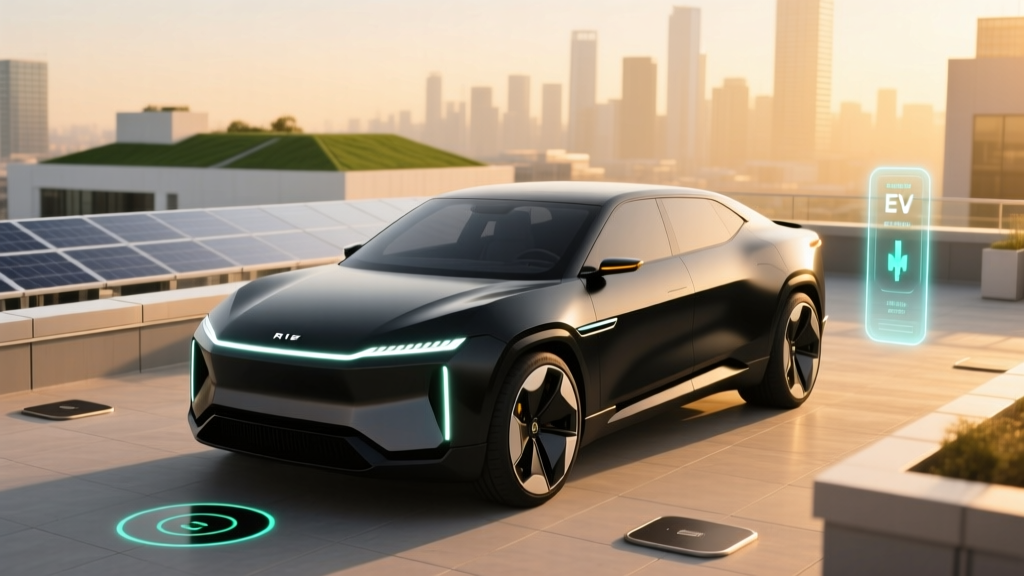
The Rivian R2 is the most anticipated electric SUV since the original Tesla Model Y — a compact, five-seat electric crossover designed to bring Rivian's adventure-focused platform to a mainstream price point. For shoppers tracking the Rivian R2 timeline, the wait is nearly over: production at Rivian's Normal, Illinois facility is scheduled to begin in the first half of 2026, with customer deliveries expected to ramp through the second half of the year. Here is everything we know about the R2's specifications, pricing, and ownership profile based on Rivian's official disclosures, supply-chain reporting, and our analysis of the segment.
Rivian R2 Timeline: Key Milestones and Delivery Windows
Rivian CEO RJ Scaringe first unveiled the R2 in March 2024 alongside the smaller R3 concept. Since then, the company has accelerated its path to production by choosing to build initial R2 units on the existing Normal, Illinois assembly line rather than waiting for its planned Georgia factory. Here is the current timeline as of early 2026:
- March 2024: R2 officially revealed with design, platform details, and target pricing of ~$45,000.
- Mid-2024: Rivian confirms Illinois production line retooling to accommodate R2 alongside R1S and R1T.
- Q4 2025: Pre-production validation builds begin; reservation holders gain configuration access.
- H1 2026: Series production starts at the Normal, IL facility.
- H2 2026: First customer deliveries, starting with dual-motor AWD trims. Single-motor RWD expected to follow in late 2026 or early 2027.
- 2028 (projected): Georgia plant comes online for higher-volume R2 and R3 production.
Reservation holders who placed a $1,000 refundable deposit in 2024 are being prioritized by configuration date. Rivian has indicated it will follow the same rollout pattern as the R1: early builds skew toward higher-trim, dual-motor configurations before base single-motor variants enter the mix.
Range, Battery, and Efficiency: What to Expect
Rivian has targeted a maximum EPA-estimated range of 330 miles for the R2 Long Range AWD variant. The standard-range dual-motor is expected to deliver approximately 270–290 miles EPA, while the single-motor RWD (when it arrives) may push toward 310 miles thanks to reduced drivetrain losses.
The 330-mile EPA figure applies to the Long Range AWD under mixed driving conditions. Expect roughly 275–295 miles in sustained 75-mph highway driving, and plan for 230–260 miles in freezing temperatures (below 32°F) where battery chemistry and cabin heating reduce usable capacity. Rivian's heat pump system should mitigate some cold-weather loss compared to the R1's earlier thermal management, but physics still applies.
The R2 is expected to use a battery pack in the 75–85 kWh usable capacity range. Rivian has not confirmed cell chemistry for every trim, but industry reporting and the company's cost-reduction targets strongly suggest the standard-range R2 will use LFP (lithium iron phosphate) cells, while the Long Range variant will use NMC (nickel manganese cobalt) for higher energy density.
| Specification | Standard Range AWD | Long Range AWD | Single-Motor RWD (Est.) |
|---|---|---|---|
| EPA Range (est.) | ~280 mi | ~330 mi | ~310 mi |
| Battery Capacity (usable) | ~75 kWh (LFP) | ~85 kWh (NMC) | ~75 kWh (LFP est.) |
| Drivetrain | Dual-Motor AWD | Dual-Motor AWD | Single-Motor RWD |
| Horsepower | ~400 hp | ~450 hp | ~280 hp |
| 0–60 mph | ~4.5 sec | ~3.9 sec | ~6.5 sec |
| Efficiency (est.) | ~120 MPGe / 28 kWh/100mi | ~125 MPGe / 26 kWh/100mi | ~130 MPGe / 25 kWh/100mi |
| Base MSRP (est.) | ~$45,000 | ~$52,000 | ~$42,000 |
All figures above are based on Rivian's public disclosures and analyst estimates; final EPA certification numbers will be published on fueleconomy.gov once the R2 receives official certification, likely in mid-2026.
Charging Speed: DC Fast Charge and Home Level 2
Rivian has confirmed the R2 will ship with the NACS (North American Charging Standard) connector natively — no adapter required. This gives R2 owners direct access to the Tesla Supercharger network, which remains the most reliable DC fast-charging infrastructure in the U.S.
The R2's 800-volt-class electrical architecture (similar to the updated R1 platform) is expected to support peak DC fast-charge rates of approximately 220–250 kW. Here is what that translates to in practice:
| Charging Level | Power / Rate | Estimated Speed |
|---|---|---|
| Level 1 (120V household) | ~1.4 kW | ~3–4 miles per hour |
| Level 2 (240V, 48A home charger) | ~11.5 kW | ~28–32 miles per hour |
| DC Fast Charge (NACS Supercharger) | Peak ~240 kW | 10–80% in ~22 minutes (est.) |
A critical detail for road-trippers: like all modern EVs, the R2 will not sustain peak charge rates across the entire session. Expect the charge curve to taper noticeably above 80% State of Charge (SoC) — a 10–90% session will take considerably longer than 10–80%. For highway travel, plan stops around the 10–80% sweet spot and precondition the battery via navigation routing to a charger for optimal speeds.
At home, a 48-amp Level 2 wall connector on a 60-amp circuit will fully replenish the R2 overnight in roughly 7–9 hours depending on pack size. Most owners charging daily will rarely need a full 0–100% cycle.
Performance, Dimensions, and Cargo
The R2 sits on a new mid-size platform that is smaller and lighter than the R1S/R1T skateboard. Dual-motor variants will feature Rivian's latest iteration of its dual-motor AWD system with torque vectoring. Performance targets position the R2 between the Tesla Model Y Performance and the Hyundai Ioniq 5 in straight-line acceleration, but with more off-road capability than either.
Exterior dimensions place the R2 at approximately 185 inches long, 76 inches wide, and 66 inches tall — roughly the footprint of a Toyota RAV4 but with EV packaging advantages. Interior space is expected to include:
- Cargo volume (rear seats up): ~32 cubic feet
- Cargo volume (rear seats folded): ~68 cubic feet
- Front trunk (frunk): ~8 cubic feet — a significant advantage over the Model Y's minimal frunk
- Rear legroom: ~38 inches (estimated)
- Ground clearance: ~8.5 inches, with potential air-suspension adjustability on higher trims
The R2's gear tunnel — a signature Rivian feature on the R1T — is not expected to carry over to the R2's SUV form factor, but the combination of a usable frunk and flat load floor should make it competitive for camping and gear hauling.
Pricing, Trims, and Federal Tax Credit Eligibility
Rivian's stated goal is a starting MSRP of approximately $45,000 for the base dual-motor R2, with the Long Range AWD climbing to roughly $52,000. A single-motor RWD entry point around $42,000 is anticipated when that variant enters production. Fully loaded configurations with adventure packages, larger wheels, and premium interiors could approach $60,000.
| Trim | Est. Base MSRP | §30D Credit (Max) | Effective Price (if eligible) |
|---|---|---|---|
| Single-Motor RWD | ~$42,000 | Up to $7,500 | ~$34,500 |
| Dual-Motor AWD (Standard Range) | ~$45,000 | Up to $7,500 | ~$37,500 |
| Dual-Motor AWD (Long Range) | ~$52,000 | Up to $7,500 | ~$44,500 |
Federal tax credit caveats: Under IRS §30D rules, the full $7,500 credit requires the vehicle to meet critical-mineral and battery-component sourcing thresholds that tighten annually. The R2, assembled in Illinois, benefits from domestic manufacturing, but final credit eligibility depends on the battery cell supply chain at time of delivery. Additionally, buyer income caps apply ($150,000 single / $300,000 joint AGI), and the vehicle MSRP must not exceed $80,000 for SUVs — a threshold the R2 comfortably clears. The credit can now be transferred to the dealer at point of sale, reducing your purchase price directly. Always confirm eligibility with a tax professional before relying on the credit.
Technology, Driver Assists, and Warranty
The R2 will debut Rivian's next-generation software stack on a large central touchscreen (expected 15.6-inch landscape orientation) with a fully digital instrument cluster. Key tech features are expected to include:
- Over-the-air (OTA) updates for powertrain, infotainment, and ADAS improvements
- Rivian Autonomy Platform — an advanced Level 2 driver-assist system with enhanced highway lane-keeping, adaptive cruise, and hands-on-wheel monitoring (not self-driving; the driver must remain engaged at all times per NHTSA guidelines)
- Camp Mode and Gear Guard — carryover adventure features for powering accessories and monitoring cargo
- Phone-as-key with Bluetooth Low Energy and NFC backup
- Vehicle-to-load (V2L) capability for powering devices and appliances from the traction battery
Rivian's driver-assist system is classified as SAE Level 2. It provides steering and acceleration support simultaneously, but the driver must remain fully attentive, keep hands on or near the wheel, and be prepared to take over at any moment. It is not autonomous driving.
Rivian's warranty for the R1 series provides a strong precedent: expect the R2 to carry a 5-year/60,000-mile bumper-to-bumper warranty and an 8-year/100,000-mile battery and powertrain warranty with a capacity retention threshold of at least 70%. Rivian has historically offered competitive warranty terms, and the R2 should match or slightly improve on the R1 benchmarks.
How the R2 Compares: Worth the Wait?
The R2 enters one of the most competitive segments in the EV market. Here is how it stacks up against its most direct rivals on paper:
| Spec | Rivian R2 LR AWD | Tesla Model Y LR AWD | Hyundai Ioniq 5 LR AWD |
|---|---|---|---|
| EPA Range | ~330 mi | ~320 mi | ~290 mi |
| Base MSRP | ~$52,000 | ~$49,000 | ~$51,000 |
| DC Fast Charge (Peak) | ~240 kW | ~250 kW | ~235 kW |
| Cargo (rear up) | ~32 cu ft | ~30 cu ft | ~27 cu ft |
| Ground Clearance | ~8.5 in | ~6.6 in | ~6.1 in |
| Frunk | ~8 cu ft | ~4 cu ft | ~0.85 cu ft |
| Connector | NACS (native) | NACS (native) | NACS (2025+) |
- You need genuine off-road ground clearance and adventure capability in a compact EV SUV
- A large frunk and flat cargo floor matter for camping, skiing, or gear hauling
- You value Rivian's software ecosystem and adventure-oriented brand identity
- You can wait for H2 2026 delivery and potentially limited initial service-center availability
- You need a vehicle now — the Model Y and Ioniq 5 are available today with established service networks
- Lowest purchase price is paramount — the Model Y undercuts on MSRP and benefits from Tesla's Supercharger network maturity
- You prioritize the fastest possible DC charging — the Ioniq 5's E-GMP platform has proven 10–80% times around 18 minutes
Pros
- Class-leading ground clearance and off-road capability
- Native NACS — direct Supercharger access, no adapter
- Large frunk (~8 cu ft) rare in this segment
- 330-mile target range is competitive with best-in-class
- US-built in Illinois — strong §30D credit prospects
- Adventure-focused software (Camp Mode, Gear Guard)
Cons
- Not available until H2 2026 — long wait for reservation holders
- Initial service-center network may be limited vs. Tesla/Hyundai
- Base MSRP likely higher than Model Y
- Real-world range and charging specs unverified until EPA certification
- Single-motor RWD variant delayed to late 2026 or 2027
- Rivian's production ramp history suggests early delays are possible
Frequently Asked Questions
What is the real-world range of the Rivian R2?
Rivian targets 330 miles EPA for the Long Range AWD. In real-world highway driving at 70–75 mph, expect approximately 275–295 miles. In sub-freezing winter conditions, plan for 230–260 miles per charge. These figures are estimates pending official EPA certification.
How fast does the R2 charge at home and on the road?
At home on a 48-amp Level 2 charger (240V), the R2 should add roughly 28–32 miles of range per hour, fully charging overnight in 7–9 hours. On DC fast chargers, peak rates of ~240 kW should deliver a 10–80% charge in approximately 22 minutes, with taper above 80% extending total session time.
How much does the R2 cost after the federal tax credit?
If you qualify for the full $7,500 §30D credit, the dual-motor Standard Range R2 at ~$45,000 MSRP could effectively cost around $37,500. Eligibility depends on your income (under $150K single / $300K joint), the vehicle's battery sourcing compliance, and MSRP caps — all of which the R2 is expected to meet, but confirm with a tax professional.
Does the Rivian R2 qualify for the federal EV tax credit?
The R2 is assembled in Illinois and is expected to meet the MSRP cap (under $80,000 for SUVs). Battery sourcing requirements under §30D tighten each year, and the final determination depends on the cell supply chain at time of delivery. Rivian's domestic manufacturing and supply-chain investments position the R2 favorably, but check the IRS clean vehicle credit page for the latest eligibility details.
Is the Rivian R2 worth waiting for versus buying a Model Y or Ioniq 5 now?
If you need a vehicle immediately, the Model Y and Ioniq 5 are proven, available, and well-supported. If you can wait until late 2026 and prioritize off-road capability, a large frunk, and Rivian's adventure ecosystem, the R2 offers a differentiated package that no current competitor matches. The trade-off is production-ramp risk and a potentially thinner service network in the first year.
When will I get my R2 if I have a reservation?
Rivian is prioritizing early reservation holders (those who placed deposits in early 2024) for H2 2026 delivery, starting with dual-motor AWD configurations. Later reservations and single-motor RWD requests will likely push into 2027. Monitor your Rivian account for configuration invitations.