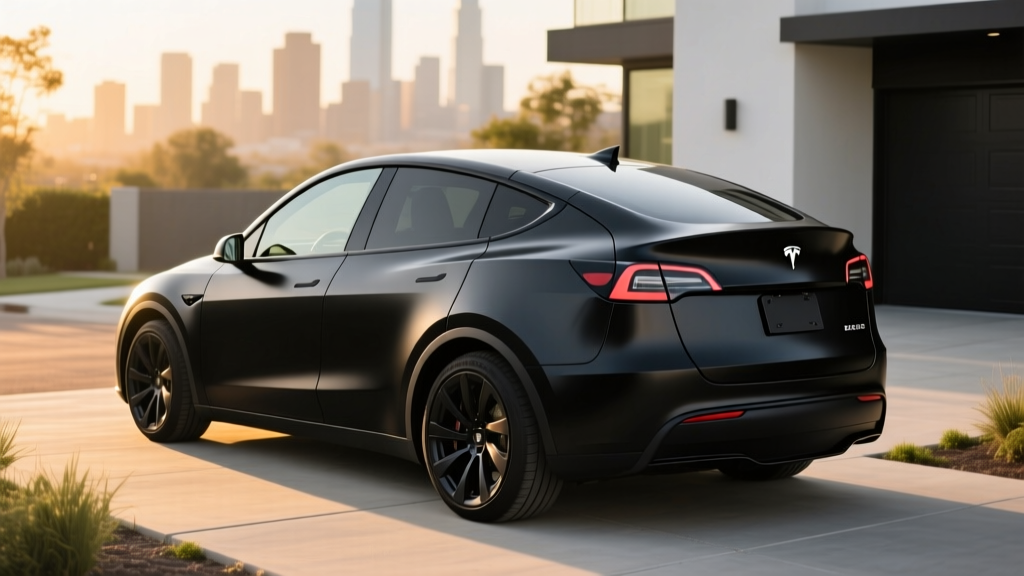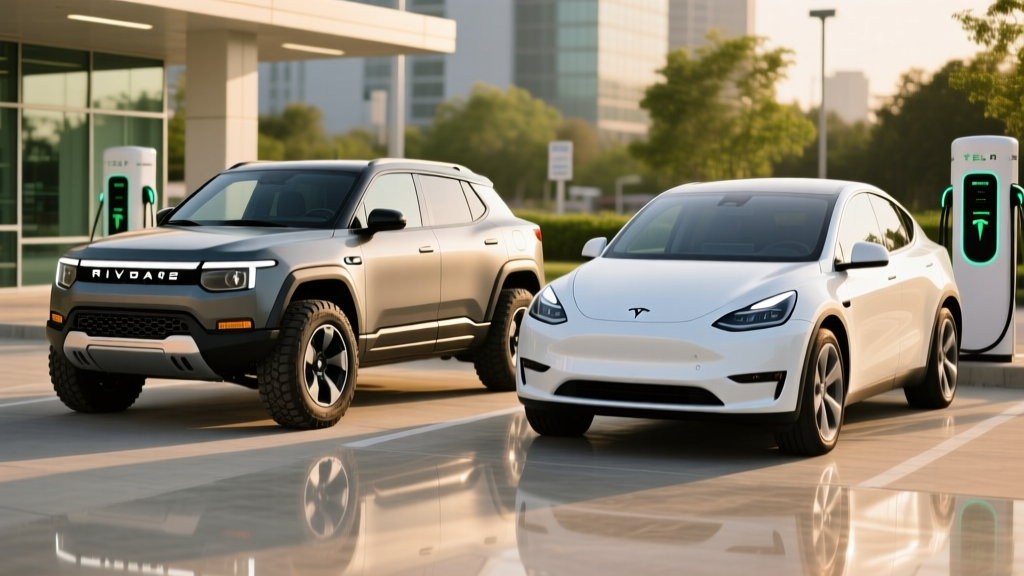
The compact electric SUV segment is the most competitive space in the EV market, and two nameplates dominate the conversation: the Tesla Model Y and the incoming Rivian R2. With the R2 entering production in 2026, buyers are weighing whether to wait for Rivian's smaller, more affordable entry or stick with the proven bestseller. This comparison breaks down the Rivian R2 vs Tesla Model Y in size, range, charging speed, pricing, and real-world usability — with exact numbers, not marketing fluff.
Rivian R2 vs Tesla Model Y: Side-by-Side Spec Table
Before we dig into the nuances, here's how the two vehicles compare on paper. Note that the Rivian R2 is a 2026 model-year release with preliminary specifications confirmed by Rivian; the Model Y reflects the current 2025/2026 refresh (codenamed Juniper).
| Specification | Rivian R2 (Dual-Motor AWD) | Tesla Model Y LR AWD |
|---|---|---|
| Vehicle Class | Compact SUV | Compact SUV |
| Length (inches) | ~183.5 | 188.0 |
| Wheelbase (inches) | ~113.0 | 113.8 |
| Width (inches, no mirrors) | ~75.0 | 75.6 |
| Height (inches) | ~66.5 | 63.9 |
| Curb Weight (est. lbs) | ~4,800 | 4,363 |
| Battery Capacity (usable kWh) | ~75 (LFP est.) | ~75 (NMC) |
| EPA Range (miles) | ~330 (preliminary) | 320 |
| MPGe (combined, est.) | ~110 | 122 |
| 0-60 mph (seconds) | ~5.0 (Dual-Motor) | 4.8 |
| Horsepower | ~400 (Dual-Motor) | 384 |
| Drivetrain | Dual-Motor AWD | Dual-Motor AWD |
| Max DC Fast Charge (kW) | ~200 (est.) | 250 |
| 10-80% DC Fast Charge (min) | ~25 (est.) | ~27 |
| Level 2 Home Charge (kW) | 11.5 | 11.5 |
| Cargo Volume (cu ft, rear seats up) | ~28 | 30.2 |
| Cargo Volume (cu ft, rear seats folded) | ~65 | 72.0 |
| Front Trunk (cu ft) | ~11 | 4.1 |
| Base MSRP | $54,000 | $48,990 |
| Battery/Powertrain Warranty | 8 yr / 100,000 mi | 8 yr / 120,000 mi |
Size & Dimensions: How the Rivian R2 and Model Y Compare
The keyword on every buyer's mind — Rivian R2 vs Tesla Model Y size — reveals a nuanced picture. The R2 is shorter overall by roughly 4.5 inches, yet taller by about 2.6 inches. That extra height gives the R2 a more upright, SUV-like seating position and better outward visibility, while the Model Y's longer wheelbase (by 0.8 inches) translates to marginally more rear legroom.
In practice, the R2 is designed to slot below the R1S in Rivian's lineup as a true compact crossover — think of it as closer to a Subaru Forester in footprint but with EV packaging advantages. The Model Y, despite being classified as a compact, rides on a stretched platform that pushes it toward midsize interior volume.
Where the R2 fights back is the frunk. Rivian has confirmed a front trunk of approximately 11 cubic feet — nearly triple the Model Y's 4.1 cu ft. That's meaningful for grocery runs, charging cables, or gear you want separated from the main cargo area. The Model Y compensates with slightly more total cargo volume behind the rear seats (30.2 vs ~28 cu ft) and a flat-load floor when the 60/40 split folds.
Range, Efficiency & Real-World Expectations
Rivian targets approximately 330 miles of EPA-estimated range for the R2 Dual-Motor AWD, which would edge out the Model Y Long Range AWD's 320-mile EPA rating. However, EPA stickers only tell part of the story.
Efficiency matters too. The Model Y's 122 MPGe combined (roughly 28 kWh/100 mi) is among the best in the segment, a product of Tesla's industry-leading heat pump, low drag coefficient (0.23 Cd), and lighter curb weight. The R2, likely heavier by 400+ lbs and less aerodynamic, is estimated around 110 MPGe (~31 kWh/100 mi). Over 15,000 miles per year, that's roughly 450 kWh more energy consumption — about $60-90/year at national average electricity rates.
Charging Speed: DC Fast Charging & Home Level 2
Charging infrastructure access is where the Model Y currently holds a decisive advantage. Every new Tesla ships with the native NACS (North American Charging Standard) connector and full access to the Tesla Supercharger network — over 20,000 stalls in North America with industry-best uptime.
Rivian has confirmed the R2 will also ship with a native NACS charge port, granting it Supercharger access from day one. This is a significant evolution from the R1S/R1T, which launched with CCS and required an adapter.
| Charging Method | Rivian R2 (Est.) | Tesla Model Y LR |
|---|---|---|
| Level 1 (120V, 1.4 kW) | ~3-4 mi/hr | ~3-4 mi/hr |
| Level 2 (240V, 11.5 kW) | ~32 mi/hr | ~37 mi/hr |
| DC Fast Charge (Peak kW) | ~200 kW | 250 kW |
| 10-80% DC Fast Charge | ~25 min | ~27 min |
| Connector | NACS (native) | NACS (native) |
| Charge Curve Note | LFP chemistry may sustain peak kW longer | NMC tapers sharply above 80% |
A key nuance: if the R2 uses LFP (lithium iron phosphate) battery chemistry as expected for base trims, it may sustain a higher average charge rate through the 10-80% window despite a lower peak kW. LFP cells tolerate higher C-rates at elevated states of charge, meaning the real-world 10-80% time gap may be smaller than peak numbers suggest. The Model Y's NMC pack, while peaking at 250 kW, tapers aggressively past 60% SoC.
For home charging, both vehicles accept 11.5 kW on Level 2, adding roughly 32-37 miles of range per hour of charging. A full overnight charge (8-10 hours on a 48-amp Level 2 circuit) easily replenishes either battery from near-empty. Expect a professional Level 2 installation to cost $800-$2,500 depending on panel proximity and local permitting.
Performance & Drivetrain
Both vehicles offer dual-motor all-wheel-drive configurations, but the character differs. The Model Y Long Range AWD delivers 384 horsepower and a 4.8-second 0-60 mph time — brisk, composed, and well-suited to daily driving. Tesla's traction control and torque-vectoring remain benchmark-level.
The Rivian R2 Dual-Motor targets approximately 400 horsepower and a ~5.0-second 0-60 time. Rivian's R1 platform has proven capable (the R1T Dual-Motor does 0-60 in 4.5 seconds), so these numbers are conservative estimates. What the R2 will offer that the Model Y cannot is genuine off-road capability. Rivian has confirmed the R2 will retain a version of the brand's quad/dual-motor torque-vectoring system, with selectable drive modes for snow, sand, and rock crawling — plus higher ground clearance (~8.5 inches vs the Model Y's 6.6 inches).
If towing matters: the R2 is expected to tow up to 3,300 lbs (preliminary), slightly less than the R1T but adequate for a small trailer or pair of dirt bikes. The Model Y is rated at 3,500 lbs.
Pricing, Trims & Federal Tax Credit Eligibility
The R2's $54,000 starting MSRP (Dual-Motor AWD) positions it above the Model Y Long Range AWD at $48,990. A more affordable R2 Standard trim with single-motor RWD is expected at approximately $45,000 in late 2026 or 2027, which would undercut the Model Y RWD ($44,990).
| Trim | MSRP | Est. §30D Credit | Effective Price |
|---|---|---|---|
| Tesla Model Y RWD | $44,990 | Up to $7,500* | ~$37,490 |
| Tesla Model Y LR AWD | $48,990 | Up to $7,500* | ~$41,490 |
| Tesla Model Y Performance | $52,490 | Up to $7,500* | ~$44,990 |
| Rivian R2 Dual-Motor AWD | $54,000 | Up to $7,500* | ~$46,500 |
| Rivian R2 Standard (RWD, late '26) | ~$45,000 | Up to $7,500* | ~$37,500 |
*Federal EV tax credit eligibility under IRS §30D is not automatic. For 2026, buyers must meet ALL of the following:
- MSRP cap: SUVs must be at or below $80,000 — both vehicles qualify on MSRP.
- Income cap: Modified AGI must not exceed $150,000 (single), $225,000 (head of household), or $300,000 (joint).
- Battery sourcing: A percentage of critical minerals and battery components must be sourced from the US or free-trade-agreement countries. This requirement tightens annually and may affect eligibility for specific trims or build dates.
- Point-of-sale transfer: The credit can now be applied as a discount at purchase rather than claimed on your tax return, but the dealer must be registered with the IRS Energy Credits portal.
The Tesla Model Y has consistently qualified for the full $7,500 credit through recent model years, but Rivian's R2 eligibility at launch depends on final battery-sourcing certifications — something to verify before placing a deposit. Consult a tax professional and check the latest fueleconomy.gov credit listings before purchasing.
Tech, Driver Assistance & Interior
The Model Y's interior is minimalist by design: a single 15.4-inch center touchscreen handles virtually every function, including climate controls and mirror adjustment. The Juniper refresh added ventilated front seats, ambient lighting, a rear-seat entertainment screen, and improved sound insulation. Tesla's Autopilot (standard) is a competent SAE Level 2 driver-assist system, with Full Self-Driving (Supervised) available as a $8,000 add-on — though FSD still requires active driver supervision at all times and does not make the vehicle autonomous.
The R2 is expected to feature Rivian's latest interior design language: a 15.6-inch center display, a dedicated driver instrument cluster (a welcome addition the Model Y lacks), and physical controls for climate and drive modes. Rivian's Driver+ system is also SAE Level 2 but has earned strong reviews for lane-centering smoothness and hands-on-wheel detection that's less intrusive than Tesla's steering-wheel torque sensor.
Unique R2 features are expected to include a camp kitchen accessory, integrated air compressor, and Gear Guard cable lock — carryovers from the R1 platform that appeal to the outdoor-adventure crowd. The Model Y counters with Sentry Mode dashcam recording, Dog Mode climate, and a vastly larger Supercharger network for road trips.
Pros & Cons at a Glance
Rivian R2 — Pros
- Larger frunk (~11 cu ft) for gear and cables
- Upright SUV seating position and visibility
- Off-road capability and higher ground clearance
- Native NACS for Supercharger access at launch
- Physical controls and driver display
- Adventure-ready accessories
Rivian R2 — Cons
- Higher starting MSRP than Model Y LR
- Unproven at scale (first new model from Rivian)
- Heavier and less aerodynamic — higher energy use
- Lower peak DC charge rate (~200 vs 250 kW)
- Tax credit eligibility unconfirmed at launch
- Limited service center network vs Tesla
Tesla Model Y — Pros
- Proven reliability and massive Supercharger network
- Best-in-class efficiency (122 MPGe combined)
- Lower MSRP with consistent $7,500 credit eligibility
- Fastest DC charging (250 kW peak)
- Strong resale value and service infrastructure
- OTA updates continuously add features
Tesla Model Y — Cons
- Minimalist interior not for everyone
- No driver instrument cluster
- Low ground clearance — not off-road capable
- Small frunk (4.1 cu ft)
- Everything controlled via touchscreen
- Ubiquity — it's everywhere
Who Should Buy Which?
- Choose the Tesla Model Y if: You want the lowest effective price after credits, the most proven charging network, best efficiency, and maximum cargo space. Ideal for commuters, small families, and frequent road-trippers who value Supercharger reliability.
- Choose the Rivian R2 if: You need off-road capability, prefer an upright SUV driving position, want a large frunk and adventure accessories, and are willing to pay a premium for a more distinctive vehicle. Best for outdoor enthusiasts and those who find the Model Y's interior too spartan.
- Wait for the R2 Standard (RWD) if: Budget is your top priority and you don't need AWD — the ~$45,000 RWD trim (late 2026/2027) could become the segment value leader if it qualifies for the full credit.
Frequently Asked Questions
What is the real-world range of the Rivian R2 vs the Tesla Model Y?
The R2 targets ~330 miles EPA; expect 280-300 miles in real-world highway driving and 230-260 in cold weather. The Model Y LR's 320-mile EPA rating delivers ~270-290 highway and ~230-250 in freezing temps. The gap narrows significantly outside ideal conditions.
Does the Rivian R2 qualify for the $7,500 federal EV tax credit?
It likely will, given its sub-$80,000 MSRP, but final eligibility depends on battery-sourcing and critical-mineral compliance under IRS §30D. Rivian must certify each trim/build configuration. Verify on fueleconomy.gov before purchasing — don't assume eligibility.
Can I charge the Rivian R2 at Tesla Superchargers?
Yes. Rivian has confirmed the R2 will ship with a native NACS port, granting direct Supercharger access without an adapter — the same connector Tesla uses.
Is the Rivian R2 bigger or smaller than the Model Y?
Smaller in length (~4.5 inches shorter) but taller (~2.6 inches). The R2 has a larger frunk; the Model Y has more rear cargo volume and slightly more rear legroom. Overall, they're in the same compact SUV class with different packaging philosophies.
Which is better for towing — the R2 or the Model Y?
The Model Y is rated at 3,500 lbs. The R2 is expected at ~3,300 lbs (preliminary). Both handle light trailer duty, but neither is a heavy-duty tow vehicle. The R2's off-road modes may be more useful for boat ramps and unpaved campsite access.
When can I actually buy the Rivian R2?
Rivian began R2 production at its Normal, Illinois facility in early 2026, with first deliveries expected mid-2026. The more affordable Standard RWD trim is anticipated for late 2026 or early 2027. Reservations are open on Rivian's website with a refundable deposit.