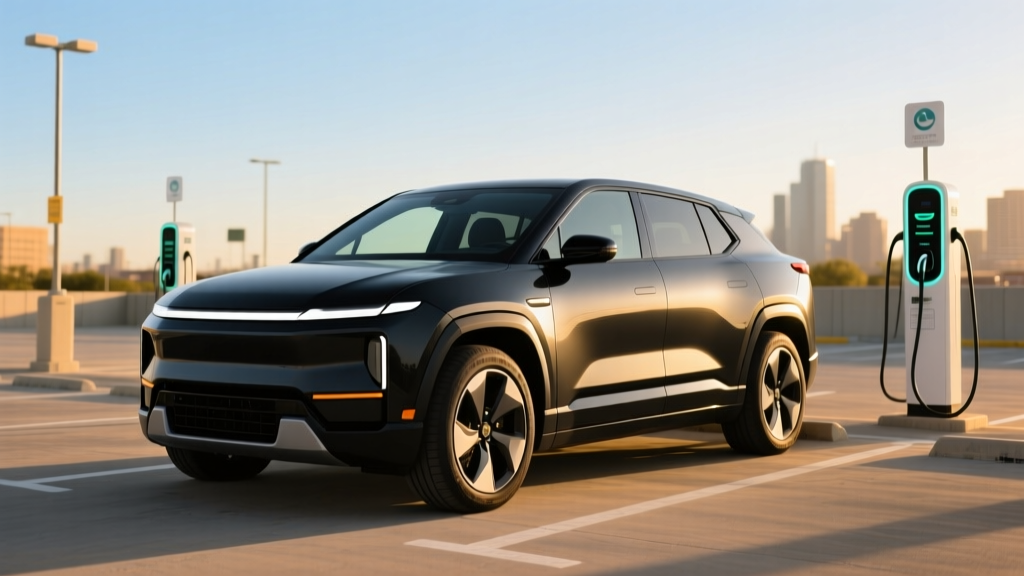
The Rivian R2 is the automaker's high-stakes, midsize electric SUV designed to bring the brand's adventure-oriented formula to a broader market at a sub-$50,000 price point. But as the R2 moves toward its 2026 production ramp at Rivian's Normal, Illinois facility — and now a planned second line in Georgia — the company's recent workforce reductions have raised legitimate questions among reservation holders and prospective buyers. Can Rivian execute on time, and what does the R2 actually deliver in range, charging, and everyday usability?
This review breaks down everything we know about the R2's specifications, real-world range expectations, charging performance, and how recent corporate restructuring may influence the ownership experience in 2026 and beyond.
Rivian R2 Core Specifications at a Glance
| Attribute | R2 Standard | R2 Dual-Motor | R2 Tri-Motor (Perf) |
|---|---|---|---|
| EPA Range (est.) | ~275 mi | ~330 mi | ~310 mi |
| Battery Capacity | ~75 kWh usable (LFP) | ~92 kWh usable (NMC) | ~92 kWh usable (NMC) |
| Drivetrain | RWD (single motor) | AWD (dual motor) | AWD (tri motor) |
| Horsepower | ~335 hp | ~450 hp | ~600+ hp |
| 0-60 mph | ~6.0 sec | ~4.5 sec | ~3.0 sec |
| Max DC Fast Charge | ~175 kW | ~217 kW | ~217 kW |
| 10-80% DC Time | ~28 min | ~22 min | ~22 min |
| Level 2 Home Charging | 11.5 kW (~33 mi/hr) | 11.5 kW (~33 mi/hr) | 11.5 kW (~33 mi/hr) |
| Base MSRP | $45,000 | $52,500 | $58,000 |
| Towing Capacity | ~3,300 lbs | ~4,400 lbs | ~4,400 lbs |
Note: Rivian has published preliminary specifications for the R2 platform. Final EPA certification figures may vary at the time of customer deliveries. The tri-motor Performance variant was announced but is not expected in the initial production wave.
Real-World Range: What to Actually Expect
EPA Estimated Range: Up to 330 miles (Dual-Motor, 92 kWh NMC pack)
Real-World Expectation: Expect approximately 270-295 miles on mixed highway driving at 70-75 mph. In cold weather (below 30°F), plan for a 15-25% reduction, bringing effective range to roughly 220-250 miles for the Dual-Motor variant. The LFP-equipped Standard RWD model will see a tighter real-world envelope of approximately 230-250 miles highway in mild conditions.
The R2's aerodynamic profile and thermal management system — which includes a standard heat pump for cabin heating and battery preconditioning — help mitigate some of the cold-weather losses that plague less sophisticated EV platforms. However, the boxy SUV shape inherently creates more drag than a sedan like the Tesla Model 3 or Hyundai Ioniq 6, which translates to higher energy consumption at sustained highway speeds.
Rivian's efficiency target for the Dual-Motor sits around 3.2-3.5 miles per kWh, or roughly 28-31 kWh per 100 miles. That translates to an estimated 105-115 MPGe combined. For comparison, the Tesla Model Y Long Range achieves about 122 MPGe combined per fueleconomy.gov. The R2 trades some efficiency for its off-road capability, ground clearance, and heavier build.
LFP battery buyers should note that lithium iron phosphate chemistry performs well in longevity but has slightly lower energy density than NMC. This is why the Standard RWD model carries a smaller pack with less range. The upside: LFP packs tolerate regular 100% charging better than NMC, making daily full charges less detrimental to long-term health.
Charging Speed and Infrastructure
Rivian has equipped the R2 with the North American Charging Standard (NACS) connector natively, meaning direct access to Tesla's Supercharger network — the most reliable DC fast-charging infrastructure in the U.S. — without an adapter. This is a significant advantage over CCS-only vehicles that still require adapters at Superchargers.
| Charging Level | Power | Miles Added per Hour | Notes |
|---|---|---|---|
| Level 1 (120V) | ~1.4 kW | ~4 mi/hr | Emergency/top-off only |
| Level 2 (240V, 48A) | 11.5 kW | ~33 mi/hr | Full charge in ~8-9 hours |
| DC Fast Charge | Up to 217 kW peak | ~650 mi/hr (peak) | 10-80% in ~22 min (Dual-Motor) |
The 217 kW peak charge rate on the Dual-Motor and Tri-Motor variants is competitive with the Hyundai Ioniq 5 (240 kW peak) and slightly behind the Tesla Model Y's ~250 kW capability on V3 Superchargers. However, peak charge rate is not sustained charge rate. In real-world DC charging, the R2's charge curve will taper significantly above 60-70% state of charge (SoC), which is standard physics for lithium-ion cells. Expect the 10-80% session to average closer to 140-160 kW sustained, which is why the 22-minute estimate holds.
For home charging, a Level 2 wall connector on a 60-amp circuit (providing 48 amps continuous) will replenish the R2's battery at 11.5 kW, adding roughly 33 miles of range per hour of charging. A full overnight charge from 10% to 100% takes approximately 8-9 hours for the larger NMC pack. Home installation costs for a Level 2 setup typically range from $500 to $2,000 depending on panel proximity and whether a 200-amp service upgrade is needed — consult a licensed electrician for your specific situation.
What the Workforce Cuts Mean for R2 Buyers
In early-to-mid 2026, Rivian confirmed workforce reductions across several departments as part of a broader cost-management strategy aimed at reaching gross-margin profitability. For prospective R2 buyers, these cuts raise practical questions about production timelines, software development velocity, and post-sale support.
Here is what matters:
- Production timeline: Rivian has maintained its commitment to begin R2 production at the Normal, Illinois plant in the first half of 2026. The Georgia facility, originally slated for R2 production, was deferred to conserve capital. Workforce cuts have not, as of current reporting, shifted the Illinois production start date, but reservation holders should monitor for delivery-window adjustments.
- Software and feature development: Rivian's ADAS (Advanced Driver Assistance Systems) team and infotainment engineers have seen some reduction. This could slow the rollout of advanced features like enhanced highway assist or over-the-air improvements that early buyers might expect. The core driving experience and vehicle software should remain intact.
- Service network: Rivian has been expanding its service center footprint and mobile service vans. Workforce reductions in non-production roles could slow this expansion, potentially leading to longer wait times for service in less-covered metro areas during the initial R2 ramp.
- Financial stability: The cuts signal fiscal discipline rather than distress. Rivian secured significant capital through its partnership with Volkswagen Group, which invested up to $5 billion in a joint venture for software and electrical architecture. This backing reduces bankruptcy risk substantially.
The bottom line: If you hold an R2 reservation, the workforce cuts are a yellow flag, not a red one. Production should proceed, but delivery estimates and feature rollouts may shift. If you are considering placing a new order, factor in potential 6-12 month wait times beyond the quoted delivery window.
Pricing, Trims, and Federal Tax Credit Eligibility
| Trim | MSRP | Est. Federal Credit (§30D) | Effective Price |
|---|---|---|---|
| R2 Standard (RWD) | $45,000 | Up to $7,500* | ~$37,500 |
| R2 Dual-Motor (AWD) | $52,500 | Up to $7,500* | ~$45,000 |
| R2 Tri-Motor (AWD Perf) | $58,000 | Up to $7,500* | ~$50,500 |
*Federal tax credit eligibility under IRS §30D is subject to multiple requirements that change frequently. Key constraints include:
- MSRP cap: SUVs must have an MSRP at or below $80,000. All R2 trims clear this threshold.
- Buyer income cap: Adjusted gross income must not exceed $150,000 (single), $225,000 (head of household), or $300,000 (joint filers).
- Battery sourcing requirements: A percentage of critical minerals and battery components must be sourced from the U.S. or free-trade-agreement countries. These thresholds increase annually and may affect credit amounts ($3,750 for minerals, $3,750 for components — up to $7,500 total).
- Point-of-sale transfer: As of 2024, buyers can transfer the credit to the dealer at purchase, reducing the upfront price rather than waiting for a tax refund. This option is expected to remain available for 2026 purchases.
Rivian has not yet confirmed which R2 trims will qualify for the full $7,500 credit versus a partial $3,750. Battery cell sourcing — likely from a combination of Samsung SDI and potentially other suppliers — will determine the final credit amount. Buyers should verify eligibility with a tax professional before purchase, as rules are subject to legislative change.
Performance, Capability, and Daily Driving
The R2 rides on a new, smaller platform that shares design DNA with the R1S and R1T but is engineered for higher-volume manufacturing. The single-motor RWD variant offers a compelling entry point for commuters who do not need all-wheel drive, while the Dual-Motor provides the all-weather traction and towing capability that defines the Rivian brand.
Key performance notes:
- Dual-Motor AWD: ~450 hp with approximately 4.5-second 0-60 mph times. Torque vectoring between front and rear motors provides confident handling on wet and loose surfaces.
- Ground clearance: Approximately 8.5 inches standard, with available air suspension offering up to ~10.5 inches for off-road use. This is competitive with the Subaru Outback Wilderness and significantly more than the Tesla Model Y.
- Towing: Up to 4,400 lbs on Dual-Motor trims. Towing will reduce range by approximately 35-50% depending on trailer weight and aerodynamics — plan for 160-190 miles of effective range when towing near capacity.
- Drive modes: Expected to include Snow, Sand, Rock Crawl, and All-Purpose modes inherited from the R1 platform.
On the road, the R2's steering and suspension tuning should deliver a compliant ride with less body roll than the heavier R1S, thanks to the shorter wheelbase and lower curb weight (estimated ~4,800-5,200 lbs depending on trim). Regenerative braking is expected to offer multiple levels including a one-pedal driving mode.
Interior, Cargo, and Technology
The R2's interior follows Rivian's minimalist-but-functional philosophy. A large central touchscreen (expected 15.3 inches) handles infotainment, navigation, and vehicle settings. A smaller driver display replaces a traditional instrument cluster. Physical controls for climate and drive modes are expected to remain, addressing a common complaint with touchscreen-only interfaces.
Dimension highlights:
- Seating: 5 passengers (2-row SUV). Rear legroom estimated at ~38-40 inches, accommodating adult passengers comfortably.
- Cargo volume: Approximately 32-35 cu ft behind the second row, expanding to ~65-70 cu ft with rear seats folded. A front trunk (frunk) adds an estimated 8-10 cu ft of sealed, drainable storage — a Rivian signature feature.
- Gear Tunnel: Unlike the R1S, the R2 is not expected to offer the full-width gear tunnel, given the shorter vehicle length. Roof rail accessories and a hitch-mounted cargo carrier remain available options.
On the technology front, the R2 features:
- Rivian Driver+ (ADAS): A Level 2 (per SAE J3016) driver-assistance system combining adaptive cruise control, lane centering, and automatic emergency braking. Hands-on-wheel supervision is required at all times. This is NOT autonomous or self-driving.
- Over-the-air updates: Continuous software improvements, feature additions, and performance tuning delivered wirelessly.
- Camp Mode and Pet Mode: Climate-control presets for overnight camping and leaving pets safely in the vehicle, leveraging the large battery for extended operation.
- Vehicle-to-Load (V2L): Expected to offer 120V outlet capability for powering devices, tools, or campsite equipment from the traction battery.
Warranty Coverage
Rivian is expected to carry forward warranty terms similar to the R1 platform:
- Battery warranty: 8 years / 100,000 miles, with a capacity retention threshold of 70% minimum over the warranty period.
- Powertrain warranty: 8 years / 100,000 miles covering motors, inverter, and related components.
- Bumper-to-bumper: 5 years / 60,000 miles.
These terms are competitive with Tesla (8 yr/120,000 mi for Model Y battery), Hyundai (10 yr/100,000 mi), and Ford (8 yr/100,000 mi). The 70% capacity retention threshold is industry-standard, though some competitors guarantee 80%.
Pros and Cons
Pros
- Native NACS connector — direct Supercharger access
- Class-leading ground clearance and off-road capability
- Competitive starting price with potential $7,500 tax credit
- LFP battery option for buyers prioritizing longevity over range
- Frunk and practical adventure-oriented design
- VW-backed financial stability reduces long-term risk
Cons
- Workforce cuts may delay deliveries and software features
- Service network still expanding — rural coverage gaps
- Lower efficiency (MPGe) than crossover competitors
- Tri-Motor Performance variant delayed beyond initial launch
- No gear tunnel on the smaller platform
- Real-world range drops significantly when towing
Who Should Buy the Rivian R2?
The R2 is purpose-built for a specific buyer: someone who wants EV efficiency and low running costs but also needs genuine all-weather capability, ground clearance for dirt roads or ski trips, and practical cargo space. It competes most directly with the Tesla Model Y, Ford Mustang Mach-E, and Hyundai Ioniq 5, but offers off-road chops none of those match.
Choose the R2 if: You prioritize outdoor capability, want native Supercharger access, value the frunk and adventure features, and can tolerate potential delivery delays from a scaling startup.
Look elsewhere if: Maximum range-per-dollar is your priority (Tesla Model Y), you need a three-row SUV (Kia EV9), you want the longest warranty (Hyundai), or you cannot risk a delivery delay from a company navigating workforce restructuring.
Frequently Asked Questions
What is the real-world range of the Rivian R2?
The Dual-Motor R2 targets approximately 330 miles EPA. In real-world mixed highway driving at 70-75 mph, expect 270-295 miles. Cold weather below 30°F will reduce this to roughly 220-250 miles. The Standard RWD with LFP battery will deliver approximately 230-250 miles highway in mild conditions.
How fast does the Rivian R2 charge?
On a DC fast charger, the Dual-Motor peaks at 217 kW, achieving a 10-80% charge in approximately 22 minutes. At home on a Level 2 (240V, 48A) charger, the R2 charges at 11.5 kW, adding about 33 miles of range per hour for a full overnight charge.
How much does the Rivian R2 cost after tax credits?
The base R2 Standard starts at $45,000 MSRP. With the full $7,500 federal tax credit (§30D), the effective price drops to approximately $37,500. The Dual-Motor at $52,500 would be roughly $45,000 after credit. Eligibility depends on buyer income, battery sourcing requirements, and MSRP caps — consult a tax professional.
Does the Rivian R2 qualify for the federal EV tax credit?
All R2 trims fall under the $80,000 SUV MSRP cap. However, the full $7,500 credit depends on critical-mineral and battery-component sourcing rules that tighten annually. Rivian has not confirmed which trims will qualify for the full amount versus the partial $3,750. Buyer income must also fall under IRS thresholds ($150K single / $300K joint).
Is the Rivian R2 worth buying vs. the Tesla Model Y?
The Model Y offers higher efficiency (122 MPGe vs. ~110 MPGe), a more established service network, and faster delivery. The R2 counters with superior ground clearance, off-road capability, a frunk, native NACS Supercharger access, and a more distinctive design. If you need adventure capability, the R2 wins. If you want the most efficient and proven option, the Model Y remains strong.
Will Rivian's workforce cuts affect my R2 delivery?
Workforce reductions in 2026 have not officially delayed the R2 production start at the Illinois plant, but they may slow software feature rollouts, service network expansion, and could compress delivery timelines. Reservation holders should expect potential 2-6 month shifts from original delivery estimates and stay in communication with Rivian's delivery team.
Is Rivian's Driver+ system self-driving?
No. Rivian Driver+ is a Level 2 driver-assistance system per SAE J3016. It combines adaptive cruise control and lane centering but requires the driver to remain fully engaged, hands on the wheel, and eyes on the road at all times. It does not operate autonomously.