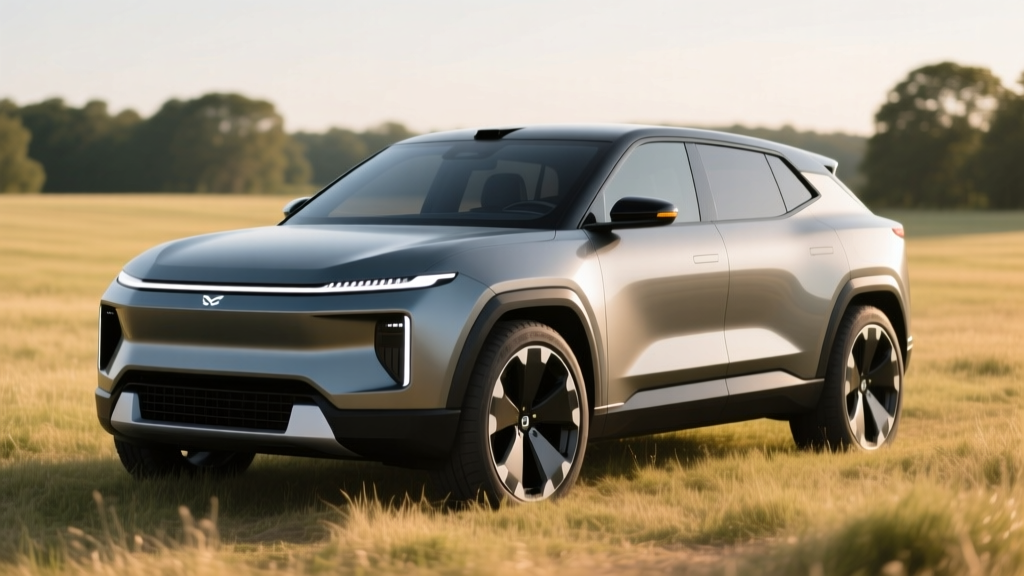
Rivian's smaller, more affordable R2 SUV is finally inching toward production, and the Rivian R2 SUV pre-production prototypes spotted testing in 2025 and early 2026 have given us our clearest look yet at the specs, packaging, and design decisions that will define this compact electric crossover. Slotted below the R1S and priced to undercut the Tesla Model Y, the R2 is Rivian's bid for mainstream volume — and the stakes couldn't be higher for the automaker's Normal, Illinois factory.
Because the R2 has not yet entered full customer production as of early 2026, every figure below is drawn from Rivian's official disclosures, pre-production prototype testing data, and supplier leaks. Final EPA certification numbers may shift before deliveries begin. We'll update this profile as Rivian confirms specs.
What the R2 Pre-Production Prototypes Tell Us
Rivian began testing R2 pre-production units in mid-2025 across cold-weather proving grounds in northern Minnesota and hot-climate loops in Death Valley. These prototypes — often spotted in heavy camouflage near Rivian's engineering facilities — are the last validation step before tooling up the new R2 production line adjacent to the existing R1 plant.
Pre-production vehicles serve a specific purpose: they are built with production-intent parts on production-intent tooling, meaning the specs they reveal are typically within 1-3% of what customers will eventually receive. That makes them the most reliable data source available right now.
Range, Battery, and Efficiency
The R2 is built on Rivian's new mid-size platform, which uses a structural battery pack integrated into the vehicle floor. Based on prototype testing and Rivian's official statements, here is what we know about the energy storage system:
| Specification | Single-Motor (RWD) | Dual-Motor (AWD) |
|---|---|---|
| Battery Chemistry | LFP (Lithium Iron Phosphate) | LFP (Lithium Iron Phosphate) |
| Usable Battery Capacity | ~75 kWh (est.) | ~85 kWh (est.) |
| EPA Estimated Range | ~275 miles (prelim.) | ~330 miles (prelim.) |
| Efficiency (est.) | ~27 kWh/100 mi | ~26 kWh/100 mi |
The decision to use LFP chemistry across the R2 lineup is a significant one. LFP batteries offer excellent cycle life (3,000+ full cycles before meaningful degradation) and lower cost per kWh, but they sacrifice some energy density compared to NMC (nickel manganese cobalt) cells. That means Rivian needs a physically larger pack to achieve the same range — which partly explains the R2's slightly taller ride height versus some competitors.
One LFP advantage for owners: Rivian is expected to recommend periodic charging to 100% for LFP packs (unlike NMC, which prefers an 80% daily limit). This means your daily usable range on an LFP R2 is effectively closer to the full EPA number, not a derated 80% figure.
Charging Speed: DC Fast and Home Level 2
Charging speed is where the R2 needs to compete directly with the Tesla Model Y and Hyundai Ioniq 5, both of which offer rapid DC fast charging. Based on pre-production prototype data and Rivian's engineering disclosures, here is what we expect:
| Charging Level | Spec | Notes |
|---|---|---|
| DC Fast Charge (Peak) | ~200 kW | NACS connector standard; CCS via adapter |
| DC 10-80% Time | ~25-28 minutes (est.) | LFP charge curve tapers earlier than NMC |
| Level 2 (Home, 240V) | ~11.5 kW / ~35 mi/hr | Full charge overnight on 48A circuit |
| Level 1 (120V) | ~1.4 kW / ~4 mi/hr | Emergency/top-up only |
A ~200 kW peak DC fast-charge rate puts the R2 in the solid mid-tier — behind the Hyundai Ioniq 5's 240 kW but ahead of the base Tesla Model Y's ~170 kW capability. The critical detail is the charge curve: LFP cells tend to hold peak charge rate for a shorter window than NMC before tapering, which is why the estimated 10-80% time of 25-28 minutes is slightly longer than you might expect from a 200 kW headline number.
For road trips along the Tesla Supercharger network (which Rivian now accesses via NACS), a 25-minute stop every 250 miles is practical. For daily driving with a home Level 2 charger, the 11.5 kW onboard charger will replenish the full pack in roughly 7-8 hours — plug in at night, wake up full.
Performance and Drivetrain
Rivian has confirmed two drivetrain configurations for the R2, mirroring the approach used in the R1S/R1T but simplified for cost:
| Metric | Single-Motor RWD | Dual-Motor AWD |
|---|---|---|
| Horsepower | ~280 hp | ~450 hp |
| 0-60 mph | ~6.5 seconds (est.) | ~3.5 seconds (est.) |
| Drivetrain | Rear-Wheel Drive | All-Wheel Drive (dual motor) |
| Towing Capacity | TBD (est. ~3,000 lbs) | TBD (est. ~3,500 lbs) |
The dual-motor AWD variant's estimated 3.5-second 0-60 time would make it one of the quickest compact crossovers on the market, rivaling the Tesla Model Y Performance. The single-motor RWD version, while less thrilling, offers a lower entry price and slightly better efficiency for commuters who don't need all-wheel drive.
Rivian's dual-motor system uses independently controlled front and rear motors, enabling torque vectoring and the brand's signature "gear tunnel" storage (though the R2's tunnel is expected to be smaller than the R1T's). The R2 also ditches the R1's complex quad-motor option for simplicity and cost savings.
Interior, Cargo, and Practicality
Pre-production prototype sightings and Rivian's official teasers reveal a minimalist but functional interior with a large central touchscreen (estimated 15.6 inches), a digital instrument cluster, and Rivian's characteristic adventure-oriented design language. Key dimensions based on prototype analysis and Rivian disclosures:
- Seating: 5 passengers (two-row layout; no third-row option)
- Rear legroom: ~38 inches (estimated, competitive with Model Y)
- Cargo volume (behind rear seats): ~32 cu ft (est.)
- Cargo volume (rear seats folded): ~68 cu ft (est.)
- Front trunk (frunk): ~8 cu ft (est.) — confirmed on prototypes
- Ground clearance: ~8.5 inches (est., with Rivian's air suspension option)
The R2's footprint is roughly 15-18 inches shorter than the R1S, making it significantly easier to park in urban garages while still offering competitive cargo space. Rivian has also confirmed the R2 will feature the brand's camp kitchen accessory compatibility and integrated gear tie-down points in the cargo area — details that matter to the outdoor-adventure buyer Rivian targets.
Pricing, Trims, and Federal Tax Credit Eligibility
Rivian has targeted an aggressive starting price for the R2, aiming to undercut the Tesla Model Y and compete with the Hyundai Ioniq 5 and Ford Mustang Mach-E in the $45,000-$55,000 range:
| Trim | Est. MSRP | Est. After §30D Credit |
|---|---|---|
| Standard (Single-Motor RWD) | ~$45,000 | ~$37,500* |
| Adventure (Dual-Motor AWD) | ~$52,500 | ~$45,000* |
| Performance (Dual-Motor AWD+) | ~$57,500 | ~$50,000* |
*Tax credit amounts are estimates and subject to IRS §30D eligibility. See checklist below.
Federal tax credit eligibility under IRS §30D is complex and changes as battery sourcing rules tighten. Here is what buyers need to verify before counting on the credit:
- MSRP Cap: SUVs must be priced at or below $80,000 — the R2 clears this easily at all trims.
- Buyer Income Cap: Modified AGI must not exceed $150,000 (single), $225,000 (head of household), or $300,000 (joint filing).
- Battery Sourcing (Critical Minerals): A percentage of critical minerals must be sourced from the US or FTA partners — this threshold increases annually. Rivian's LFP supply chain (potentially involving Chinese-processed minerals) may affect partial or full credit eligibility. Check the latest fueleconomy.gov listings at time of purchase.
- Battery Component Manufacturing: A percentage of battery components must be manufactured or assembled in North America. This threshold also tightens yearly.
- Point-of-Sale Transfer: Eligible buyers can transfer the credit to the dealer at purchase, reducing the upfront price rather than waiting for a tax refund.
- Final Assembly: Must occur in North America — Rivian's Normal, Illinois plant satisfies this requirement.
Rivian's use of LFP chemistry introduces a sourcing wildcard. Many LFP cells are currently produced by CATL or BYD in China, and while Rivian has announced partnerships with Samsung SDI and its own cell development, the specific cell supplier for the production R2 has not been confirmed. This could affect whether the R2 qualifies for the full $7,500 credit, the partial $3,750 credit, or no credit at all — depending on when in 2026 you purchase and what the current sourcing thresholds require. Always verify eligibility on fueleconomy.gov and consult a tax professional before relying on the credit.
Warranty, Tech, and Driver Assistance
Rivian is expected to carry over its proven warranty structure from the R1 lineup:
- Battery & Drive Unit Warranty: 8 years / 120,000 miles (minimum 70% capacity retention)
- Bumper-to-Bumper: 5 years / 60,000 miles
- Corrosion: 12 years / unlimited miles
On the technology front, pre-production prototypes have been spotted with a revised sensor suite including roof-mounted LiDAR (similar to the R1's updated hardware), multiple cameras, and radar — supporting Rivian's Driver+ system. Driver+ is a SAE Level 2 driver-assistance system, meaning it can manage steering, acceleration, and braking on compatible highways but requires the driver to remain fully attentive at all times. It is not autonomous driving.
Infotainment runs on Rivian's proprietary software, which supports over-the-air updates, integrated navigation with charging stop planning, and a connected companion app. Apple CarPlay and Android Auto support has been a point of contention in the R1 (Rivian initially omitted them), and the company has not yet confirmed whether the R2 will include smartphone mirroring at launch.
How the R2 Stacks Up Against Competitors
R2 Advantages
- Adventure-oriented design with genuine off-road capability
- LFP battery longevity (3,000+ cycles, 100% daily charging)
- Frunk + gear tunnel storage options
- Rivian's strong OTA update track record
- US-built (Normal, IL) — likely final assembly credit qualification
R2 Drawbacks
- LFP energy density limits range vs. NMC competitors
- DC fast-charge speed (~200 kW) trails Ioniq 5 (~240 kW)
- Unproven production ramp — Rivian's R1 launch had delays
- Driver+ lacks hands-free highway capability
- Tax credit uncertain due to LFP battery sourcing
Who Should Buy the R2?
Choose the R2 if: You want a compact electric SUV with genuine off-road chops, adventure-oriented storage, and the long-cycle-life benefits of LFP chemistry — and you're willing to accept a slightly slower DC charge rate and potential tax-credit uncertainty.
Look at the Tesla Model Y if: You prioritize Supercharger network seamlessness, faster DC charging, and the most mature software ecosystem in EVs.
Look at the Hyundai Ioniq 5 if: You want the fastest DC fast charging in the segment (240 kW, 10-80% in ~18 min) and a more proven production track record.
FAQ: Rivian R2 Pre-Production Prototypes
What is the real-world range of the Rivian R2?
The dual-motor AWD R2 targets a preliminary EPA range of ~330 miles. In real-world highway driving at 70-80 mph, expect approximately 280-300 miles. In cold weather (below 32°F), range may drop to 230-265 miles without preconditioning. The single-motor RWD variant targets ~275 miles EPA.
How fast does the R2 charge at home and on DC fast chargers?
The R2 is expected to peak at approximately 200 kW on DC fast chargers, achieving a 10-80% charge in roughly 25-28 minutes. At home on a Level 2 (240V, 48A) charger, the 11.5 kW onboard charger adds about 35 miles of range per hour, fully replenishing the battery overnight.
How much will the R2 cost after federal tax credits?
If the R2 qualifies for the full §30D credit of $7,500, the base single-motor RWD could start as low as ~$37,500 and the dual-motor Adventure trim around ~$45,000. However, credit eligibility depends on battery sourcing rules, buyer income, and MSRP caps — all of which should be verified on fueleconomy.gov and with a tax professional at time of purchase.
Is the R2 worth buying versus the Tesla Model Y or Ioniq 5?
The R2 is compelling for buyers who prioritize off-road capability, adventure storage, and LFP battery longevity. The Model Y wins on charging infrastructure and software maturity; the Ioniq 5 wins on DC fast-charge speed. Your decision should hinge on which combination of range, charging speed, utility, and brand ecosystem matters most for your driving patterns.
When can I actually buy the Rivian R2?
Rivian targets production start in the first half of 2026, with customer deliveries expected mid-to-late 2026. Reservation holders from the 2024 announcement will likely receive priority. Pre-production prototypes are currently undergoing validation testing — the vehicles are not yet available for purchase or test drives.
Does the R2 qualify for the federal EV tax credit?
Likely yes for the MSRP cap and final assembly requirements (built in Normal, Illinois). The wildcard is battery sourcing: LFP cells often involve Chinese-processed critical minerals, which may reduce or eliminate the credit depending on 2026 threshold rules. Check the IRS and fueleconomy.gov for the definitive answer at time of purchase.