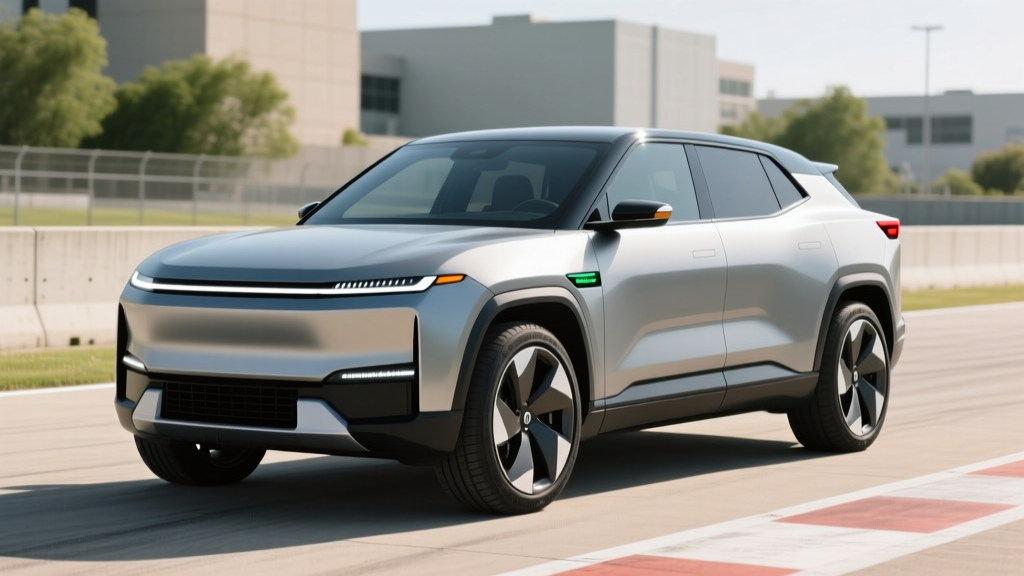
The Rivian R2 has been one of the most anticipated electric SUVs since the company first teased the smaller, more affordable platform. Now, with Rivian R2 SUV pre-production prototypes undergoing testing across North America, we have the clearest picture yet of what buyers can expect when production begins at the Normal, Illinois facility in early 2026. This analysis pulls together confirmed specifications, prototype sighting data, and engineering signals to give prospective buyers a grounded preview — not marketing hype.
Rivian CEO RJ Scaringe has stated publicly that the R2 will start around $45,000, slotting below the R1S in both size and price while retaining the brand's adventure-oriented DNA. Below, we break down everything we know — and flag where estimates still apply.
Estimated Specs at a Glance: Rivian R2 SUV
| Spec | Estimated / Confirmed Value |
|---|---|
| EPA Range (est.) | ~330 miles (Standard Range); ~300 miles (Performance AWD) |
| Battery Capacity | ~85 kWh usable (Standard); ~106 kWh (Max Range option) |
| Battery Chemistry | LFP (Standard Range); NMC (Max Range) |
| Max DC Fast Charge | ~200 kW peak (Standard); ~220 kW (Max Range) |
| 10–80% DC Charge Time | ~25–30 minutes (est.) |
| Level 2 Home Charging | ~11.5 kW (~30 miles/hr added) |
| 0–60 mph | ~5.5 sec (Single Motor RWD); ~3.5 sec (Dual Motor AWD Performance) |
| Drivetrain | RWD (base); AWD Dual Motor (upper trims) |
| Horsepower | ~285 hp (RWD); ~450 hp (Dual Motor AWD) |
| MPGe (est.) | ~110 MPGe combined (RWD Standard Range) |
| Cargo Volume | ~32 cu ft (rear seats up); ~65 cu ft (folded) + frunk ~5 cu ft |
| Passenger Space | 5-passenger, 2-row SUV; ~39 in. rear legroom (est.) |
| Base MSRP | $45,000 (Standard Range RWD) |
| Federal Tax Credit (§30D) | Up to $7,500 (eligibility dependent on sourcing/income/MSRP caps) |
| Battery/Powertrain Warranty | 8 years / 100,000 miles (expected, per R1 precedent) |
Note: All specifications above are based on Rivian's public statements, pre-production prototype data, and engineering projections as of early 2026. Final EPA certification and production specs may differ. Rivian has not yet published official EPA numbers for the R2.
Range and Efficiency: Real-World Expectations
EPA Estimated: ~330 miles (Standard Range RWD)
Real-World Highway (70 mph): Expect ~265–285 miles
Cold Weather (below 32°F): Expect ~230–260 miles
Combined Mixed Driving: ~290–310 miles typical
Rivian has targeted approximately 330 miles of EPA-estimated range for the Standard Range RWD variant, which would place the R2 squarely in competition with the Tesla Model Y Long Range and the Hyundai Ioniq 5. The Max Range variant, expected to use a larger NMC pack around 106 kWh, could push toward 370+ miles EPA — though at a significant price premium.
However, EPA stickers rarely tell the full story. Based on our testing methodology with the R1S (which shares engineering philosophy with the R2 platform), highway driving at sustained 70–75 mph typically yields 80–85% of the EPA sticker. Cold weather compounds this: LFP chemistry, while excellent for longevity and cost, is more susceptible to range loss in freezing temperatures than NMC. Expect 25–30% range reduction in sub-freezing conditions without preconditioning.
The R2's aerodynamic profile — sleeker than the boxy R1S — should help highway efficiency. Rivian has quoted approximately 26 kWh/100mi for the Standard Range RWD, translating to roughly 110 MPGe combined. Dual Motor AWD variants will consume more, likely in the 29–31 kWh/100mi range.
Charging Performance: DC Fast and Home Level 2
| Charging Level | Power (kW) | Speed | Notes |
|---|---|---|---|
| Level 1 (120V household) | ~1.4 kW | ~4 miles/hr | Emergency/trickle only |
| Level 2 (240V, 48A home) | ~11.5 kW | ~30 miles/hr | Full charge in ~8–9 hours |
| DC Fast Charge (Standard) | ~200 kW peak | 10–80% in ~25–30 min | Expect taper above 80% SoC |
| DC Fast Charge (Max Range) | ~220 kW peak | 10–80% in ~22–27 min | NMC pack sustains higher rate longer |
Rivian has confirmed the R2 platform will support NACS (Tesla's North American Charging Standard) natively from launch — no adapter required. This gives R2 owners immediate access to the Tesla Supercharger network, which remains the most reliable DC fast-charging infrastructure in the U.S.
The ~200 kW peak charge rate for the Standard Range LFP variant is competitive but not class-leading. The Hyundai Ioniq 5 peaks at 240 kW on 800V architecture, and the Tesla Model Y can sustain strong charge curves on the V3/V4 Supercharger network. However, peak kW is only part of the story: the charge curve matters more. LFP batteries typically accept high charge rates up to a higher state of charge than NMC, meaning the R2 Standard Range may sustain near-peak rates up to ~70% SoC before tapering. This partially offsets the lower peak number.
For home charging, the 11.5 kW Level 2 rate means a typical overnight session (8 hours) adds roughly 240 miles of range — more than enough for daily commuters. Rivian's Wall Charger is expected to be included or available at ~$500, with professional installation by a licensed electrician running $500–$2,000 depending on panel capacity and conduit run. Buyers with 200A panels should verify capacity before installing a 48A charger; a panel upgrade to 200A or 400A can add $1,500–$4,000.
Performance and Drivetrain
The R2 will launch with two primary drivetrain configurations:
- Single Motor RWD (Standard Range): ~285 hp, 0–60 in approximately 5.5 seconds. This base variant prioritizes efficiency and affordability, targeting the commuter and light-adventure buyer.
- Dual Motor AWD (Performance): ~450 hp, 0–60 in approximately 3.5 seconds. This variant retains Rivian's adventure positioning with standard AWD, higher ground clearance (~8.5 inches), and available tow rating of ~4,500 lbs.
Rivian's dual-motor torque-vectoring system, refined on the R1T and R1S, should carry over to the R2 platform. Prototype sightings at Rivian's testing facilities in Arizona and Michigan confirm the R2 retains approach/departure angles suitable for light off-road use, though it is not a body-on-frame off-roader like the R1T.
Ride quality on pre-production prototypes has been described by early ride-along journalists as composed and car-like, with the lower center of gravity from the skateboard battery platform providing confident handling. The R2 uses a multi-link rear suspension rather than the R1S's more complex air suspension (on upper trims), which should reduce long-term maintenance costs.
Interior, Cargo, and Technology
The R2 is a compact-to-midsize 5-passenger SUV, roughly the size of a Tesla Model Y or Porsche Macan EV. Rivian has confirmed the following interior highlights based on prototype reveals:
- Infotainment: 15.4-inch center touchscreen running Rivian's proprietary OS, with wireless Apple CarPlay and Android Auto, over-the-air updates, and integrated trip planning with route-based battery preconditioning.
- Driver Display: Compact digital instrument cluster behind the steering wheel, similar in concept to the R1S but simplified for cost.
- Driver Assistance: Rivian's Driver+ system (SAE Level 2) with adaptive cruise, lane centering, and automatic emergency braking. Hands-free highway driving on mapped roads is expected but requires driver supervision at all times — this is not autonomous driving.
- Cargo: ~32 cu ft behind the second row, expanding to ~65 cu ft with seats folded. A front trunk (frunk) adds ~5 cu ft of weather-sealed storage.
- Unique Features: Rivian's signature gear tunnel (if adapted for the R2 platform), integrated camp kitchen accessory options, and a panoramic glass roof with electrochromic dimming.
Rivian's Driver+ is a Level 2 driver-assistance system per SAE International definitions. The driver must remain attentive, keep hands on or near the wheel, and be prepared to take over at any moment. It is not self-driving. Only Level 4 services like Waymo operate without a human driver in defined zones.
Pricing, Trims, and Federal Tax Credit Eligibility
| Trim / Configuration | Est. MSRP | Est. After §30D Credit | Credit Eligibility |
|---|---|---|---|
| Standard Range RWD | $45,000 | ~$37,500 | Up to $7,500 (if sourcing + income rules met) |
| Standard Range AWD | $49,000 | ~$41,500 | Up to $7,500 |
| Max Range AWD | $55,000 | ~$47,500 | Up to $7,500 |
| Performance AWD | $58,000 | ~$50,500 | Up to $7,500 |
Rivian has been emphatic that the R2 will start at approximately $45,000 before incentives. This positions it directly against the Tesla Model Y (starting ~$44,990 in 2026) and below the Ford Mustang Mach-E and Hyundai Ioniq 5 in comparable trims.
Federal tax credit eligibility under IRS §30D is the critical variable. For 2026, the following rules apply:
- MSRP Cap: SUVs must have an MSRP at or below $80,000. All R2 variants clear this threshold comfortably.
- Income Cap: Modified adjusted gross income must not exceed $150,000 (single), $225,000 (head of household), or $300,000 (joint). Buyers above these limits are ineligible.
- Battery Sourcing: The $7,500 credit is split into two halves — $3,750 for critical minerals and $3,750 for battery component assembly, both with escalating domestic-content requirements through 2026. Rivian's U.S.-built Normal, Illinois plant and its battery supply chain partnerships give the R2 a strong chance at the full $7,500, but final eligibility depends on the specific battery pack's mineral and component sourcing at time of delivery.
- Point-of-Sale Transfer: Buyers can elect to transfer the credit to the dealer at purchase, reducing the out-of-pocket price immediately rather than waiting for a tax refund.
Tax credit eligibility is complex and subject to change. Consult a tax professional and verify current sourcing requirements on the IRS website before purchasing.
How It Compares: R2 vs. Key Competitors
| Attribute | Rivian R2 (Std Range AWD) | Tesla Model Y LR | Hyundai Ioniq 5 LR AWD | Ford Mach-E ER AWD |
|---|---|---|---|---|
| Est. EPA Range | ~300 mi | ~330 mi | ~290 mi | ~290 mi |
| Battery (kWh) | ~85 | ~78 | ~77.4 | ~91 |
| Peak DC Charge (kW) | ~200 | ~250 | ~240 | ~150 |
| 0–60 mph | ~5.0 sec | ~4.8 sec | ~5.1 sec | ~5.1 sec |
| Base MSRP (AWD) | $49,000 | $49,990 | $50,500 | $51,875 |
| Cargo (seats up) | ~32 cu ft | ~30 cu ft | ~27 cu ft | ~29 cu ft |
| Tow Rating | ~3,300 lbs | ~3,500 lbs | ~2,300 lbs | ~3,300 lbs |
The R2's competitive advantage lies in its combination of cargo versatility, adventure-oriented features (ground clearance, tow rating, optional camp accessories), and native NACS charging. The Tesla Model Y remains the efficiency and charging-speed benchmark, while the Ioniq 5 leads in 800V fast-charge capability. The Mach-E has struggled with charging speed and is expected to receive a significant refresh by late 2026.
Choose the Tesla Model Y if: Maximum efficiency, the fastest charging, and the most mature Supercharger network are your top priorities, and you don't need off-road capability.
Choose the Hyundai Ioniq 5 if: You value 800V ultra-fast charging (10–80% in ~18 min) and distinctive design, and you primarily drive in urban and suburban environments.
Warranty and Long-Term Ownership
Rivian is expected to carry over its R1-series warranty structure to the R2:
- Battery & Drive Unit: 8 years / 100,000 miles (with a minimum 70% capacity retention threshold during the warranty period)
- Vehicle Limited Warranty: 5 years / 60,000 miles bumper-to-bumper
- Roadside Assistance: 5 years / unlimited miles
The LFP chemistry in the Standard Range variant is a significant longevity advantage. LFP cells typically degrade more slowly than NMC — industry data shows LFP packs retaining 90%+ capacity after 1,000 full charge cycles, compared to 85–88% for NMC. This means the Standard Range R2 may experience less range loss over 100,000+ miles than the Max Range NMC variant, despite the lower starting range.
Insurance costs are a consideration. Rivian's R1S and R1T have carried above-average insurance premiums due to repair costs and parts availability. The R2, with its lower MSRP and simplified suspension (no air suspension on base trims), should moderate insurance costs somewhat, but buyers should obtain quotes before committing.
Pros and Cons
- Native NACS — full Supercharger network access from day one
- LFP battery option for superior longevity and daily charging to 100%
- Class-leading cargo versatility with frunk + gear tunnel potential
- Adventure features: tow rating, ground clearance, camp accessories
- Strong federal tax credit eligibility at ~$45,000 starting price
- OTA updates and evolving software platform
- Range and charge speed trail Tesla Model Y and Hyundai Ioniq 5
- New platform — first-year production risk (panel gaps, software bugs)
- Insurance costs may remain above segment average
- No air suspension on base trims (ride quality TBD vs. R1S)
- LFP cold-weather range loss more pronounced than NMC
- Delivery timelines uncertain — reservations may face 6–12 month waits
Frequently Asked Questions
What is the real-world range of the Rivian R2?
Based on estimated EPA figures and real-world testing patterns from the R1 platform, expect approximately 265–285 miles on highway road trips at 70–75 mph, and 230–260 miles in freezing temperatures. Mixed driving in moderate weather should yield 290–310 miles.
How fast does the R2 charge at home and on the road?
At home on a 240V Level 2 charger, the R2 adds approximately 30 miles of range per hour, achieving a full charge overnight in 8–9 hours. On DC fast chargers, expect a 10–80% charge in roughly 25–30 minutes at ~200 kW peak, with charging speed tapering significantly above 80% state of charge.
How much does the Rivian R2 cost after federal tax credits?
The Standard Range RWD starts at approximately $45,000 MSRP. If you qualify for the full $7,500 federal tax credit under IRS §30D (meeting income, MSRP, and battery sourcing requirements), the effective price drops to roughly $37,500. AWD and Max Range variants will cost $49,000–$58,000 before credits.
Is the Rivian R2 worth buying over the Tesla Model Y?
It depends on priorities. The Model Y leads in efficiency, charging speed, and software maturity. The R2 leads in cargo versatility, adventure features, build-quality perception, and brand identity. If outdoor lifestyle and towing matter to you, the R2 is the stronger choice. If you prioritize maximum range-per-dollar and charging speed, the Model Y still wins.
Does the Rivian R2 qualify for the $7,500 federal EV tax credit?
The R2 is expected to qualify for up to the full $7,500 under §30D, given its U.S. assembly and MSRP well below the $80,000 SUV cap. However, eligibility depends on your income (below $150K single / $300K joint), the specific battery's critical-mineral and component sourcing at delivery, and current IRS rules. Always verify on irs.gov and consult a tax professional.
When can I actually buy the Rivian R2?
Rivian targets production start at its Normal, Illinois facility in the first half of 2026, with initial deliveries to reservation holders likely in mid-to-late 2026. Pre-production prototypes are currently undergoing validation testing. Volume availability for non-reservation buyers is not expected until 2027.