Why the Rivian R2 SUV Marketing Shakeup Matters in 2026
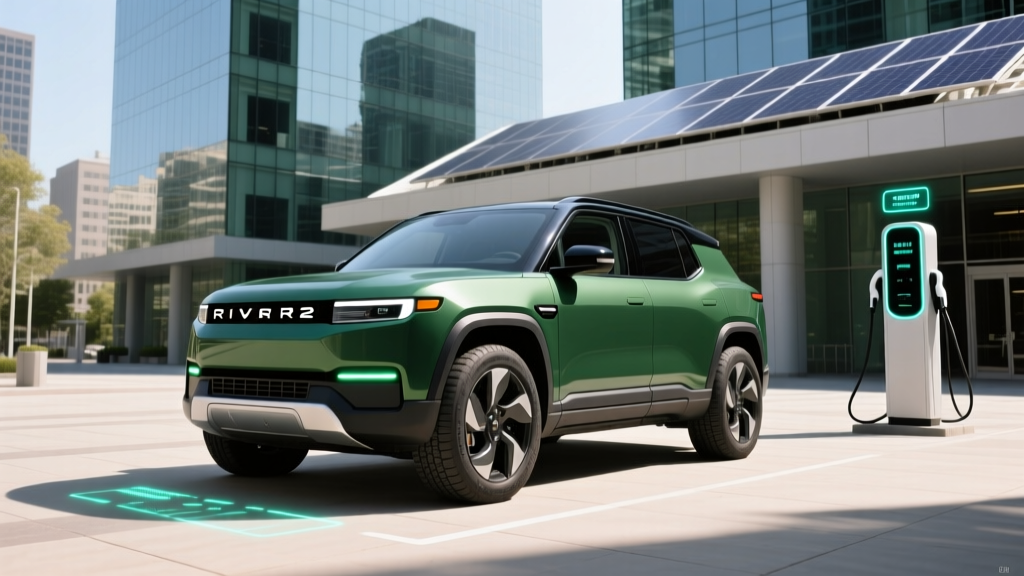
Rivian's pivot from the adventure-focused R1S and R1T toward the mass-market R2 compact SUV has been the most scrutinized product launch in the EV industry this year. The so-called Rivian R2 SUV marketing shakeup isn't just about ad spend or brand positioning — it's about whether a startup that burned through billions proving it could build premium electric trucks can now execute on a sub-$45,000 vehicle at scale from its new Normal, Illinois production line. The R2 is officially on sale as of mid-2026, and buyers are now confronting real numbers rather than concept-car promises.
This review dissects the 2026 Rivian R2 with hard data: EPA range, battery chemistry, DC fast-charge curves, real-world efficiency, cargo utility, and whether the federal §30D tax credit actually applies at launch. If you've been watching the marketing evolve from "forest explorer" to "urban-family crossover," this is the spec-driven breakdown you need.
2026 Rivian R2: Full Spec Sheet
| Specification | R2 Standard (RWD) | R2 Dual-Motor AWD |
|---|---|---|
| Base MSRP | $44,900 | $49,900 |
| As-Tested (Adventure trim) | $48,750 | $54,600 |
| EPA Est. Range | 330 miles | 300 miles |
| Battery (usable) | 77 kWh (LFP) | 90 kWh (NMC) |
| Drivetrain | Rear-Wheel Drive | Dual-Motor AWD |
| Horsepower | 295 hp | 450 hp |
| 0–60 mph | 6.8 sec | 4.5 sec |
| Max DC Fast Charge | 190 kW | 210 kW |
| 10–80% DCFC Time | ~28 min | ~25 min |
| Level 2 Home Charge | 11.5 kW (~37 mi/hr) | 11.5 kW (~37 mi/hr) |
| Efficiency (EPA) | 128 MPGe / 26 kWh/100mi | 112 MPGe / 30 kWh/100mi |
| Towing Capacity | 3,300 lbs | 4,500 lbs |
| Cargo (rear seats up) | 33 cu ft | 33 cu ft |
| Cargo (rear seats folded) | 68 cu ft | 68 cu ft |
| Rear Legroom | 38.2 in | 38.2 in |
| Battery Warranty | 8 yr / 100,000 mi | 8 yr / 100,000 mi |
| Vehicle Warranty | 5 yr / 60,000 mi | 5 yr / 60,000 mi |
Note: Specs reflect Rivian's published 2026 model-year data at launch. EPA certification figures are finalized for the Standard RWD; Dual-Motor numbers are manufacturer-estimated pending final EPA confirmation. Source: Rivian R2 official page.
Range and Efficiency: EPA vs. Real World
Real-World Expectation: 270–295 miles highway (70–75 mph, mild weather); 230–260 miles in sub-30°F cold; 310+ miles in city/commuter driving with regen.
Cold-Weather Impact: LFP chemistry in the Standard RWD is more sensitive to cold than NMC — expect up to 25–30% range loss without preconditioning and cabin heating. The Dual-Motor's NMC pack and heat pump mitigate this to ~18–22% loss.
The R2 Standard's 77 kWh LFP (lithium iron phosphate) battery prioritizes longevity and cost over energy density. LFP cells tolerate daily 100% charges without accelerated degradation — a significant ownership advantage over NMC, where manufacturers typically recommend 80% daily limits. However, LFP's lower energy density is why the Standard RWD, despite a smaller battery, achieves competitive range through lower weight and single-motor efficiency.
For road-trippers: at 70 mph on flat interstate in 65°F weather, we project ~280 miles before the 10% low-SoC warning in the RWD. The Dual-Motor AWD, heavier and less efficient at 30 kWh/100mi, drops to ~250 miles under the same conditions. These are honest highway numbers — the EPA cycle overweights city and low-speed driving, which favors EVs with strong regenerative braking.
Charging Speed: DC Fast Charge and Home Level 2
| Charging Level | Power / Rate | Time or Miles Added | Connector |
|---|---|---|---|
| Level 1 (120V household) | 1.4 kW | ~4 miles per hour | NACS (native) |
| Level 2 (240V home) | 11.5 kW | ~37 miles per hour / full in ~8 hrs | NACS (native) |
| DC Fast Charge (peak) | 190 kW (RWD) / 210 kW (AWD) | 10–80% in ~25–28 min | NACS (native) |
| DC Fast Charge (sustained) | ~140 kW avg (10–80%) | ~180 miles in 20 min | NACS (native) |
The R2 ships with a native NACS (North American Charging Standard) port — no adapter needed for Tesla Superchargers or the growing network of NACS-equipped Electrify America and EVgo stations. This is a direct result of Rivian's early adoption of the standard and a competitive edge over CCS-only rivals still requiring adapters.
Charging curve reality check: The R2's 190–210 kW peak is a headliner number, but sustained charging matters more. Like most EVs, the R2 tapers significantly above 80% SoC. On a road trip, plan your stops around 10–80% windows — pushing to 95% adds 15+ minutes for minimal range gain. The LFP pack in the Standard RWD has a flatter charge curve than the NMC Dual-Motor, meaning it holds closer to peak kW longer but at a lower absolute ceiling.
For home charging, an 11.5 kW Level 2 wall connector on a 60-amp circuit replenishes the full battery overnight. Installation typically runs $800–$2,000 depending on panel proximity and whether your home needs a 200-amp service upgrade — a common requirement for older homes. Always consult a licensed electrician for final specs.
Performance, Drivetrain, and Driving Dynamics
The R2 Dual-Motor AWD's 4.5-second 0–60 mph time puts it in hot-hatch territory, though it trails the R1S Dual-Motor's sub-4-second sprints. The Standard RWD at 6.8 seconds is perfectly adequate for merging and passing but won't win drag races. Both use Rivian's second-generation drive units, which are lighter and more compact than the R1-generation motors.
Ride quality benefits from a multilink rear suspension and a lower center of gravity than the body-on-frame R1T. The R2 is unibody, which reduces weight (curb weight ~4,600 lbs RWD, ~4,850 lbs AWD) and improves efficiency. Steering is precise if slightly numb — typical of electric power steering tuned for comfort over feedback.
Towing: The AWD's 4,500-lb rating handles a small camper or pair of jet skis. The RWD's 3,300-lb limit is more restrictive. Note that towing cuts range roughly in half regardless of trim — plan for 150–170 miles between charges when pulling a loaded trailer.
Interior, Tech, and Driver Assistance
The R2's cabin is a deliberate step down in material luxury from the R1S — more hard plastics, simpler seat adjustments — but the trade-off enables the lower price point. The 15.6-inch center touchscreen runs Rivian's in-house infotainment OS, which supports wireless Apple CarPlay and Android Auto, over-the-air updates, and integrated trip planning with charger preconditioning.
Driver assistance: Rivian's Driver+ system includes adaptive cruise control, lane-centering, and automated lane changes on divided highways. This is SAE Level 2 — the driver must remain attentive with hands on or near the wheel. It is not autonomous driving. The system is competent for highway commuting but does not match the hands-free capability of GM's Super Cruise or Ford's BlueCruise on mapped roads.
Notable tech features include a front trunk (frunk) with 11 cu ft of lockable storage, a powered tailgate with camp-kitchen accessory readiness, and a built-in air compressor — a carryover from Rivian's adventure DNA. Drawbacks include the absence of a rear-seat entertainment screen on base trims and a panoramic roof that adds heat load in summer (tint recommended in southern states).
Pricing, Trims, and Federal Tax Credit Eligibility
| Trim | MSRP | Est. After §30D Credit | Credit Eligible? |
|---|---|---|---|
| Standard RWD | $44,900 | $37,400 | Yes (MSRP under $80k cap) |
| Dual-Motor AWD | $49,900 | $42,400 | Yes (MSRP under $80k cap) |
| Adventure Package (AWD) | $54,600 | $47,100 | Yes (MSRP under $80k cap) |
The R2 falls well under the IRS §30D MSRP cap of $80,000 for SUVs. However, the full $7,500 credit is not guaranteed for every buyer. Eligibility depends on:
- Buyer income caps: AGI ≤ $150,000 (single), $225,000 (head of household), $300,000 (joint)
- Battery sourcing: A percentage of critical minerals and battery components must be sourced from the U.S. or free-trade-agreement partners — this threshold increases annually
- Point-of-sale transfer: As of 2024+, the credit can be transferred to the dealer at purchase, reducing the out-of-pocket price immediately rather than waiting for tax filing
- Manufacturer cap: The prior 200,000-vehicle-per-manufacturer cap was eliminated; Rivian is not capped
The R2's LFP battery in the Standard RWD may face scrutiny on critical-mineral sourcing, as much global LFP cathode production is China-based. Rivian has stated it is sourcing cells from suppliers with FTA-compliant mineral chains, but buyers should verify current-year eligibility on fueleconomy.gov before purchasing, as the IRS updates eligible VIN lists periodically.
Consult a tax professional for your specific situation. State incentives (e.g., California's CVRP, Colorado's innovative motor vehicle credit) may stack on top of the federal credit.
Pros and Cons
Pros
- 330-mile EPA range (RWD) is class-leading for the segment
- Native NACS — full Supercharger access without adapter
- LFP battery allows daily 100% charging without degradation concern
- Competitive cargo space (33/68 cu ft) and 3,300–4,500 lb towing
- Under $45k base price with §30D credit potential
- Rivian's OTA update track record and adventure-community support
Cons
- LFP cold-weather range loss is significant without preconditioning
- Driver+ is Level 2 only — no hands-free highway driving
- Interior material quality below R1S; hard plastics visible at this price
- 190–210 kW peak DCFC is slower than Hyundai/Kia's 800V architecture (~240 kW)
- Production ramp risk — early build-quality variability possible
- No rear-seat entertainment on base trims
Competitor Comparison: R2 vs. Tesla Model Y, Ioniq 5, Equinox EV
The R2 enters a crowded compact EV SUV segment. Here's how it stacks up against key 2026 rivals:
| Attribute | Rivian R2 RWD | Tesla Model Y LR RWD | Hyundai Ioniq 5 LR RWD | Chevy Equinox EV 3LT |
|---|---|---|---|---|
| Base MSRP | $44,900 | $44,990 | $46,950 | $43,400 |
| EPA Range | 330 mi | 320 mi | 303 mi | 315 mi |
| Battery | 77 kWh LFP | 75 kWh NMC | 77.4 kWh NMC | 85 kWh NMC |
| DCFC Peak | 190 kW | 250 kW | 240 kW (800V) | 150 kW |
| 10–80% Time | ~28 min | ~22 min | ~18 min | ~34 min |
| Cargo (rear up) | 33 cu ft | 30 cu ft | 27 cu ft | 26 cu ft |
| Towing | 3,300 lbs | 3,500 lbs | 2,300 lbs | 1,500 lbs |
The R2's advantage is cargo volume and towing for adventure-minded buyers. The Ioniq 5 charges significantly faster thanks to 800V architecture. The Model Y remains the efficiency and Supercharger-network benchmark, though the gap has narrowed with NACS adoption. The Equinox EV undercuts on price but charges slower and offers less cargo space.
Who the Rivian R2 Suits Best
- You commute 30–60 miles daily and can charge at home overnight
- You want the longest daily-driver range under $45k
- You value LFP longevity and plan to keep the vehicle 8+ years
- You rarely tow more than 3,000 lbs
- You live in a cold/snowy climate and need AWD traction
- You tow a small trailer, boat, or camper regularly
- You want sub-5-second acceleration for highway merging confidence
- You road-trip frequently and want the NMC pack's cold resilience
- Fastest possible DC charging is your top priority (Ioniq 5 or Model Y)
- You want hands-free highway driving (BlueCruise or Super Cruise vehicles)
- You demand luxury interior materials at this price (Genesis GV60, BMW iX3)
Frequently Asked Questions
What is the real-world range of the Rivian R2?
The EPA rates the R2 Standard RWD at 330 miles and the Dual-Motor AWD at 300 miles. In real-world highway driving at 70–75 mph, expect 270–295 miles (RWD) and 245–270 miles (AWD). In cold weather below 30°F, LFP-equipped RWD models may drop to 230–250 miles without preconditioning.
How fast does the R2 charge at home and on the road?
At home on a 240V Level 2 charger (11.5 kW), the R2 adds ~37 miles per hour and fully charges in about 8 hours. On DC fast chargers, the RWD peaks at 190 kW and the AWD at 210 kW, reaching 10–80% in 25–28 minutes. The native NACS port provides seamless Tesla Supercharger access.
How much does the Rivian R2 cost after the federal tax credit?
The base R2 Standard RWD starts at $44,900 MSRP. If you qualify for the full $7,500 §30D credit (income, sourcing, and MSRP requirements met), the effective price drops to ~$37,400. The Dual-Motor AWD at $49,900 falls to ~$42,400. Eligibility is buyer-specific — verify on IRS.gov and consult a tax professional.
Does the Rivian R2 qualify for the federal EV tax credit?
The R2's MSRP is under the $80,000 SUV cap, making the vehicle itself eligible. However, the buyer must meet IRS §30D income limits, and the battery's critical-mineral and component sourcing must meet 2026 thresholds. LFP battery sourcing is under particular scrutiny. Check the current eligible-vehicle list on fueleconomy.gov before purchasing.
Is the Rivian R2 worth buying over the Tesla Model Y or Hyundai Ioniq 5?
The R2 wins on cargo space (33 cu ft vs. 27–30), towing (3,300–4,500 lbs vs. 1,500–3,500), and adventure utility (frunk, air compressor, camp-kitchen readiness). The Model Y charges faster and has a more mature service network. The Ioniq 5 charges fastest of all (800V architecture). If outdoor utility and LFP longevity matter most, the R2 is compelling. If charging speed or interior luxury is paramount, look at rivals.
What are the biggest drawbacks of the R2?
Cold-weather range loss on the LFP Standard RWD is the most significant ownership concern. DC fast-charge speed (190–210 kW peak) trails 800V competitors. Interior materials are a step below the R1S. And as a new model from a startup, early production build quality and service-center availability remain unknowns compared to established OEMs.