The Rivian R2 Arrives in Silver Gray: A Smaller, Sharper Electric SUV
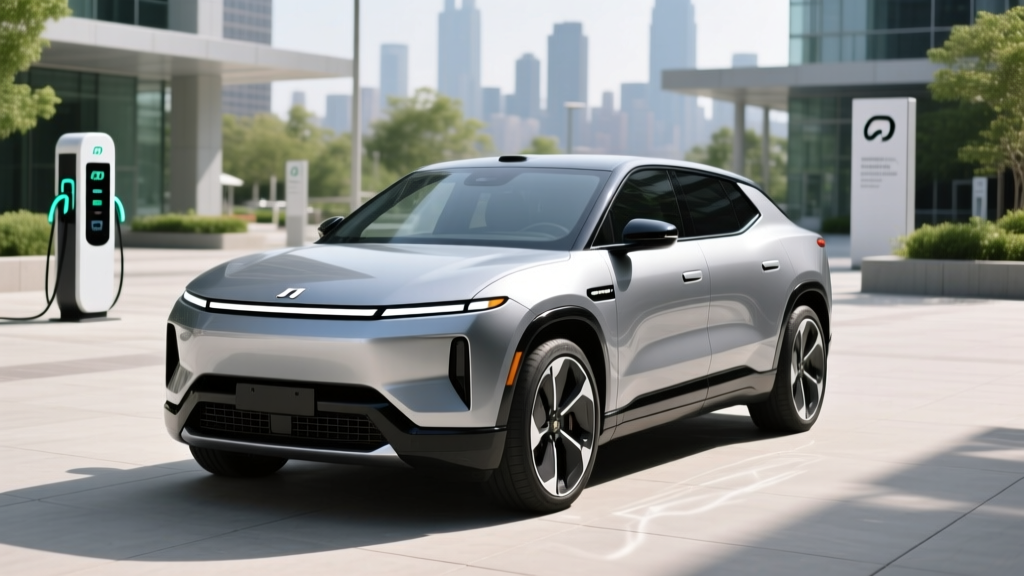
The Rivian R2 is the compact electric SUV that has been dominating pre-order queues since its 2024 reveal, and as production ramps at Rivian's Normal, Illinois factory through early 2026, buyers are finally configuring theirs. Among the most discussed configuration choices is the new Silver Gray exterior color — a sophisticated, cool-toned metallic that sits between the warmer Limestone and the darker Midnight in Rivian's palette. It pairs particularly well with the available black roof and Glacier White interior, giving the R2 a premium, understated look that distinguishes it from the brighter, more playful hues Rivian initially launched with on the R1S and R1T.
But color is only skin-deep. The R2 is engineered to be Rivian's volume vehicle: a two-row, five-passenger electric SUV targeting the heart of the market — the same segment where the Tesla Model Y, Ford Mustang Mach-E, and Hyundai Ioniq 5 compete. Below, we break down everything confirmed about the 2026 Rivian R2's range, battery, charging, performance, pricing, and federal tax credit eligibility so you can decide if this compact electric SUV belongs on your shortlist.
| Spec | Value |
|---|---|
| EPA Est. Range (Standard Range) | ~330 miles |
| Usable Battery Capacity | ~85 kWh (NMC chemistry) |
| Max DC Fast Charge | ~190 kW peak |
| 10–80% DC Fast Charge Time | ~25 minutes |
| Level 2 Home Charge Rate | ~11.5 kW (~35 mi/hr) |
| Drivetrain | Dual-motor AWD |
| 0–60 mph | ~4.5 seconds (est.) |
| Horsepower | ~400 hp (combined, est.) |
| MPGe (combined, est.) | ~110 MPGe / 30 kWh/100 mi |
| Cargo Volume (rear seats up) | ~28 cu ft |
| Cargo Volume (rear seats folded) | ~65 cu ft |
| Towing Capacity | ~3,300 lbs (est.) |
| Base MSRP (Standard Range) | $45,000 |
| Battery/Powertrain Warranty | 8 years / 100,000 miles |
Note: The Rivian R2 is in early production as of mid-2026. Specifications above reflect Rivian's announced targets and preliminary EPA filings; final certified figures may vary by trim. Always confirm with Rivian's official R2 page before ordering.
Range and Efficiency: What the EPA Number Actually Means on the Road
Rivian has targeted an EPA-estimated range of approximately 330 miles for the dual-motor AWD Standard Range R2, powered by an ~85 kWh usable NMC (nickel manganese cobalt) battery pack. A larger Max Range variant with an estimated 400+ miles is expected later in the production cycle, likely using a higher-capacity pack or more energy-dense cells.
EPA 330 mi (Standard Range AWD) — but plan for less in practice. On highway-only driving at 70–75 mph, expect roughly 275–295 miles before needing to charge. In freezing temperatures (below 30°F), range can drop an additional 15–25%, putting cold-weather highway range closer to 230–260 miles. The R2's heat pump (standard) helps mitigate cabin-heating losses, but battery chemistry still suffers in deep cold. City driving with regenerative braking recovers energy and can push real-world range closer to or slightly above the EPA sticker.
Efficiency is projected at roughly 110 MPGe combined, translating to about 30 kWh per 100 miles. That puts the R2 in the same efficiency ballpark as the Tesla Model Y Long Range (122 MPGe) and slightly behind the Hyundai Ioniq 5 AWD (113 MPGe) per fueleconomy.gov. For an SUV of this size and capability, that's competitive — though Rivian's boxy, adventure-oriented design does create more aerodynamic drag than sleeker crossovers at highway speeds.
Charging Speed: DC Fast, Home Level 2, and the NACS Advantage
The R2 ships with a native NACS (North American Charging Standard) port, meaning it plugs directly into Tesla Superchargers — the most reliable and expansive DC fast-charging network in the US — without an adapter. This is a significant practical advantage over CCS-equipped competitors still relying on adapters for Supercharger access.
| Charging Level | Power / Rate | Speed |
|---|---|---|
| Level 1 (120V household) | ~1.4 kW | ~4 miles per hour |
| Level 2 (240V home / public) | ~11.5 kW | ~35 miles per hour |
| DC Fast Charge (peak) | ~190 kW | 10–80% in ~25 min |
Charging curve reality: The ~190 kW peak is not sustained across the entire session. Expect peak speed between roughly 10–40% state of charge, after which the curve tapers. The 10–80% time of approximately 25 minutes is competitive with the Hyundai Ioniq 5's 18-minute benchmark (which charges at up to 240 kW) but trails slightly. Above 80% SoC, charging slows dramatically to protect the battery — plan to unplug at 80% on road trips unless you need the extra range to reach your next stop.
For home charging, an 11.5 kW Level 2 wall connector on a 60-amp circuit will fully replenish the ~85 kWh pack in roughly 8–9 hours — overnight charging is effortless. If your home electrical panel is older or maxed out, a licensed electrician may need to upgrade your service or install a dedicated circuit. Budget $500–$2,000 for a professional Level 2 installation, depending on panel capacity and run length.
Performance, Drivetrain, and Capability
The dual-motor all-wheel-drive R2 produces an estimated 400 horsepower and should deliver a 0–60 mph time around 4.5 seconds. That's brisk for a compact SUV and puts it in the performance neighborhood of the Ford Mustang Mach-E Premium AWD (5.1 sec) while trailing the Tesla Model Y Performance (3.5 sec). A single-motor rear-wheel-drive variant may follow, prioritizing efficiency and a lower starting price.
Rivian's trademark off-road DNA carries over to the R2, though in a more accessible form than the R1S. The R2 features:
- Standard AWD with independent torque vectoring across axles
- Available air suspension for adjustable ride height
- Estimated ground clearance of ~8.5 inches (standard) to ~10.5 inches (max height)
- Estimated wading depth of ~24 inches
- Estimated towing capacity of ~3,300 lbs (adequate for a small trailer, bikes, or a pair of jet skis — but not a large boat or camper)
The R2 is not a hardcore rock crawler, but it's meaningfully more capable off-pavement than a Model Y or Ioniq 5. If your weekends involve forest service roads, ski-area parking lots, or sandy beach access, the R2's suspension travel and AWD tuning give it a genuine edge.
Interior, Cargo, and Technology in the Silver Gray Configuration
Step inside a Silver Gray R2 and you'll find Rivian's design philosophy of "minimalist warmth." The cabin uses a mix of recycled microfiber, synthetic leather, and real wood accents. Available interior themes include Glacier White, Ocean Coast, and Black Mountain — the Glacier White interior creates a striking contrast against the Silver Gray exterior.
Cargo and passenger space:
- Rear-seat legroom: ~38 inches (comfortable for adults on longer trips)
- Cargo behind rear seats: ~28 cu ft
- Cargo with rear seats folded: ~65 cu ft
- Front trunk (frunk): ~11 cu ft — large enough for a charging cable bag and groceries
- Rivian's signature Gear Tunnel is not available on the R2 (it's exclusive to the R1T truck)
Tech highlights:
- 15.6-inch center touchscreen running Rivian's proprietary infotainment OS
- Digital instrument cluster integrated into a slim dash display
- Over-the-air (OTA) software updates for continuous feature improvements
- Rivian Driver+ (Level 2 ADAS): adaptive cruise control, lane-centering, highway assist — not autonomous driving; hands-on-wheel supervision required at all times
- Standard Apple CarPlay and Android Auto (wireless)
- Available premium audio system with 14+ speakers
- Vehicle-to-load (V2L) capability for powering accessories or camping gear from the battery
Notable drawbacks: Rivian's infotainment, while visually clean, still lags Tesla's in responsiveness and app ecosystem. The R2 does not offer a third row (if you need three rows, the R1S or Kia EV9 are better fits). Rear visibility is somewhat limited by the thick C-pillars — a 360-degree camera system helps, but it's not a substitute for thinner pillars. And as a new model from a low-volume manufacturer, early-build R2s may experience the fit-and-finish quirks that affected early R1S and R1T deliveries.
Pricing, Trims, and Federal Tax Credit Eligibility
The Rivian R2 launches with a targeted base MSRP of $45,000 for the Standard Range AWD, making it one of the more accessible vehicles in Rivian's lineup and positioning it directly against the Tesla Model Y ($44,990 base) and Ford Mustang Mach-E ($42,995 base). A Max Range variant is expected to start closer to $52,000–$55,000, and fully loaded configurations with air suspension, premium interior, and advanced driver assists could push $60,000+.
| Trim | Base MSRP | Est. Federal Credit | Effective Price |
|---|---|---|---|
| Standard Range AWD | $45,000 | Up to $7,500* | ~$37,500 |
| Max Range AWD | ~$53,000 | Up to $7,500* | ~$45,500 |
| Adventure / Fully Loaded | ~$60,000+ | Up to $7,500* | ~$52,500+ |
*Federal EV tax credit (§30D) eligibility is not guaranteed. Under current IRS rules, the $7,500 credit requires meeting all of the following:
- MSRP cap: The vehicle's MSRP must not exceed $80,000 for SUVs — the R2 clears this easily.
- Buyer income cap: Modified adjusted gross income must be ≤$150,000 (single), ≤$225,000 (head of household), or ≤$300,000 (joint filers).
- Battery sourcing: A percentage of critical minerals and battery components must be sourced from the US or free-trade-agreement countries. These thresholds tighten annually. Rivian has been working to localize its supply chain, but final credit eligibility for specific R2 builds depends on the battery pack's exact sourcing at time of delivery.
- Point-of-sale transfer: As of 2024+, buyers can transfer the credit to the dealer at purchase, effectively reducing the purchase price upfront rather than waiting for a tax refund.
Because battery-sourcing requirements are complex and change yearly, always verify current eligibility on fueleconomy.gov or with a tax professional before assuming the full $7,500.
Warranty and Long-Term Ownership
Rivian covers the R2's battery and powertrain with an 8-year / 100,000-mile warranty, consistent with industry standards and federal requirements. The battery warranty guarantees that capacity will remain above 70% of original during the coverage period — a typical threshold. The bumper-to-bumper limited warranty is expected at 4 years / 50,000 miles.
Long-term ownership considerations specific to Rivian:
- Service network: Rivian operates its own service centers and mobile service vans, but coverage is still expanding. Buyers in rural areas should check proximity to the nearest Rivian service location.
- Insurance: EVs, particularly from newer manufacturers, often carry higher insurance premiums. Get a quote before ordering — the R2's ~$45K starting price and moderate repair complexity should keep premiums more reasonable than the R1S, but expect 10–20% higher than an equivalent gas SUV.
- Depreciation: As a new model without a long track record, the R2's depreciation curve is uncertain. Rivian's brand is strengthening, but early adopters take more depreciation risk than buyers of established models.
Pros and Cons: The Honest Assessment
- Native NACS port — direct Tesla Supercharger access, no adapter needed
- ~330-mile EPA range is competitive for the class
- Genuine off-road capability in a compact EV package
- Distinctive design — the Silver Gray color elevates the premium feel
- $45,000 starting price undercuts the R1S significantly
- Frunk + V2L add practical versatility
- Strong brand cachet and community
- Early-production vehicles may have build-quality inconsistencies
- Charging speed (~190 kW peak) trails Ioniq 5's 240 kW capability
- Service network still limited outside major metro areas
- No third-row option — families needing 6+ seats must look elsewhere
- Rear visibility compromised by thick C-pillars
- Federal tax credit not guaranteed — depends on battery sourcing at delivery
- Higher insurance premiums likely vs. gas competitors
Who Should Buy the Rivian R2 in Silver Gray?
The R2 is best suited for:
- Adventure-oriented commuters who want daily EV efficiency but weekend trail and snow capability
- Two-adult households or small families (1–2 children) who don't need three rows
- Tesla-curious buyers who want Supercharger access but prefer a non-Tesla brand and a more rugged aesthetic
- Design-conscious buyers — the Silver Gray exterior with Glacier White interior is one of the most sophisticated EV colorways available at this price point
- Second-car buyers who already own an R1S or R1T and want a smaller, more affordable daily driver in the Rivian ecosystem
The R2 is not the right choice if you need maximum towing (look at the R1T or F-150 Lightning), three rows (Kia EV9 or R1S), the absolute fastest charging (Hyundai Ioniq 5), or the lowest possible price (Chevrolet Equinox EV starts lower).
Frequently Asked Questions
What is the real-world range of the Rivian R2?
The EPA-estimated range for the Standard Range AWD is approximately 330 miles. In real-world highway driving at 70+ mph, expect 275–295 miles. In freezing temperatures, plan for 230–260 miles. City driving with regenerative braking may approach or slightly exceed the EPA figure.
How fast does the R2 charge at home and on the road?
On a DC fast charger, the R2 peaks at approximately 190 kW, reaching 10–80% in about 25 minutes. At home on a Level 2 (240V, 48-amp) charger, it adds roughly 35 miles per hour, fully charging overnight in 8–9 hours. The native NACS connector gives seamless Tesla Supercharger access.
How much does the Rivian R2 cost after federal tax credits?
The Standard Range AWD starts at $45,000 MSRP. If you qualify for the full $7,500 federal tax credit under IRS §30D rules (income limits, MSRP cap, and battery-sourcing requirements all apply), the effective price drops to approximately $37,500. Credit eligibility is not guaranteed — verify on fueleconomy.gov and consult a tax professional.
Does the Rivian R2 qualify for the $7,500 federal EV tax credit?
It is expected to qualify, but final eligibility depends on the specific battery pack's critical-mineral and component sourcing at the time of your delivery. The MSRP ($45,000+) clears the $80,000 SUV cap. You must also meet IRS income limits (≤$300K joint, ≤$150K single). Check the latest eligibility list on fueleconomy.gov before ordering.
Is the Rivian R2 worth buying over a Tesla Model Y or Hyundai Ioniq 5?
Choose the R2 if you prioritize off-road capability, distinctive design, native Supercharger access without an adapter, and the Rivian brand experience. Choose the Model Y if you want maximum Supercharger network maturity, the lowest energy consumption, and a proven production track record. Choose the Ioniq 5 if the fastest DC charging speed (240 kW) and lowest starting price are your top priorities. All three are strong — the right pick depends on your use case.
Is the Silver Gray color a premium (extra-cost) option?
Rivian has historically offered some colors as no-cost options and others as premium add-ons ($500–$1,500). Final pricing for Silver Gray on the R2 has not been separately confirmed — check Rivian's configurator when your reservation opens for exact color pricing.
When can I actually take delivery of a Rivian R2?
Rivian began R2 production in early-to-mid 2026 at its Normal, Illinois facility, with priority given to existing reservation holders. New orders placed today may have delivery timelines extending into late 2026 or 2027 depending on demand and production ramp. Contact Rivian directly for your reservation's estimated delivery window.