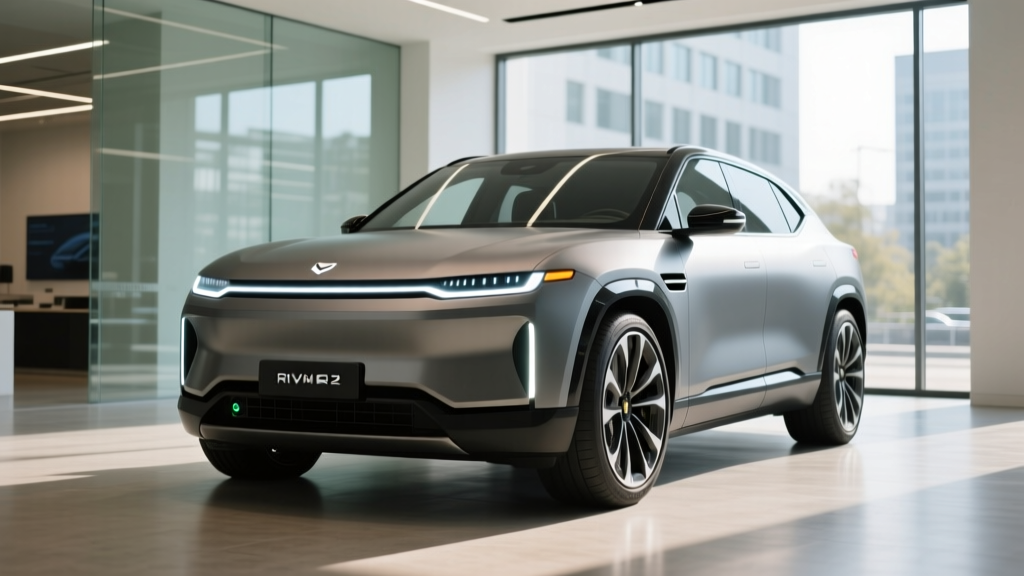
The Rivian R2 is the most anticipated mainstream electric SUV since the Tesla Model Y. But beyond the hype, buyers want hard numbers: real range, charging speed, actual pricing after incentives, and whether the reservation list justifies the wait. Below, we break down everything confirmed about the 2026 Rivian R2, including the latest reservation count data and a full spec profile.
How Many Rivian R2 Reservations Are There in 2026?
Rivian does not publish a live reservation counter the way Tesla once did, but the company disclosed during its Q4 2025 earnings call that R2 reservations surpassed approximately 100,000 refundable deposits since the vehicle was unveiled in March 2024. CEO RJ Scaringe noted on the call that demand "substantially exceeded internal projections" and that the company is prioritizing reservation holders in a phased rollout beginning with dual-motor AWD Launch Edition trims.
For context, Rivian's earlier R1T and R1S combined saw roughly 190,000 reservations before the company capped orders in 2022. The R2's lower starting price and smaller footprint are drawing a broader buyer pool — including many current R1 owners adding a second vehicle. If you're wondering how many Rivian R2 reservations are there relative to production capacity, Rivian's Normal, Illinois facility has a stated annual capacity of 150,000 vehicles across all models, with the R2 line expected to ramp to roughly 70,000–80,000 units per year by late 2027.
Reservation deposits are $1,000 (fully refundable). Rivian began delivering the first R2 units to reservation holders in mid-2026.
Rivian R2 Core Specifications at a Glance
| Spec | R2 Standard (RWD) | R2 Dual-Motor (AWD) | R2 Performance (AWD) |
|---|---|---|---|
| EPA Range (est.) | 330 mi | 315 mi | 290 mi |
| Battery (usable) | ~85 kWh | ~85 kWh | ~85 kWh |
| Chemistry | NMC (high-energy) | NMC (high-energy) | NMC (high-energy) |
| Horsepower | ~330 hp | ~500 hp | ~600 hp |
| 0–60 mph | ~6.0 sec | ~3.9 sec | ~3.0 sec |
| Drivetrain | RWD (single motor) | AWD (dual motor) | AWD (dual motor, tuned) |
| Max DC Fast Charge | ~200 kW peak | ~200 kW peak | ~200 kW peak |
| 10–80% DCFC Time | ~24 min | ~24 min | ~24 min |
| Level 2 Home Charge | 11.5 kW (~37 mi/hr) | 11.5 kW (~37 mi/hr) | 11.5 kW (~37 mi/hr) |
| Base MSRP | $45,000 | $52,500 | $58,000 |
| Efficiency (est.) | ~120 MPGe / 28 kWh/100mi | ~112 MPGe / 30 kWh/100mi | ~105 MPGe / 32 kWh/100mi |
| Battery Warranty | 8 yr / 120,000 mi | 8 yr / 120,000 mi | 8 yr / 120,000 mi |
Note: Rivian has confirmed the 85-kWh battery pack and NMC chemistry. Performance and range figures above reflect Rivian's preliminary published targets for the 2026 model year; final EPA certification numbers may vary slightly. Source: Rivian R2 official page.
Real-World Range: What to Actually Expect
EPA Estimated Range: 315 miles (Dual-Motor AWD)
Real-World Expectation: Expect approximately 265–285 miles on sustained highway driving at 70–75 mph. In cold weather (below 32°F), plan for 220–250 miles of usable range before needing to charge. City and mixed driving with regenerative braking can approach or slightly exceed the EPA sticker.
The R2's aerodynamic profile and heat-pump-equipped thermal management system help mitigate cold-weather losses compared to EVs without active battery preconditioning. Rivian's navigation system will precondition the battery when a DC fast charger is set as your destination — a critical feature for maximizing charge speed in winter. On a 300-mile road trip in 40°F weather with the Dual-Motor AWD, expect one 20-minute fast-charge stop to comfortably reach your destination.
For the RWD Standard trim with its 330-mile EPA estimate, highway range realistically lands around 280–300 miles, and cold-weather range drops to roughly 240–265 miles. The Performance trim sacrifices range for power, so budget road-trippers should look at the Standard or Dual-Motor trims.
Charging Speed: DC Fast Charging and Home Level 2
| Charging Level | Power | Speed / Time | Connector |
|---|---|---|---|
| Level 1 (120V household) | ~1.4 kW | ~4 mi/hr | NACS (native) |
| Level 2 (240V home/workplace) | 11.5 kW | ~37 mi/hr (full charge ~9 hr) | NACS |
| DC Fast Charge (peak) | ~200 kW | 10–80% in ~24 min | NACS |
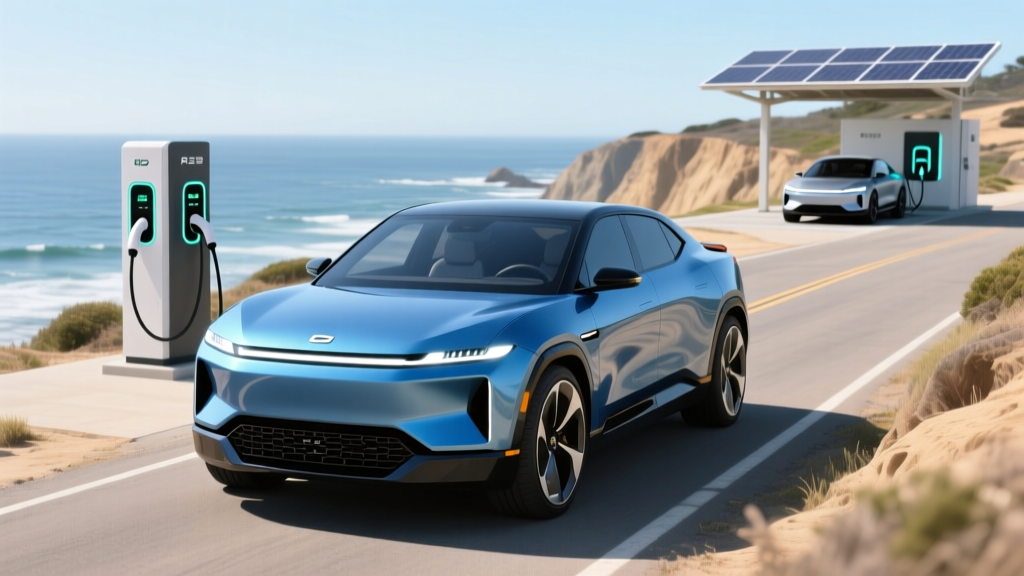
The R2 ships with a native NACS (North American Charging Standard) port — the same connector used by Tesla's Supercharger network. This is a significant advantage: R2 owners will have direct access to over 20,000 Tesla Superchargers across North America without an adapter, in addition to Electrify America, EVgo, and other networks that have begun adding NACS cables.
The 200 kW peak DC fast-charge rate is competitive but not class-leading (the Hyundai Ioniq 5 peaks at ~240 kW on 800V architecture). However, Rivian's charge curve is relatively flat through the 20–60% state-of-charge window before tapering above 80%, which is standard behavior to protect NMC cell longevity. In practical terms, a 10–80% charge in roughly 24 minutes adds about 220 miles of range — enough for most road-trip legs.
For home charging, the 11.5 kW onboard charger means a 48-amp Level 2 wall connector will fully replenish the 85-kWh pack in roughly 9 hours overnight. Most R2 owners will need a 60-amp dedicated circuit; budget $800–$2,000 for professional Level 2 installation depending on your electrical panel's capacity and the run length from panel to garage.
Pricing, Trims, and Federal Tax Credit Eligibility
| Trim | Base MSRP | Est. Price After §30D Credit | MSRP Cap Status |
|---|---|---|---|
| R2 Standard (RWD) | $45,000 | ~$37,500* | Under $80K SUV cap ✓ |
| R2 Dual-Motor (AWD) | $52,500 | ~$45,000* | Under $80K SUV cap ✓ |
| R2 Performance (AWD) | $58,000 | ~$50,500* | Under $80K SUV cap ✓ |
*Estimated price assumes full $7,500 federal tax credit under IRS §30D. Actual credit depends on battery sourcing, critical-mineral requirements, and buyer income limits. Verify eligibility at IRS.gov or via the point-of-sale transfer option at delivery.
All three R2 trims fall well under the $80,000 MSRP cap for SUVs under §30D rules. The R2 is classified as an SUV by the IRS, which is the more generous cap (sedans are capped at $55,000). However, qualifying for the full $7,500 credit depends on two additional factors:
- Buyer income caps: Modified adjusted gross income (MAGI) must not exceed $150,000 (single), $225,000 (head of household), or $300,000 (joint filers).
- Battery sourcing: A portion of the credit ($3,750) requires critical minerals sourced from the U.S. or a free-trade-agreement country; the other $3,750 requires battery components manufactured or assembled in North America. Rivian manufactures its vehicles in Illinois, but battery cell and module sourcing details for the R2 have not been fully itemized publicly. Rivian has stated it is "targeting full credit eligibility" for the R2 at launch.
As of 2026, the §30D credit can be transferred to the dealer at point of sale, effectively reducing your purchase price by $7,500 at delivery — no need to wait for tax filing. Consult a tax professional to confirm your specific eligibility.
Interior, Cargo, and Practicality
The R2 is a compact-to-midsize crossover — noticeably smaller than the R1S but larger than a Subaru Crosstrek. Rivian has confirmed the following interior dimensions:
- Cargo volume (behind 2nd row): ~32 cu ft
- Cargo volume (2nd row folded): ~68 cu ft
- Front trunk (frunk): ~11 cu ft (lockable, drainable — Rivian signature)
- Rear legroom: ~38 inches
- Seating: 5 passengers (2-row only; no 3rd-row option)
The R2 retains Rivian's signature gear tunnel concept in a smaller form factor, plus the lockable, drainable frunk that doubles as a cooler — a practical feature for camping and tailgating. The flat floor and absence of a driveshaft tunnel give the rear seat generous footroom for its class.
The infotainment system runs Rivian's proprietary software on a 15.6-inch center touchscreen with wireless Apple CarPlay and Android Auto. The R2 also includes Rivian's Driver+ system — a Level 2 (SAE) driver-assistance suite with adaptive cruise control, lane-centering, and automatic lane changes on divided highways. Driver+ is not self-driving; the driver must remain attentive with hands on the wheel at all times.
Pros and Cons
Pros
- Native NACS port — direct Tesla Supercharger access without adapter
- Strong real-world range (265–285 mi highway, AWD) for the class
- Competitive pricing starting at $45,000; all trims under §30D SUV cap
- Rivian's signature frunk, gear tunnel, and outdoor-oriented design
- Heat pump standard for cold-weather efficiency
- OTA software updates continuously add features post-delivery
Cons
- 200 kW peak DC charge rate trails 800V competitors (Ioniq 5 at 240 kW)
- 5-seat only — no third-row option for larger families
- Reservation wait times may extend 6–12+ months depending on trim
- Battery sourcing details for full §30D credit not yet publicly confirmed
- Performance trim's 290-mi range may feel limiting for road-trip-heavy buyers
- No LFP battery option (NMC only) — slightly higher long-term degradation risk vs. LFP
Who Should Buy the Rivian R2?
Choose the R2 if: You want a practical, outdoor-capable compact EV SUV with strong range, native Supercharger access, and a sub-$50K price after incentives. It's ideal for two-adult households, weekend adventurers, and current R1 owners adding a daily driver. The RWD Standard trim is the value pick; the Dual-Motor AWD is the best all-rounder.
Look elsewhere if: You need a third row (consider the R1S, Kia EV9, or Tesla Model X), you prioritize the absolute fastest DC charging in the segment (Hyundai Ioniq 5 or Kia EV6), or you need immediate delivery without a reservation wait.
Frequently Asked Questions
Is the Rivian R2 available to order now?
Yes — Rivian is accepting $1,000 refundable reservation deposits. Deliveries to reservation holders began in mid-2026, starting with the Dual-Motor AWD Launch Edition. Walk-up orders without a reservation will be available as production scales.
Does the Rivian R2 qualify for the $7,500 federal EV tax credit?
All R2 trims fall under the $80,000 SUV MSRP cap. Full $7,500 credit eligibility depends on IRS §30D battery-sourcing and critical-mineral requirements, plus buyer income limits. Rivian has stated it is targeting full credit eligibility. Confirm your personal eligibility via IRS.gov or a tax professional.
How does the R2 compare to the Tesla Model Y?
The R2 and Model Y are direct competitors. The Model Y Long Range AWD offers ~310 miles EPA range at ~$48,000 MSRP. The R2 Dual-Motor offers comparable range (315 mi EPA), more outdoor-oriented utility (frunk, gear tunnel), and a more premium interior at a slightly higher price ($52,500). The Model Y charges faster on V3 Superchargers (~250 kW peak), but the R2's native NACS port means both vehicles use the same charging network.
What is the Rivian R2's towing capacity?
Rivian has confirmed a towing capacity of approximately 3,300 pounds for the R2 — adequate for a small boat trailer or light utility trailer but not designed for heavy hauling. For heavier towing needs, the R1T (11,000 lb) or R1S (7,700 lb) are more appropriate.
Will the R2 get an LFP battery option?
As of 2026, Rivian has only confirmed NMC (nickel manganese cobalt) chemistry for the R2. An LFP variant could be introduced in a future model year to offer a lower-cost, longer-cycle-life option at the expense of some energy density and cold-weather performance. Rivian has not announced an LFP R2 timeline.