Rivian R2 Release Timeline: What We Know for 2026
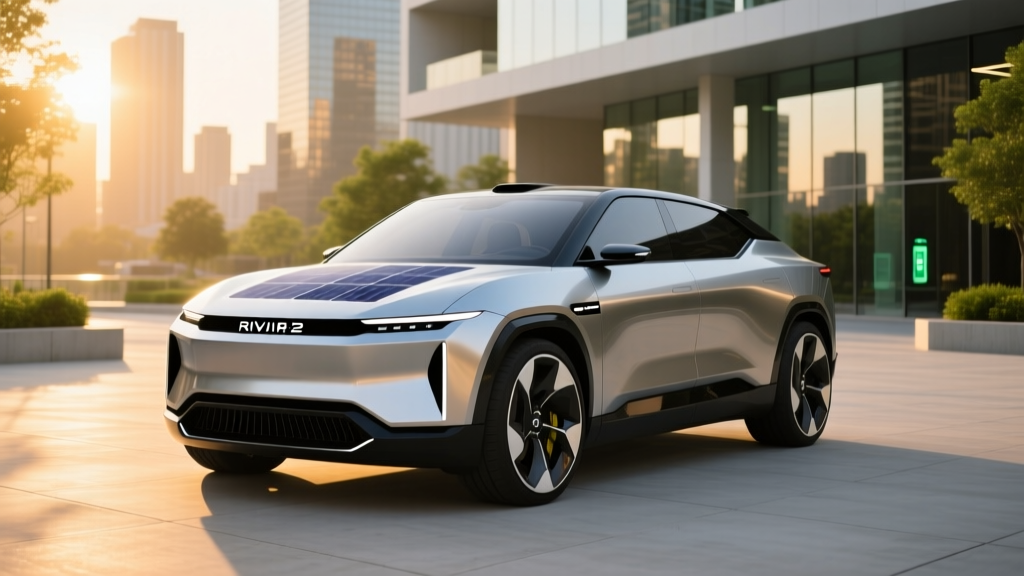
If you've been tracking the compact electric SUV market, the question on your mind is likely: when will the Rivian R2 be released? As of early 2026, Rivian has confirmed that the R2 is slated for production in the first half of 2026, with customer deliveries expected to begin around mid-2026. The vehicle was officially unveiled in March 2024, and Rivian has been preparing its Normal, Illinois assembly line — alongside a planned new Georgia facility — to build the R2 at volume.
The R2 is positioned as Rivian's mainstream play: a smaller, more affordable sibling to the R1S and R1T, targeting the high-volume compact SUV segment occupied by the Tesla Model Y, Ford Mustang Mach-E, and upcoming entrants. Unlike the R1 series, which starts above $70,000, the R2 aims for a starting MSRP around $45,000, making it one of the most anticipated EV launches of the decade.
Because the R2 has not yet entered customer deliveries as of this writing, all specifications below are based on Rivian's announced preliminary data and may shift before production vehicles reach driveways. We'll update this profile as final EPA certifications and pricing are confirmed.
Preliminary Rivian R2 Specifications
| Spec | R2 Standard (Est.) | R2 Dual-Motor (Est.) | R2 Performance (Est.) |
|---|---|---|---|
| Drivetrain | Single-Motor RWD | Dual-Motor AWD | Dual-Motor AWD (Tri-Motor TBD) |
| Horsepower | ~280 hp | ~450 hp | ~600+ hp |
| 0-60 mph | ~6.5 sec | ~4.5 sec | ~3.0 sec |
| Battery (Usable) | ~75 kWh (LFP) | ~90 kWh (NMC) | ~90 kWh (NMC) |
| EPA Range (Est.) | ~270 mi | ~330 mi | ~300 mi |
| Max DC Fast Charge | ~175 kW | ~200+ kW | ~200+ kW |
| 10-80% DCFC Time | ~28 min | ~25 min | ~25 min |
| Level 2 Home Charging | 11.5 kW (~37 mi/hr) | 11.5 kW (~37 mi/hr) | 11.5 kW (~37 mi/hr) |
| Base MSRP | $45,000 | $52,500 | $58,000+ |
Note: All specs are preliminary estimates based on Rivian announcements and industry analysis. Final EPA-certified figures may differ.
Range, Efficiency & Real-World Expectations
Real-World Expectation: On highway-heavy road trips at 70-75 mph, expect roughly 260-290 miles from the dual-motor variant. In cold weather (below 30°F), range can drop 15-25%, bringing effective highway range to approximately 220-250 miles for the AWD model. City driving with regenerative braking will return closer to the EPA sticker or slightly above.
Rivian has targeted a best-in-class efficiency figure for the R2, aiming for approximately 130 MPGe combined (roughly 26 kWh/100 mi) on the dual-motor variant. The single-motor RWD version should push closer to 140 MPGe thanks to reduced drivetrain losses and a lighter curb weight.
For context, the Tesla Model Y Long Range AWD achieves 122 MPGe combined. If Rivian hits its efficiency targets, the R2 would be among the most efficient compact SUVs in its class.
The chemistry choice matters here. The base Standard trim is expected to use an LFP (lithium iron phosphate) battery pack, which offers a longer cycle life and can be charged to 100% daily without degradation concerns — ideal for commuters. The trade-off is lower energy density, meaning less range per pound. The Dual-Motor and Performance trims will likely use NMC (nickel manganese cobalt) chemistry for higher energy density and the 330-mile target, but Rivian recommends keeping daily charges to 80-90% to preserve long-term battery health.
Charging Speed: DC Fast & Home Level 2
| Charging Level | Power / Rate | Miles Added per Hour | Notes |
|---|---|---|---|
| Level 1 (120V outlet) | ~1.4 kW | ~4-5 mi/hr | Emergency / overnight trickle only |
| Level 2 (240V home) | 11.5 kW | ~37 mi/hr | Full charge in ~8-9 hours |
| DC Fast Charge | Up to ~200 kW peak | ~600+ mi/hr (peak) | 10-80% in ~25 min; tapers above 80% |
Rivian has confirmed the R2 will use the NACS (North American Charging Standard) connector natively — the same plug used by Tesla. This gives R2 owners direct access to the Tesla Supercharger network (17,000+ stalls in North America) without an adapter, a significant advantage over CCS-equipped competitors still transitioning.
On a DC fast charger, expect the R2's charge curve to peak around 200 kW in the 10-40% state-of-charge window, then taper progressively. By 60%, you'll likely see ~120 kW, and above 80%, speeds drop to under 50 kW to protect battery longevity. This is standard behavior for all modern EVs — the 10-80% time of ~25 minutes is what matters for road-trip planning, not the peak number.
At home on a Level 2 wall connector (48A circuit, 60A breaker), the R2 will add approximately 37 miles of range per hour, easily replenishing a full day's commute overnight. Installation of a Level 2 home charger typically runs $800-$2,000 depending on your electrical panel's capacity and the distance from panel to garage. Homes with older 100A panels may need a $1,500-$3,000 panel upgrade to support a dedicated 60A circuit.
Performance & Drivetrain
The R2 will launch with multiple drivetrain configurations. The entry-level single-motor RWD targets affordability and maximum range, putting down an estimated 280 hp and a 0-60 mph time around 6.5 seconds — plenty quick for daily driving and highway merging.
The dual-motor AWD variant is expected to deliver approximately 450 hp and a 4.5-second 0-60 time, with torque vectoring across the rear axle for improved cornering traction. Rivian's experience with the R1T and R1S quad-motor system gives them a strong foundation in electric AWD tuning.
A Performance variant (possibly tri-motor) has been hinted at, targeting 600+ hp and a sub-3.0-second 0-60 time. This would position the R2 Performance against the Tesla Model Y Performance and Porsche Macan EV in the sport-compact EV segment.
All variants are expected to offer Rivian's adjustable air suspension (a brand hallmark), giving the R2 up to 8.5 inches of ground clearance for light off-road capability — a differentiator against the Model Y's fixed suspension.
Pricing, Trims & Federal Tax Credit Eligibility
| Trim | Base MSRP (Est.) | Est. Price After §30D Credit | Production Timing |
|---|---|---|---|
| Standard (RWD) | $45,000 | ~$37,500* | First half 2026 |
| Dual-Motor AWD | $52,500 | ~$45,000* | First half 2026 |
| Performance AWD | $58,000+ | ~$50,500+* | Late 2026 / Early 2027 |
*Tax credit estimates assume full $7,500 eligibility under IRS §30D. Actual credit depends on buyer income, vehicle MSRP caps, battery sourcing, and point-of-sale transfer rules. Always consult a tax professional.
- MSRP Cap: SUVs must be under $80,000 MSRP — all R2 trims clear this easily.
- Buyer Income Cap: Modified AGI must not exceed $150,000 (single), $225,000 (head of household), or $300,000 (joint filers).
- Battery Sourcing: The $7,500 credit splits into two $3,750 halves — one for critical minerals and one for battery component manufacturing. As of 2026, sourcing requirements have tightened significantly, and vehicles with battery components from "foreign entities of concern" (FEOC) may lose partial or full eligibility.
- Point-of-Sale Transfer: Buyers can transfer the credit to the dealer at purchase, reducing the out-of-pocket price immediately rather than waiting for a tax refund.
Rivian has not yet confirmed the R2's specific battery sourcing compliance. We will update this section once Rivian publishes §30D eligibility details closer to launch.
Interior, Cargo & Technology
The R2 is a compact SUV, dimensionally slotted between the Tesla Model Y and the Hyundai Ioniq 5. Rivian has published preliminary interior volume figures:
- Cargo volume (behind 2nd row): ~32 cu ft
- Cargo volume (2nd row folded): ~72 cu ft
- Front trunk (frunk): ~11 cu ft
- Rear legroom: ~38 inches
- Seating: 5-passenger, 2-row configuration
On the technology front, the R2 will feature:
- 15.4-inch center touchscreen running Rivian's latest OS with native navigation, over-the-air updates, and integrated trip planning with charger routing.
- Rivian Driver Assist+ — a Level 2 ADAS suite including adaptive cruise control, lane-centering, automatic lane changes, and hands-on-wheel monitoring. This is not autonomous driving; the driver must remain attentive at all times.
- Camera-based side mirrors (camera stems replacing traditional mirrors) to reduce drag and improve efficiency — a first for a mainstream US-market vehicle if it receives NHTSA approval.
- Native NACS charge port with Plug & Charge capability on the Supercharger network.
- V2L (Vehicle-to-Load) capability, allowing the R2 to power external devices or camping equipment through built-in outlets.
A notable drawback: Rivian has moved to a more minimalist interior with fewer physical controls than the R1 series. Climate and mirror adjustments route through the touchscreen, which some buyers find distracting while driving. Early prototype reviews have also noted that rear-seat headroom may be tighter than the R1S for taller passengers due to the sloping roofline.
Warranty & Long-Term Ownership
Rivian is expected to carry over its existing warranty structure to the R2:
- Battery & Drive Unit: 8 years / 100,000 miles (whichever comes first), with a capacity retention threshold of 70% — meaning Rivian will repair or replace the pack if it degrades below 70% of original capacity within the warranty period.
- Limited Vehicle Warranty: 5 years / 60,000 miles bumper-to-bumper.
- Roadside Assistance: 5 years / 60,000 miles.
The LFP battery in the Standard trim should offer excellent long-term degradation characteristics. Industry data shows LFP packs retaining 90%+ capacity after 1,000 full charge cycles — equivalent to roughly 250,000+ miles. NMC packs in the Dual-Motor and Performance trims typically retain 85-90% after 500 cycles, still well within the warranty threshold for normal ownership periods.
Who the Rivian R2 Is For
- You want a compact EV SUV with genuine off-road capability and adjustable ride height.
- Supercharger network access via native NACS is a top priority for road trips.
- You value adventure-oriented features (V2L, frunk, air suspension) over luxury sedan comfort.
- You want a sub-$50,000 EV (after incentives) with 300+ mile range and AWD.
Look elsewhere if:
- You need third-row seating (consider the R1S or Kia EV9).
- You want a vehicle available for immediate delivery — the R2 won't reach most buyers until mid-to-late 2026 at the earliest.
- Maximum rear-seat headroom is essential for tall passengers.
- You prefer physical climate controls and button-heavy interiors.
Frequently Asked Questions
When will the Rivian R2 be released and available to buy?
Rivian has confirmed production of the R2 begins in the first half of 2026 at its Normal, Illinois factory. Initial deliveries are expected to reservation holders by mid-2026. A second production facility in Georgia is planned for later volume expansion. The Performance trim may not arrive until late 2026 or early 2027.
What is the real-world range of the Rivian R2?
The dual-motor AWD variant targets an EPA-estimated ~330 miles. In real-world highway driving at 70-75 mph, expect 260-290 miles. In cold weather (below 30°F), plan for 220-250 miles of effective range. The single-motor RWD targets ~270 miles EPA, with real-world highway range around 220-240 miles.
How fast does the R2 charge at home and on the road?
On a Level 2 home charger (11.5 kW), the R2 adds approximately 37 miles of range per hour, fully charging overnight. On a DC fast charger, it peaks at approximately 200 kW, reaching 10-80% in about 25 minutes. Charging above 80% slows significantly to protect battery health.
Does the Rivian R2 qualify for the $7,500 federal EV tax credit?
The R2's MSRP falls well under the $80,000 SUV cap, making it structurally eligible. However, full $7,500 credit depends on the buyer's income (AGI caps apply), and critically, on Rivian's battery sourcing meeting 2026 IRS §30D requirements for critical minerals and FEOC-free components. Rivian has not published final sourcing certification. Consult a tax professional before relying on the credit.
Is the Rivian R2 worth buying vs the Tesla Model Y or Ford Mustang Mach-E?
The R2 offers unique differentiators: native NACS/Supercharger access, air suspension, V2L capability, and an adventure-oriented design. The Model Y remains the efficiency and charging-infrastructure benchmark, while the Mach-E offers strong driving dynamics. If you value off-road capability, frunk storage, and Rivian's software ecosystem — and can wait for mid-2026 delivery — the R2 is a compelling choice. If you need a vehicle today, the Model Y and Mach-E are available now with proven track records.
What are the biggest pros and cons of the Rivian R2?
- ~330-mile estimated range (AWD)
- Native NACS / Supercharger access
- Air suspension with 8.5" ground clearance
- V2L capability for camping/power
- 11 cu ft frunk + 32 cu ft cargo
- Sub-$45K price (after credit) on base trim
- Not available until mid-2026 at earliest
- Specs are still preliminary/unverified
- Camera mirrors need NHTSA approval
- Minimalist touchscreen-heavy interior
- Tight rear headroom for tall passengers
- Tax credit sourcing not yet confirmed
Sources: Rivian R2 Official Page, IRS §30D Clean Vehicle Credits, EPA Fuel Economy.