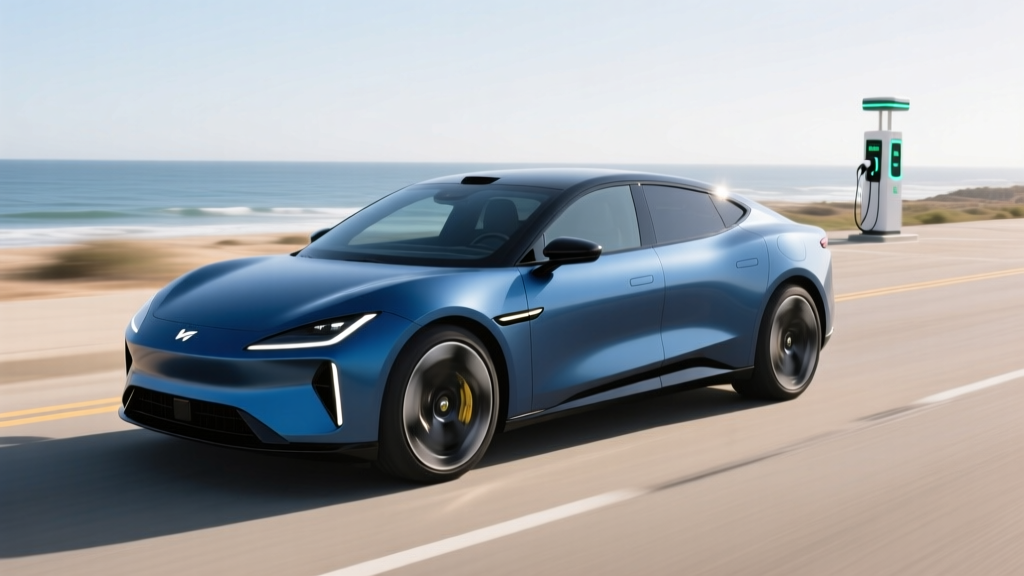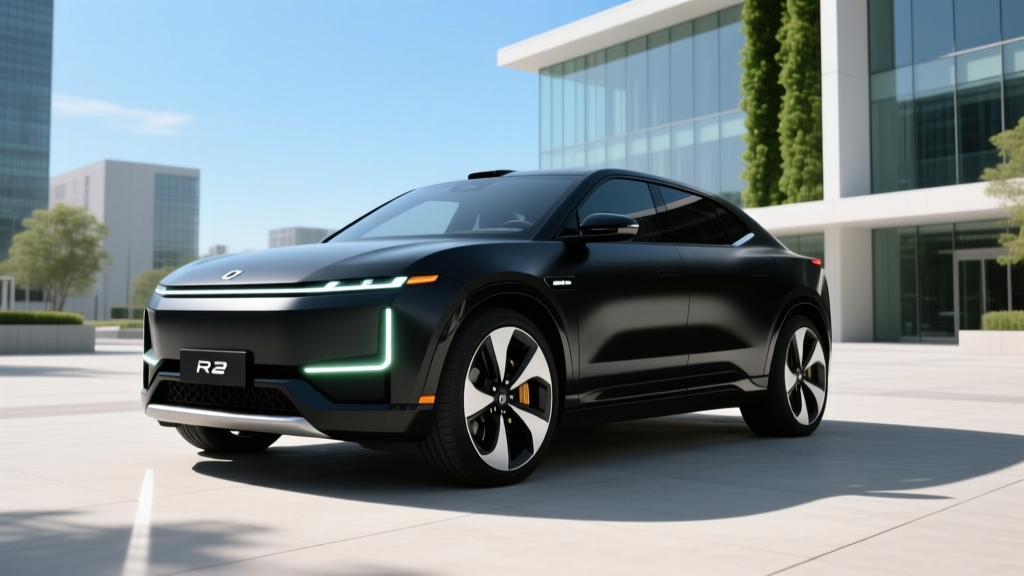
The Rivian R2 is the most anticipated mainstream electric SUV since the Tesla Model Y. Compact enough for city parking, rugged enough for trail use, and priced to undercut the midsize EV establishment, the R2 represents Rivian's bid for volume production. But for buyers tracking pre-orders and release dates, the central question remains: when is the R2 Rivian coming out, and what exactly will it deliver when it arrives?
As of early 2026, Rivian has confirmed that R2 production is slated to begin in the first half of 2026 at its newly constructed second factory in Stanton, Georgia, with customer deliveries expected to follow shortly after. This article compiles every confirmed and estimated spec, pricing tier, and ownership detail we know so far — and clearly labels what is preliminary versus finalized.
Release Timeline: When Can You Actually Buy the Rivian R2?
Rivian CEO RJ Scaringe confirmed at the March 2024 R2 reveal event — and reiterated in subsequent quarterly earnings calls — that the R2 program targets production start in H1 2026. The Georgia plant, purpose-built for the R2 platform, began equipment installation in late 2025. Here is the timeline as we understand it:
- Q1 2026: Pre-production validation builds at the Georgia facility.
- Q2 2026 (target): Start of regular production; initial units allocated to reservation holders.
- Q3–Q4 2026: Ramp to volume production; broader retail availability.
- 2027+: Additional trims, potential dual-motor performance variants, and international market expansion.
Rivian has historically been conservative with production timelines — the R1S and R1T both experienced delays from initial announcements to first deliveries. Buyers placing reservations now should expect delivery windows that may shift by one or two quarters depending on supply chain readiness and Georgia plant ramp speed.
Range, Battery, and Efficiency: What the R2 Will Deliver
Rivian has announced the R2 will launch with multiple battery options, targeting a maximum EPA-estimated range of over 300 miles on the largest pack. The company has confirmed the R2 platform will support both NMC (nickel manganese cobalt) and LFP (lithium iron phosphate) battery chemistries, with LFP likely reserved for the standard-range, lower-priced trim to hit that critical ~$45,000 entry point.
| Spec | Standard Range (Est.) | Max Range (Est.) |
|---|---|---|
| EPA Range | ~250 mi | 300+ mi |
| Battery Capacity (usable) | ~70 kWh (est.) | ~90 kWh (est.) |
| Chemistry | LFP | NMC |
| Efficiency (est.) | ~28 kWh/100mi | ~30 kWh/100mi |
The LFP vs. NMC trade-off matters here. LFP batteries are heavier and less energy-dense, which limits range, but they tolerate full 100% charges, degrade more slowly over thousands of cycles, and avoid cobalt sourcing concerns. NMC packs deliver more range per kilogram but benefit from daily charge limits around 80–90% for longevity. For a daily commuter who charges at home every night, LFP is arguably the smarter long-horizon choice.
Charging Speed: DC Fast Charge and Home Level 2
Rivian has confirmed the R2 will use the NACS (North American Charging Standard) connector natively — no adapter required — giving it direct access to Tesla's Supercharger network, now the largest and most reliable DC fast-charging network in North America. This is a significant competitive advantage over CCS-equipped rivals that still require adapters or rely on sparser networks.
| Charging Level | Power / Rate | Speed |
|---|---|---|
| Level 1 (120V) | ~1.4 kW | ~3–4 mi/hr |
| Level 2 (240V, 48A) | ~11.5 kW | ~25–30 mi/hr |
| DC Fast Charge (peak) | ~200 kW (est.) | 10–80% in ~25 min (est.) |
A few charging-curve realities to keep in mind: the ~200 kW peak will only be sustained at low state-of-charge (roughly 10–30%). Expect the curve to taper significantly above 60% SoC, with charging power dropping to 80–100 kW in the 60–80% window and slowing further above 80%. This is standard behavior for all lithium-ion packs due to cell-protection protocols, but it means your last 20% will take nearly as long as your first 50%. Plan road-trip stops around 10–80% sessions for the fastest turnaround.
For home charging, a 48-amp Level 2 wall connector on a 60-amp circuit will fully replenish the R2 overnight in roughly 8–10 hours depending on pack size. Rivian is expected to offer its own branded wall charger, though any J1772/NACS-compatible Level 2 unit will work. Budget $500–$1,500 for professional installation depending on your panel capacity and run distance — and confirm with a licensed electrician whether your home's 200-amp service can support a 60-amp dedicated circuit without a panel upgrade.
Performance, Drivetrain, and Platform
The R2 will launch with multiple drivetrain configurations. Rivian has confirmed both rear-wheel drive (single motor) and all-wheel drive (dual motor) variants, with a performance-oriented dual-motor option likely following in 2027. The R2 sits on an entirely new, smaller platform — not a shortened R1 architecture — designed from the ground up for cost-efficient, high-volume manufacturing.
| Spec | Single Motor RWD | Dual Motor AWD |
|---|---|---|
| Horsepower (est.) | ~275 hp | ~450 hp |
| 0–60 mph (est.) | ~6.5 sec | ~4.5 sec |
| Drivetrain | RWD | AWD |
| Towing Capacity (est.) | ~3,000 lbs | ~4,500 lbs |
Rivian's trademark gear tunnel (a pass-through storage compartment behind the rear seats) is confirmed for the R2, along with a front trunk (frunk). The company has also teased a simplified semi-active suspension system — less complex than the R1's quad-motor hydraulic setup, but still offering adjustable ride height for light off-road use. Approach and departure angles should comfortably exceed typical crossover benchmarks, though the R2 is positioned as a lifestyle-adventure SUV rather than a hardcore rock crawler like the R1S.
Pricing, Trims, and Federal Tax Credit Eligibility
Rivian has targeted a starting MSRP of approximately $45,000 for the base R2 single-motor, standard-range configuration. This positions the R2 directly against the Tesla Model Y, the upcoming next-gen Chevrolet Equinox EV, and the Hyundai Ioniq 5. Higher trims with dual motors and the Max Range pack are expected to push into the $55,000–$60,000 range.
| Trim (Est.) | MSRP | Est. After §30D Credit |
|---|---|---|
| Standard Range RWD | ~$45,000 | ~$37,500* |
| Max Range RWD | ~$50,000 | ~$42,500* |
| Dual Motor AWD | ~$55,000 | ~$47,500* |
*Tax credit amounts are estimates based on current IRS §30D rules. Eligibility requires meeting all of the following criteria:
- MSRP cap: SUVs must have an MSRP at or below $80,000 — the R2 clears this easily.
- Buyer income cap: Modified adjusted gross income must not exceed $150,000 (single), $225,000 (head of household), or $300,000 (joint filers).
- Battery sourcing: A percentage of critical minerals and battery components must be sourced from the U.S. or free-trade-agreement countries. These thresholds increase annually. Rivian's Georgia-built packs are expected to meet domestic content requirements, but final certification depends on the specific model year's sourcing thresholds.
- Point-of-sale transfer: Under current rules, eligible buyers can transfer the credit to the dealer at purchase, reducing the upfront price rather than waiting for a tax refund.
Important: Tax credit rules are subject to legislative change. Always verify your eligibility with a tax professional and check the latest IRS guidance before making a purchase decision.
Interior, Cargo, Technology, and Driver Assistance
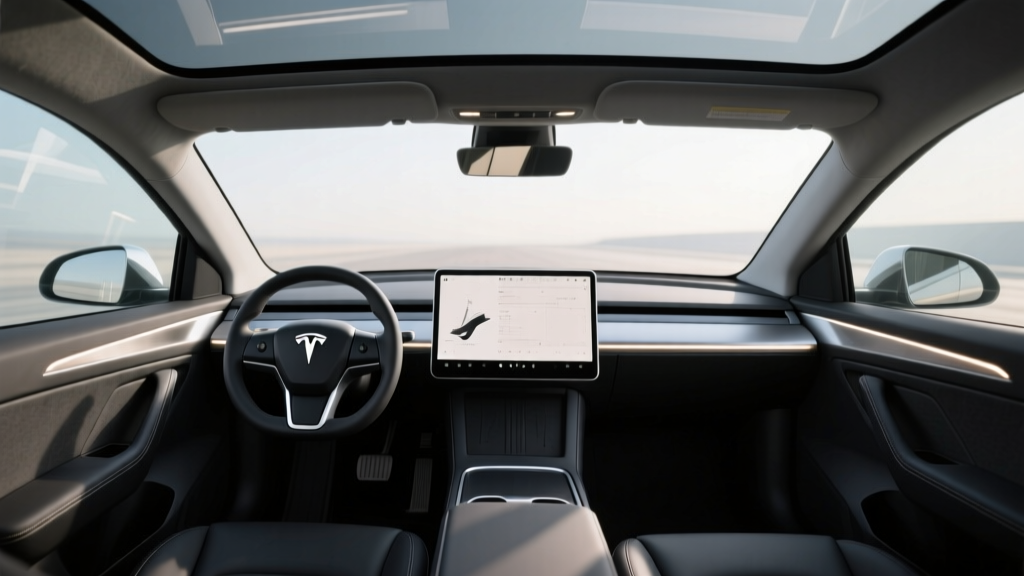
The R2's interior follows Rivian's design language: minimalist, material-forward, and anchored by a large central touchscreen (expected to be 15+ inches). Rivian has committed to using sustainable and recycled materials throughout the cabin, consistent with the R1 lineup. Key interior and technology highlights:
- Seating: 5-passenger capacity with an available panoramic glass roof.
- Cargo (est.): ~30 cu ft behind the rear seats, expanding to ~65 cu ft with seats folded — plus a front trunk (frunk) adding approximately 5–7 cu ft and the signature gear tunnel.
- Infotainment: Rivian's proprietary OS with over-the-air updates, integrated navigation with route-based battery preconditioning, and native app ecosystem.
- Driver assistance: Rivian's Driver+ system (SAE Level 2) with adaptive cruise control, lane-centering, and highway assist. This is a driver-supervision-required system — not autonomous driving. Expect hands-on-wheel monitoring similar to Tesla Autopilot or Ford BlueCruise.
- Unique features: Gear tunnel storage, integrated camp kitchen accessory option (carryover from R1 philosophy), and vehicle-to-load (V2L) capability for powering external devices.
Notable potential drawbacks to watch for: Rivian's service center network, while expanding, remains significantly smaller than Tesla's. Buyers in rural areas should verify proximity to an authorized service location. Additionally, the R2's simplified suspension — while cost-effective — may not match the R1's on-road refinement or off-road capability. Early adopters may also encounter first-model-year software quirks that Rivian typically addresses through OTA updates over the first 12–18 months.
Warranty and Ownership Outlook
Rivian's current R1 vehicles carry a 5-year/60,000-mile vehicle limited warranty and an 8-year/175,000-mile battery and drive unit warranty. The company has not yet published R2-specific warranty terms, but industry expectations — and competitive pressure from Hyundai's 10-year/100,000-mile EV powertrain coverage — suggest Rivian will match or closely mirror its existing R1 warranty structure.
| Coverage | Expected Term |
|---|---|
| Vehicle Limited Warranty | 5 years / 60,000 miles |
| Battery & Drive Unit | 8 years / 175,000 miles (≥70% capacity retention) |
| Roadside Assistance | 5 years / 60,000 miles |
The battery warranty's 70% capacity retention threshold is industry-standard (matching Tesla and Ford). In practice, LFP packs in the standard-range R2 are likely to retain well above 85% capacity after 150,000 miles based on current cell-cycle data, while NMC packs typically retain 80–88% over the same distance with proper charging habits (avoiding sustained 100% SoC storage).
Who the Rivian R2 Suits Best — and Who Should Look Elsewhere
- You want a compact adventure SUV with genuine off-road credibility and the gear tunnel for outdoor gear.
- Native NACS charging and Tesla Supercharger access are priorities for road-trip reliability.
- You value a sustainable brand ethos and are willing to accept first-model-year refinement trade-offs.
- Your household needs a 5-seat daily driver that can tow a small camper or trailer (~3,000–4,500 lbs).
❌ Look elsewhere if:
- You need a 3-row family hauler — the R2 seats five; consider the R1S or Kia EV9 instead.
- You require an established service network with a center within 30 miles — check Rivian's service map for your ZIP code first.
- You want immediate availability — the R2 is not yet in production, and early reservation fulfillment may extend into late 2026 or 2027 depending on demand.
- Maximum range is the sole priority — the Hyundai Ioniq 5 (311 mi EPA) or Tesla Model Y Long Range may offer more certified miles at launch.
Rivian R2 vs. Key Competitors
| Spec | Rivian R2 (AWD Est.) | Tesla Model Y LR | Hyundai Ioniq 5 LR AWD |
|---|---|---|---|
| EPA Range | 300+ mi (est.) | 310 mi | 290 mi |
| Starting MSRP | ~$45,000 | ~$47,000 | ~$49,000 |
| Peak DC Charge | ~200 kW | 250 kW | 240 kW |
| Connector | NACS (native) | NACS (native) | NACS (2025+) |
| 0–60 mph | ~4.5 sec | 4.8 sec | 5.1 sec |
| Cargo (rear seats up) | ~30 cu ft | 30 cu ft | 27 cu ft |
The R2's primary differentiator is its adventure-oriented design language and gear tunnel — neither the Model Y nor the Ioniq 5 offers anything comparable for kayak paddles, climbing ropes, or a slide-out camp kitchen. However, the Tesla Model Y benefits from the most mature Supercharger ecosystem and a decade of OTA refinement, while the Ioniq 5 delivers class-leading 800V charging architecture and a more established dealer/service footprint.
✅ Pros
- Native NACS — no adapter for Superchargers
- Adventure-first design with gear tunnel and frunk
- Competitive ~$45K entry price
- LFP option for worry-free daily charging
- Strong estimated range (300+ mi max)
❌ Cons
- Not yet in production — delivery timing uncertain
- Rivian service network still expanding
- First-model-year risk (software, build quality)
- 5-seat only; no 3rd-row option
- DC charge speed may lag Ioniq 5 and Model Y
Frequently Asked Questions
When is the R2 Rivian coming out exactly?
Rivian targets production start in the first half of 2026, with customer deliveries expected mid-to-late 2026. Exact timing depends on the Georgia factory ramp and may shift. Reservation holders will receive estimated delivery windows as production approaches.
What is the real-world range of the Rivian R2?
Rivian targets an EPA-estimated 300+ miles for the Max Range variant. In real-world highway driving at 70 mph, expect approximately 260–280 miles. In cold weather (below freezing), plan for 200–230 miles without preconditioning. The Standard Range LFP model will likely deliver ~250 miles EPA, with real-world highway figures around 210–230 miles.
How fast does the Rivian R2 charge?
Estimated peak DC fast-charge rate is approximately 200 kW, enabling a 10–80% session in roughly 25 minutes under optimal conditions (warm battery, low SoC start, capable charger). Home Level 2 charging at 11.5 kW adds about 25–30 miles per hour, fully replenishing overnight.
Does the Rivian R2 qualify for the federal EV tax credit?
The R2 is expected to qualify for up to $7,500 under IRS §30D, given its sub-$80,000 MSRP, U.S. manufacturing, and anticipated domestic battery content. However, buyer income caps ($150K single / $300K joint) and annual battery-sourcing thresholds apply. Confirm your eligibility via the IRS clean vehicle credit page and consult a tax professional before purchase.
Is the Rivian R2 worth buying vs. the Tesla Model Y?
If you prioritize adventure utility (gear tunnel, off-road clearance, V2L), a distinctive design, and Rivian's brand ethos, the R2 offers something the Model Y does not. If you want the most proven charging network, the lowest depreciation risk, and immediate availability, the Model Y remains the safer bet. Both will share native NACS Supercharger access.
Can I reserve the Rivian R2 now?
Yes — Rivian opened R2 reservations with a refundable deposit. However, early reservation slots are expected to fill quickly, and delivery order may prioritize existing Rivian owners and earlier deposit timestamps. Visit Rivian's official site for current reservation status.