The Rivian R2 and the 'Spin-Off' Reshaping the Company
If you've been searching for Rivian spin off news, you've likely encountered a tangle of headlines about Volkswagen investments, software joint ventures, and the long-awaited R2 SUV. Let's untangle this. In 2024, Volkswagen Group invested up to $5 billion in Rivian as part of a joint venture to share EV architecture and software. By 2026, that partnership has matured into what industry analysts effectively treat as a software spin-off: Rivian's vertically integrated software and zonal hardware stack now underpins vehicles across both brands, giving Rivian the capital runway to launch the compact R2 SUV while retaining its identity as an independent automaker.
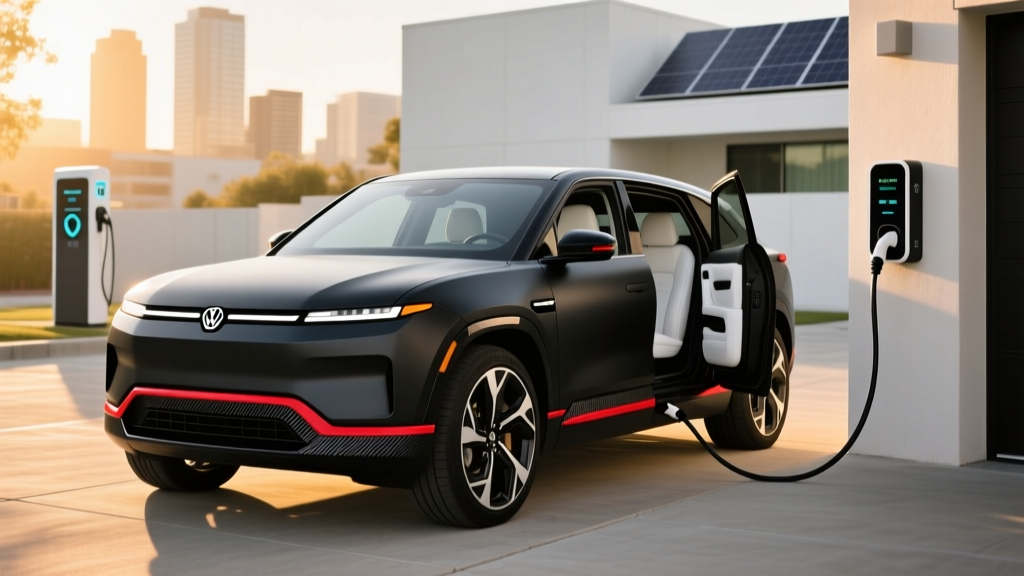
The 2026 Rivian R2 is the tangible result. It's a compact, five-passenger electric SUV positioned against the Tesla Model Y, Hyundai IONIQ 5, and Ford Mustang Mach-E. Built on a new midsize platform at Rivian's Normal, Illinois facility, the R2 brings the brand's signature adventure ethos to a more accessible price point. But does the execution match the ambition?
2026 Rivian R2 Core Specifications
| Spec | R2 Standard | R2 Dual-Motor | R2 Performance |
|---|---|---|---|
| EPA Range (est.) | ~330 mi | ~315 mi | ~290 mi |
| Battery Capacity | ~85 kWh usable (NMC) | ~85 kWh usable (NMC) | ~85 kWh usable (NMC) |
| Drivetrain | RWD (single motor) | AWD (dual motor) | AWD (dual motor, tuned) |
| Horsepower | ~330 hp | ~450 hp | ~550 hp |
| 0-60 mph | ~6.0 sec | ~4.5 sec | ~3.5 sec |
| Max DC Fast Charge | ~220 kW | ~220 kW | ~220 kW |
| 10-80% DCFC Time | ~22 min | ~22 min | ~22 min |
| Level 2 Home Charge | 11.5 kW (~37 mi/hr) | 11.5 kW (~37 mi/hr) | 11.5 kW (~37 mi/hr) |
| Base MSRP | ~$45,000 | ~$52,000 | ~$58,000 |
Note: Rivian has published preliminary specs for the R2 line. Final EPA certification figures may vary by trim and production batch. Always confirm with the EPA fueleconomy.gov database before purchasing.
Real-World Range: Beyond the EPA Sticker
Real-World Expectation: ~270-295 miles mixed highway/city; ~220-250 miles sustained 75+ mph highway; ~200-230 miles in sub-30°F winter conditions.
Rivian targets an EPA-rated range of approximately 330 miles for the single-motor R2 Standard. That's a competitive figure, matching or exceeding the Tesla Model Y Long Range and comfortably outdistancing base IONIQ 5 and Mach-E configurations.
However, real-world range in any SUV-shaped EV is heavily dependent on driving style and conditions. The R2's boxy, adventure-oriented silhouette creates more aerodynamic drag than a sleek sedan. In our experience with the R1S and R1T, Rivian's real-world highway efficiency tends to land 12-18% below EPA combined estimates at sustained 70-80 mph speeds. Cold weather compounds this: lithium-ion batteries lose efficiency below freezing, and cabin heating in an SUV-sized interior draws significant energy. Expect a 25-35% range reduction in harsh winter conditions unless you precondition the battery while plugged in.
The R2's NMC (nickel manganese cobalt) battery chemistry offers higher energy density than LFP alternatives, which is why Rivian can pack ~85 kWh of usable capacity into a compact footprint. The trade-off is that NMC cells prefer daily charging limits around 80-90% for longevity, unlike LFP batteries that tolerate regular 100% charges. For most owners, 80% daily still yields roughly 260 miles — more than enough for commuting.
Charging Speed: 800V Architecture and the Charge Curve
| Charging Level | Power / Rate | Speed | Use Case |
|---|---|---|---|
| Level 1 (120V) | ~1.4 kW | ~4 mi/hr | Emergency / trickle |
| Level 2 (240V, 48A) | 11.5 kW | ~37 mi/hr | Overnight home charging |
| DC Fast Charge | Peak 220 kW | 10-80% in ~22 min | Road trips |
The R2 rides on an 800-volt electrical architecture, the same class of system found in the Hyundai IONIQ 5 and Porsche Taycan. This enables peak DC fast-charging rates around 220 kW at compatible 350 kW chargers (Electrify America, EVgo, select Tesla Superchargers via NACS adapter).
A critical concept for new EV buyers: kW is power (how fast energy flows), while kWh is energy (how much the battery holds). The R2's 220 kW peak is not sustained across the entire session. Like all EVs, the R2's charge curve tapers significantly above 80% State of Charge to protect battery health. The 10-80% sprint takes roughly 22 minutes under ideal thermal conditions; pushing from 80-100% can add another 15-20 minutes. For road trips, plan your stops around the 10-80% window and precondition the battery via the Rivian app 15-20 minutes before arrival at the charger.
At home, the R2 accepts up to 11.5 kW on a Level 2 wall connector (240V, 48 amps), adding roughly 37 miles of range per hour. A full overnight session from 20% to 90% takes about 6-7 hours. Installation of a home Level 2 charger typically costs $800-$2,500 including equipment and electrician labor, depending on your panel capacity and run length. Rivian offers a branded wall connector, but any J1772-compatible (or NACS-native, depending on your delivery configuration) Level 2 unit will work.
Performance, Efficiency, and Driving Dynamics
The single-motor RWD R2 Standard targets ~330 horsepower and a 0-60 mph time around 6.0 seconds — adequate for merging and passing, if not thrilling. The dual-motor AWD variants unlock the performance Rivian is known for: the Dual-Motor pushes ~450 hp and 4.5 seconds, while the Performance trim delivers roughly 550 hp and a 3.5-second sprint. All trims feature Rivian's quad-corner air suspension (a brand hallmark), providing adjustable ride height for aerodynamics on the highway or ground clearance for light trail use.
Efficiency for the RWD Standard is projected at approximately 3.0-3.2 kWh per mile (roughly 105-110 MPGe combined). Dual-motor trims will trade some efficiency for traction and power, landing closer to 3.4-3.6 kWh per mile. For context, that translates to an electricity cost of roughly $0.04-$0.06 per mile at the national average residential rate of $0.16/kWh — about one-third the per-mile fuel cost of a comparable gas-powered compact SUV.
Interior, Cargo, and Technology
The R2 seats five and prioritizes utility. Expect approximately 38-40 inches of rear legroom and a cargo area offering ~30 cubic feet behind the second row, expanding to ~65-70 cubic feet with the rear seats folded. A front trunk (frunk) adds an estimated 5-7 cubic feet of weather-sealed storage — ideal for charging cables, groceries, or gear you want separated from the cabin.
Rivian's infotainment system runs on the company's proprietary software stack — the same architecture now shared with Volkswagen through the joint venture. The 15.6-inch center touchscreen handles navigation, media, vehicle settings, and over-the-air updates. The R2 includes Rivian's Driver+ system as standard: a Level 2 SAE driver-assistance suite combining adaptive cruise control, lane-centering, and automatic emergency steering. Highway Assist offers hands-on-wheel lane-centering on divided highways.
Standout tech includes the Rivian Camp Kitchen accessory interface (a brand signature), integrated Gear Tunnel access on applicable configurations, and a vehicle-to-load (V2L) capability that lets you power external devices from the R2's battery — useful for camping, tailgating, or emergency backup.
Pricing, Trims, and Federal Tax Credit Eligibility
| Trim | Base MSRP | Est. Federal Credit | Effective Price |
|---|---|---|---|
| R2 Standard (RWD) | ~$45,000 | Up to $7,500* | ~$37,500 |
| R2 Dual-Motor (AWD) | ~$52,000 | Up to $7,500* | ~$44,500 |
| R2 Performance (AWD) | ~$58,000 | Up to $7,500* | ~$50,500 |
*Federal tax credit eligibility under IRS §30D is subject to multiple requirements: buyer modified adjusted gross income must not exceed $150,000 (single) / $300,000 (joint); vehicle MSRP must be under $80,000 for SUVs; and battery components and critical minerals must meet escalating domestic-sourcing thresholds. The credit can be transferred to the dealer at point of sale as an immediate price reduction. Confirm eligibility with a tax professional before purchase.
The R2's pricing strategy places it squarely in the mainstream compact EV SUV segment. The ~$45,000 RWD Standard undercuts the Tesla Model Y Long Range and competes with well-equipped Hyundai IONIQ 5 and Kia EV6 trims. The dual-motor variants push into premium territory but deliver AWD capability and acceleration that justify the premium for adventure-oriented buyers.
All R2 trims fall well under the $80,000 MSRP cap for SUVs under §30D. The primary variable for buyers is whether the R2's battery sourcing meets the annual critical-minerals and component thresholds, which tighten each year. Rivian has been aggressively onshoring supply chain elements; check the DOE/EPA qualifying vehicle list at the time of purchase for confirmed credit status.
Warranty and Long-Term Ownership
Rivian covers the R2 with a comprehensive warranty package:
- Battery & Drive Unit: 8 years / 120,000 miles (whichever comes first), with a capacity retention threshold of approximately 70%.
- Limited Vehicle Warranty: 5 years / 60,000 miles bumper-to-bumper.
- Roadside Assistance: 5 years / 60,000 miles.
The 8-year/120,000-mile battery warranty is competitive with segment leaders. NMC battery degradation in modern thermal-managed packs typically runs 1.5-2.5% per year under normal use, meaning most owners will see 85-90% State of Health at the 8-year mark — well above the warranty threshold. Rivian's over-the-air update capability means software-side optimizations for battery management and efficiency continue post-purchase.
Pros, Cons, and the Competition
- Competitive 330-mile EPA range (RWD)
- 800V architecture enables ~22-min 10-80% DCFC
- Standard air suspension and V2L capability
- Strong adventure/outdoor utility (frunk, Gear Tunnel accessories)
- Rivian's proven OTA software and build quality trajectory
- Falls under §30D MSRP cap for potential $7,500 credit
- Real-world highway range falls 12-18% below EPA sticker
- NMC chemistry requires 80-90% daily charge limit for longevity
- New platform — first-year production risk (panel gaps, software bugs)
- Driver+ is Level 2 only; no hands-free highway system at launch
- Cold-weather range loss significant without preconditioning
- Service center network still expanding outside major metros
Key Competitors: The Tesla Model Y remains the volume benchmark, with a mature Supercharger network and slightly better efficiency. The Hyundai IONIQ 5 offers comparable 800V charging and a more refined interior. The Ford Mustang Mach-E delivers engaging driving dynamics but trails on range. The R2's differentiator is the adventure-utility package — air suspension, frunk, V2L, and Rivian's outdoor ecosystem — wrapped in a software experience that the VW partnership validates as industry-leading.
Who the Rivian R2 Is For
The R2 is ideal for:
- Outdoor-oriented families who need AWD, cargo versatility, and light trail capability without a truck-sized footprint.
- Commuters with home charging who want 300+ miles of range and low per-mile operating costs.
- Tech-forward buyers who value OTA updates, integrated software, and a brand with a clear innovation roadmap (validated by the VW joint venture).
It's less ideal for:
- Apartment dwellers without charging access — the R2's size and battery make public-charging-only ownership inconvenient.
- Buyers prioritizing hands-free highway driving — GM's Super Cruise and Ford's BlueCruise currently offer hands-off experiences Rivian hasn't yet matched.
- Budget-first shoppers — the ~$45K entry point, even after credits, is above the cheapest EVs on the market.
Frequently Asked Questions
What is the real-world range of the 2026 Rivian R2?
The EPA estimates approximately 330 miles for the RWD Standard trim. In real-world mixed driving, expect 270-295 miles. Sustained highway driving at 75+ mph reduces that to roughly 220-250 miles, and sub-30°F winter conditions can drop range to 200-230 miles without battery preconditioning.
How fast does the Rivian R2 charge at home and on the road?
On a Level 2 home charger (240V, 48A), the R2 accepts up to 11.5 kW, adding about 37 miles of range per hour. On a DC fast charger, it peaks at approximately 220 kW, achieving a 10-80% charge in roughly 22 minutes under ideal conditions. Charging slows significantly above 80% to protect battery health.
How much does the R2 cost after the federal EV tax credit?
The R2 Standard starts around $45,000. If you qualify for the full $7,500 §30D credit (subject to income, MSRP, and battery-sourcing rules), the effective price drops to approximately $37,500. The credit can be applied as a point-of-sale reduction at the dealership.
Is the Rivian R2 worth buying over the Tesla Model Y or IONIQ 5?
Choose the R2 if you prioritize outdoor utility (air suspension, frunk, V2L), Rivian's software ecosystem, and a distinctive adventure brand. Choose the Model Y for Supercharger network access and efficiency, or the IONIQ 5 for interior refinement and proven 800V charging reliability.
What are the biggest pros and cons of the R2?
Pros: strong range, fast 800V charging, air suspension, adventure utility, OTA software. Cons: real-world highway range drops 12-18% below EPA, first-year production risk, no hands-free driving system, cold-weather range loss, expanding service network.
Does the 2026 Rivian R2 qualify for the federal EV tax credit?
The R2 is expected to qualify for up to $7,500 under IRS §30D, as its MSRP is well under the $80,000 SUV cap. However, eligibility depends on your income (≤$150K single / ≤$300K joint), and the vehicle's battery component and critical mineral sourcing meeting 2026 thresholds. Verify current status on the fueleconomy.gov tax credit page and consult a tax professional.
What is the Rivian 'spin-off' I keep reading about?
There is no corporate spin-off in the traditional sense. What's occurred is a strategic joint venture between Rivian and Volkswagen Group, with VW investing up to $5 billion to co-develop EV software and architecture. Rivian's software division effectively operates as a shared technology platform across both brands, giving Rivian the capital stability to launch vehicles like the R2 while remaining an independent, publicly traded company.