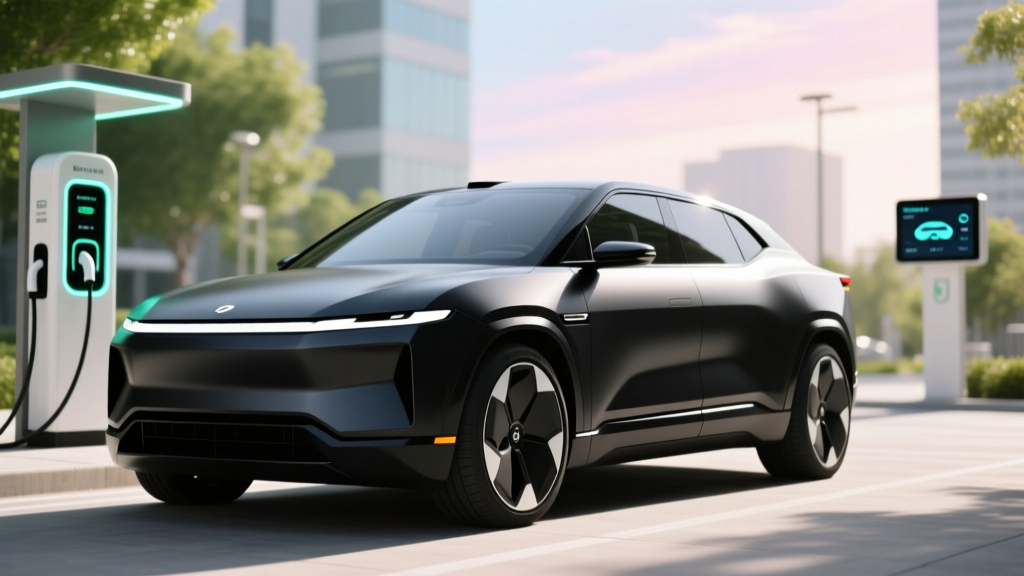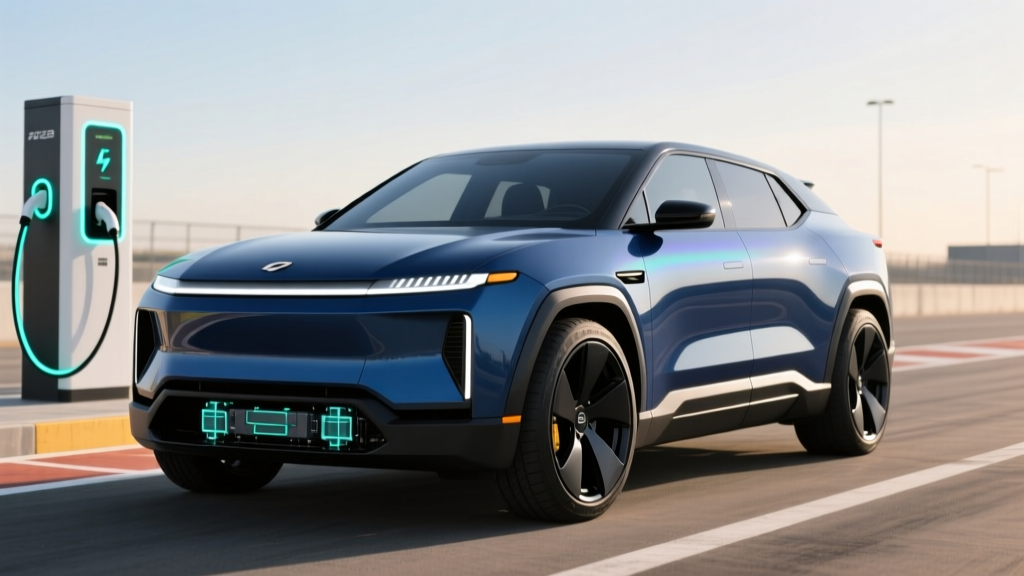
The Rivian R2 prototype represents the automaker's bid to bring its adventure-EV formula to a midsize, more accessible price point. First shown to the public in March 2024 and undergoing active road testing through 2025, the R2 is slated to begin production at Rivian's Normal, Illinois plant in the first half of 2026. Until customer vehicles roll off the line and the EPA certifies final numbers, every specification below is preliminary and subject to change. What follows is a data-driven synthesis of Rivian's official disclosures, supply-chain reporting, and our own analysis of the prototype's engineering targets.
Range, Battery, and Efficiency Targets
Rivian has confirmed the R2 will launch with a "Standard" battery pack targeting over 300 miles of EPA-estimated range, with CEO RJ Scaringe publicly stating a goal of approximately 330 miles for the dual-motor AWD variant. A larger "Max" pack option is expected to push that figure to roughly 350–370 miles, mirroring the strategy used in the R1S and R1T lineup.
Real-world expectation: Plan for approximately 270–295 miles in mixed highway driving at 70–75 mph. In cold weather (below 30°F), expect a 20–30% reduction, yielding roughly 230–265 miles before needing a charge. City driving with regenerative braking will trend closer to or slightly above the EPA sticker.
The R2 is built on a brand-new, smaller platform with a structural battery pack that serves as a stressed chassis member. Rivian has indicated the chemistry will be NMC (nickel manganese cobalt) for the Max pack to maximize energy density, while the Standard pack may use an LFP (lithium iron phosphate) chemistry to hit a lower price point. LFP offers superior cycle life and can be charged to 100% daily without degradation concerns, but trades some energy density, explaining the range gap between pack sizes.
| Spec | Standard Pack (Est.) | Max Pack (Est.) |
|---|---|---|
| Usable capacity | ~75 kWh | ~100 kWh |
| Chemistry | LFP (likely) | NMC |
| EPA range target | ~300 mi | ~350–370 mi |
| Efficiency (est.) | ~25 kWh/100 mi (~135 MPGe) | ~28 kWh/100 mi (~120 MPGe) |
Efficiency will be critical. The R1S and R1T, built on the larger R1 platform, consume roughly 35–42 kWh/100 mi. The R2's lighter, more aerodynamic body and next-generation silicon-carbide inverters should drop that figure into the mid-to-high 20s, competitive with the Tesla Model Y and Hyundai Ioniq 5.
Charging Speed: DC Fast Charge and Home Level 2
The R2 prototype uses a NACS (North American Charging Standard) connector natively — no adapter required for Tesla Superchargers. Rivian confirmed the R2 platform will support an 800-volt electrical architecture, a significant upgrade from the R1's 400V system, enabling substantially faster DC fast charging.
| Charging Level | Power (kW) | Speed / Time |
|---|---|---|
| Level 1 (120V household) | ~1.4 kW | ~3–4 mi/hr |
| Level 2 (240V home, 48A) | ~11.5 kW | ~30–38 mi/hr; full charge in ~8–10 hr |
| DC Fast Charge (peak) | ~250 kW (est.) | 10–80% in ~20–25 min (est.) |
Charging-curve reality check: A peak rate of 250 kW will not be sustained across the entire session. Expect the R2 to hold peak or near-peak rates between roughly 10% and 40% state of charge, then taper progressively. Above 80%, charging slows dramatically to protect battery health — a 10–80% session will be roughly 20–25 minutes, but 10–95% could take 40+ minutes. The 800V architecture should give the R2 a flatter, more sustained charge curve than the current R1 fleet, similar to what we've measured on Hyundai's E-GMP platform.
For home charging, a 48-amp Level 2 wall connector on a 60-amp circuit will add roughly 30–38 miles of range per hour, enough to fully replenish the Standard pack overnight. Budget $500–$2,000 for professional Level 2 installation depending on your electrical panel's capacity — a 200-amp panel is typically sufficient, but older homes may require a panel upgrade.
Performance and Drivetrain
Rivian has confirmed the R2 will launch with a dual-motor all-wheel-drive configuration, consistent with the brand's adventure-oriented positioning. A single-motor rear-wheel-drive variant is expected to follow, likely for the 2027 model year, which would serve as the entry-level, lowest-price trim.
| Metric | Dual-Motor AWD (Est.) |
|---|---|
| Horsepower | ~450–500 hp |
| 0–60 mph | ~4.5 seconds (est.) |
| Drivetrain | Dual-motor AWD |
| Towing capacity | ~4,000–5,000 lbs (est.) |
| Ground clearance | ~8.5 inches (est.) |
The R2 is smaller than the R1S but larger than most compact crossovers. Rivian's dual-motor system provides torque vectoring and will include the brand's suite of drive modes (All-Purpose, Sport, Snow, Off-Road). Towing capacity should comfortably handle a small camper or boat trailer, though range will drop significantly — expect a 40–50% range reduction when towing near max capacity.
Interior, Cargo, and Technology
The R2 prototype features a clean, minimalist cabin anchored by a large central touchscreen (estimated 15.6 inches) and a smaller driver display. Rivian's proprietary software powers the infotainment, with over-the-air updates, integrated navigation with charging route planning, and native app support. Notably, the R2 introduces a rear hatch glass that opens independently of the liftgate — a feature borrowed from the R1T's Gear Tunnel concept — providing quick access to the cargo area without opening the full hatch.
| Dimension | Estimate |
|---|---|
| Seating capacity | 5 passengers |
| Cargo volume (rear seats up) | ~30–35 cu ft |
| Cargo volume (rear seats folded) | ~65–72 cu ft |
| Front trunk (frunk) | ~8–10 cu ft |
| Rear legroom | ~38 inches (est.) |
On the driver-assistance front, the R2 will ship with Rivian's Driver+ system, a Level 2 ADAS (per SAE classification) that includes adaptive cruise control, lane-centering, and automatic lane changes on highways. This is a hands-on, eyes-on system — the driver must remain fully engaged. Rivian has hinted at a hands-free highway assist feature arriving via OTA update post-launch, but this would still be classified as Level 2, requiring driver supervision. It is not autonomous driving.
Pricing, Trims, and Federal Tax Credit Eligibility
Rivian has targeted a starting MSRP of approximately $45,000 for the R2, with the dual-motor AWD Standard pack serving as the entry point. Higher trims with the Max pack, premium interiors, and adventure packages are expected to push well-equipped examples into the $52,000–$58,000 range.
| Trim / Config | Est. MSRP | Est. After §30D Credit |
|---|---|---|
| Dual-Motor AWD / Standard Pack | ~$45,000 | ~$37,500* |
| Dual-Motor AWD / Max Pack | ~$52,000 | ~$44,500* |
| Adventure / Premium (fully loaded) | ~$56,000–$58,000 | ~$48,500–$50,500* |
* Tax-credit-adjusted prices assume full $7,500 eligibility under IRS §30D. Actual credit varies based on buyer income, battery sourcing, and MSRP cap compliance. See eligibility checklist below.
- MSRP cap: The R2, classified as an SUV, must have an MSRP at or below $80,000. All announced trims fall well under this threshold. (Source: IRS §30D)
- Buyer income cap: Modified adjusted gross income must not exceed $150,000 (single), $225,000 (head of household), or $300,000 (joint filers).
- Battery sourcing: The full $7,500 credit requires meeting both critical-mineral and battery-component sourcing thresholds. Rivian's supply chain for the R2 is still being finalized; partial credit ($3,750) is possible if only one threshold is met.
- Point-of-sale transfer: Eligible buyers can transfer the credit to the dealer at purchase, reducing the out-of-pocket price immediately rather than waiting for a tax refund.
- Final assembly: The R2 will be assembled in Normal, Illinois, satisfying the North American final-assembly requirement.
Consult a tax professional before relying on credit eligibility. Rules have shifted frequently, and the battery-sourcing requirements in particular depend on supply-chain details Rivian may not fully disclose until closer to launch.
Warranty and Ownership Considerations
Rivian currently provides an 8-year/175,000-mile battery and drive unit warranty on the R1S and R1T, with a 5-year/60,000-mile bumper-to-bumper limited warranty. The R2 is expected to carry similar coverage, though the exact mileage threshold for the battery warranty may be adjusted given the vehicle's lower price positioning. Rivian's battery warranty guarantees the pack will retain a specified percentage of its original capacity (typically 70%) over the warranty period.
Ownership costs to consider beyond the purchase price:
- Insurance: EVs tend to carry 15–25% higher premiums than comparable ICE vehicles. Expect $150–$220/month depending on your profile and state.
- Charging cost: At a national average of $0.16/kWh for home electricity, charging the 75 kWh Standard pack from empty costs roughly $12 — equivalent to about $0.04–$0.05 per mile, versus $0.12–$0.15/mile for a gas-powered SUV at 25 MPG.
- Maintenance: No oil changes, no transmission fluid. Expect cabin air filter replacements, brake fluid checks, tire rotation, and wiper fluid. Budget ~$300–$500/year versus $800–$1,200 for an ICE equivalent.
How the R2 Stacks Up Against Key Competitors
| Spec | Rivian R2 (Est.) | Tesla Model Y LR AWD | Hyundai Ioniq 5 AWD |
|---|---|---|---|
| EPA range | ~330 mi | 311 mi | 290 mi |
| Battery (usable) | ~75 kWh | 75 kWh | 77.4 kWh |
| DC fast charge (peak) | ~250 kW | 250 kW | 240 kW |
| 0–60 mph | ~4.5 sec | 4.8 sec | 4.5 sec |
| Base MSRP | ~$45,000 | ~$48,000 | ~$49,500 |
| NACS native | Yes | Yes | No (CCS, adapter avail.) |
| Towing capacity | ~4,500 lbs | 3,500 lbs | 2,300 lbs |
Choose the Tesla Model Y if: You prioritize Supercharger network access today, proven software maturity, and immediate availability with no wait list.
Choose the Hyundai Ioniq 5 if: You want the fastest real-world 10–80% charging times available now, a distinctive design, and strong value with available dealer inventory.
Pros, Cons, and Verdict
- 330+ mile EPA target is highly competitive for the segment
- 800V architecture enables fast DC charging
- Native NACS — full Supercharger access from day one
- Strong off-road and towing capability for a midsize EV
- Innovative cargo features (independent hatch glass, frunk)
- Assembled in the U.S. — strong §30D credit eligibility
- Potential LFP option for daily-friendly 100% charging
- Not yet available — production starts H1 2026 at earliest
- First-year model on a new platform carries early-adopter risk
- All specs are preliminary until EPA certification
- Rivian's service center network is still expanding
- Battery-sourcing details for full §30D credit not yet confirmed
- Insurance premiums likely higher than ICE competitors
- No hands-free driving at launch (Level 2 only)
Bottom line: If Rivian hits its targets, the R2 will be one of the most compelling midsize electric SUVs on the market — offering range, charging speed, and capability that match or beat the Tesla Model Y, with a more distinctive design and genuine off-road credibility. The $45,000 starting price, potentially dropping to ~$37,500 after the federal credit, makes it a serious contender for buyers who've been priced out of the R1S/R1T. The risk is timing and first-year execution. Reservations are open, but patient buyers may want to let early production issues surface before committing.
Frequently Asked Questions
What is the real-world range of the Rivian R2?
Rivian targets approximately 330 miles EPA for the dual-motor Standard pack. In real-world highway driving at 70–75 mph, expect 270–295 miles. In cold weather below 30°F, plan for 230–265 miles. The Max pack should add 20–40 miles to these figures.
How fast does the R2 charge at home and on the road?
At home on a 240V Level 2 charger (48A), the R2 should add roughly 30–38 miles of range per hour, fully charging overnight. On a DC fast charger, Rivian targets a peak rate of ~250 kW via its 800V architecture, with an estimated 10–80% time of 20–25 minutes.
How much does the Rivian R2 cost after tax credits?
The base dual-motor AWD is targeted at ~$45,000 MSRP. If you qualify for the full $7,500 federal §30D credit (subject to income, MSRP, and battery-sourcing rules), the effective price drops to approximately $37,500. Higher trims with the Max pack will land in the $44,500–$50,500 range after credit.
Does the Rivian R2 qualify for the federal EV tax credit?
Based on current IRS §30D rules, the R2 should qualify: its MSRP is well under the $80,000 SUV cap, it's assembled in North America (Normal, IL), and it meets the income-cap thresholds. However, the full $7,500 depends on battery-sourcing compliance, which Rivian has not yet confirmed for the R2's supply chain. Partial credit of $3,750 is possible. Always verify with a tax professional before purchase.
Is the Rivian R2 worth buying over the Tesla Model Y or Hyundai Ioniq 5?
The R2 offers a unique combination of off-road capability, higher towing capacity, and adventure-focused design that neither competitor matches. If those features matter to you — and you're comfortable with first-year platform risk — it's a strong choice. If you prioritize immediate availability, established service networks, or the lowest possible cost of ownership today, the Model Y and Ioniq 5 are proven alternatives.
When can I actually buy the Rivian R2?
Production is scheduled to begin at Rivian's Normal, Illinois facility in the first half of 2026. Reservation holders will receive priority, with general availability expected to follow later in 2026 or early 2027 depending on production ramp.
What is the battery warranty on the R2?
Rivian is expected to carry over its current battery warranty structure: 8 years / 175,000 miles with a capacity-retention guarantee (typically 70% of original capacity). Final R2 warranty terms will be confirmed at launch.