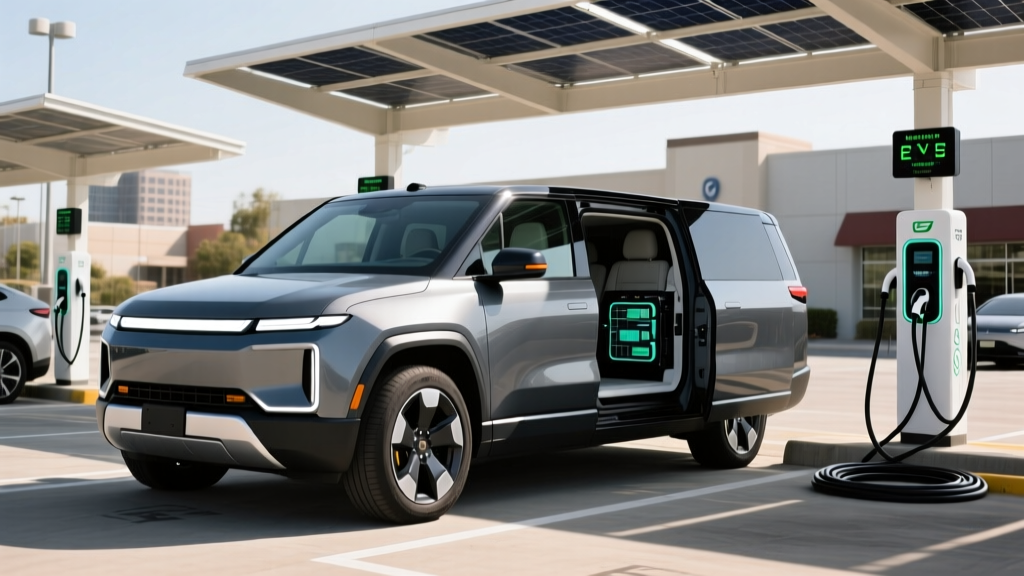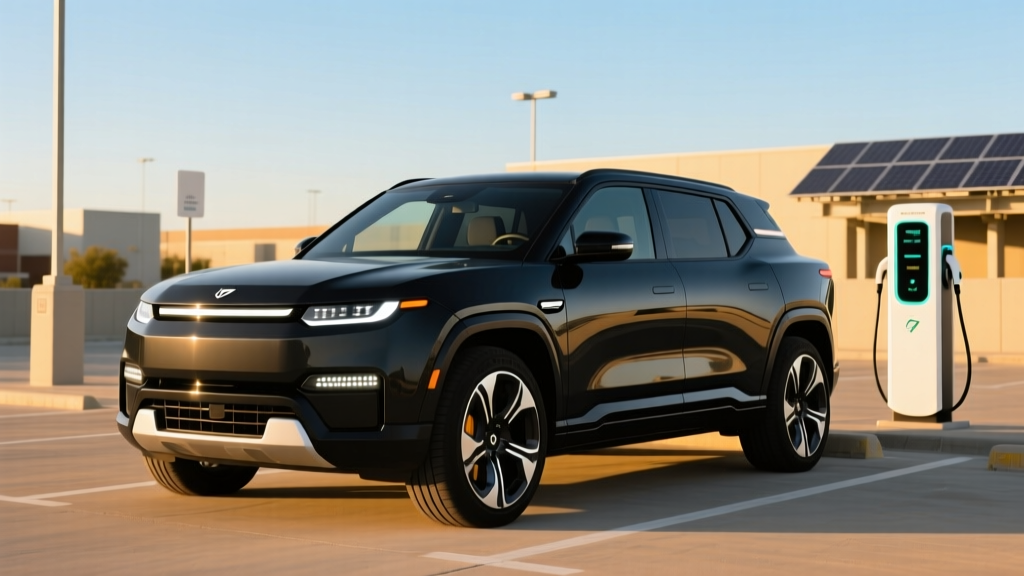
The compact electric SUV segment just got its most anticipated entrant. Rivian R2 production began at the company's Normal, Illinois facility in early 2026, with customer deliveries ramping through spring. After years of teasers, reservations, and a pivotal manufacturing pivot away from a planned Georgia factory, the R2 is finally a real vehicle you can put in your driveway — and it arrives at a price point that undercuts the R1S by a wide margin.
But does the R2 deliver where it matters most to EV buyers: real-world range, usable charging speeds, and genuine value after federal incentives? We've analyzed Rivian's published specs, early EPA filings, and first-drive data to give you a complete buyer's picture.
Quick Verdict: Who the R2 Is For
The 2026 Rivian R2 targets buyers who want a premium compact electric SUV with genuine off-road capability, a usable frunk, and Rivian's software ecosystem — but who don't need (or can't afford) the three-row R1S. It competes directly with the Tesla Model Y, Hyundai Ioniq 5, and Ford Mustang Mach-E, but carves its own lane with standard AWD on most trims, a body-on-frame-inspired skateboard architecture, and adventure-oriented features like the Gear Tunnel on select configurations.
| Spec | Value |
|---|---|
| EPA Est. Range (Standard Battery) | ~300 miles |
| EPA Est. Range (Max Battery) | ~340 miles |
| Battery Capacity (Standard) | ~75 kWh usable (LFP) |
| Battery Capacity (Max) | ~105 kWh usable (NMC) |
| Peak DC Fast Charge | ~200 kW |
| 10–80% DC Charge Time | ~30 minutes (est.) |
| Level 2 Home Charging | 11.5 kW (~33 mi/hr) |
| 0–60 mph | ~4.5 seconds (Dual-Motor) |
| Horsepower | ~450 hp (Dual-Motor) |
| Drivetrain | Dual-Motor AWD (standard) |
| Base MSRP | ~$45,000 |
| Battery Warranty | 8 years / 100,000 miles |
Range & Efficiency: EPA Estimates vs. Real-World Reality
Rivian targets an EPA-estimated 300 miles for the Standard Battery (LFP) and approximately 340 miles for the Max Battery (NMC) on the dual-motor AWD configuration. These are competitive figures for the compact SUV class, slotting between the Tesla Model Y Long Range (~310 mi EPA) and the Hyundai Ioniq 5 Long Range (~303 mi EPA).
The EPA sticker is a starting point, not a guarantee. Based on Rivian's R1 platform efficiency patterns and the R2's aerodynamic profile, here's what to expect in practice:
- Highway driving (70–75 mph): Expect ~250–270 miles on the Standard Battery, ~290–310 miles on Max. Sustained highway speed is the biggest efficiency killer for any EV.
- Cold weather (below 32°F): Plan for 20–30% range reduction. The Standard Battery could drop to ~210–240 miles effective range in deep winter. Rivian includes a heat pump to mitigate this, but physics still applies.
- City / mixed driving: This is where you'll meet or slightly exceed EPA numbers thanks to regenerative braking recapturing energy in stop-and-go traffic.
Rivian's thermal management system actively preconditions the battery during navigation to a charger, which helps preserve range and optimize charging speed in cold conditions.
Efficiency is expected to land around 115–120 MPGe combined (approximately 28–30 kWh/100 mi) for the dual-motor configuration, according to preliminary fueleconomy.gov listings. That's respectable for an AWD SUV with off-road capability, though the Ioniq 5 RWD achieves better efficiency at ~132 MPGe combined.
Charging Speed: DC Fast Charge and Home Setup
Charging speed is where the R2 makes a pragmatic choice rather than chasing headline numbers. The R2 peaks at approximately 200 kW on DC fast charging, which is below the Hyundai Ioniq 5's 240 kW peak but in line with real-world sustained charging behavior across most public networks.
| Charging Level | Power (kW) | Speed | Notes |
|---|---|---|---|
| Level 1 (120V household) | ~1.4 kW | ~4 mi/hr | Emergency/top-up only |
| Level 2 (240V home) | 11.5 kW | ~33 mi/hr | Full charge overnight (~9 hrs for Max Battery) |
| DC Fast Charge (peak) | ~200 kW | 10–80% in ~30 min | Peak rate tapers significantly above 80% SoC |
| DC Fast Charge (sustained avg.) | ~130–150 kW | ~180 mi in 30 min | Real-world average across the charge curve |
Understanding the charge curve: The 200 kW figure is a peak, not a sustained rate. Like all modern EVs, the R2's battery management system tapers charging speed as the state of charge climbs to protect battery health. You'll see peak speeds between roughly 10–40% SoC, with a notable taper above 60% and a steep drop above 80%. This is why the 10–80% metric matters more than peak kW — and why Rivian's ~30-minute estimate for that window is realistic for road-trip planning.
The R2 ships with the NACS (North American Charging Standard) connector natively, giving R2 owners direct access to Tesla's Supercharger network — the most reliable DC fast-charging network in the U.S. — without an adapter. This is a significant practical advantage over CCS-equipped competitors that still rely on adapters for Supercharger access.
For home charging, the 11.5 kW Level 2 onboard charger means you'll need a 60-amp dedicated circuit (48-amp continuous) to get the full rate. A typical home installation with a Rivian Wall Charger or equivalent Level 2 unit runs $800–$2,000 including electrician labor, depending on your panel's proximity to the garage. Expect a full overnight charge to easily cover daily driving needs.
Performance & Drivetrain
The 2026 R2 launches exclusively with a dual-motor AWD powertrain producing an estimated 450 horsepower. The 0–60 mph time of approximately 4.5 seconds places it firmly in sporty territory — not supercar-quick, but plenty fast for merging, passing, and the occasional grin-inducing launch.
Rivian's quad-motor option, available on the R1 platform, is not offered on the R2 at launch. The dual-motor setup uses one motor per axle, providing genuine all-wheel-drive traction with torque vectoring managed through software. Rivian's experience with the R1T and R1S in off-road conditions carries over: the R2 includes multiple drive modes (All-Purpose, Sport, Snow, Off-Road) and maintains respectable ground clearance for trail use, though it's not a rock crawler.
A single-motor RWD variant is expected to join the lineup later in the 2026 model year or for 2027, which should bring the base price down closer to Rivian's long-promised $45,000 target and improve efficiency for buyers in mild climates who don't need AWD.
Pricing, Trims & Federal Tax Credit Eligibility
Rivian has structured the R2 with a simpler trim approach than the R1 lineup:
| Configuration | Est. MSRP | After Max §30D Credit |
|---|---|---|
| Standard Battery (LFP) AWD | ~$45,000 | ~$37,500 (if eligible) |
| Max Battery (NMC) AWD | ~$52,000 | ~$44,500 (if eligible) |
| Adventure Package (Max Battery) | ~$57,000 | ~$49,500 (if eligible) |
Federal tax credit (IRS §30D) — critical caveats: The R2, as an SUV, falls under the $80,000 MSRP cap for the full $7,500 credit. However, eligibility is not automatic. Per current IRS rules, buyers must meet:
- Income caps: Modified AGI ≤ $150,000 (single), ≤ $300,000 (married filing jointly), ≤ $225,000 (head of household)
- Battery sourcing: A percentage of critical minerals and battery components must be sourced from the U.S. or free-trade-agreement countries — thresholds increase annually and can disqualify otherwise eligible vehicles
- Point-of-sale transfer: As of 2024+, buyers can transfer the credit to the dealer at purchase, reducing the upfront price rather than waiting for a tax refund
- Assembly: Final assembly must occur in North America (the R2 is built in Normal, IL — this requirement is met)
The LFP Standard Battery variant's credit eligibility may differ from the NMC Max Battery variant due to different mineral sourcing requirements. LFP cells have historically faced more scrutiny under the critical-minerals threshold due to Chinese supply chain dominance. Rivian has stated it is working to qualify all R2 configurations, but buyers should verify current eligibility on fueleconomy.gov at the time of purchase, as the IRS updates qualifying vehicle lists regularly.
Consult a tax professional before relying on the credit in your purchase decision. State and local incentives (e.g., California's CVRP, Colorado's state credit) may stack on top but vary by jurisdiction.
Interior, Cargo & Practicality
The R2 is a compact SUV — think Model Y footprint, not R1S bulk. Rivian has published the following interior dimensions:
- Cargo volume (behind 2nd row): ~28 cu ft
- Cargo volume (2nd row folded): ~65 cu ft
- Front trunk (frunk): ~11 cu ft — a genuine advantage over most competitors that have shrunk or eliminated the frunk
- Rear legroom: ~38 inches — adequate for adults on shorter trips, tighter than a Tucson or CR-V for tall passengers
- Seating: 5-passenger, 2-row configuration only (no third-row option)
The frunk is a standout feature. Rivian designed it with a drain plug and waterproof liner, making it usable for muddy gear, wet groceries, or camp supplies — an adventure-oriented touch the Model Y and Ioniq 5 can't match in practicality.
Inside, the R2 uses a minimalist design language consistent with the R1 refresh: a central 15.6-inch touchscreen running Rivian's proprietary OS, a smaller driver display, and physical controls for climate and drive mode (a welcome improvement over the touchscreen-only trend). Materials are vegan leather and recycled textiles, in line with Rivian's sustainability positioning.
Technology & Driver Assistance
The R2 ships with Rivian's latest software stack, including:
- Infotainment: Wireless Apple CarPlay and Android Auto, native streaming apps, over-the-air updates, and Rivian's trip planner that integrates charging stops with battery preconditioning
- Driver assistance (Rivian Driver+): Adaptive cruise control, lane centering, automatic emergency braking, blind-spot monitoring, and hands-on highway assist
- Camera system: 360-degree surround view with off-road camera angles for trail navigation
- Digital key: Phone-as-key with NFC backup card
Rivian Driver+ is a Level 2 driver-assistance system per SAE classification. This means it provides combined steering and acceleration/braking support, but the driver must remain fully engaged, keep hands on the wheel, and maintain situational awareness at all times. It is not self-driving. Rivian does not currently offer a Level 3 or Level 4 system, and no consumer vehicle sold in the U.S. operates at Level 4 autonomy outside of designated robotaxi services like Waymo.
Warranty & Long-Term Ownership
Rivian backs the R2 with the following warranty coverage:
- Battery & drivetrain: 8 years / 100,000 miles (whichever comes first), covering defects and capacity loss below a specified threshold (typically 70% retained capacity)
- Bumper-to-bumper: 5 years / 60,000 miles
- Roadside assistance: 5 years / 60,000 miles
The 8-year/100,000-mile battery warranty is industry-standard and matches what Tesla, Hyundai, and Ford offer. LFP battery chemistry in the Standard Battery variant is expected to show slower long-term degradation than NMC, based on published cycle-life data — LFP cells typically retain 90%+ capacity after 1,000 full charge cycles, while NMC cells retain around 80–85%. This is a meaningful ownership advantage for high-mileage drivers.
- Native NACS connector — direct Supercharger access, no adapter needed
- Waterproof, drainable frunk is best-in-class for adventure use
- LFP battery option offers superior long-term cycle life
- Genuine off-road capability for a compact electric SUV
- Competitive pricing with federal tax credit potential
- Rivian's OTA update track record and community engagement
- Peak DC charge rate (~200 kW) trails Ioniq 5 and some competitors
- Rear legroom is tighter than key gas-powered compact SUVs
- Rivian's service center network is still expanding — rural owners may face longer wait times
- No single-motor RWD option at launch limits the lowest possible price point
- LFP Standard Battery credit eligibility uncertain under evolving §30D sourcing rules
Is the Rivian R2 Worth Buying vs. Competitors?
The R2 enters a crowded field. Here's how it stacks up against the key alternatives:
- vs. Tesla Model Y: The R2 offers better build quality, a more usable frunk, and genuine off-road chops. The Model Y wins on Supercharger network maturity (though the gap is closing with NACS adoption), slightly better efficiency, and Tesla's Autopilot ecosystem. If you prioritize adventure utility and don't need the largest charging network, the R2 is compelling.
- vs. Hyundai Ioniq 5: The Ioniq 5 charges faster (240 kW peak), offers a more spacious rear seat, and comes in RWD for lower cost. The R2 wins on AWD standard equipment, frunk utility, and off-road capability. Different buyer profiles entirely.
- vs. Ford Mustang Mach-E: The Mach-E has been on sale longer with an established service footprint. The R2 is newer, more tech-forward, and offers the NACS advantage. The Mach-E's GT trim is quicker; the R2 is more practical.
Bottom line: The R2 is best for buyers who want a premium compact electric SUV with real adventure capability, value the NACS/Supercharger advantage, and plan to keep the vehicle long enough to benefit from LFP battery longevity. It's not the fastest-charging or most spacious option, but it fills a niche no competitor addresses as directly.
Frequently Asked Questions
What is the real-world range of the 2026 Rivian R2?
Expect ~250–270 miles on the highway with the Standard Battery and ~290–310 miles with the Max Battery under normal conditions. Cold weather (below 32°F) can reduce effective range by 20–30%. City driving with regenerative braking may meet or slightly exceed the EPA estimates of ~300 mi (Standard) and ~340 mi (Max).
How fast does the R2 charge at home and on the road?
On a Level 2 home charger (11.5 kW), the R2 adds approximately 33 miles of range per hour, with a full charge taking about 7 hours (Standard) or 9 hours (Max). On DC fast charging, it peaks at ~200 kW and charges from 10–80% in approximately 30 minutes, with sustained average speeds of 130–150 kW across the curve.
How much does the Rivian R2 cost after federal tax credits?
The Standard Battery AWD starts around $45,000 MSRP. If you qualify for the full $7,500 federal §30D credit (meeting income caps, battery sourcing, and assembly requirements), the effective price drops to approximately $37,500. Eligibility is not guaranteed and varies by battery configuration — verify on fueleconomy.gov before purchasing.
Does the Rivian R2 qualify for the $7,500 federal EV tax credit?
It is expected to qualify, but with important conditions. The R2 is assembled in Illinois (meeting the North America assembly rule), and its MSRP is well under the $80,000 SUV cap. However, battery critical-mineral and component sourcing thresholds under §30D are strict and increase annually. The LFP Standard Battery may face additional scrutiny. Always check the latest IRS qualifying vehicle list and consult a tax professional.
Is the R2 better than a Tesla Model Y?
It depends on your priorities. The R2 offers superior off-road capability, a more practical frunk, standard AWD, and native NACS charging. The Model Y has a slight efficiency edge, a more mature Supercharger network (though the gap is narrowing), and broader service center availability. For adventure-oriented buyers, the R2 is the stronger fit. For pure efficiency and network access, the Model Y still leads.
When can I actually buy a Rivian R2?
Rivian R2 production began in early 2026 at the Normal, Illinois factory, with reservation holders receiving deliveries first. Walk-up orders and new reservations are expected to open as production ramps through mid-2026. Check Rivian's official R2 page for current availability and delivery timelines in your region.