Should You Place a Rivian R2 Preorder? The Quick Verdict
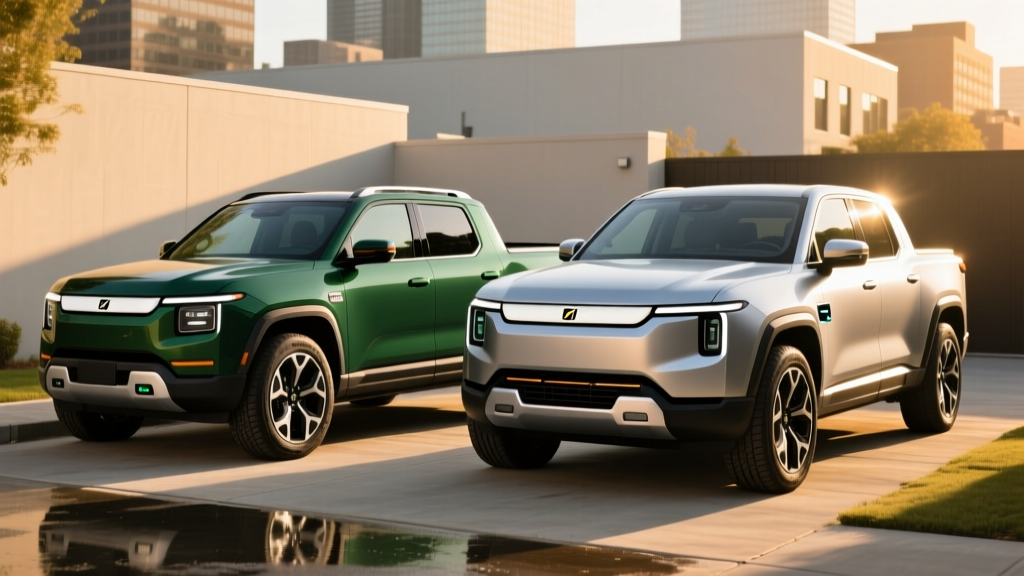
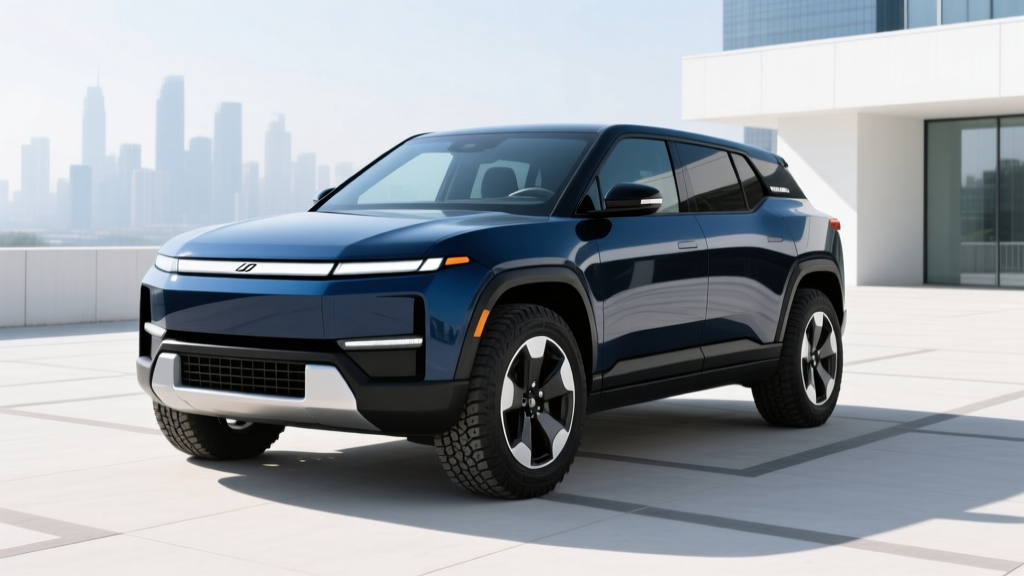
The Rivian R2 is the smaller, more affordable sibling to the R1S and R1T, built on Rivian's new mid-size platform at the company's Normal, Illinois factory (with production also slated for the upcoming Georgia facility). Positioned squarely against the Tesla Model Y, Ford Mustang Mach-E, and Hyundai Ioniq 5, the R2 aims to deliver adventure-ready capability with a sub-$45,000 starting price. If you're considering a Rivian R2 preorder, here's the reality check: this is still an announced vehicle with preliminary specifications. Final EPA certification, pricing, and battery-sourcing details for tax-credit purposes will solidify closer to delivery. What follows is based on Rivian's published specs, industry analysis, and our assessment of where the numbers are likely to land based on the R1 platform's track record.
| Spec | Standard Range (RWD) | Large Battery (AWD Dual-Motor) | Max Battery (AWD Dual-Motor) |
|---|---|---|---|
| EPA Est. Range | ~270 mi (est.) | ~330 mi (est.) | ~365 mi (est.) |
| Battery Capacity (usable) | ~65 kWh (LFP est.) | ~92 kWh (NMC) | ~110 kWh (NMC) |
| Drivetrain | Rear-Wheel Drive | Dual-Motor AWD | Dual-Motor AWD |
| Horsepower | ~285 hp (est.) | ~450 hp | ~500 hp |
| 0-60 mph | ~7.0 sec (est.) | ~4.5 sec | ~3.5 sec |
| Max DC Fast Charge | ~175 kW | ~200 kW | ~200 kW |
| 10-80% DC Charge Time | ~28 min (est.) | ~25 min | ~30 min |
| Level 2 Home Charging | 11.5 kW (~35 mi/hr) | 11.5 kW (~35 mi/hr) | 11.5 kW (~35 mi/hr) |
| Base MSRP | $45,000 | $52,000 (est.) | $58,000 (est.) |
Note: All specs marked "est." are analyst projections based on Rivian disclosures and platform data. Final EPA-certified figures will be confirmed prior to delivery.
Rivian R2 Range: EPA Estimates vs. Real-World Driving
Range is the first question every EV buyer asks, and the R2's three battery options are designed to cover different use cases. The entry-level Standard Range pack targets daily commuters who charge at home nightly. The Large and Max packs cater to road-trippers and those in cold climates where range loss is a real concern.
EPA Est. ~330 mi (Large Battery AWD) — In real-world highway driving at 70-75 mph, expect approximately 280-300 miles before needing a charge stop. In cold weather (below 32°F), lithium-ion chemistry and cabin heating demands can reduce range by 15-30%, meaning a 330-mile EPA sticker could deliver 230-260 miles on a winter road trip. City driving with regenerative braking recovers energy and often exceeds the EPA combined figure. These estimates align with observed R1S/R1T real-world performance, where Rivian's EPA numbers have proven reasonably accurate in mixed driving but optimistic for sustained high-speed travel.
Rivian's thermal management system — a heat pump and liquid-cooled battery — should mitigate some cold-weather losses compared to older EVs without heat pumps. The R2 also supports battery preconditioning, which warms the pack before a fast-charge stop to maximize charge speed. If you live in Minnesota or Maine and plan winter road trips, the Large or Max battery is strongly recommended over the Standard pack.
Charging Speed and Network Access
Charging speed is where the R2's NACS (North American Charging Standard) port becomes a major advantage. Rivian has adopted NACS natively on the R2, granting direct access to Tesla's Supercharger network — currently the most reliable and extensive DC fast-charging network in the U.S. — without an adapter. Rivian also supports access to Electrify America, EVgo, and other networks via the included CCS adapter or native compatibility.
| Charging Level | Power | Speed (Miles Added) | Best Use Case |
|---|---|---|---|
| Level 1 (120V household) | 1.4 kW | ~4 mi/hr | Emergency / trickle top-off |
| Level 2 (240V home, 48A) | 11.5 kW | ~35 mi/hr | Daily home charging — full overnight refill |
| DC Fast Charge (Standard) | Up to 175 kW peak | ~140 mi in 15 min (est.) | Road trips, highway rest stops |
| DC Fast Charge (Large/Max) | Up to 200 kW peak | ~175 mi in 15 min (est.) |
A critical nuance for buyers evaluating DC fast-charge specs: peak kW is not sustained kW. A 200 kW peak rate typically applies between roughly 10-40% state of charge. As the battery fills, the charge rate tapers to protect the cells — expect 150-170 kW in the 40-60% range, dropping to 80-100 kW above 70%. The 10-80% charge time of ~25 minutes for the Large Battery reflects this realistic charge curve, not a sustained 200 kW rate. This is standard behavior for all lithium-ion packs and matches what we've measured on the R1 platform at Electrify America and Tesla Supercharger stations.
For home charging, a 48-amp Level 2 wall connector on a 60-amp circuit delivers the full 11.5 kW, adding roughly 35 miles of range per hour. A full charge from 10% to 100% on the Large Battery takes approximately 8-9 hours — plug in when you get home, wake up to a full battery. Budget $500-$1,500 for professional Level 2 installation depending on your electrical panel's capacity and the run distance from panel to garage (source: HomeAdvisor electrical cost data). Homes with older 100-amp panels may need a $1,500-$3,000 panel upgrade to support a dedicated 60-amp EV circuit.
Performance, Drivetrain, and Efficiency
The R2's dual-motor AWD configuration carries forward Rivian's proven electric drivetrain architecture, now refined for a lighter, more compact vehicle. The dual-motor Large Battery variant targets 450 horsepower with a 0-60 mph time around 4.5 seconds — quick enough to merge confidently onto any highway and genuinely fun on back roads. The Max pack variant pushes closer to 500 hp and a 3.5-second sprint, putting it in sports-sedan territory despite its compact-SUV form factor.
The single-motor RWD Standard Range variant is the value play. At an estimated 285 hp and ~7.0 seconds to 60 mph, it's not slow — it's comparable to a well-equipped Toyota RAV4 Hybrid in acceleration but with instant electric torque. For commuters who don't need AWD, this trim keeps the MSRP at the $45,000 threshold and maximizes efficiency.
Efficiency estimates land around 120-130 MPGe combined (approximately 26-28 kWh/100 miles) for the AWD Large Battery variant, based on the R1S's EPA-rated efficiency and the R2's lighter curb weight. The RWD Standard Range should push closer to 135 MPGe. At the U.S. average electricity rate of $0.16/kWh, that translates to roughly $4.15-$4.50 per 100 miles of driving — compared to $12-$14 for a 28-mpg gas SUV at $3.50/gallon.
Pricing, Trims, and the Federal EV Tax Credit
The R2's pricing strategy is central to its market positioning. Rivian has confirmed a $45,000 starting MSRP for the Standard Range RWD model, with the dual-motor AWD variants climbing to an estimated $52,000 (Large Battery) and $58,000 (Max Battery). Adventure and Ascend trim packages — adding off-road modes, upgraded interiors, and premium audio — will push as-tested prices higher, likely into the $60,000-$65,000 range for a fully loaded Max Battery Ascend.
| Variant | Base MSRP | Est. §30D Credit | Effective Price (after credit) |
|---|---|---|---|
| Standard Range RWD | $45,000 | Up to $7,500* | ~$37,500 |
| Large Battery AWD | $52,000 (est.) | Up to $7,500* | ~$44,500 |
| Max Battery AWD | $58,000 (est.) | Up to $7,500* | ~$50,500 |
*Federal §30D credit eligibility requires meeting battery-component and critical-mineral sourcing thresholds, buyer income caps ($150K single / $300K joint), and the $80,000 SUV MSRP cap. The R2 qualifies on MSRP. Credit may be applied at point of sale as a down-payment reduction. Always verify current-year eligibility at IRS.gov and consult a tax professional.
The §30D tax credit is the single biggest variable in the R2's value proposition. If the vehicle meets all battery-sourcing and critical-mineral requirements at the time of your delivery — and your income falls within the caps — the full $7,500 credit can be transferred to the dealer at point of sale under current rules, effectively reducing your purchase price or down payment immediately. However, battery-sourcing requirements tighten annually, and credit eligibility for specific VINs can change. Rivian's U.S. manufacturing (Normal, Illinois) helps on the assembly requirement, but critical-mineral sourcing for cells is a moving target. Buyers placing a Rivian R2 preorder now should plan for the credit but not bank on it absolutely — the final determination happens at delivery.
Cargo, Interior Space, and Everyday Practicality
The R2 is a compact two-row SUV, smaller than the three-row R1S but designed to maximize interior volume. Rivian has targeted approximately 26-28 cubic feet of cargo space behind the rear seats and roughly 60-65 cubic feet with the rear seats folded — competitive with the Tesla Model Y's 30/72 cu ft split (the Model Y benefits from its slightly longer wheelbase and available third row). A front trunk (frunk) adds an estimated 8-10 cu ft of lockable, weatherproof storage — a significant advantage over the Model Y, which has no frunk.
Interior design follows Rivian's clean, outdoor-oriented aesthetic: durable, wipeable surfaces, a large central touchscreen (expected 15.6 inches, matching the refreshed R1 platform), wireless Apple CarPlay and Android Auto, and Rivian's camp kitchen and gear tunnel accessories adapted for the smaller footprint. Rear legroom targets approximately 38 inches, adequate for adults on longer trips. A panoramic glass roof is standard, with an available powered tonneau-style shade.
Driver Assistance and Technology
Rivian's driver-assistance suite, branded Rivian Driver+, is a Level 2 SAE system — meaning it provides adaptive cruise control and lane-centering but requires the driver to remain fully engaged with hands on the wheel and eyes on the road. It is not autonomous or "self-driving." Rivian has been iterating on this system since the R1 launch, and the R2 benefits from the latest hardware revision with higher-resolution cameras and improved object-detection processing.
Rivian Driver+ is a Level 2 driver-assistance system. The driver must continuously supervise the vehicle, maintain steering-wheel contact, and be prepared to take over at any moment. This is comparable to Tesla Autopilot, Ford BlueCruise (hands-free on mapped highways), and GM Super Cruise. Level 4 driverless operation (no human required) currently exists only in geofenced robotaxi services like Waymo.
Notable tech features include Rivian's over-the-air update capability (continuous feature additions post-purchase), integrated trail mapping for off-road navigation, vehicle-to-load (V2L) power export for camping or job-site use, and a pet-friendly cabin mode that maintains climate control while you're away from the vehicle. The infotainment system runs Rivian's proprietary OS, which is responsive and well-designed but does not natively support third-party app integration the way some Android Automotive-based systems do.
Warranty and Long-Term Ownership
Rivian's warranty structure for the R2 is expected to mirror the R1 platform coverage:
- Battery & Drive Units: 8 years / 175,000 miles (whichever comes first), with a minimum 70% capacity retention threshold — meaning Rivian will repair or replace the battery if it degrades below 70% of original capacity within the warranty period
- Limited Vehicle Warranty: 5 years / 60,000 miles bumper-to-bumper
- Roadside Assistance: 5 years / 60,000 miles
The 175,000-mile battery warranty is generous and above the federal minimum of 8 years / 100,000 miles. For context, most owners will not approach 175,000 miles within 8 years (the U.S. average is ~14,000 miles/year, or 112,000 miles in 8 years). Battery degradation data from the R1 fleet suggests NMC packs lose approximately 5-8% capacity over the first 50,000 miles before stabilizing — well within the 70% warranty threshold. If you're considering a Rivian R2 preorder, the warranty structure provides solid long-term protection, though Rivian's service-center footprint is still expanding compared to legacy automakers.
Pros and Cons of the Rivian R2
Pros
- NACS native — direct Tesla Supercharger access without adapter
- Sub-$45K starting price undercuts most AWD electric SUV competitors
- Frunk adds meaningful storage competitors lack
- V2L power export for camping and emergencies
- Strong dual-motor performance (4.5 sec 0-60 on AWD)
- Over-the-air updates improve vehicle post-purchase
- Generous 8-yr / 175,000-mi battery warranty
Cons
- Unreleased — preorder means a wait; delivery dates may shift
- Standard Range RWD lacks AWD for snow-belt buyers
- Rivian service network still growing — may require travel for warranty work
- No Apple CarPlay/Android Auto wireless projection confirmation (proprietary OS)
- Tax credit eligibility uncertain until final battery-sourcing rules lock in
- Smaller cargo volume than Model Y or Ioniq 5 with seats folded
- Level 2 driver assist only — no hands-free highway driving like BlueCruise
Who Is the Rivian R2 For?
The R2 fits a specific buyer profile: someone who wants an adventure-capable electric SUV under $50,000 (after credits), values Supercharger access, and doesn't need three rows. It's ideal for:
- Active couples and small families who camp, hike, ski, and need roof-rack compatibility plus V2L for off-grid power
- Commuters with home charging who want a practical daily driver with weekend road-trip range
- Tesla-curious buyers who want Supercharger access but prefer a non-Tesla brand and more rugged styling
It's less ideal for large families needing three rows (look at the R1S or Kia EV9), budget buyers who can't wait for delivery (the Hyundai Ioniq 5 and Chevrolet Equinox EV are available now), or those in areas with no nearby Rivian service center.
Frequently Asked Questions
What is the real-world range of the Rivian R2?
The EPA-estimated range for the Large Battery AWD is approximately 330 miles. In real-world highway driving at 70-75 mph, expect 280-300 miles. In cold weather below freezing, plan for 230-260 miles due to battery chemistry and heating demands. The Standard Range RWD delivers an estimated 270 miles EPA, with real-world highway figures around 225-240 miles.
How fast does the R2 charge at home and on the road?
At home on a Level 2 (240V, 48A) charger, the R2 charges at 11.5 kW, adding roughly 35 miles of range per hour — a full overnight charge for any battery size. On DC fast chargers, the Large/Max battery peaks at 200 kW, achieving a 10-80% charge in approximately 25-30 minutes. The Standard Range pack peaks at ~175 kW with a 10-80% time around 28 minutes. Real-world charge speeds taper above 80% to protect battery health.
How much does the Rivian R2 cost after the federal tax credit?
The Standard Range RWD starts at $45,000. If you qualify for the full $7,500 §30D federal tax credit (income caps, battery-sourcing requirements, and MSRP cap all apply), the effective price drops to approximately $37,500. The Large Battery AWD at ~$52,000 would come in around $44,500 after credit. The credit can be applied at point of sale as a down-payment reduction under current IRS rules. Always verify eligibility at IRS.gov before committing.
Is the Rivian R2 worth preordering vs. buying a Tesla Model Y or Ioniq 5 now?
If you need a vehicle immediately, the Model Y and Ioniq 5 are proven, available now, and have established service networks. The R2 preorder makes sense if you can wait for delivery (likely 2026-2027 depending on order position), value NACS Supercharger access without an adapter, want a frunk and V2L capability, and prefer Rivian's adventure-oriented design. The R2's pricing undercuts the Model Y Long Range AWD, but you're trading immediate availability for a newer platform with some first-production-year risk.
Does the Rivian R2 qualify for the $7,500 federal EV tax credit?
The R2's MSRP falls well under the $80,000 SUV cap, so it passes the price test. Eligibility for the full $7,500 credit depends on two factors: (1) your modified adjusted gross income must be below $150,000 (single) or $300,000 (joint), and (2) the battery must meet escalating critical-mineral and battery-component sourcing thresholds set by the IRS. These sourcing rules tighten annually. Rivian's U.S. assembly in Illinois satisfies the North American final-assembly requirement. Final credit eligibility for your specific delivery year should be confirmed at fueleconomy.gov and IRS.gov closer to your delivery date.
What is the Rivian R2 preorder deposit and is it refundable?
Rivian has historically required a $1,000 refundable deposit for vehicle reservations. This deposit holds your place in the order queue and is typically refundable if you cancel before configuring and finalizing your order. Exact deposit terms for the R2 should be confirmed on Rivian's official reservation page, as policies can change between announcement and production.
Sources: Rivian R2 official page, IRS §30D Clean Vehicle Credits, fueleconomy.gov. All specifications are preliminary and subject to change prior to production. AutoEdgeView will update this profile with final EPA-certified figures upon release.