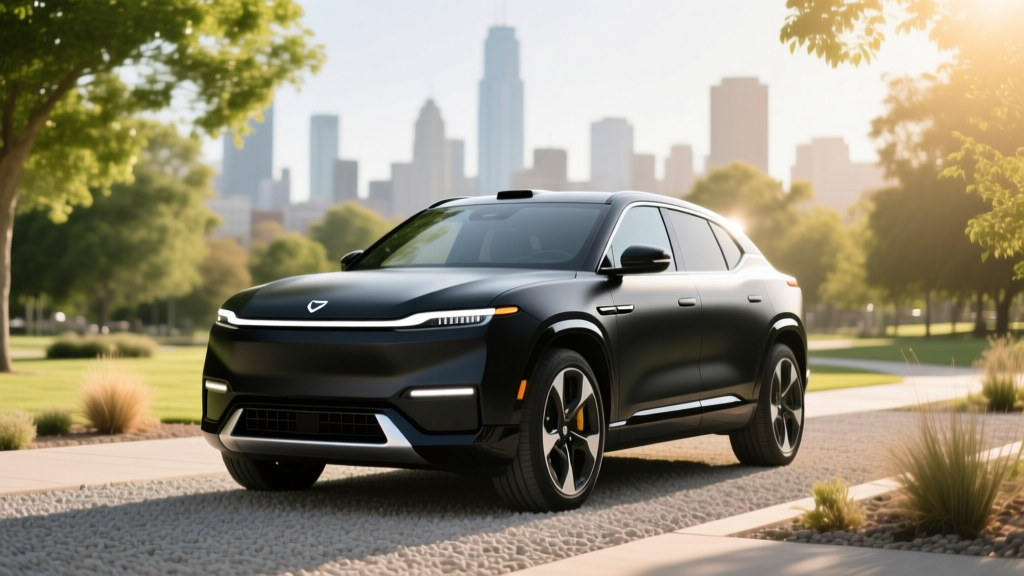
The Rivian R2 is the electric SUV the startup has been building toward since the R1S and R1T debuted. Smaller, lighter, and significantly more affordable than its predecessors, the R2 is positioned to compete directly with the Tesla Model Y, Ford Mustang Mach-E, and Hyundai Ioniq 5 in the high-volume compact electric SUV segment. With deliveries beginning in the first half of 2026 from Rivian's new production line at its Normal, Illinois facility, interest in securing a build slot has surged.
If you're researching a Rivian R2 pre order, you need hard numbers — not teaser marketing. Below is a comprehensive breakdown of every confirmed and projected specification, real-world range expectations, charging performance, pricing after federal tax credits, and how the R2 stacks up against its most relevant competitors.
The Rivian R2 was officially unveiled in March 2024, with final specifications and pricing confirmed closer to the 2026 production launch. Some figures below reflect manufacturer-confirmed data; where noted, certain efficiency and range numbers remain EPA-preliminary pending final certification at fueleconomy.gov. We update this profile as final certifications publish.
Rivian R2 Specifications at a Glance
| Specification | Value |
|---|---|
| EPA Estimated Range | ~330 miles (preliminary, Standard Battery AWD) |
| Battery Capacity (usable) | ~75 kWh (LFP chemistry, Standard); ~105 kWh (NMC, Max) |
| Max DC Fast Charge Rate | ~200 kW peak (NACS port, native) |
| 10–80% DC Fast Charge Time | ~25 minutes (projected) |
| Level 2 Home Charging | 11.5 kW onboard charger (~37 mi/hr at 240V/48A) |
| 0–60 mph | ~3.0 seconds (Performance Dual-Motor) |
| Horsepower | ~450 hp (Dual-Motor); up to ~600 hp (Performance) |
| Drivetrain | RWD (base) / Dual-Motor AWD / Performance AWD |
| Starting MSRP | $45,000 (base RWD) / ~$52,000 (Dual-Motor AWD) |
| Battery/Powertrain Warranty | 8 years / 100,000 miles (projected, matching R1 platform) |
Range and Efficiency: EPA Estimates vs. Real-World Driving
Rivian has targeted approximately 330 miles of EPA-estimated range for the dual-motor AWD variant equipped with the standard LFP battery pack. A larger Max battery pack option (NMC chemistry, ~105 kWh usable) is expected to push that figure above 400 miles, though final EPA certification for that configuration is pending.
The EPA sticker is a useful baseline, but real-world range varies significantly with driving conditions:
- Highway driving (70–75 mph, steady): Expect ~270–290 miles from the 330-mi EPA variant. Aerodynamic drag is the dominant efficiency loss at speed, and the R2's SUV profile creates more resistance than a sedan like the Tesla Model 3.
- City/suburban mixed driving: Range can meet or slightly exceed the EPA estimate thanks to regenerative braking recovering energy at lower speeds.
- Cold weather (below 32°F): Plan for a 20–30% range reduction. LFP chemistry is more resistant to cold-induced degradation long-term but still suffers immediate range loss in freezing temps. Battery preconditioning and seat/steering-wheel heating help mitigate this.
- Towing: Rivian hasn't published a final tow rating for the R2, but based on its size and weight class, expect 3,000–3,500 lbs max. Towing at capacity can cut range by 40–50%.
Efficiency is projected in the range of 3.0–3.5 miles per kWh (approximately 29–33 kWh per 100 miles), which would translate to an estimated 100–115 MPGe combined. These figures place the R2 in line with the Tesla Model Y Long Range (~3.5 mi/kWh) but slightly behind the more aerodynamic Hyundai Ioniq 6. For an SUV with genuine ground clearance and off-road capability, this is competitive efficiency.
Charging Performance: DC Fast Charging and Home Level 2
The R2 launches with a native NACS (North American Charging Standard) port, meaning it plugs directly into Tesla Superchargers without an adapter. This is a significant practical advantage — Tesla's Supercharger network remains the most reliable and widespread DC fast-charging infrastructure in the U.S., with over 25,000 stalls nationally.
| Charging Level | Power / Rate | Miles Added per Hour | Notes |
|---|---|---|---|
| Level 1 (120V household) | ~1.4 kW | ~3–4 mi/hr | Emergency/trickle only; full charge takes days |
| Level 2 (240V home, 48A) | 11.5 kW | ~37 mi/hr | Full charge overnight (~8–9 hrs from 10%) |
| DC Fast Charge (peak) | ~200 kW peak | ~700+ mi/hr (at peak) | 10–80% in ~25 min; tapers above 80% |
Understanding the charge curve: The 200 kW peak rate applies only at low states of charge (typically 10–30% SoC) with a preconditioned battery. As the battery fills, the charge rate tapers to protect cell health — expect ~120 kW around 50% SoC and ~50 kW approaching 80%. This is why the 10–80% metric matters far more than peak kW alone. A ~25-minute 10–80% session at a 250 kW Supercharger stall is realistic for road-trip stops.
Home charging setup: The 11.5 kW onboard charger means you'll want a 240V/60A circuit (48A continuous draw) installed by a licensed electrician to get the full Level 2 rate. Expect $800–$2,000 for a professional home charger installation depending on your panel capacity and run distance. If your electrical panel is maxed out, a panel upgrade to 200A can add $1,500–$3,000. Always get a quote from a licensed electrician before committing.
Performance, Drivetrain, and Capability
Rivian has confirmed three powertrain configurations for the R2 at launch:
- Single-Motor RWD (base): The entry point at $45,000, aimed at maximizing range and affordability. Horsepower and 0–60 figures for this variant haven't been finalized, but expect ~300 hp and a 0–60 in the 6-second range.
- Dual-Motor AWD: Two motors, one per axle, delivering ~450 hp and a 0–60 mph time estimated under 4.5 seconds. This is the volume variant and the sweet spot for most buyers.
- Performance Dual-Motor AWD: A sport-tuned variant with ~600 hp and a blistering 0–60 mph of approximately 3.0 seconds, rivaling performance SUVs costing twice as much.
The R2 rides on a new, smaller platform that shares Rivian's core software architecture and skateboard-design philosophy but is engineered for higher-volume, lower-cost manufacturing. Ground clearance is expected around 8.0–8.5 inches, and Rivian's signature gear tunnel (from the R1T/R1S) will not carry over — the R2 uses a more conventional cargo layout optimized for daily family use.
Rivian's Driver+ assistance system (a Level 2 SAE system, meaning the driver must remain fully engaged and supervising at all times) is standard. It includes adaptive cruise control, lane centering, and automatic lane changes on highways. This is not autonomous driving — it competes with Tesla Autopilot, Ford BlueCruise, and GM Super Cruise in capability, though Rivian's camera-and-radar approach differs from Tesla's vision-only system.
Pricing, Trims, and Federal Tax Credit Eligibility
| Trim / Configuration | Base MSRP | Est. After §30D Credit | Credit Eligibility |
|---|---|---|---|
| R2 Standard (RWD, LFP) | $45,000 | ~$37,500* | Likely eligible (under $80K MSRP cap) |
| R2 Dual-Motor AWD (LFP) | ~$52,000 | ~$44,500* | Likely eligible (under $80K MSRP cap) |
| R2 Performance AWD (NMC) | ~$60,000+ | ~$52,500* | Eligibility depends on battery sourcing |
*Estimated effective prices assume full $7,500 federal tax credit under IRS §30D. Actual credit amount varies based on battery component and critical mineral sourcing requirements, buyer income, and MSRP caps. Point-of-sale transfer is available, allowing the credit to be applied at purchase rather than at tax filing.
The federal EV tax credit (§30D) has several requirements that determine whether you'll actually receive the full $7,500:
- MSRP cap: SUVs must be priced under $80,000. All announced R2 trims clear this threshold comfortably.
- Buyer income limits: Adjusted gross income must not exceed $150,000 (single), $225,000 (head of household), or $300,000 (joint filers).
- Battery sourcing requirements: The credit is split into two $3,750 halves — one tied to critical minerals sourcing and one to battery component manufacturing. The R2's LFP battery (standard range) may face sourcing challenges since LFP cell production is heavily concentrated in China. The NMC Max pack may fare better depending on Rivian's supply chain. Check the latest eligibility at IRS.gov before finalizing your order.
- Point-of-sale transfer: You can elect to transfer the credit to the dealer at purchase, reducing your out-of-pocket cost immediately rather than waiting for a tax refund.
For detailed current-year rules, consult a tax professional and the official IRS clean vehicle credits page. Eligibility details shift as supply chains evolve.
Interior, Cargo, and Technology
The R2 is a compact SUV roughly sized between the Tesla Model Y and the Hyundai Ioniq 5. Rivian has emphasized a practical, adventure-oriented interior:
- Cargo volume: Estimated ~30 cu ft behind the second row, ~65 cu ft with rear seats folded (final numbers pending EPA measurement). A front trunk (frunk) adds additional sealed storage for gear or charging cables.
- Seating: Five-passenger capacity with a flat floor enabled by the skateboard battery architecture. Rear legroom is projected at ~38 inches, competitive with the Model Y.
- Infotainment: A large central touchscreen running Rivian's proprietary software, with over-the-air updates, integrated trip planning with charger routing, and camping/adventure modes inherited from the R1 platform.
- Unique features: Rivian's camp kitchen accessory compatibility, built-in air compressor (optional), and a pet-friendly rear cargo area with tie-downs and washable surfaces. These adventure-forward touches differentiate the R2 from more urban-focused competitors.
Notable drawbacks to consider: The R2 does not have a third-row option (unlike the R1S), limiting it to families of five or fewer. Rivian's service center network, while expanding, remains far smaller than Tesla's or legacy automakers'. Owners in rural areas may face longer travel distances for warranty service.
- Native NACS port — no adapter needed at Superchargers
- Strong projected range (330+ mi) at competitive pricing
- Adventure-focused features (camp modes, air compressor)
- Performance variants rival luxury SUVs at half the cost
- Under $80K MSRP across trims — tax credit eligible
- LFP battery option for longevity and daily charging to 100%
- First-year production risk — new platform, new line
- Limited service center network vs. legacy OEMs
- No third-row seating; five-passenger max
- LFP battery sourcing may affect partial tax credit eligibility
- Real-world range and charging data limited pre-delivery
- Towing capacity lower than R1T/R1S (est. 3,000–3,500 lbs)
How the R2 Compares to Key Competitors
The R2 enters the most competitive EV segment in America. Here's how preliminary specs stack up against the vehicles it must beat:
| Metric | Rivian R2 (AWD) | Tesla Model Y LR | Ford Mach-E ER AWD | Hyundai Ioniq 5 LR AWD |
|---|---|---|---|---|
| EPA Range | ~330 mi | 320 mi | 290 mi | 290 mi |
| Starting MSRP (AWD) | ~$52,000 | ~$48,000 | ~$52,000 | ~$51,000 |
| Max DC Charge | ~200 kW | 250 kW | 150 kW | 240 kW |
| Charging Port | NACS (native) | NACS (native) | CCS1 | NACS (2025+) |
| 0–60 mph | ~4.5 sec | 4.8 sec | 5.1 sec | 5.1 sec |
| Cargo (rear seats up) | ~30 cu ft | 30 cu ft | 29 cu ft | 27 cu ft |
The R2's edge: Its combination of strong projected range, native NACS access, adventure features, and Rivian's software experience create a differentiated package. The Model Y remains the efficiency and charging-speed benchmark; the Ioniq 5 offers the best 800V architecture for charging; the Mach-E provides the most established dealer service network. The R2 must prove itself on build quality and service reliability as a first-year product.
Who Should Pre-Order the Rivian R2?
- Pre-order the R2 if: You want an adventure-capable compact EV SUV with native Supercharger access, value unique features like camp modes and a frunk, and are comfortable with a first-year production vehicle from a newer manufacturer.
- Consider the Model Y if: Maximum charging speed, the most proven Supercharger integration, and the lowest risk are your priorities.
- Consider the Ioniq 5 if: Ultra-fast 800V charging (10–80% in ~18 min) and a more established service network matter most.
- Consider a PHEV instead if: You lack reliable home charging access or frequently drive in areas with sparse DC fast-charging infrastructure.
Frequently Asked Questions
How do I place a Rivian R2 pre order?
Rivian accepts reservations through its website (rivian.com) with a refundable deposit, typically $1,000. Pre-ordering secures your place in the production queue — it is not a binding purchase. You'll configure your vehicle and finalize the order closer to your build slot.
When will Rivian R2 deliveries begin?
Rivian has confirmed production begins in the first half of 2026 at its Normal, Illinois factory on a new, dedicated R2 production line. Early pre-order holders will receive build invitations first, with delivery timelines dependent on configuration and demand.
Does the Rivian R2 qualify for the $7,500 federal EV tax credit?
All announced R2 trims fall under the $80,000 SUV MSRP cap. However, full credit eligibility depends on battery critical-mineral and component sourcing rules, which are evolving. The LFP standard battery may face partial eligibility issues due to China-dominant LFP supply chains. Check IRS.gov for the latest eligibility list before purchase. Buyer income caps also apply ($150K single / $300K joint).
What is the real-world range of the Rivian R2?
With the EPA estimate at ~330 miles (AWD Standard), expect approximately 270–290 miles in real-world highway driving at 70–75 mph, and 230–260 miles in freezing weather. City driving with regenerative braking can approach or match the EPA sticker. These are projections pending real-world testing once deliveries begin.
How fast does the R2 charge at home?
With an 11.5 kW onboard charger and a 240V/48A home circuit, the R2 adds roughly 37 miles of range per hour. A full charge from 10% to 100% takes approximately 8–9 hours — easily accomplished overnight. Most owners will charge from 20–80% daily, which takes about 4–5 hours on Level 2.
Is the R2 better than a Tesla Model Y?
It depends on priorities. The R2 offers more adventure-focused features, a potentially longer standard range, and Rivian's highly regarded software and customer experience. The Model Y has a proven track record, faster peak charging (250 kW), a vastly larger service network, and typically faster delivery times. First-year R2 production carries more risk than the mature Model Y platform.