If you've been searching for Rivian R2 photos, you're not alone. The midsize electric SUV has dominated EV forums and social feeds since its reveal, and with production ramping at Rivian's Normal, Illinois facility for the 2026 model year, clearer images and firmer specifications are finally emerging. This first-look profile compiles the latest official photography, confirmed powertrain data, and pricing details to help you decide whether the R2 deserves a spot on your shortlist.
Because the Rivian R2 is still in its early production and delivery phase, some specifications remain preliminary and are marked as such below. We will update this profile as EPA certification and real-world testing data become available.
Rivian R2 Photos: Design Walkaround and Dimensions
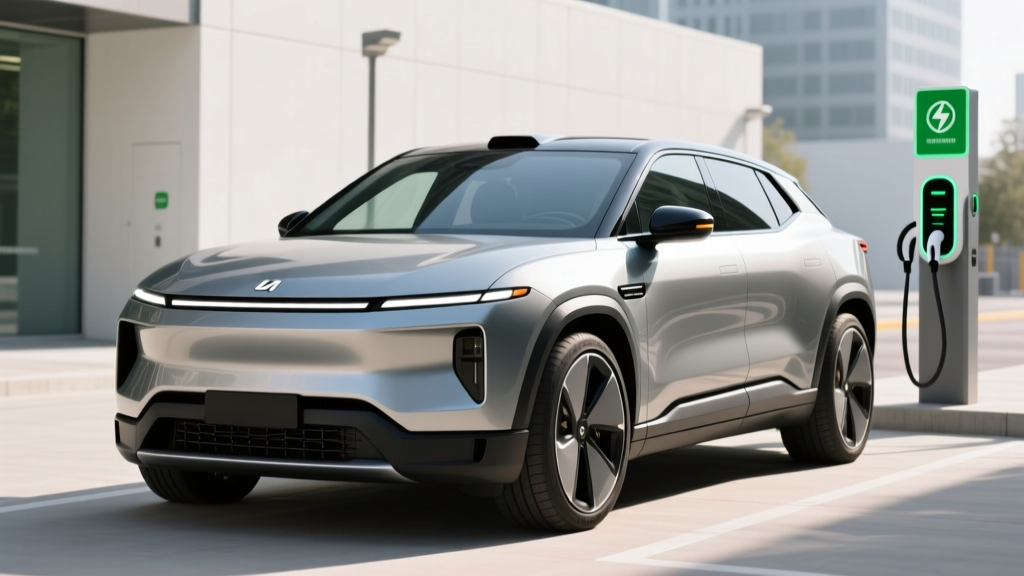
The latest Rivian R2 photos confirm a design language that bridges the chunky, adventure-ready aesthetic of the R1S with a more urban-friendly footprint. Rivian positions the R2 roughly between the Tesla Model Y and the Ford Explorer EV in size, targeting buyers who want genuine utility without the full-size SUV penalty.
- Length: ~185 inches
- Wheelbase: ~113 inches
- Cargo Volume: ~32 cu ft (rear seats up), ~70 cu ft (rear seats folded)
- Front Headroom: ~40.5 inches | Rear Legroom: ~38 inches
- Ground Clearance: ~8.5 inches (adjustable with available air suspension)
Notable design cues visible in official photos include Rivian's signature stadium-style headlights, a flat roofline optimized for rooftop cargo and tent accessories, a front trunk (frunk) with drain capability for wet gear, and a gear tunnel-style pass-through storage compartment behind the rear seats — a feature borrowed from the R1T pickup that sets the R2 apart from conventional crossover rivals.
Wheel options visible in released photography include 19-inch all-season, 21-inch all-terrain, and a 22-inch performance configuration. The all-terrain tire option signals Rivian's intent to keep the R2 credible on light off-road trails, not just suburban school runs.
Range, Battery, and Efficiency
Rivian has targeted a 330-mile EPA-estimated range for the R2 Dual-Motor AWD with the Max battery pack. A Standard battery variant is expected to deliver roughly 270 miles EPA. Rivian has not yet published the exact usable battery capacity, but industry reporting and supply-chain disclosures point to a ~92 kWh usable pack (Max) and ~72 kWh (Standard).
| Spec | Standard Pack | Max Pack |
|---|---|---|
| Usable Capacity | ~72 kWh | ~92 kWh |
| Chemistry | NMC (nickel manganese cobalt) | NMC (nickel manganese cobalt) |
| EPA Range (est.) | ~270 mi | ~330 mi |
| Efficiency (est.) | ~28 kWh/100 mi | ~28 kWh/100 mi |
| MPGe (est.) | ~120 MPGe combined | ~120 MPGe combined |
Rivian is using a new 46mm-diameter cylindrical cell format (often called 4680-class) produced in partnership with Samsung SDI, enabling higher energy density and structural integration into the vehicle's skateboard platform. The chemistry remains NMC rather than LFP, which preserves energy density and cold-weather performance at the cost of slightly higher raw-material sourcing complexity.
The 330-mile EPA figure is a combined-cycle estimate. In real-world highway driving at 70-75 mph, expect approximately 270–295 miles from the Max pack. In cold weather (below 32°F), plan for a 15–25% reduction, dropping effective range to roughly 250–280 miles. City driving with regenerative braking recapture can push range above the EPA sticker in mild temperatures. These estimates are based on observed R1S/R1T efficiency patterns and the R2's improved aerodynamics. Confirm against fueleconomy.gov once EPA data is published.
Charging Speed: DC Fast Charging and Home Level 2
Charging speed is where the R2 represents a meaningful generational leap over the first-generation R1 platform. Rivian has confirmed the R2 uses an 800-volt-class electrical architecture, enabling significantly faster DC fast charging than the R1S/R1T's 400V system.
| Charging Level | Power | Speed / Time |
|---|---|---|
| Level 1 (120V household) | ~1.4 kW | ~3–4 miles per hour |
| Level 2 (240V home/work) | 11.5 kW (48A) | ~28 miles per hour / ~10 hrs (0–100%) |
| DC Fast Charge (peak) | ~250 kW | 10–80% in ~22 minutes (est.) |
| DC Fast Charge (sustained avg) | ~180 kW avg | 10–80% real-world ~25–28 min |
The 10–80% DC fast-charge time of approximately 22 minutes is a manufacturer estimate; actual times depend on ambient temperature, battery preconditioning, and charger capability. Rivian's battery thermal management system includes active preconditioning that engages automatically when a DC fast charger is set as your navigation destination — a critical feature for consistent fast-charging speeds, especially in cold climates.
The R2 ships with a NACS (North American Charging Standard) connector natively, granting access to the Tesla Supercharger network without an adapter, in addition to Electrify America, EVgo, and other NACS-equipped networks. This is a significant practical advantage over CCS-only vehicles now that NACS has become the dominant U.S. standard.
Performance and Drivetrain
Rivian is offering the R2 in multiple drivetrain configurations, continuing the brand's modular approach:
| Configuration | HP (est.) | Torque (est.) | 0–60 mph | Drivetrain |
|---|---|---|---|---|
| Single-Motor RWD | ~330 hp | ~360 lb-ft | ~6.0 sec | Rear-Wheel Drive |
| Dual-Motor AWD | ~550 hp | ~600 lb-ft | ~3.6 sec | All-Wheel Drive |
| Performance Dual-Motor | ~650+ hp | ~700+ lb-ft | ~3.0 sec | AWD w/ torque vectoring |
The Dual-Motor AWD variant is expected to be the volume seller, offering a compelling balance of all-weather traction, strong acceleration, and range efficiency. The single-motor RWD, arriving later in the production cycle, will serve as the entry-price option and deliver the longest EPA range. The Performance variant targets buyers who want sports-car acceleration in a family SUV — a segment Tesla has proven has strong demand.
Towing capacity is rated at up to 5,000 pounds (Dual-Motor), competitive with the Hyundai Ioniq 5 (when equipped with the tow package) and sufficient for light utility trailers, small boats, or a compact camper. Always factor in a 20–30% range reduction when towing near max capacity.
Pricing, Trims, and Federal Tax Credit Eligibility
Rivian has positioned the R2 to undercut the R1S substantially while remaining above mainstream competitors like the Hyundai Ioniq 5 and Chevrolet Equinox EV. Here's the anticipated pricing structure for the 2026 model year:
| Trim | Base MSRP | Est. After §30D Credit | Delivery Window |
|---|---|---|---|
| R2 Standard (RWD) | ~$45,000 | ~$37,500 | Late 2026 / Early 2027 |
| R2 Dual-Motor (AWD) | ~$52,000 | ~$44,500 | Mid 2026 |
| R2 Dual-Motor Max Pack | ~$58,000 | ~$50,500 | Mid 2026 |
| R2 Performance | ~$63,000+ | ~$55,500+ | Late 2026 |
Federal Tax Credit (§30D) Eligibility: The R2 is expected to qualify for up to $7,500 under the IRS Clean Vehicle Credit, but eligibility depends on several conditions that buyers must verify at point of sale. Per current IRS §30D rules:
- MSRP Cap: The vehicle must have an MSRP at or below $80,000 for SUVs — all announced R2 trims clear this threshold.
- Buyer Income Cap: Modified adjusted gross income (MAGI) must not exceed $150,000 (single), $225,000 (head of household), or $300,000 (married filing jointly).
- Battery Sourcing: Critical minerals and battery components must meet phased-in domestic/free-trade-agreement sourcing thresholds. Rivian's Samsung SDI partnership and U.S. assembly are designed to satisfy these requirements, but final certification is determined per model year by the IRS and DOE.
- Point-of-Sale Transfer: Buyers can elect to transfer the credit to the dealer at purchase, reducing the purchase price directly rather than waiting for a tax refund. Confirm eligibility with your tax professional.
Tech, Safety, and Driver Assistance
The R2's interior centers on a 15.4-inch landscape touchscreen running Rivian's proprietary infotainment OS, now in its third generation. Wireless Apple CarPlay and Android Auto are confirmed, along with over-the-air (OTA) update capability for both infotainment and vehicle firmware.
The R2 debuts Rivian's next-generation ADAS suite, branded Rivian Driver+, built on a sensor array that includes multiple cameras, radar, and ultrasonic sensors. Key capabilities:
- Adaptive cruise control with stop-and-go
- Lane-centering assist on divided highways
- Automatic emergency braking with pedestrian/cyclist detection
- Blind-spot monitoring with rear cross-traffic alert
- Available hands-on-wheel highway assist (Level 2 SAE)
Safety ratings from NHTSA and IIHS are not yet available for the R2 at this early production stage. We will update this section as crash-test results are published. Rivian's R1S earned an IIHS Top Safety Pick+ designation, suggesting strong structural engineering that should carry forward to the R2's platform.
Who Should Buy the Rivian R2 — and Who Shouldn't
Pros
- 330-mile Max range is class-competitive
- NACS native — full Supercharger access
- Gear tunnel and frunk add genuine utility
- 5,000-lb towing beats most electric crossovers
- 800V architecture enables ~22-min fast charging
- Strong off-road credibility for the segment
- Expected §30D tax credit eligibility on all trims
Cons
- Premium pricing vs. Ioniq 5, Equinox EV
- RWD base trim delayed to late 2026/2027
- No LFP battery option (higher cost, sourcing complexity)
- Rivian service center network still expanding
- Real-world range and charging unproven at scale
- Third-row seating not available (unlike R1S)
The R2 is best for: Active-lifestyle buyers (hiking, camping, skiing) who want a midsize electric SUV with genuine trail capability, strong towing, and road-trip-friendly charging — without stepping up to the $75,000+ R1S. It also suits dual-income families who can charge at home and want NACS Supercharger access for longer trips.
Look elsewhere if: You need a third row (consider the Kia EV9 or R1S), want the lowest possible entry price (the Chevrolet Equinox EV starts around $33,000), or need immediate delivery today — the R2's production ramp means wait times may extend several months depending on configuration.
Frequently Asked Questions
What is the real-world range of the Rivian R2?
The Max Pack targets 330 miles EPA combined. In real-world highway driving at 70–75 mph, expect approximately 270–295 miles. Cold weather (below 32°F) can reduce range by 15–25%, yielding roughly 250–280 miles. City driving with regenerative braking may exceed the EPA estimate in mild conditions.
How fast does the Rivian R2 charge?
On a DC fast charger, the R2 peaks at approximately 250 kW, achieving 10–80% in roughly 22 minutes under ideal conditions. Sustained average charging rate is closer to 180 kW, making real-world 10–80% stops approximately 25–28 minutes. At home on a Level 2 (240V, 48A) charger, expect about 28 miles of range per hour, or a full charge overnight in roughly 10 hours.
How much does the Rivian R2 cost after the federal tax credit?
The Dual-Motor AWD starts around $52,000 MSRP and drops to approximately $44,500 after the full $7,500 §30D credit, assuming you meet income and sourcing requirements. The base RWD Standard trim, when it arrives, is expected near $45,000 ($37,500 after credit). Verify eligibility on irs.gov and with a tax professional.
Does the Rivian R2 qualify for the federal EV tax credit?
Rivian has designed the R2 to qualify for the full $7,500 Clean Vehicle Credit under IRS §30D. The MSRP is well below the $80,000 SUV cap, and U.S. assembly with Samsung SDI battery sourcing targets compliance with critical-mineral and component requirements. Final per-model-year certification is determined by the IRS. Buyer income caps apply ($150K single / $300K joint).
Is the Rivian R2 worth buying vs. the Tesla Model Y or Hyundai Ioniq 5?
The R2 trades at a premium over both the Model Y and Ioniq 5 but offers unique advantages: genuine off-road capability, a gear tunnel, 5,000-lb towing, and Rivian's adventure-oriented ecosystem. If your priority is lowest cost per mile of range, the Model Y or Ioniq 5 wins. If you want a do-everything midsize SUV that can handle a ski weekend, a boat trailer, and a daily commute — the R2 occupies a niche neither competitor fully fills.
When can I actually buy and take delivery of a Rivian R2?
Rivian began initial R2 production in early 2026, with Dual-Motor AWD deliveries expected mid-2026. The single-motor RWD and Performance variants are slated for late 2026 or early 2027. Reservation holders receive priority; new orders may face wait times depending on demand and production ramp speed.