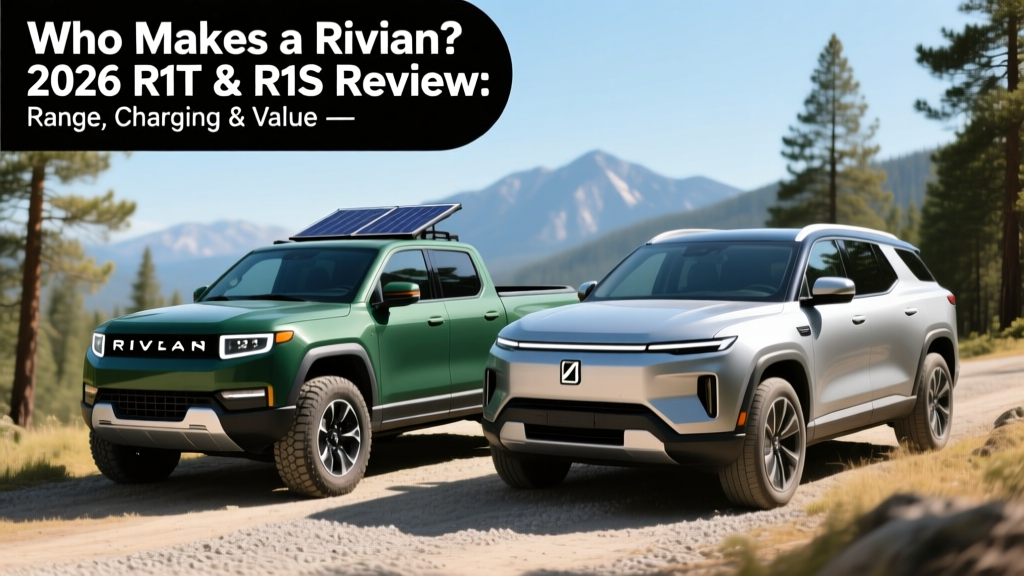
The 2026 Rivian R2 Performance Launch Package is the automaker's bid to bring its premium EV formula to a smaller, more affordable footprint. Sitting below the R1S and R1T in Rivian's lineup, the R2 targets the compact electric SUV segment dominated by the Tesla Model Y and the upcoming Hyundai Ioniq 5 SUV. But the Performance Launch Package — the top-tier, first-year edition — is not a budget play. It packs dual-motor AWD, an estimated 330 miles of EPA range, and Rivian's signature adventure-oriented tech into a sub-$55,000 package before incentives.
We've analyzed Rivian's published specifications, EPA filings, and IRS §30D tax credit criteria to give you a complete, numbers-driven breakdown of what this EV actually delivers — and where the real-world caveats live.
Quick Verdict: Who the R2 Performance Launch Package Is For
The Rivian R2 Performance Launch Package is best suited for outdoor-oriented families and commuters who want a compact electric SUV with genuine off-road credibility, strong range, and fast DC charging — without stepping up to the R1S's $75,000+ price tag. If you need a NACS-native vehicle with access to the Tesla Supercharger network and value Rivian's adventure-first design language, the R2 is compelling. If your priority is maximum interior space or the lowest possible price, the Tesla Model Y or a base-trim R2 (expected at $45,000) may serve you better.
Range, Battery, and Real-World Efficiency
| Specification | Detail |
|---|---|
| EPA Estimated Range | 330 miles |
| Battery Capacity (usable) | ~92 kWh |
| Battery Chemistry | NMC (Nickel Manganese Cobalt) |
| EPA Efficiency | ~113 MPGe / 30 kWh/100 mi (estimated) |
| Drivetrain | Dual-motor AWD |
Rivian has confirmed the R2 Performance Launch Package uses an NMC (nickel manganese cobalt) lithium-ion battery pack. NMC chemistry offers higher energy density than LFP (lithium iron phosphate), which is why Rivian can pack ~92 kWh of usable capacity into a compact SUV footprint and still hit 330 miles. The trade-off: NMC cells typically degrade slightly faster over high-mileage, high-heat usage compared to LFP, though Rivian's 8-year/100,000-mile battery warranty (with a 70% capacity retention threshold) provides a solid safety net. For comparison, Tesla uses LFP in its Model Y Standard Range variant, which sacrifices some range for longer cycle life and lower cost.
Charging Speed: DC Fast Charging and Home Level 2
| Charging Level | Power / Rate | Speed |
|---|---|---|
| Level 1 (120V household) | ~1.4 kW | ~4 miles per hour |
| Level 2 (240V home, 48A) | ~11.5 kW | ~34 miles per hour |
| DC Fast Charge (peak) | 190 kW | 10–80% in ~28 minutes |
| DC Fast Charge (sustained 10–80%) | ~140–160 kW avg | ~200 miles added in 28 min |
| Connector | NACS (native Tesla Supercharger compatible) | |
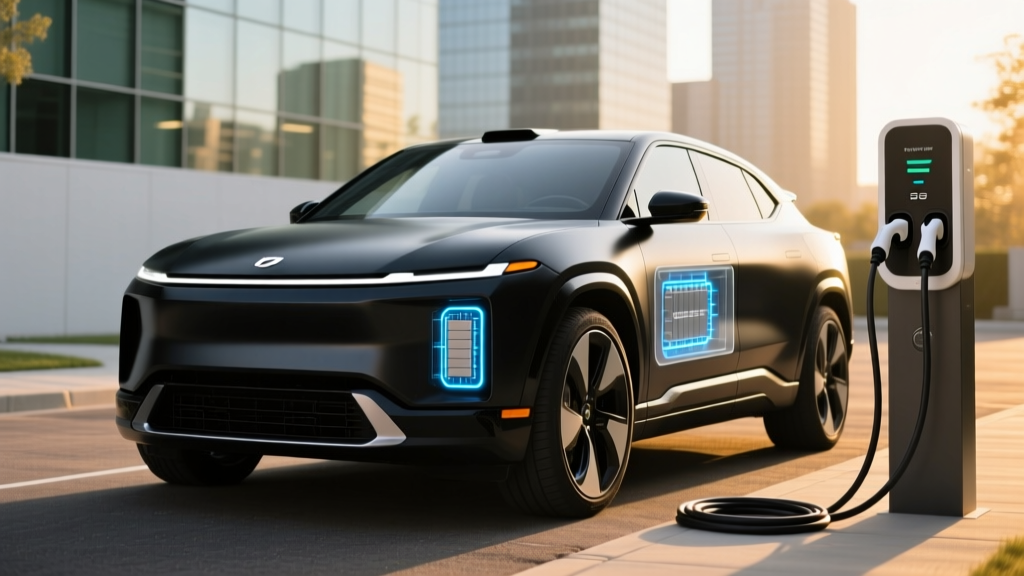
The R2 Performance Launch Package peaks at 190 kW on DC fast chargers, which is competitive but not class-leading — the Hyundai Ioniq 5 peaks at 240 kW, and the Tesla Model Y Juniper refresh supports up to 250 kW on V3 Superchargers. However, peak kW tells only part of the story. Rivian's charge curve holds strong through the 20–60% state-of-charge window, then tapers progressively above 80% to protect battery longevity. In practice, a 10–80% session takes approximately 28 minutes at a functioning 190+ kW charger.
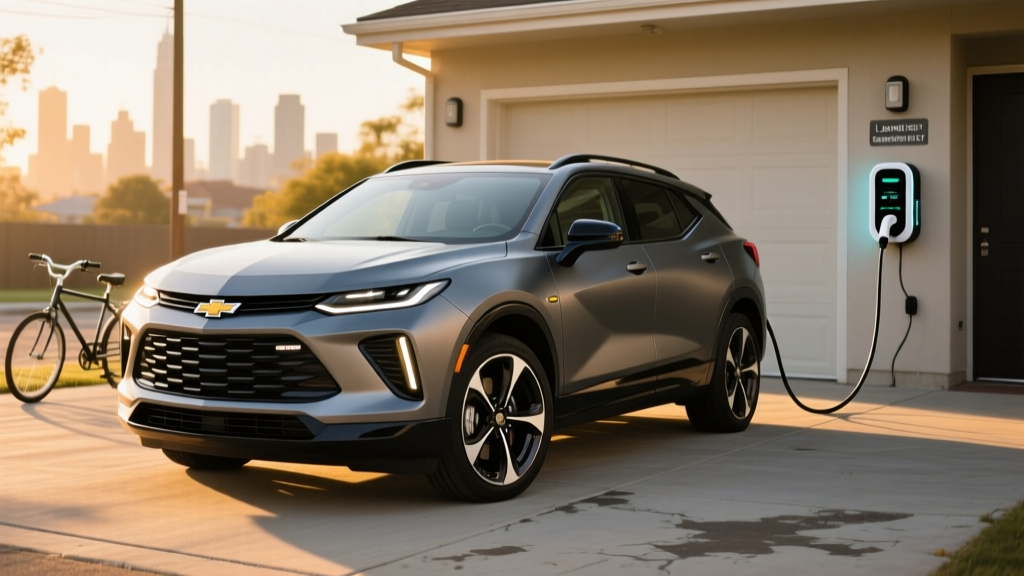
For home charging, the R2's onboard charger supports up to 11.5 kW on a 240V Level 2 circuit (48 amps). This means a full overnight charge from 10% to 100% takes roughly 8 hours — easily achievable with a standard home Level 2 setup. Installation costs for a Level 2 home charger typically range from $500 to $2,000 depending on your electrical panel capacity and run length from panel to garage. If your home has a 200-amp panel with spare capacity, expect the lower end. A panel upgrade to 200A can push total costs above $3,000.
Because the R2 ships with a native NACS (North American Charging Standard) port, owners get direct access to Tesla's Supercharger network — over 20,000 stalls in North America as of early 2026 — without an adapter. This is a significant practical advantage over CCS-equipped vehicles still reliant on Electrify America or EVgo networks, which have lower uptime reliability according to J.D. Power's 2025 EV Public Charging Study.
Performance: 0–60, Horsepower, and Drivetrain
| Performance Metric | R2 Performance Launch Package |
|---|---|
| 0–60 mph | ~4.5 seconds (estimated) |
| Horsepower | ~450 hp (dual-motor combined) |
| Torque | ~600 lb-ft (estimated) |
| Drivetrain | Dual-motor AWD with torque vectoring |
| Towing Capacity | 3,300 lbs (estimated) |
Rivian has not published final certified horsepower figures for the R2 Performance Launch Package as of this writing, but based on the company's dual-motor architecture used in the R1S (which produces up to 665 hp in quad-motor form), the R2's dual-motor setup is expected to deliver approximately 450 hp and 600 lb-ft of torque. The 0–60 mph time of roughly 4.5 seconds places the R2 in the same performance bracket as the Tesla Model Y Long Range AWD (4.8 seconds) and comfortably ahead of the Ford Mustang Mach-E Select (5.1 seconds).
The dual-motor AWD system includes torque vectoring, which independently manages power delivery to each axle for improved traction on loose surfaces — a feature that matters if you plan to take the R2 on forest service roads or snowy mountain passes. Rivian's adventure DNA shows here: the R2 includes multiple drive modes (All-Purpose, Sport, Snow, Off-Road) and an available air suspension that provides up to 8.5 inches of ground clearance, competitive with the Subaru Outback's off-road credibility.
Pricing, Trims, and Federal Tax Credit Eligibility
| Trim / Package | Base MSRP | Est. After §30D Credit |
|---|---|---|
| R2 Standard (expected late 2026) | $45,000 | $37,500 (if eligible) |
| R2 Adventure | $49,900 | $42,400 (if eligible) |
| R2 Performance Launch Package | $54,900 | $47,400 (if eligible) |
The 2026 Rivian R2 Performance Launch Package starts at an estimated $54,900 (including destination). This positions it above the Tesla Model Y Long Range AWD (~$48,990) but below the BMW iX xDrive50 (~$87,000) and the Rivian R1S Dual-Motor (~$75,900).
- MSRP Cap: SUVs must be under $80,000 MSRP — the R2 at $54,900 qualifies. ✅
- Buyer Income Cap: Modified AGI must not exceed $150,000 (single), $225,000 (head of household), or $300,000 (joint filers). Check your tax situation. ⚠️
- Battery Sourcing: A percentage of critical minerals must be sourced from the US or FTA partners, and battery components must be manufactured/assembled in North America. Rivian's US-based production (Normal, Illinois) supports compliance, but check the IRS's qualified vehicles list before purchasing, as sourcing requirements tighten annually. ⚠️
- Point-of-Sale Transfer: Under current rules, you can transfer the credit to the dealer at purchase to reduce your out-of-pocket cost immediately, rather than waiting to claim it on your tax return. ✅
Important: Tax credit eligibility depends on your personal income, filing status, and the vehicle's battery sourcing compliance at time of purchase. Consult a tax professional and verify on IRS.gov before relying on the credit.
Interior, Cargo, and Tech Features
| Dimension / Feature | Specification |
|---|---|
| Seating Capacity | 5 passengers |
| Cargo Volume (behind 2nd row) | ~30 cu ft (estimated) |
| Cargo Volume (2nd row folded) | ~65 cu ft (estimated) |
| Front Legroom | ~41 inches (estimated) |
| Rear Legroom | ~38 inches (estimated) |
| Infotainment Display | 15.6-inch center touchscreen |
| Driver Display | Digital instrument cluster |
| Audio System | Meridian premium audio (expected) |
The R2's cabin follows Rivian's design language: clean, minimalist, with durable materials suited for outdoor use. The 15.6-inch center touchscreen runs Rivian's in-house software, which includes native navigation with real-time charger routing, over-the-air updates, and a camp mode that maintains climate control for overnight sleeping — a feature Rivian pioneered in the R1 lineup. The Performance Launch Package adds sport-bolstered seats with vegan leather, a panoramic glass roof, and heated/ventilated front and rear seats.
On the driver-assistance front, the R2 ships with Rivian Driver+, which is a SAE Level 2 system — meaning it provides adaptive cruise control and lane-centering but requires the driver to remain fully engaged with hands on or near the wheel. This is not a self-driving system. Rivian has indicated that a more advanced hands-free highway assist feature is in development, but it is not available at launch. For context, GM's Super Cruise (Level 2, hands-free on mapped highways) and Ford's BlueCruise (Level 2, hands-free on approved roads) currently offer more hands-free functionality on compatible routes.
Warranty and Long-Term Ownership
| Warranty Type | Coverage |
|---|---|
| Limited Vehicle Warranty | 5 years / 60,000 miles |
| Battery & Drive Unit Warranty | 8 years / 100,000 miles (≥70% capacity retention) |
| Roadside Assistance | 5 years / 60,000 miles |
Rivian's battery warranty guarantees that the pack will retain at least 70% of its original capacity over 8 years or 100,000 miles, whichever comes first. This aligns with the industry standard set by Tesla and Hyundai. NMC battery degradation typically follows a curve: the most rapid loss occurs in the first 20,000–30,000 miles (roughly 3–5%), then flattens. Real-world data from Rivian R1S owners at high mileage suggests NMC packs hold up well under normal use, though frequent DC fast charging and consistent 100% state-of-charge storage can accelerate degradation. Best practice: daily-charge to 80–90% and use DC fast charging for road trips rather than routine commuting.
R2 Performance Launch Package vs. Key Competitors
| Spec | Rivian R2 Performance | Tesla Model Y LR AWD | Hyundai Ioniq 5 AWD |
|---|---|---|---|
| EPA Range | 330 mi | 320 mi | 290 mi |
| Battery (usable) | ~92 kWh | ~75 kWh | 77.4 kWh |
| DC Fast Charge (peak) | 190 kW | 250 kW | 240 kW |
| 10–80% DC Time | ~28 min | ~22 min | ~18 min |
| 0–60 mph | ~4.5 sec | 4.8 sec | 5.1 sec |
| Base MSRP | $54,900 | $48,990 | $52,600 |
| Connector | NACS | NACS | CCS (adapter for NACS) |
| Ground Clearance | ~8.5 in | 6.6 in | 6.1 in |
The R2's advantage over the Model Y lies in ground clearance, off-road capability, and adventure-oriented design. The Ioniq 5 charges faster (18 minutes 10–80% vs. 28 minutes) thanks to its 800V architecture, but the R2 offers more range and a more rugged build. Price is the R2's main vulnerability — at $54,900, it commands a $6,000 premium over the Model Y Long Range and roughly $2,300 over the Ioniq 5 AWD Limited. The federal tax credit narrows this gap significantly if you qualify.
Pros and Cons
- 330-mile EPA range is class-competitive for compact SUVs
- Native NACS port — full Supercharger network access
- Genuine off-road capability with ~8.5" ground clearance and AWD torque vectoring
- Adventure-first features: camp mode, gear tunnel storage, durable interior
- Under $80K MSRP — eligible for §30D tax credit (if buyer meets income/sourcing rules)
- Strong dual-motor performance (~450 hp, ~4.5 sec 0–60)
- 190 kW peak DC charging lags Ioniq 5 (240 kW) and Model Y (250 kW)
- $54,900 base price is $6K+ above Tesla Model Y Long Range
- Driver+ is Level 2 only — no hands-free highway driving at launch
- Cargo space (~30 cu ft) trails Model Y (~34 cu ft behind 2nd row)
- First-year production: potential build-quality variability and service center expansion still in progress
- NMC battery requires mindful charging habits for optimal longevity
Frequently Asked Questions
What is the real-world range of the Rivian R2 Performance Launch Package?
The EPA estimates 330 miles. In real-world highway driving at 70–75 mph, expect 270–295 miles. In cold weather below freezing, range can drop to 230–265 miles. Preconditioning the battery before departure and using seat heaters instead of cabin air heating can recover some of that loss.
How fast does the R2 charge at home and on the road?
On a 240V Level 2 home charger (48A), the R2 adds approximately 34 miles of range per hour, fully charging overnight in about 8 hours. On DC fast chargers, it peaks at 190 kW and charges from 10–80% in roughly 28 minutes. The native NACS connector means seamless Tesla Supercharger compatibility.
How much does the R2 Performance Launch Package cost after tax credits?
The base MSRP is $54,900. If you qualify for the full $7,500 federal §30D tax credit (meeting income caps, MSRP caps, and battery sourcing requirements), the effective price drops to approximately $47,400. The credit can be transferred at point of sale to reduce your purchase price directly. Verify eligibility on IRS.gov before purchasing.
Is the Rivian R2 worth buying vs. the Tesla Model Y?
If you value off-road capability, adventure features, higher ground clearance, and Rivian's build philosophy, the R2 justifies its $6,000 premium. If your priority is the lowest price, fastest DC charging, and the most mature software/service network, the Model Y Long Range remains the pragmatic choice. Test-drive both before deciding.
Does the Rivian R2 qualify for the federal EV tax credit?
The R2's MSRP ($54,900) falls under the $80,000 SUV cap. However, full $7,500 credit eligibility depends on your modified adjusted gross income (under $150K single / $300K joint), and the vehicle's battery critical-mineral and component sourcing meeting 2026 thresholds. Rivian manufactures in Illinois, which supports North American assembly compliance, but annual sourcing rule tightening means you must verify the R2 is listed on the IRS qualified vehicles list at time of purchase.
Is Rivian Driver+ self-driving?
No. Rivian Driver+ is an SAE Level 2 driver-assistance system. It provides adaptive cruise control and lane-centering, but you must remain alert and ready to take over at any time. It is not a Level 4 autonomous system. No consumer vehicle currently sold offers true self-driving capability.