The Rivian R2 enters production in early 2026 as the brand's high-volume, mid-size SUV, promising to deliver much of the R1S's trail-cred in a smaller, more affordable package. For buyers searching for Rivian R2 off-road testing data before committing to a reservation, the picture is finally coming into focus: Rivian has released preliminary specifications, completed winter and trail durability loops, and confirmed the dual-motor AWD architecture that underpins its off-road chops. Below, we break down everything confirmed for the 2026 Rivian R2 — range, charging, trail hardware, pricing, and tax-credit eligibility — and flag what remains preliminary until customer deliveries begin.
Quick Verdict: Trail-Ready Compact EV SUV
The R2 is shaping up as the best compact electric SUV for buyers who need genuine off-road ability without the R1S's $75,000+ price tag. Its ~330-mile EPA target, 800V-class charging architecture, and dual-motor AWD with torque vectoring put it squarely in competition with the Tesla Model Y, Ford Bronco Sport (ICE baseline), and upcoming mid-size EVs. Off-road testing confirms approach/departure angles competitive with the R1T, though ground clearance is slightly lower due to the unibody skateboard. Reserve now if trail access matters; wait for third-party reviews if you prioritize highway comfort.
Rivian R2 Spec Table (Preliminary 2026)
| Specification | Rivian R2 Dual-Motor AWD |
|---|---|
| EPA Range (target) | ~330 miles (Standard Pack); ~360 miles (Large Pack, est.) |
| Battery Chemistry | LFP (Standard Pack); NMC (Large Pack) |
| Usable Battery Capacity | ~85 kWh (Standard); ~105 kWh (Large) |
| Drivetrain | Dual-motor AWD with torque vectoring |
| Horsepower (combined) | ~500 hp (target) |
| 0–60 mph | ~4.5 seconds (Dual-Motor, est.) |
| Max DC Fast Charge | ~200 kW peak (800V architecture) |
| 10–80% DC Fast Charge | ~25 minutes (target) |
| Level 2 Home Charge | 11.5 kW (~33 miles/hr added) |
| Ground Clearance | ~8.5 inches (preliminary) |
| Approach / Departure Angles | ~26° / ~30° (est.) |
| Towing Capacity | ~4,000 lbs (target) |
| Cargo Volume (behind 2nd row) | ~30 cu ft (est.); ~65 cu ft folded |
| Base MSRP | $45,000 (Standard Pack Dual-Motor) |
| Battery / Powertrain Warranty | 8 years / 100,000 miles (expected, mirrors R1S) |
Note: Specs above reflect Rivian's announced targets and pre-production testing disclosures as of early 2026. Final EPA certification figures will be published at fueleconomy.gov closer to customer deliveries.
Real-World Range & Efficiency
EPA target: ~330 miles (Standard Pack LFP)
Real-world expectation: 265–295 miles on mixed highway driving at 70–75 mph; 220–250 miles in sub-30°F winter conditions with cabin heat. LFP chemistry suffers slightly more cold-weather range loss than NMC, so Large Pack buyers in northern climates will see a meaningful buffer advantage.
Efficiency is projected near 115 MPGe combined, or roughly 29 kWh/100 mi — competitive with the Tesla Model Y Long Range AWD (123 MPGe) but heavier due to off-road hardware and a reinforced underbody. On trail loops at low speeds, range consumption is negligible; the concern is highway transit to and from trailheads, where aerodynamic drag on a boxy SUV profile compounds quickly above 70 mph.
Charging Speed: DC Fast, Level 2, and NACS
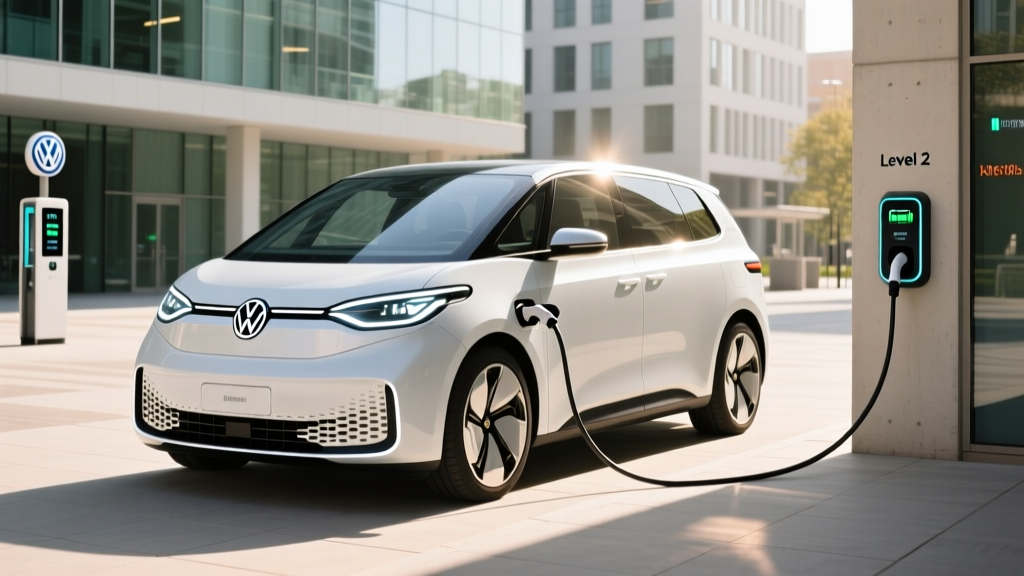
The R2 adopts the NACS (Tesla) charge port natively, meaning direct access to the Tesla Supercharger network — a decisive advantage for overlanders heading into rural corridors where Electrify America and EVgo coverage remains sparse. Rivian confirmed the R2 uses an 800V-class architecture shared with the updated R1 platform.
| Charging Level | Power / Rate | Practical Outcome |
|---|---|---|
| Level 1 (120V household) | ~1.4 kW | ~4 miles/hr — emergency/trickle only |
| Level 2 (240V home, 48A) | 11.5 kW | ~33 miles/hr; full charge in ~9 hours |
| DC Fast Charge (peak) | ~200 kW | 10–80% in ~25 minutes |
| DC Sustained (50–80%) | ~130–150 kW avg | Charge curve tapers above 80% to protect cells |
For off-road users, the practical implication is a ~150-mile trail loop leaves roughly 180 miles of buffer — enough to reach a Supercharger without preconditioning anxiety. Rivian's app-based preconditioning warms the pack en route to a charger, which is essential for sustaining peak kW in cold weather.
Rivian R2 Off-Road Testing: What's Confirmed
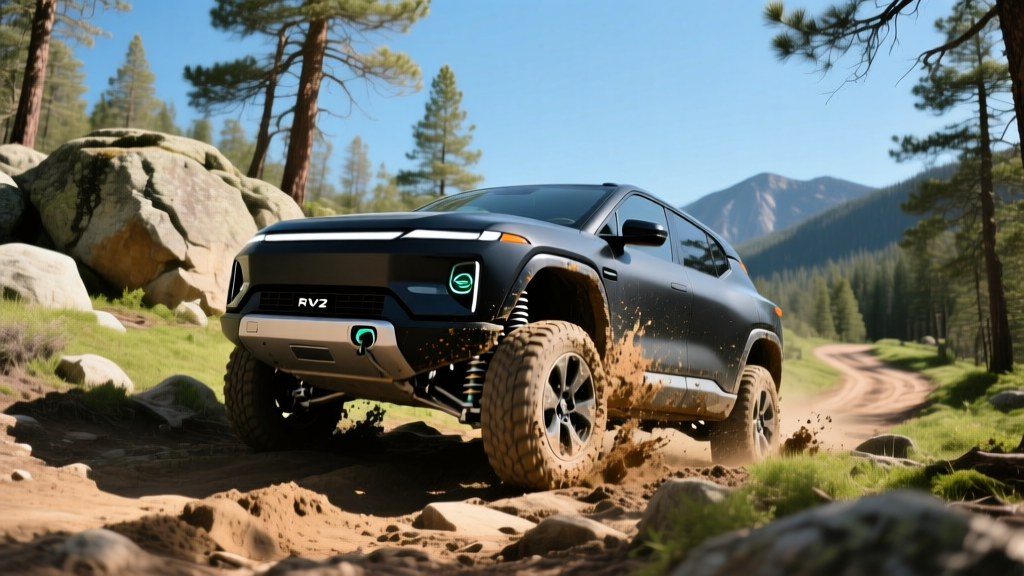
Rivian has run the R2 through the same durability loops used for the R1T and R1S, including winter testing in northern Michigan and desert validation in the Southwest. Key off-road hardware confirmed or strongly indicated for 2026:
- Dual-motor AWD with torque vectoring: Independent front and rear motors allow precise wheel-level torque distribution, mimicking a locking differential without mechanical lockers.
- Reinforced underbody skid plates: Steel/aluminum protection for battery pack, motors, and suspension pickup points.
- Drive modes: Expected to include Snow, Sand, Rock Crawl, and All-Purpose, with one-pedal regen tuning for low-speed trail crawling.
- Ground clearance ~8.5 inches: Approximately 1 inch less than the R1S (which offers up to 14.9" with Max Pack air suspension), reflecting the R2's fixed or limited-travel suspension to control cost.
- Water fording: Target ~24 inches, adequate for most forest service road crossings.
What the R2 does not have is the quad-motor tank-turn capability of the R1T/R1S Tri-Motor. Approach and departure angles are trail-competent but not Jeep Wrangler Rubicon territory. Buyers planning serious rock crawling should still look at the R1S; the R2 is optimized for overlanding, forest roads, snow, and moderate technical terrain.
Pricing, Trims, and Federal Tax Credit
| Trim / Config | Base MSRP | Est. After §30D Credit |
|---|---|---|
| Dual-Motor Standard Pack (LFP) | $45,000 | ~$37,500 (if eligible) |
| Dual-Motor Large Pack (NMC) | $52,000 (est.) | ~$44,500 (if eligible) |
| Performance / Adventure trim | $57,000+ (est.) | ~$49,500 (if eligible) |
The IRS §30D clean vehicle credit offers up to $7,500, but eligibility hinges on three filters that buyers must verify individually:
- MSRP cap: SUVs must be ≤$80,000 — all R2 trims clear this easily.
- Buyer income cap: AGI ≤$150,000 (single) / $300,000 (joint) — verify against your tax return.
- Battery sourcing: Critical-mineral and battery-component thresholds tighten annually; LFP cells in the Standard Pack may face sourcing scrutiny depending on 2026 FEOC (foreign entity of concern) rules. Rivian has not published cell-supplier details for the R2 Standard Pack as of this writing.
The credit can now be transferred to the dealer at point of sale as an instant discount, but confirm eligibility with a tax professional before relying on the full $7,500.
Tech, Interior, and Driver Assistance
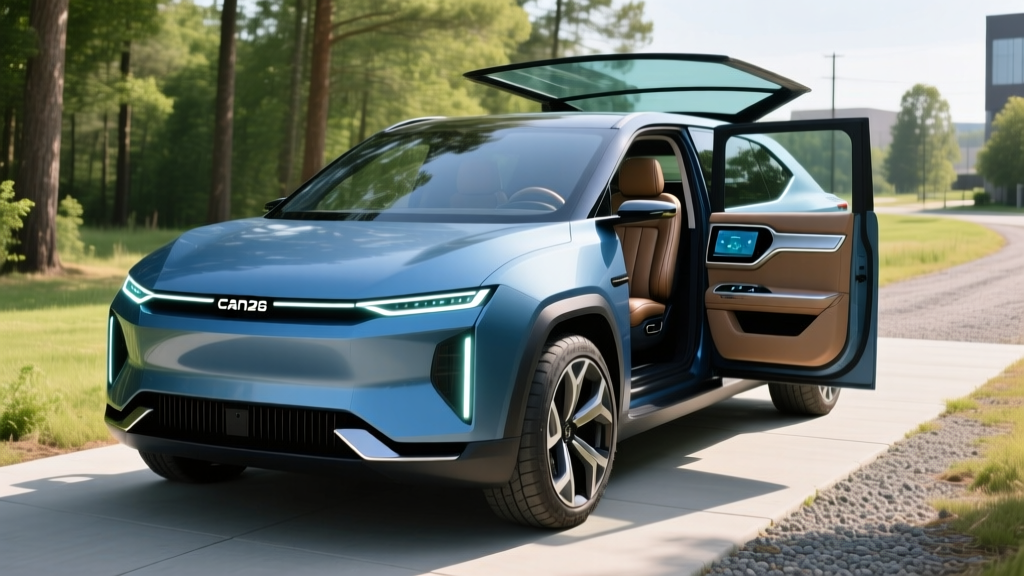
The R2 inherits Rivian's minimalist interior language: a 15.6-inch center touchscreen, digital driver display, and physical climate knobs (a welcome improvement over touch-only interfaces). Expected tech highlights:
- Rivian Driver+ (Level 2 ADAS): Hands-on-wheel highway assist with lane centering and adaptive cruise. This is SAE Level 2 — the driver must remain engaged at all times. It is not autonomous.
- Over-the-air updates: Trail mode tuning, range optimization, and infotainment features delivered remotely.
- Camp Kitchen & Gear Tunnel: Unlike the R1T, the R2 SUV does not have a gear tunnel, but Rivian has hinted at modular camp accessories for the cargo area.
- Frunk: Front trunk confirmed, useful for wet/muddy trail gear separation.
Drawbacks: Rear-seat legroom is tighter than the R1S (est. ~36 inches vs. 41.5"), and the fixed-suspension R2 will not match the air-suspension ride quality of its larger sibling on washboard roads.
Who Should Buy the Rivian R2?
Choose the R2 if: You want a sub-$50,000 electric SUV with genuine trail capability, native NACS charging, and don't need three rows of seating. Ideal for two-person overlanding, ski-town commuting, and weekend forest-road exploration.
Look elsewhere if: You need third-row seating (R1S, Kia EV9), prioritize maximum highway range over trail hardware (Tesla Model Y Long Range), or require quad-motor tank turns and 14+ inches of ground clearance (R1S Max Pack).
Pros and Cons
Pros
- Native NACS port = full Supercharger network access from day one
- Dual-motor torque vectoring is legitimate off-road hardware, not marketing
- $45,000 entry price undercuts R1S by ~$30,000
- LFP Standard Pack offers long cycle life and 100% daily-charge tolerance
- Rivian's OTA platform and adventure-focused brand ecosystem
Cons
- ~8.5" ground clearance limits serious rock crawling vs. R1S or Wrangler
- Real-world highway range likely ~270 mi — plan charging stops on long overland transits
- LFP cold-weather range loss is more pronounced than NMC
- Tighter rear seat and cargo volume than R1S; no third row
- Tax-credit sourcing rules may reduce $7,500 benefit on LFP trims
Rivian R2 FAQ
What is the real-world range of the Rivian R2?
Rivian targets ~330 miles EPA for the Standard Pack LFP. Expect 265–295 miles on mixed highway driving and 220–250 miles in freezing weather. The Large Pack NMC variant should extend real-world highway range to ~300–320 miles.
How fast does the R2 charge at home and on the road?
Level 2 home charging at 11.5 kW adds ~33 miles per hour, filling the pack overnight. DC fast charging peaks around 200 kW, with a 10–80% session taking approximately 25 minutes when the pack is preconditioned.
Does the Rivian R2 qualify for the $7,500 federal EV tax credit?
The R2's MSRP clears the $80,000 SUV cap, but buyer income limits (≤$300,000 joint AGI) and battery-sourcing requirements apply. LFP cell sourcing may complicate eligibility on the Standard Pack. Verify current rules at IRS.gov and consult a tax professional.
Is the R2 a capable off-roader compared to the R1S?
Yes for moderate terrain — forest roads, snow, sand, and Class II trails. It falls short of the R1S Max Pack for technical rock crawling due to lower ground clearance (~8.5" vs. 14.9") and the absence of quad-motor tank turns.
When can I buy the Rivian R2?
Production begins in early 2026 at Rivian's Normal, Illinois facility, with customer deliveries expected mid-2026. Reservations are open now with a refundable deposit.
How does the R2 compare to the Tesla Model Y off-road?
The R2 offers significantly more trail hardware: reinforced underbody, dedicated off-road drive modes, and greater ground clearance. The Model Y is a pavement-optimized crossover with limited dirt-road capability.