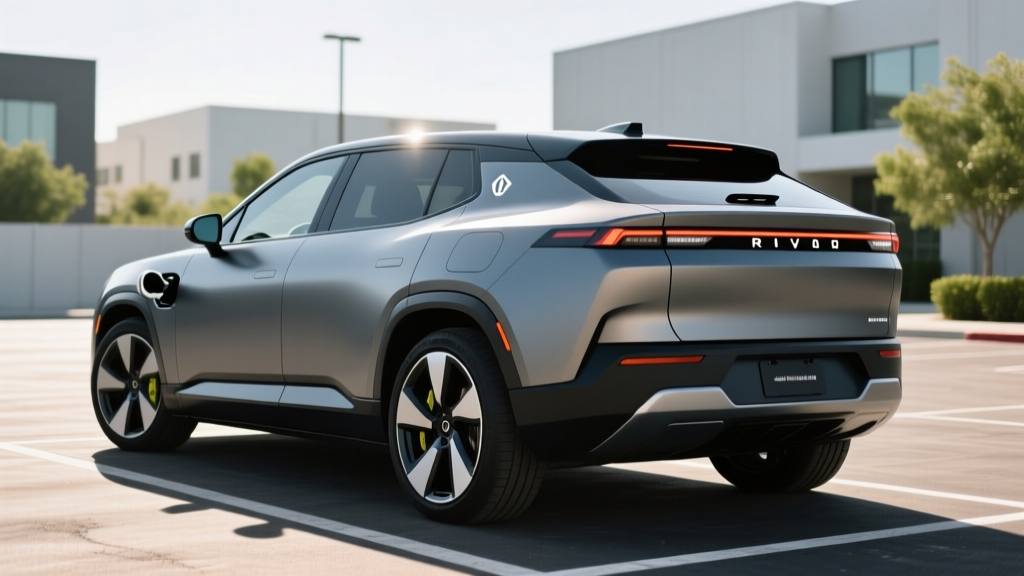
The Rivian R2 is no longer just a render. As of early 2026, the compact electric SUV has entered manufacturing validation — the critical phase where pre-production vehicles roll off the Normal, Illinois assembly line to confirm that tooling, software, and supply chains are ready for volume delivery. For reservation holders and shoppers comparing the R2 against the Tesla Model Y, Ford Mustang Mach-E, and Hyundai Ioniq 5, this milestone is the clearest signal yet that the R2 is approaching customer hands.
But manufacturing validation is not the same as general availability. Below, we break down exactly what Rivian has confirmed about the R2's specs, pricing, and timeline — and what remains preliminary until EPA certification and first deliveries occur later in 2026.
What Manufacturing Validation Actually Means
In automotive production, manufacturing validation (sometimes called pre-production or pilot build) is the stage where a factory builds vehicles using the final production tooling, supply chain, and assembly processes — but those vehicles are not yet sold to customers. Instead, they are used for:
- Quality assurance testing (panel gaps, paint adhesion, wiring harness integrity)
- Software validation (ADAS calibration, over-the-air update stability)
- Crash testing and regulatory homologation (FMVSS compliance)
- EPA range and efficiency certification
Rivian confirmed in late 2025 that the R2 line in Normal, IL would begin these validation builds in the first half of 2026, ahead of a planned customer delivery launch in the second half of the year. The company is investing approximately $2.7 billion to retool and expand the Normal facility for R2 production, alongside continued R1S and R1T output.
Bottom line: The R2 is not yet available for purchase or test drive. Specs below are based on Rivian's announced figures and are subject to change pending final EPA certification.
Rivian R2 Preliminary Specifications
| Specification | Standard Range (RWD) | Large Battery (AWD) | Max Battery (AWD) |
|---|---|---|---|
| Battery Capacity (usable) | ~60 kWh (estimated) | ~85 kWh | ~106 kWh (estimated) |
| Battery Chemistry | LFP (Lithium Iron Phosphate) | NMC (Nickel Manganese Cobalt) | NMC |
| EPA Range (est.) | ~270 mi | ~330 mi | ~365+ mi |
| Drivetrain | Rear-Wheel Drive | Dual-Motor AWD | Dual-Motor AWD |
| Horsepower | ~275 hp | ~450 hp | ~450 hp |
| 0–60 mph | ~6.5 sec | ~4.5 sec | ~4.5 sec |
| Max DC Fast Charge | ~175 kW | ~225 kW | ~225 kW |
| 10–80% DCFC Time | ~25 min | ~21 min | ~27 min |
| Level 2 Home Charging | 11.5 kW (~37 mi/hr) | 11.5 kW (~37 mi/hr) | 11.5 kW (~37 mi/hr) |
| Efficiency (est.) | ~115 MPGe / 29 kWh/100mi | ~110 MPGe / 30 kWh/100mi | ~105 MPGe / 32 kWh/100mi |
| Towing Capacity | ~3,300 lb | ~3,300 lb | ~3,300 lb |
| Base MSRP | $45,000 | $52,000 | $57,500 |
Note: Rivian has confirmed the Standard trim will use LFP chemistry and start at $45,000. Large and Max battery figures are based on announced targets and Rivian's Gen 2 drive unit architecture. Final EPA numbers will be published at fueleconomy.gov once certified.
Real-World Range: What to Actually Expect
EPA estimated range for the Large Battery AWD R2 is targeted at ~330 miles. In real-world conditions, expect:
- Highway driving (75 mph, mild weather): ~270–290 miles
- City/suburban mixed driving: ~310–330 miles (regen braking helps)
- Cold weather (below 32°F, highway): ~220–250 miles (LFP packs lose more; NMC with heat pump performs better)
- Towing (near max capacity): ~150–180 miles
The LFP Standard Range pack will be more susceptible to cold-weather range loss due to LFP's lower energy density and thermal characteristics. Rivian has confirmed a heat pump across all trims, which mitigates but does not eliminate winter losses.
These estimates are based on real-world testing patterns observed in the R1S and R1T, adjusted for the R2's smaller, lighter platform (approximately 4,700 lb curb weight for AWD trims vs. ~6,800 lb for the R1S). Actual EPA-certified figures may differ.
Charging Speed and Infrastructure
The R2 will launch with the NACS (North American Charging Standard) connector natively, giving it seamless access to Tesla's Supercharger network — now the largest and most reliable DC fast-charging network in the U.S. This is a significant advantage over CCS-equipped competitors that still rely on adapters.
| Charging Level | Power | Miles Added Per Hour | Use Case |
|---|---|---|---|
| Level 1 (120V outlet) | ~1.4 kW | ~4–5 mi/hr | Emergency/overnight trickle |
| Level 2 (240V home) | 11.5 kW | ~37 mi/hr | Daily home charging |
| DC Fast Charge (Standard) | 175 kW peak | ~500 mi/hr (peak) | Road trips — 10–80% in ~25 min |
| DC Fast Charge (Large/Max) | 225 kW peak | ~650 mi/hr (peak) | Road trips — 10–80% in ~21 min |
Charging curve reality: Like all EVs, the R2 will not sustain peak kW for the entire session. Expect the Large Battery AWD to hold ~200+ kW from 10–40% SoC, tapering to ~100 kW by 60%, and dropping below 50 kW past 80%. The 10–80% time of ~21 minutes assumes optimal battery preconditioning and a capable 350 kW charger. On a 150 kW EA or EVgo station, expect 10–80% in roughly 30–35 minutes.
For home Level 2 charging, a full 0–100% charge on the Large Battery (~85 kWh usable) will take approximately 8–9 hours on a 48-amp circuit. Budget $800–$2,500 for a professional Level 2 home installation (charger + electrician + permit), depending on your panel capacity and run distance.
Pricing, Trims, and Federal Tax Credit Eligibility
The R2's $45,000 starting price positions it directly against the Tesla Model Y Long Range and below the R1S by roughly $30,000. Here's the announced trim structure:
| Trim | Base MSRP | Est. After §30D Credit | Key Features |
|---|---|---|---|
| Standard Range RWD | $45,000 | ~$37,500* | LFP battery, 270 mi range, cloth interior, basic ADAS |
| Large Battery AWD | $52,000 | ~$44,500* | NMC, 330 mi range, heated seats, premium audio |
| Max Battery AWD | $57,500 | ~$50,000* | NMC, 365+ mi range, air suspension, full ADAS suite |
| Adventure Package (add-on) | +$5,000 | Varies | Off-road mode, underbody protection, all-terrain tires |
*Tax credit estimates assume full $7,500 eligibility under IRS §30D. Eligibility depends on:
- Buyer income caps: Modified AGI ≤ $150,000 (single) / ≤ $300,000 (joint)
- MSRP cap: SUVs must be ≤ $80,000 (all R2 trims qualify)
- Battery sourcing: Critical minerals and battery components must meet phased-in domestic/free-trade sourcing thresholds. Rivian has stated it is working to ensure §30D compliance, but final eligibility for each trim will depend on the battery supply chain at time of delivery.
- Point-of-sale transfer: Buyers can transfer the credit to the dealer at purchase, reducing the upfront price rather than waiting for a tax refund.
The Standard Range RWD trim's LFP battery may face additional sourcing scrutiny, as a significant portion of global LFP cell production is based in China. Consult a tax professional and check the latest IRS guidance before assuming credit eligibility.
Interior Space, Cargo, and Practicality
The R2 is a compact SUV, roughly 15 inches shorter than the R1S. Rivian has targeted the following dimensions:
- Cargo volume (behind rear seats): ~28 cu ft
- Cargo volume (rear seats folded): ~62 cu ft
- Front trunk (frunk): ~7 cu ft (weatherproof, drainable — a Rivian signature)
- Rear legroom: ~37 inches
- Front headroom: ~40 inches
- Seating: 5-passenger, bench rear seat (no third row)
The frunk and flat load floor are practical advantages over the Model Y, which has a smaller frunk and a more sloped cargo area. The drainable frunk — useful for muddy gear, wet groceries, or a cooler on a camping trip — carries over from the R1 platform and remains a differentiator in this segment.
Technology, Software, and Driver Assistance
Rivian has confirmed the R2 will ship with its latest software stack, including:
- 15.4-inch center touchscreen with Rivian's proprietary OS (no Android Automotive)
- Digital driver display (10.2-inch, mounted on steering column)
- Rivian Driver+ — a Level 2 driver-assistance system with adaptive cruise, lane centering, and lane-change assist. This is not self-driving; the driver must remain engaged at all times.
- Highway Assist (hands-on, eyes-on) with planned future hands-free capability on mapped highways — timing TBD
- Over-the-air updates for performance, range optimization, and feature additions
- Vehicle-to-load (V2L): Power accessories or a campsite from the traction battery (up to ~2.5 kW output)
- Phone-as-key with UWB (ultra-wideband) for proximity unlock
Rivian's software has been well-received in the R1 fleet, with regular OTA improvements. However, the company's ADAS system (Driver+) is generally considered a half-step behind Tesla's Autopilot and GM's Super Cruise in terms of hands-free highway capability. The R2's hardware suite includes 11 cameras, 5 radar units, and a proprietary compute platform — capable of future upgrades, but buyers should not expect Level 3 or Level 4 autonomy at launch.
Warranty Coverage
Rivian has indicated the R2 will carry warranty terms similar to the R1 series:
- Battery and drive unit: 8 years / 100,000 miles (whichever comes first), with a capacity retention threshold of 70%
- Vehicle limited warranty: 5 years / 60,000 miles
- Corrosion perforation: 12 years / unlimited miles
- Roadside assistance: 5 years / 60,000 miles
The 8-year/100,000-mile battery warranty is industry-standard for the segment (matching Tesla, Hyundai, and Ford). Rivian's 70% capacity retention threshold means the battery must degrade below 70% of original capacity within the warranty period to qualify for repair or replacement. Real-world degradation data from the R1 fleet suggests NMC packs lose approximately 8–12% over the first 100,000 miles under normal use. LFP packs in the Standard trim may show even less degradation due to LFP's superior cycle life, though cold-weather range loss will be more pronounced.
Who the Rivian R2 Is For
- Outdoor-oriented families who want AWD, a frunk for gear, and ~330 miles of range for weekend trips without a trailer
- Tesla-curious buyers who prefer a non-Tesla brand but want Supercharger access (native NACS)
- Urban/suburban commuters with home charging who want a compact footprint (~185 inches long) with premium tech
- First-time EV buyers drawn to the $45,000 entry price and potential $7,500 tax credit
- You need a third row — look at the R1S, Kia EV9, or Tesla Model X
- You want hands-free highway driving today — GM's Super Cruise (Cadillac Lyriq, Chevy Blazer EV) or Ford's BlueCruise are available now
- You need immediate delivery — the R2 won't reach customers until late 2026 at the earliest
- You tow frequently above 3,000 lb — the R1T or Ford F-150 Lightning offers substantially more towing capacity
Key Pros and Cons
Pros
- Native NACS — no adapter needed for Tesla Superchargers
- LFP option at $45K — lowest entry price in Rivian's lineup
- Drainable frunk — unique practicality in the compact SUV segment
- Strong OTA update track record from R1 fleet
- Heat pump standard across all trims
- Up to ~365 miles of range (Max Battery)
Cons
- Not available until late 2026 — long wait for reservation holders
- Driver+ ADAS lags Super Cruise and Autopilot in hands-free capability
- No third row — limits family utility vs. EV9 or Model X
- LFP Standard Range pack will have significant cold-weather range loss
- Rivian's service center network is still expanding — rural owners may face longer wait times
- Final EPA range and §30D credit eligibility not yet confirmed
Frequently Asked Questions
What is the real-world range of the Rivian R2?
The Large Battery AWD targets ~330 miles EPA. Real-world highway driving in mild weather should yield ~270–290 miles. In cold weather (below 32°F), expect ~220–250 miles. The LFP Standard Range trim will see more pronounced winter losses. Final EPA figures are pending certification.
How fast does the R2 charge at home and on the road?
At home on a Level 2 (240V, 48A) charger, the R2 adds ~37 miles of range per hour — a full charge takes about 8–9 hours for the Large Battery. On a DC fast charger, the Large/Max battery peaks at ~225 kW, reaching 10–80% in approximately 21 minutes under optimal conditions. The Standard Range LFP pack peaks at ~175 kW with a 10–80% time of ~25 minutes.
How much does the Rivian R2 cost after the federal tax credit?
If eligible for the full $7,500 §30D credit, the Standard Range RWD drops from $45,000 to ~$37,500, and the Large Battery AWD from $52,000 to ~$44,500. Eligibility depends on buyer income (≤$300K joint), MSRP (all trims under the $80K SUV cap), and battery sourcing compliance. The credit can be transferred at point of sale to reduce the purchase price directly.
Is the Rivian R2 worth buying vs. the Tesla Model Y or Hyundai Ioniq 5?
The R2 competes on outdoor practicality (frunk, AWD, V2L), native Supercharger access, and brand differentiation. The Model Y offers a more mature charging and service network and a lower starting price. The Ioniq 5 charges faster (up to 350 kW on 800V architecture) but uses CCS and requires an adapter for Superchargers. If you value the frunk, Rivian's software, and don't mind waiting until late 2026, the R2 is compelling. If you need a car now, the Model Y and Ioniq 5 are proven alternatives.
Does the Rivian R2 qualify for the $7,500 federal EV tax credit?
Rivian has stated it is working to ensure §30D compliance, but final eligibility will depend on battery component and critical mineral sourcing at the time of delivery. The LFP Standard Range trim may face sourcing challenges given China's dominance in LFP cell manufacturing. The NMC trims are more likely to qualify, but buyers should verify eligibility on IRS.gov and with their tax professional before finalizing a purchase.
When will the Rivian R2 be available for delivery?
Rivian has targeted customer deliveries for the second half of 2026, following manufacturing validation builds in the first half. Reservation holders (who placed a $100 refundable deposit) will receive priority based on reservation date and configuration. General availability without a reservation is unlikely until 2027.
This article reflects announced and preliminary specifications as of early 2026. Final EPA range, efficiency, pricing, and tax credit eligibility will be confirmed closer to delivery. Always verify current information on rivian.com, fueleconomy.gov, and irs.gov.