The Rivian R2 has been the most anticipated compact electric SUV since Tesla's Model Y disrupted the segment, and 2026 is the year it finally reaches buyers. After years of development, a dedicated factory build-out in Normal, Illinois, and a strategic pivot away from a Georgia-only launch plan, the R2 is now entering its critical manufacturing ramp phase. For shoppers tracking the Rivian R2 manufacturing status, here is a comprehensive, data-driven breakdown of where production stands, what the vehicle actually delivers, and whether it deserves a spot on your shortlist.
Rivian R2 Manufacturing Status: Where Production Stands in 2026
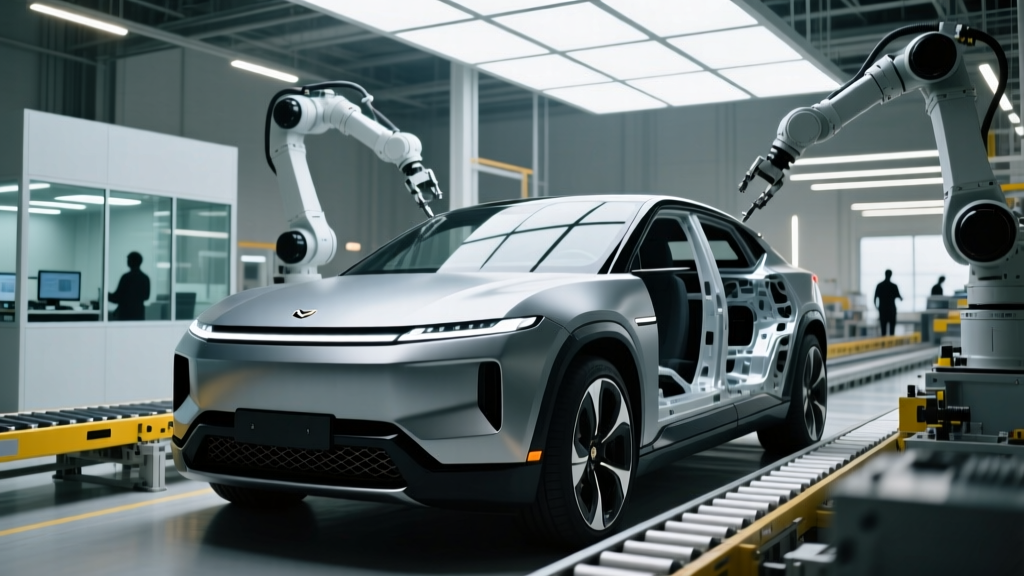
Rivian confirmed in early 2025 that it would accelerate R2 production by building a new assembly line inside its existing Normal, Illinois factory rather than waiting solely for its planned Georgia plant. This decision moved the production start forward to the first half of 2026, with first customer deliveries targeted for mid-2026. The Georgia facility remains in development for future capacity expansion.
As of the current production window, Rivian is in the pilot-build and tooling validation phase — meaning pre-production units are rolling off the line for crash testing, software validation, and EPA certification. Volume manufacturing for customer vehicles is expected to begin in earnest by Q2–Q3 2026. Rivian CEO RJ Scaringe has stated the company aims for a production rate capable of supporting the R2's high-volume ambitions, though exact monthly output figures during ramp-up have not been publicly confirmed.
Reservation holders who placed deposits (typically $1,000, refundable) are being contacted in waves based on configuration priority and delivery region. If you are not yet a reservation holder, expect availability to tighten as initial production slots fill.
EPA Range, Battery Chemistry, and Real-World Expectations
Rivian has announced the R2 will launch with multiple battery configurations. The headline numbers target a maximum EPA-estimated range of approximately 330 miles on the Long Range AWD variant, with a Standard Range model expected closer to 270 miles EPA. These figures are preliminary pending final EPA certification, which typically arrives just before or at launch.
EPA Estimate: ~330 miles (Long Range AWD, preliminary)
Expected Highway (70 mph): ~265–285 miles — highway driving at sustained speed reduces efficiency due to aerodynamic drag, which hits SUVs harder than sedans.
Cold-Weather (below 32°F): ~220–260 miles — expect 20–30% range reduction in freezing temperatures without preconditioning. The R2's heat pump (standard) helps mitigate cabin heating losses, but battery chemistry still suffers in deep cold.
Combined Real-World Expectation: Plan for ~270–295 miles in mixed moderate-weather driving.
Rivian has indicated the Standard Range R2 will use LFP (lithium iron phosphate) chemistry, while the Long Range will use NMC (nickel manganese cobalt). This is a significant distinction:
| Attribute | LFP (Standard Range) | NMC (Long Range) |
|---|---|---|
| Energy Density | Lower (~160 Wh/kg cell-level) | Higher (~250 Wh/kg cell-level) |
| Range | ~270 mi EPA (preliminary) | ~330 mi EPA (preliminary) |
| Charging to 100% | Recommended regularly | 80% daily; 100% for trips only |
| Cold Performance | Moderate loss | Better low-temp output |
| Cycle Life | 3,000+ cycles | 1,500–2,000 cycles |
| Cost | Lower | Higher |
| Cobalt Content | None | Contains cobalt |
For daily commuters who can charge at home nightly, the LFP Standard Range is arguably the smarter long-term pick — you can charge to 100% every day without degradation concerns, and LFP's superior cycle life means the battery will likely outlast the vehicle. Road-trippers and cold-climate buyers will benefit from the Long Range NMC's higher energy density and better cold-weather behavior.
Charging Speed: DC Fast Charging and Home Level 2
Charging infrastructure compatibility is where the R2 benefits from Rivian's early adoption of the NACS (North American Charging Standard) connector. The R2 will ship with a native NACS charge port, giving it direct access to the Tesla Supercharger network — the largest and most reliable DC fast-charging network in North America — without an adapter.
| Charging Level | Power / Voltage | Speed | Use Case |
|---|---|---|---|
| Level 1 (120V household) | ~1.4 kW | ~3–4 mi/hr | Emergency / trickle top-up |
| Level 2 (240V home) | ~11.5 kW (48A) | ~28–32 mi/hr | Daily home charging (~9–11 hrs for full charge) |
| DC Fast Charge | Peak ~200 kW (preliminary) | 10–80% in ~25 min | Road trips; tapers significantly above 80% |
Rivian has targeted a peak DC fast-charge rate of approximately 200 kW for the R2, though sustained rates will follow a charge curve — expect peak speeds between 10–50% SoC, with tapering beginning around 60% and significant slowdown above 80%. This is standard behavior for lithium-ion packs to protect cell health. On a road trip, plan your stops around the 10–80% window for the fastest sessions.
For home charging, a Level 2 wall connector on a 60-amp circuit (48A continuous) will deliver roughly 11.5 kW, adding about 30 miles of range per hour. Most owners will wake up to a full battery every morning. Installation costs for a Level 2 home setup typically range from $800–$2,500 depending on panel capacity and conduit run — factor this into your purchase budget.
Performance, Drivetrain, and Efficiency
The R2 will launch with multiple drivetrain configurations. Rivian has confirmed a dual-motor AWD variant as the volume seller, with a single-motor RWD expected to follow as the entry-level option. Performance targets for the dual-motor AWD:
| Specification | R2 Dual-Motor AWD (Long Range) | R2 Single-Motor RWD (est.) |
|---|---|---|
| Horsepower | ~450 hp (preliminary) | ~300 hp (preliminary) |
| 0–60 mph | ~4.5 seconds (preliminary) | ~6.0 seconds (preliminary) |
| Drivetrain | Dual-motor AWD | Single-motor RWD |
| EPA Range | ~330 mi (preliminary) | ~270 mi (preliminary) |
| Battery Usable Capacity | ~85 kWh (est.) | ~65 kWh (est.) |
| Efficiency (MPGe) | ~110 MPGe (est.) | ~120 MPGe (est.) |
| kWh/100 mi | ~30 kWh/100mi (est.) | ~28 kWh/100mi (est.) |
Efficiency figures are estimates pending EPA certification. For context, the Tesla Model Y Long Range AWD achieves 122 MPGe combined and 28 kWh/100mi, so Rivian will need to be competitive in this metric to win efficiency-minded buyers. The R2's more rugged, adventure-oriented design (higher ground clearance, boxier profile) may result in slightly lower efficiency than the Model Y's more aerodynamic shape.
Pricing, Trims, and Federal Tax Credit Eligibility
Rivian has targeted a starting MSRP of approximately $45,000 for the base R2, with higher trims climbing from there. Here's the expected pricing ladder:
| Trim / Configuration | Est. Base MSRP | §30D Credit Potential | Effective Price |
|---|---|---|---|
| R2 Standard Range RWD | ~$45,000 | Up to $7,500 | ~$37,500 |
| R2 Long Range AWD | ~$52,500 | Up to $7,500 | ~$45,000 |
| R2 Adventure / Premium Trim | ~$58,000+ | Up to $7,500 | ~$50,500+ |
Federal tax credit eligibility (IRS §30D) is not guaranteed for every buyer or every configuration. The following rules apply for 2026:
- MSRP Cap: SUVs must have an MSRP at or below $80,000 — the R2 should clear this easily across all trims.
- Buyer Income Cap: Modified adjusted gross income (MAGI) must not exceed $150,000 (single), $225,000 (head of household), or $300,000 (married filing jointly).
- Battery Sourcing: The credit splits into two $3,750 halves — one for critical minerals sourcing and one for battery component manufacturing. Both have escalating domestic-content requirements through 2026. Rivian's North American manufacturing helps, but specific battery cell sourcing will determine whether buyers get the full $7,500 or only $3,750.
- Point-of-Sale Transfer: As of 2024, buyers can transfer the credit to the dealer at purchase, reducing the upfront price rather than waiting for a tax refund. Confirm with Rivian at delivery whether this option is available.
- FEOC Restriction: Vehicles with battery components or critical minerals from a Foreign Entity of Concern (primarily Chinese supply chain) may be disqualified. This is the biggest variable for the R2.
For the most current rules, consult the IRS clean vehicle credits page and verify with a tax professional before purchase. Rivian's website should also list credit-eligible configurations once EPA certification is finalized.
Interior Space, Cargo, and Practicality
The R2 slots below the R1S in Rivian's lineup as a compact/midsize crossover, competing directly with the Tesla Model Y, Hyundai Ioniq 5, and Ford Mustang Mach-E in size. Expected interior dimensions:
- Cargo Volume (behind 2nd row): ~30–33 cu ft (est.)
- Cargo Volume (seats folded): ~65–70 cu ft (est.)
- Front Legroom: ~41 inches (est.)
- Rear Legroom: ~37–38 inches (est.)
- Seating: 5-passenger, 2-row standard
- Frunk (front trunk): Confirmed — expected ~5–7 cu ft, useful for charging cables and groceries
Rivian's design language emphasizes outdoor utility. Expect integrated features like a built-in air compressor (similar to the R1S/R1T), camp-ready power outlets, and potentially a gear tunnel option. The R2's adventure positioning means slightly more interior hard plastics and water-resistant materials compared to luxury-oriented competitors — a trade-off that suits active lifestyles but may disappoint those expecting Audi-level refinement.
Technology, Driver Assistance, and Standout Features
Rivian's software stack is one of its strongest competitive advantages. The R2 will ship with:
- Infotainment: Large central touchscreen (~15.4 inches est.), running Rivian's proprietary OS with over-the-air (OTA) update capability. No Apple CarPlay or Android Auto — Rivian uses its own native navigation and media apps, a choice that divides buyers.
- Driver Assistance: Rivian's Driver+ suite, featuring adaptive cruise control, lane-keeping assist, and highway lane-change assist. This is a SAE Level 2 system — the driver must remain engaged and hands on or near the wheel at all times. It is not autonomous driving.
- Unique Features: Gear Guard (integrated cable lock for charging), Camp Mode (climate control for sleeping), Dog Mode, and the Rivian Waypoints community-based trail navigation system.
- V2L (Vehicle-to-Load): Expected — allows the R2 to power external devices (camping equipment, tools, emergency backup) via built-in outlets.
Rivian Driver+ is an SAE Level 2 driver-assistance system. It can steer, accelerate, and brake under certain conditions, but the driver is legally and practically responsible for the vehicle at all times. Do not confuse this with Level 4 autonomous services like Waymo. Keep your eyes on the road.
Warranty Coverage
Rivian's warranty structure for the R1S/R1T sets a precedent for the R2. Expected coverage:
| Coverage | Term |
|---|---|
| Battery & Drive Unit (Powertrain) | 8 years / 175,000 miles (est., based on R1 precedent) |
| Battery Capacity Retention | ≥70% capacity through warranty period |
| Basic Vehicle (Bumper-to-Bumper) | 5 years / 60,000 miles |
| Corrosion Perforation | 5 years / unlimited miles |
| Roadside Assistance | 5 years / 60,000 miles |
The battery warranty is particularly important. Rivian's 70% capacity retention threshold is standard for the industry (Tesla uses the same). In practice, modern EV batteries with proper charging habits (avoiding frequent 100% charges on NMC, using LFP to 100% freely) typically retain 85–92% capacity at the 8-year mark based on data from existing EV fleets. The R2's thermal management system (liquid cooling with heat pump) should support strong long-term battery health.
Pros, Cons, and Who the R2 Is For
- Native NACS connector — direct Tesla Supercharger access
- LFP option for daily commuters (charge to 100% freely)
- Adventure-oriented features (air compressor, V2L, Gear Guard)
- Competitive ~330-mile range (Long Range)
- Strong OTA software update track record
- US-built in Normal, Illinois — supports §30D eligibility
- Frunk + generous cargo space for the segment
- Not yet in customer hands — production ramp risk remains
- No Apple CarPlay / Android Auto
- Full §30D credit depends on battery sourcing (unconfirmed)
- Slightly lower efficiency than Model Y due to boxier design
- DC fast-charge speed (~200 kW) trails Hyundai/Kia's 800V architecture (~240 kW)
- Service center network still expanding outside major metros
- Final EPA and pricing not yet certified
- Choose the R2 if: You want an adventure-capable compact EV SUV with native Supercharger access, value American manufacturing, need a frunk and V2L capability, and can wait for production ramp.
- Look at the Tesla Model Y if: You need a vehicle today, want maximum Supercharger network maturity, and prioritize efficiency and software integration over adventure features.
- Look at the Hyundai Ioniq 5 if: You want 800V ultra-fast charging (~18 min 10–80%), prefer a more car-like driving feel, and want Apple CarPlay support.
- Look at the Ford Mustang Mach-E if: You want sporty handling, a more traditional dealership service experience, and potentially faster delivery timelines.
Frequently Asked Questions
What is the real-world range of the Rivian R2?
The R2 Long Range AWD targets approximately 330 miles EPA, but real-world highway driving at 70 mph will likely yield 265–285 miles. In freezing weather, expect 220–260 miles. The Standard Range LFP variant targets ~270 miles EPA, with real-world expectations around 220–240 miles highway. These are preliminary figures pending EPA certification.
How fast does the Rivian R2 charge?
DC fast charging peaks at approximately 200 kW, with a 10–80% session taking roughly 25 minutes. At home on a Level 2 (240V, 48A) charger, the R2 will add about 30 miles of range per hour, fully charging overnight in 9–11 hours. Level 1 (120V) trickle charging adds 3–4 miles per hour — useful only for emergencies.
How much does the Rivian R2 cost after tax credits?
The base Standard Range RWD starts around $45,000 MSRP. If you qualify for the full $7,500 federal §30D credit (income caps, MSRP caps, and battery sourcing requirements all met), the effective price drops to approximately $37,500. The Long Range AWD at ~$52,500 MSRP would come to ~$45,000 after credit. Eligibility is not guaranteed — verify with the IRS and a tax professional.
Is the Rivian R2 worth buying vs. the Tesla Model Y?
The R2 and Model Y target overlapping buyers but with different priorities. The Model Y offers slightly better efficiency, a more mature service network, and immediate availability. The R2 counters with adventure features (V2L, air compressor, Gear Guard), a frunk, native NACS access, and an LFP battery option. If you value outdoor utility and want to support a newer American EV maker, the R2 is compelling. If you need a proven, available vehicle today, the Model Y remains the segment benchmark.
Does the Rivian R2 qualify for the federal EV tax credit?
It is expected to, but full eligibility depends on battery sourcing compliance with IRS §30D requirements. The R2 is built in the US (Normal, IL), which helps. However, the critical minerals and battery component sourcing rules are stringent and change annually. The R2's MSRP (well under the $80,000 SUV cap) and the buyer's income are the other variables. Confirm eligibility at the time of purchase.
When can I actually get a Rivian R2?
First customer deliveries are targeted for mid-2026, with production ramping through the second half of the year. Reservation holders will receive priority. If you place a reservation now, expect delivery in late 2026 or early 2027 depending on configuration demand and production rate.
What are the biggest risks of buying the R2 at launch?
Early-production vehicles from any manufacturer can have build-quality inconsistencies and software bugs. Rivian's R1S/R1T launch had documented early issues (panel gaps, software glitches) that were largely resolved through OTA updates and service campaigns within the first year. The R2 benefits from lessons learned, but first-year buyers should expect some patience with service as the network scales.