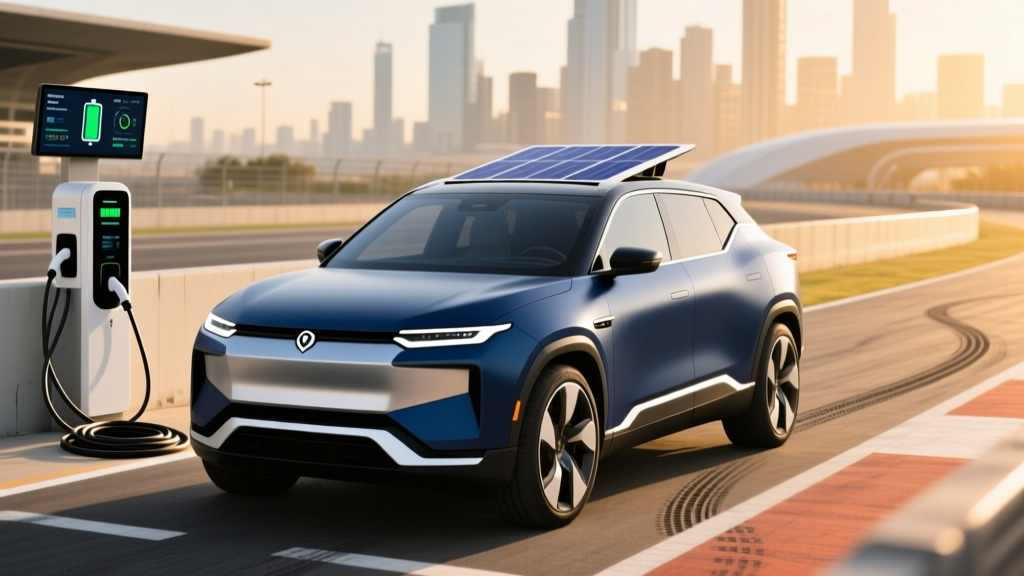
The Rivian R2 lineup delay has become a defining narrative for the automaker's compact electric SUV. Originally teased as a 2026 calendar-year launch, production timelines have shifted as Rivian ramps up its purpose-built Georgia manufacturing facility and finalizes supply-chain logistics for a vehicle meant to sell at a fraction of the R1S and R1T's price. For shoppers tracking this model, the delay raises practical questions: What are the preliminary specs? Will it still qualify for the federal EV tax credit? And is it worth waiting when competitors like the Tesla Model Y and Hyundai Ioniq 5 are on dealer lots today?
This profile compiles everything we know about the Rivian R2 as of mid-2026 — separating confirmed manufacturer data from estimates — so you can make an informed decision about reserving, waiting, or cross-shopping.
Preliminary Rivian R2 Specifications (2026 Model Year)
| Spec | Estimated / Confirmed |
|---|---|
| EPA Range (target) | 330+ miles (Dual-Motor AWD) |
| Battery Chemistry | LFP (Lithium Iron Phosphate) — Standard; NMC possible for Long Range |
| Battery Capacity | ~85–92 kWh usable (estimated) |
| Max DC Fast Charge | ~200–220 kW (peak, NACS connector) |
| 10–80% DC Charge Time | ~25–30 minutes (estimated) |
| Level 2 Home Charge Rate | 11.5 kW (~33 mi/hr added) |
| 0–60 mph | ~3.5 sec (Dual-Motor Performance); ~6.0 sec (Single-Motor RWD) |
| Horsepower | ~335 hp (Single-Motor); ~550+ hp (Dual-Motor) |
| Drivetrain Options | RWD (single-motor), AWD (dual-motor) |
| Base MSRP (target) | $45,000 (Single-Motor RWD) |
| MPGe (estimated) | ~115–125 MPGe combined |
| Cargo Volume | ~32 cu ft (rear seats up); ~65 cu ft (folded) + frunk |
| Seating | 5 passengers |
| Battery/Powertrain Warranty | 8 years / 100,000 miles (expected, per Rivian precedent) |
Note: All figures are preliminary based on Rivian announcements and industry analysis. Final EPA certification and MSRP will be confirmed closer to production start. The Rivian R2 is not yet available for retail purchase.
Understanding the Rivian R2 Lineup Delay
Rivian announced the R2 platform in March 2024 with an aggressive timeline: production beginning in 2026 at a new Georgia factory. Since then, the company has acknowledged a phased rollout, with initial units likely reserved for employee and fleet testing before retail deliveries begin. The delay stems from several converging factors:
- New factory commissioning: The Georgia plant requires tooling installation, paint-shop calibration, and quality-line validation — processes that routinely take 12–18 months.
- LFP battery supply chain: Sourcing LFP cells at the volume and cost needed for a $45,000 vehicle requires securing long-term supply agreements, primarily from CATL or similar manufacturers, which are subject to geopolitical and tariff variables.
- Software and ADAS validation: Rivian's in-house driver-assistance stack must complete millions of validation miles before deployment on a mass-market vehicle.
- NACS transition: The R2 will launch with the NACS (Tesla-style) charge port natively, requiring final validation with the broader Supercharger and third-party NACS network.
For buyers, the practical implication is that while reservations may open in late 2026 or early 2027, volume deliveries are unlikely before mid-to-late 2027. Rivian CEO RJ Scaringe has reiterated that the company prioritizes quality ramp over speed, a lesson learned from the R1T and R1S early-production growing pains.
Range and Efficiency: What to Expect in the Real World
EPA vs. Real-World Range
EPA Target: 330+ miles (Dual-Motor AWD, estimated)
Real-World Expectation: Plan for ~270–295 miles on highway road trips at 70–75 mph. In cold weather (below 32°F), expect a 15–25% reduction, bringing effective range to ~230–260 miles depending on cabin heating demands and terrain. City driving with regenerative braking will yield results closer to the EPA sticker, potentially exceeding 310 miles in mild conditions.
Rivian has targeted 330+ miles for the dual-motor AWD variant, which would place the R2 competitively against the Tesla Model Y Long Range (EPA 320 mi) and well ahead of most compact EV SUVs. The LFP chemistry in the standard-range model may carry a slightly lower energy density, meaning the base RWD variant could land closer to 270–290 miles EPA.
LFP batteries offer a distinct real-world advantage: they tolerate regular charging to 100% without the degradation concerns associated with NMC chemistries. This means daily commuters can charge fully each night without long-term battery health anxiety — a significant practical benefit for a mass-market vehicle. For more on LFP vs. NMC trade-offs, see our battery chemistry guide.
Charging Speed and Infrastructure
Charging speed is a make-or-break spec for EV buyers, and the R2 is designed to leverage the expanding NACS/Supercharger network. Here's what preliminary data suggests:
Estimated Charging Rates by Level
| Charge Level | Power | Miles Added per Hour | Use Case |
|---|---|---|---|
| Level 1 (120V household) | ~1.4 kW | ~4–5 mi/hr | Emergency / overnight trickle |
| Level 2 (240V home, 48A) | 11.5 kW | ~33 mi/hr | Daily home charging (full charge in ~8 hrs) |
| DC Fast Charge (peak) | ~200–220 kW | ~700+ mi/hr (peak) | Road trips: 10–80% in ~25–30 min |
The 10–80% DC fast-charge time of approximately 25–30 minutes is competitive but not class-leading. The Hyundai Ioniq 5, with its 800V architecture, achieves 10–80% in roughly 18 minutes at a 350 kW charger. The R2's 400V-class architecture means it won't hit those peaks, but 200+ kW is sufficient for practical road-trip charging — roughly a 150-mile range addition in 10 minutes.
Charging curve reality check: Peak kW is not sustained kW. Expect the R2 to hold peak charge rate from roughly 10–50% state of charge, then taper progressively through 80% and above. This is normal lithium-ion behavior, but it means a 10–90% charge will take considerably longer than extrapolating the 10–80% figure suggests. Plan road-trip stops around the 10–80% window for maximum efficiency.
The R2 will ship with a NACS charge port natively. Rivian owners already have access to Tesla Superchargers via the R1 adapter program, and the R2 will plug directly into the Supercharger network as well as Electrify America, EVgo, and ChargePoint stations equipped with NACS cables or adapters. For a full breakdown of home Level 2 installation costs, check our Level 2 install guide.
Performance, Drivetrain, and Capability
Rivian has built its reputation on dual-motor and quad-motor performance, and the R2 will continue that tradition in a more accessible package. Preliminary estimates suggest:
- Single-Motor RWD: ~335 hp, 0–60 mph in approximately 6.0 seconds. This is the volume trim, optimized for efficiency and the $45,000 price target.
- Dual-Motor AWD: ~550+ hp, 0–60 mph in approximately 3.5 seconds. This trim prioritizes all-weather traction and performance, likely starting around $52,000–$55,000.
The R2 sits on a new, smaller skateboard platform designed specifically for compact crossovers. Unlike the body-on-frame R1T, the R2 uses a unibody construction with a structural battery pack, lowering the center of gravity and improving ride quality for on-road comfort. Rivian has hinted at off-road capability retaining some of the brand's adventure DNA — likely through software-controlled torque vectoring and available all-terrain tires — but ground clearance and approach/departure angles remain unconfirmed.
Towing capacity is expected to land around 3,000–3,500 lbs, sufficient for a small utility trailer or a pair of jet skis but not in the R1T's 11,000-lb territory. For buyers who need serious towing, the R1S or a PHEV SUV remains a better fit.
Pricing, Trims, and Federal Tax Credit Outlook
Estimated Pricing and §30D Tax Credit Eligibility
| Trim | Est. MSRP | Est. After $7,500 Credit | Credit Eligibility |
|---|---|---|---|
| Standard RWD | $45,000 | $37,500 | Likely eligible (if sourcing rules met) |
| Dual-Motor AWD | $52,000–$55,000 | $44,500–$47,500 | Likely eligible (SUV MSRP cap: $80,000) |
| Performance AWD | $58,000–$62,000 (est.) | $50,500–$54,500 | Likely eligible |
The $45,000 starting price is the R2's headline number, positioning it as one of the most affordable electric SUVs from a U.S. automaker. As an SUV, the R2 falls under the IRS §30D $80,000 MSRP cap (not the $55,000 sedan cap), meaning all anticipated trims clear the price threshold with room to spare.
However, tax credit eligibility is not guaranteed. Under current IRS §30D rules, the R2 must meet:
- Battery component sourcing: A percentage of battery components must be manufactured or assembled in North America (thresholds increase annually).
- Critical minerals sourcing: A percentage of critical minerals must be sourced from the U.S. or free-trade-agreement partners.
- Buyer income limits: Modified adjusted gross income must not exceed $150,000 (single), $225,000 (head of household), or $300,000 (joint filers).
- Point-of-sale transfer: Eligible buyers can apply the $7,500 credit as a down-payment reduction at purchase, per the 2024 rule change.
Rivian's LFP battery strategy introduces a sourcing wildcard. If cells are sourced from Chinese manufacturers like CATL, the R2 may face challenges meeting the critical-minerals and foreign-entity-of-concern (FEOC) requirements. Rivian has signaled intent to qualify for the full credit, but final eligibility will depend on supply-chain decisions that may not be finalized until production begins. Always verify credit eligibility with a tax professional and the fueleconomy.gov tax credit database before purchasing.
Interior, Tech, and Driver Assistance
The R2's interior is expected to follow Rivian's minimalist, nature-inspired design language — a large central touchscreen (likely 15.6 inches), a compact digital instrument cluster, and sustainable materials throughout. Key anticipated tech features include:
- Rivian Driver+ (Level 2 ADAS): Adaptive cruise control, lane-centering, and hands-on-wheel highway assist. Rivian has been developing a hands-free system, but expect initial R2 models to ship with a supervised Level 2 system requiring driver engagement. This is not "self-driving" — it is an SAE Level 2 driver-assist feature.
- Over-the-air updates: Rivian's software platform supports continuous feature delivery, as demonstrated on the R1S/R1T.
- Adventure Network integration: Built-in route planning optimized for EV charging, trail maps, and campsite waypoints.
- V2L (Vehicle-to-Load): Likely included, enabling the R2 to power camping equipment, tools, or home appliances via built-in outlets.
- Gear Tunnel (possible): Rivian has patented a smaller version of the R1T's signature gear tunnel for the R2, though this is unconfirmed for production.
ADAS Limitation Notice
Rivian Driver+ and any hands-free highway assist on the R2 will be classified as SAE Level 2. The driver must remain attentive, keep hands on or near the wheel, and be prepared to take over at any time. This is not autonomous driving. Only Level 4 services like Waymo operate without a human driver.
Warranty and Long-Term Ownership
Rivian's existing R1 vehicles carry an 8-year/100,000-mile battery and powertrain warranty, and the R2 is expected to match or exceed this. For LFP-equipped models, the long-term outlook is favorable:
- LFP cycle life: LFP cells typically sustain 3,000–5,000+ charge cycles before reaching 80% capacity retention — far exceeding NMC. For an 85 kWh pack averaging 300 miles per cycle, that equates to 900,000+ miles of theoretical cycle life before meaningful degradation.
- Calendar aging: Real-world degradation is driven more by calendar age and temperature exposure than cycles. Expect 8–12% total capacity loss over 10 years under normal conditions.
- Warranty threshold: Rivian's warranty is expected to guarantee at least 70% capacity retention over 8 years/100,000 miles, consistent with industry norms and EPA/California ZEV requirements.
One ownership wildcard: Rivian's service-center network is still expanding. Buyers in rural or low-density states may face longer service wait times compared to legacy automakers with established dealer networks. Rivian has invested in mobile service vans, but coverage varies by region.
How the R2 Compares to Available Alternatives
If the Rivian R2 lineup delay pushes you to consider alternatives, here's how preliminary R2 specs stack up against available competitors:
| Spec | Rivian R2 (Est.) | Tesla Model Y LR | Hyundai Ioniq 5 LR AWD | Ford Mustang Mach-E ER AWD |
|---|---|---|---|---|
| EPA Range | 330+ mi | 320 mi | 290 mi | 290 mi |
| Battery (kWh) | ~85–92 | ~78 | 77.4 | 91 |
| DC Fast Charge (peak kW) | ~200–220 | 250 | 235 | 150 |
| 10–80% Time | ~25–30 min | ~22 min | ~18 min | ~38 min |
| 0–60 mph | ~3.5s (DM) | 4.8s | 5.1s | 4.8s |
| Base MSRP | $45,000 | $48,990 | $46,950 | $45,995 |
| Cargo (rear up / folded) | ~32 / ~65 cu ft | 30 / 72 cu ft | 27 / 59 cu ft | 29 / 60 cu ft |
| NACS Native | Yes | Yes | CCS (adapter avail.) | CCS (adapter avail.) |
The R2's projected range and pricing are compelling, but the Model Y and Ioniq 5 are available today with proven reliability records, established service networks, and confirmed tax-credit eligibility. The Ioniq 5's 800V architecture gives it a meaningful fast-charging advantage on road trips.
Pros and Cons
Pros
- Targeted 330+ mi range at a $45K starting price — best-in-class value if delivered
- LFP battery chemistry enables daily 100% charging without degradation worry
- Native NACS port for seamless Supercharger access
- Rivian's adventure-oriented software and brand identity
- Spacious cargo area for the compact SUV segment
- Likely eligible for full $7,500 federal tax credit (pending sourcing confirmation)
Cons
- Not yet available — Rivian R2 lineup delay pushes deliveries to late 2027 at earliest
- Unproven high-volume manufacturing track record for Rivian
- LFP battery supply chain may complicate tax-credit eligibility
- 400V architecture limits peak DC charge speed vs. 800V rivals
- Service network still expanding; rural coverage uncertain
- All specs preliminary — final EPA, pricing, and features unconfirmed
Who Should Wait for the Rivian R2 — and Who Shouldn't
Wait for the R2 if:
- You want a compact EV SUV under $50K with 330+ miles of range and don't need a vehicle within the next 12 months.
- You value Rivian's adventure brand, outdoor software features, and design language over immediate availability.
- You prefer LFP chemistry for its longevity and daily-charging tolerance.
- You're upgrading from a gas SUV in 2027–2028 and can plan ahead.
Buy now instead if:
- You need a vehicle in the next 6–12 months. The Tesla Model Y, Hyundai Ioniq 5, and Ford Mustang Mach-E are available today with confirmed specs, warranties, and tax-credit eligibility.
- You rely on fast DC charging for frequent road trips — the Ioniq 5's 18-minute 10–80% time is meaningfully quicker.
- You live in an area with limited Rivian service coverage and need dealer-proximate maintenance.
- You want guaranteed federal tax credit eligibility confirmed today, not pending future sourcing decisions.
Rivian R2 Frequently Asked Questions
What is the real-world range of the Rivian R2?
Rivian targets 330+ miles EPA for the dual-motor AWD variant. In real-world highway driving at 70–75 mph, expect approximately 270–295 miles. In cold weather below freezing, plan for 230–260 miles effective range. City driving with regenerative braking will yield results closer to the EPA sticker.
How fast does the Rivian R2 charge?
Preliminary estimates suggest a peak DC fast-charge rate of 200–220 kW, achieving 10–80% in approximately 25–30 minutes. Level 2 home charging at 11.5 kW (48A, 240V) adds roughly 33 miles per hour, completing a full charge overnight in about 8 hours.
How much does the Rivian R2 cost after tax credits?
The base single-motor RWD is targeted at $45,000 MSRP. If eligible for the full $7,500 federal §30D credit, the effective price drops to approximately $37,500. However, credit eligibility depends on battery sourcing, buyer income limits, and IRS rules that may change before the R2 enters production. Always verify with a tax professional.
Does the Rivian R2 qualify for the federal EV tax credit?
It is expected to qualify, but not guaranteed. The R2 falls under the $80,000 SUV MSRP cap and Rivian has expressed intent to meet §30D battery-sourcing requirements. However, LFP cell sourcing from non-FTA countries could complicate eligibility. Final determination will depend on the supply chain in place at production start. Check fueleconomy.gov and the IRS §30D guidelines before purchasing.
Is the Rivian R2 worth waiting for vs. the Tesla Model Y or Hyundai Ioniq 5?
If you can wait until late 2027 or 2028, the R2's combination of 330+ mile range, $45K price, LFP battery, and native NACS charging is compelling. If you need a vehicle sooner, the Model Y (320 mi, $48,990) and Ioniq 5 (290 mi, $46,950, fastest charging in class) are proven alternatives available today with confirmed tax-credit eligibility.
When will the Rivian R2 actually be available?
Rivian has not confirmed a firm retail delivery date. The Rivian R2 lineup delay has pushed initial production to its Georgia facility, with limited output expected in 2026 and volume deliveries likely in 2027. Reservation holders will receive updates as the timeline solidifies.