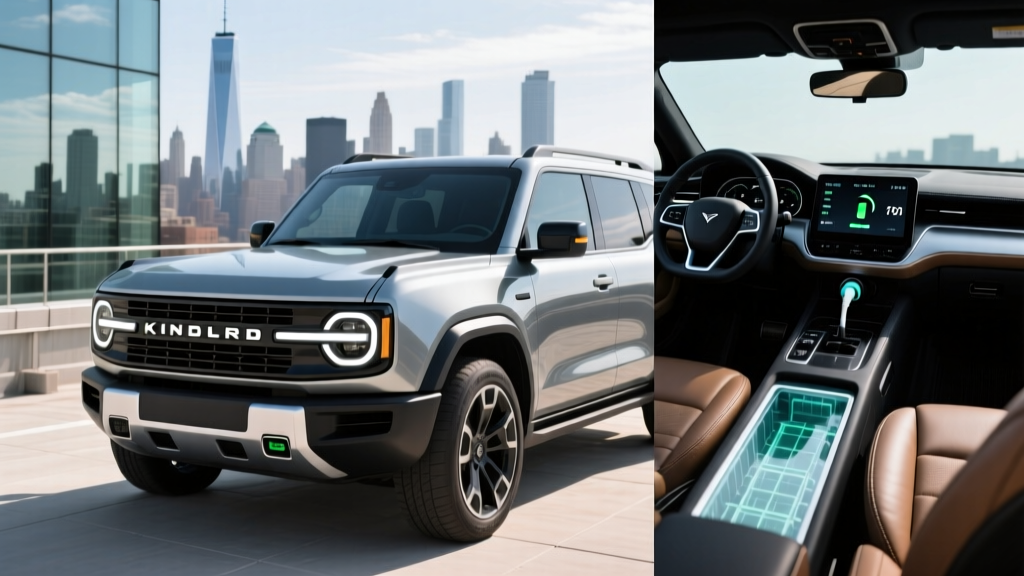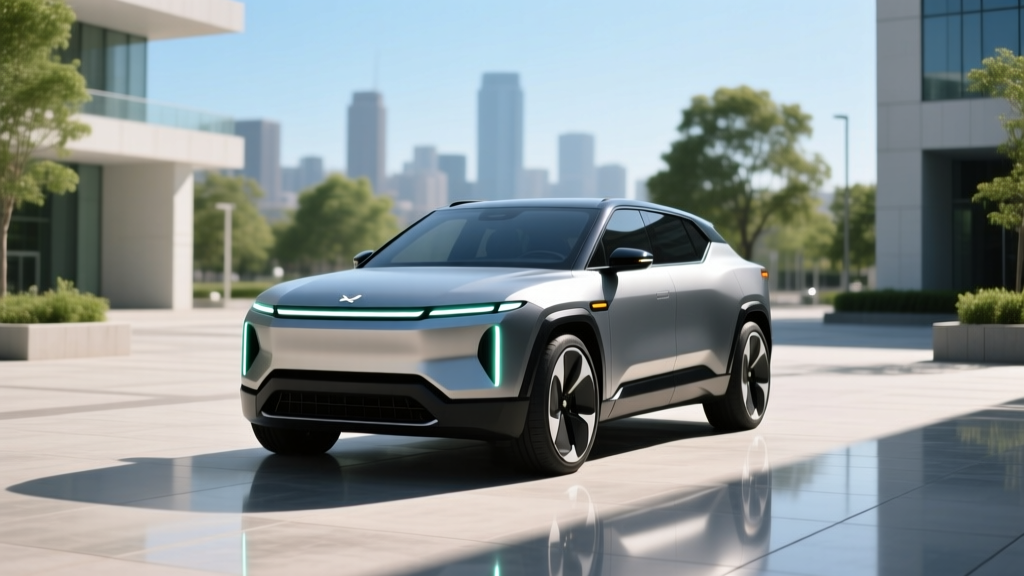
The compact electric SUV segment is about to get a serious new contender. After years of anticipation, concept reveals, and production-line preparations at Rivian's Normal, Illinois factory, the Rivian R2 launch date has officially been targeted for the first half of 2026. CEO RJ Scaringe confirmed in late 2024 that the R2 would begin rolling off the assembly line in early 2026, with customer deliveries following shortly after. For buyers who've been eyeing a sub-$50,000 electric SUV with genuine off-road chops and Rivian's signature adventure-oriented design, the wait is nearly over.
But announced specs and production realities are two different things. Below, we break down everything confirmed (and clearly labeled as preliminary) about the 2026 Rivian R2 — from expected EPA range and battery chemistry to DC fast-charging speeds, interior space, and whether it will qualify for the federal §30D tax credit under current IRS rules.
Rivian R2 Launch Timeline: What's Confirmed for 2026
Rivian has been deliberate about the R2 rollout. Unlike the R1S and R1T, which launched on a brand-new production line, the R2 will be built on a newly constructed mid-size platform within the existing Normal facility — a move that required significant retooling but allows Rivian to scale volume faster. Here's the confirmed timeline:
- Q1 2026: Production begins at the Normal, IL factory on the new mid-size line
- Q2 2026: First customer deliveries expected (reservation holders prioritized)
- Mid-to-Late 2026: Broader retail availability as production ramps
- 2027+: Planned production at Rivian's upcoming Stanton, Georgia facility
Reservations opened in early 2024 with a refundable $1,000 deposit, and Rivian has reported hundreds of thousands of reservation holders. If you're not on the list, expect to join a waitlist once initial reservation fulfillment is complete.
Expected Range, Battery, and Efficiency
The R2 will launch with multiple battery and drivetrain configurations. Rivian has confirmed a starting EPA-estimated range target of over 300 miles for the largest battery pack variant, though the exact EPA certification number has not been published as of this writing. Based on Rivian's engineering disclosures and the vehicle's estimated aerodynamic profile, here's what we can project:
Expected EPA Estimate: 315+ miles (Large Pack AWD)
Real-World Highway (70-75 mph): ~260–280 miles
Cold Weather (below 30°F): ~220–250 miles (expect 20–30% reduction typical of NMC packs without aggressive preconditioning)
City/Mixed Commuting: ~290–310 miles (regen braking recovers energy in stop-and-go)
Note: Final EPA certification figures will be published on fueleconomy.gov once the R2 completes testing. Numbers above are projections based on Rivian's stated targets and comparable-class SUV efficiency.
Battery capacity and chemistry: Rivian has confirmed the R2 will use a new, structurally integrated battery pack. The Large Pack variant is expected to offer approximately 85–92 kWh usable capacity, likely using NMC (nickel manganese cobalt) chemistry in the initial launch trims for maximum energy density. A Standard Pack (estimated 65–72 kWh) is expected to follow, potentially using LFP (lithium iron phosphate) chemistry — which sacrifices some range for lower cost, longer cycle life, and the ability to charge routinely to 100% without degradation concerns. Rivian has not officially confirmed chemistry splits by trim as of this writing.
Expected efficiency: Based on the R1S's EPA-rated combined efficiency of roughly 2.0–2.2 kWh/mile and the R2's smaller, lighter platform (estimated ~4,700 lbs curb weight vs. the R1S's ~5,900 lbs), we project the R2 Large Pack AWD at approximately 105–115 MPGe combined, or roughly 29–32 kWh/100 miles.
| Spec | Standard Pack RWD (Est.) | Large Pack AWD (Est.) | Performance AWD (Est.) |
|---|---|---|---|
| Battery (usable kWh) | ~65–72 kWh | ~85–92 kWh | ~85–92 kWh |
| Chemistry | LFP (likely) | NMC | NMC |
| EPA Range (est.) | ~240–260 mi | ~315+ mi | ~290–305 mi |
| 0–60 mph | ~7.0 sec | ~5.0 sec | ~3.5 sec |
| Horsepower | ~280 hp | ~450 hp | ~600+ hp |
| Drivetrain | Single-motor RWD | Dual-motor AWD | Tri-motor AWD |
| Expected Base MSRP | ~$45,000 | ~$52,000 | ~$58,000+ |
Charging Speed: DC Fast Charge and Home Level 2
Charging speed is where the R2 needs to compete directly with the Tesla Model Y, Hyundai Ioniq 5, and Kia EV6. Rivian has confirmed the R2 will ship with the NACS (North American Charging Standard) connector natively — no adapter needed for Tesla Superchargers. This is a significant advantage for road-trip charging infrastructure access in 2026.
Here's what we expect based on Rivian's disclosed 800V-capable architecture targets and the new mid-size platform's electrical design:
| Charging Level | Power / Rate | Speed / Time | Notes |
|---|---|---|---|
| Level 1 (120V household) | ~1.4 kW | ~3–4 mi/hr | Emergency/trickle only |
| Level 2 (240V home, 48A) | ~11.5 kW | ~30–35 mi/hr; full charge in ~8–9 hrs | Requires NACS wall connector or J1772-to-NACS adapter |
| DC Fast Charge (peak) | ~200–220 kW peak (Large Pack) | 10–80% in ~22–25 min | Expect taper above 80%; preconditioning critical |
Charging-curve reality check: As with all EVs, the R2's peak DC charge rate of ~200–220 kW will not be sustained across the entire 10–80% window. Expect the curve to peak between 10–40% SoC and taper progressively. The 10–80% time of ~22–25 minutes assumes proper battery preconditioning (the R2's navigation system should automatically condition the pack when a charger is set as your destination). Without preconditioning — for example, pulling into a charger with a cold-soaked battery — add 5–10 minutes to that estimate.
Home charging setup: Rivian sells its own Wall Charger (NACS, up to 11.5 kW / 48 amps). For a typical installation on an existing 200-amp electrical panel with the charger within 50 feet of the panel, expect to pay roughly $500–$800 for the charger and $800–$2,000 for professional electrician installation. If your home needs a panel upgrade (common in older homes), add $1,500–$3,000. Always get a quote from a licensed electrician before committing.
Performance, Drivetrain, and Capability
Rivian built its reputation on dual- and quad-motor AWD systems with genuine off-road capability, and the R2 will carry that DNA into a more accessible package. The confirmed and projected performance specs:
- Single-motor RWD: The base R2 will be Rivian's first rear-wheel-drive vehicle, targeting ~280 hp and a ~7.0-second 0–60 mph time. This is the efficiency-and-price leader of the lineup.
- Dual-motor AWD: The volume seller, with ~450 hp, ~5.0-second 0–60, and Rivian's torque-vectoring AWD system with multiple drive modes (All-Purpose, Snow, Sport, and the expected Off-Road/Soft Sand modes).
- Performance (tri-motor): Expected to push 600+ hp with a sub-3.5-second 0–60, competing directly with the Tesla Model Y Performance and Porsche Macan EV.
Towing and payload: Rivian has targeted a 3,300-pound towing capacity for the AWD R2 — sufficient for a small boat, utility trailer, or a pair of dirt bikes. This is less than the R1T/R1S (up to 7,700 lbs) but competitive for the compact SUV class. Payload is expected around 1,100 lbs.
Ground clearance and off-road: The R2 will feature Rivian's gear tunnel storage concept (scaled down from the R1T) and is expected to offer approximately 8.5–9.5 inches of ground clearance, with approach/departure angles suitable for forest roads and moderate trail use. An available air suspension system (confirmed for higher trims) should add adjustable ride height.
Interior Space, Cargo, and Daily Practicality
The R2 sits on a wheelbase approximately 10 inches shorter than the R1S, placing it firmly in the compact-to-midsize crossover segment alongside the Tesla Model Y and Ford Mustang Mach-E. Here's what to expect in terms of interior dimensions:
- Seating: 5 passengers (2 rows — no third-row option, unlike the R1S)
- Rear legroom: ~37–39 inches (projected — competitive with Model Y's 37.2 inches)
- Cargo behind 2nd row: ~28–32 cu ft (estimated)
- Cargo with 2nd row folded: ~65–72 cu ft (estimated)
- Front trunk (frunk): Confirmed — expect ~8–10 cu ft, weather-sealed and drainable (a Rivian hallmark)
- Gear tunnel: A scaled-down version of the R1T's transverse tunnel, accessible from both sides — ideal for charging cables, recovery gear, or a week's groceries
Infotainment and tech: The R2 will feature a 15.4-inch center touchscreen running Rivian's proprietary infotainment OS (no Apple CarPlay or Android Auto — Rivian has maintained its stance on native software integration). A compact digital driver display, over-the-air updates, built-in navigation with charge-route planning, and a premium audio system (expected 12+ speakers on higher trims) round out the tech stack.
Driver assistance: Rivian's Driver+ suite will be standard, offering adaptive cruise control, lane-centering, automatic emergency braking, blind-spot monitoring, and rear cross-traffic alert. This is an SAE Level 2 driver-assistance system — the driver must remain attentive with hands on the wheel. Rivian has indicated a hands-free highway driving feature (comparable to GM's Super Cruise or Ford's BlueCruise) is in development for future OTA delivery, but it will not be available at launch.
Rivian Driver+ is an SAE Level 2 system. It assists with steering and speed control on highways but requires continuous driver supervision. It is not self-driving. You must keep your hands on the wheel and eyes on the road at all times. Any "hands-free" feature added via future OTA will be limited to pre-mapped divided highways and will still require driver attention.
Pricing, Trims, and Federal Tax Credit Eligibility
Rivian's stated goal for the R2 is a starting MSRP of approximately $45,000 for the base Standard Pack RWD model. However, early-production vehicles in 2026 are expected to be higher-trim, higher-price configurations — a pattern we've seen with nearly every EV launch. Here's the projected pricing ladder:
| Trim | Est. MSRP | §30D Credit (Max) | Est. Net Price |
|---|---|---|---|
| Standard Pack RWD | ~$45,000 | Up to $7,500* | ~$37,500 |
| Large Pack AWD | ~$52,000 | Up to $7,500* | ~$44,500 |
| Performance AWD | ~$58,000+ | Up to $7,500* | ~$50,500+ |
*Federal §30D tax credit eligibility — critical caveats: The R2's eligibility for the full $7,500 credit depends on several factors that are actively evolving under current IRS rules:
- MSRP cap: SUVs must have an MSRP at or below $80,000. All announced R2 trims clear this threshold comfortably.
- Buyer income cap: Modified adjusted gross income must not exceed $150,000 (single), $225,000 (head of household), or $300,000 (joint filers).
- Battery component sourcing: A percentage of battery components must be manufactured or assembled in North America, and critical minerals must be sourced from the U.S. or FTA partners. These thresholds increase annually. Rivian's U.S.-based manufacturing is an advantage, but specific cell and mineral sourcing for the R2's new battery pack has not been publicly detailed.
- FEOC exclusion: Vehicles with battery components from a "foreign entity of concern" (e.g., certain Chinese suppliers) are disqualified. This is the most volatile rule and has eliminated several competitors' credit eligibility in 2024–2025.
- Point-of-sale transfer: Under current rules, you can transfer the credit to the dealer at purchase, effectively reducing your out-of-pocket cost at the time of sale rather than waiting to claim it on your tax return.
Bottom line: The R2's U.S. manufacturing gives it a structural advantage for §30D eligibility, but battery sourcing specifics will determine whether buyers get the full $7,500, a partial $3,750, or nothing. Check the fueleconomy.gov tax credit database once the R2 receives official certification, and consult a tax professional for your personal situation.
Warranty Coverage and Battery Longevity
Rivian is expected to mirror or slightly improve upon the R1S/R1T warranty structure for the R2:
- Battery & drive unit warranty: 8 years / 100,000 miles (minimum, per EPA/CARB standards for emissions-related EV components). Rivian has historically offered 8 years / 175,000 miles on the R1 series battery and drive units — a best-in-class benchmark. Expect the R2 to follow suit, though Rivian has not published final R2 warranty terms.
- Bumper-to-bumper: 5 years / 60,000 miles (estimated, matching R1 coverage)
- Capacity retention guarantee: Rivian's R1 warranty covers the battery if it falls below 70% state of health within the warranty period. A similar threshold is expected for the R2.
For context, Tesla covers the Model Y battery at 8 years / 120,000 miles with a 70% retention threshold. Hyundai covers the Ioniq 5 at 10 years / 100,000 miles. Rivian's 175,000-mile battery warranty on the R1 series, if matched on the R2, would be among the longest in the segment.
R2 vs. the Competition: How It Stacks Up
The R2 enters one of the most competitive segments in the EV market. Here's how it positions against the key rivals buyers are cross-shopping:
| Attribute | Rivian R2 AWD (Est.) | Tesla Model Y LR AWD | Hyundai Ioniq 5 AWD |
|---|---|---|---|
| EPA Range | ~315+ mi | 311 mi | 290 mi |
| DC Fast Charge (10–80%) | ~22–25 min | ~25–28 min | ~18 min |
| 0–60 mph | ~5.0 sec | 4.8 sec | 5.1 sec |
| Base MSRP (AWD) | ~$52,000 | ~$48,000 | ~$49,500 |
| Connector | NACS (native) | NACS (native) | CCS1 (NACS adapter avail.) |
| Towing Capacity | ~3,300 lbs | 3,500 lbs | 2,300 lbs |
| Off-Road Capability | High (air susp., modes) | Low | Low |
| Frunk | Yes (~9 cu ft) | Yes (~4.1 cu ft) | Yes (~2.0 cu ft) |
| Battery Warranty | 8 yr / ~175,000 mi (est.) | 8 yr / 120,000 mi | 10 yr / 100,000 mi |
- You want genuine off-road capability in a compact EV (air suspension, drive modes, 9+ inches of ground clearance)
- A large, drainable frunk and gear tunnel storage matter for your outdoor lifestyle
- You value a class-leading battery warranty and U.S.-built manufacturing
- Native NACS / Supercharger access without an adapter is a priority
- Lowest price in the AWD segment and proven Supercharger reliability are paramount
- You want the most mature OTA update ecosystem and largest service network
- Fastest DC charging speed (18-minute 10–80%) matters most for your road-trip habits
- You want V2L (vehicle-to-load) capability to power devices from your car
Pros, Cons, and the Bottom Line
- 315+ mile range (Large Pack) is class-competitive
- Native NACS — full Supercharger network access
- Best-in-class off-road capability for the segment
- Large frunk + gear tunnel = real adventure utility
- Likely best-in-class battery warranty (8yr/175k mi)
- U.S.-built, strong §30D credit prospects
- Distinctive, non-generic design
- Early-production models will be higher-priced trims only
- Reservation backlog may mean long waits for non-depositors
- DC fast charging (~22–25 min) trails Ioniq 5/EV6
- No Apple CarPlay / Android Auto
- Rivian's service center network is still expanding
- Hands-free driving assist not available at launch
- Real-world cold-weather range unproven on this platform
Who the R2 suits best: The Rivian R2 is built for the outdoor-active family or individual who wants a daily-drivable electric SUV that can also handle weekend forest roads, ski trips, and camping runs without compromise. It's for buyers who've been cross-shopping the Model Y but find it too generic, or who looked at the R1S and found it too large and too expensive. If your use case is primarily urban commuting with occasional road trips, the R2 works — but you may be paying for off-road capability you'll rarely use, and a Model Y or Ioniq 5 could be a more cost-effective choice.
Frequently Asked Questions
When exactly will the Rivian R2 be available to buy?
Rivian has targeted production start in Q1 2026, with first customer deliveries in Q2 2026. However, initial availability will be limited to reservation holders. Walk-in retail availability without a reservation is not expected until mid-to-late 2026 at the earliest, depending on production ramp speed.
What is the real-world range of the Rivian R2?
The Large Pack AWD variant is expected to achieve an EPA-estimated 315+ miles. In real-world highway driving at 70–75 mph, expect approximately 260–280 miles. In cold weather (below 30°F), plan for 220–250 miles. These are projections pending official EPA certification.
How fast does the R2 charge at home and on the road?
At home on a 240V Level 2 charger (48A / 11.5 kW), the R2 should add roughly 30–35 miles of range per hour, with a full charge taking 8–9 hours. On a DC fast charger, the Large Pack is expected to peak at ~200–220 kW, achieving a 10–80% charge in approximately 22–25 minutes with proper battery preconditioning.
Will the Rivian R2 qualify for the $7,500 federal tax credit?
The R2 has strong structural eligibility: it's built in the U.S., its MSRP is well under the $80,000 SUV cap, and most buyers will fall within income limits. However, the final credit amount ($7,500, $3,750, or $0) depends on battery component and critical-mineral sourcing requirements that Rivian has not publicly detailed for the R2's new battery pack. Verify on fueleconomy.gov once certified and consult a tax professional.
Is the R2 worth waiting for vs. buying a Model Y or Ioniq 5 now?
If you value off-road capability, a distinctive design, a large frunk, and what's likely to be a best-in-class battery warranty, the R2 offers something neither the Model Y nor Ioniq 5 can match. If you need a car today, want the lowest price, or prioritize the fastest DC charging, the Model Y and Ioniq 5 are proven, available, and credit-eligible now. The R2 is worth the wait if its unique strengths align with your lifestyle — just be prepared for early-production pricing and potential delivery delays.
Does the Rivian R2 have Apple CarPlay or Android Auto?
No. Rivian uses its proprietary infotainment operating system and has not announced plans to support Apple CarPlay or Android Auto. The native system includes built-in navigation with EV charge routing, streaming media apps, and over-the-air updates.
Can I reserve an R2 now, and what does it cost?
Yes — reservations are open on Rivian's website with a $1,000 refundable deposit. Reservation holders will be prioritized for early production slots in 2026. New reservations placed now may not result in delivery until late 2026 or 2027, depending on demand and production rate.