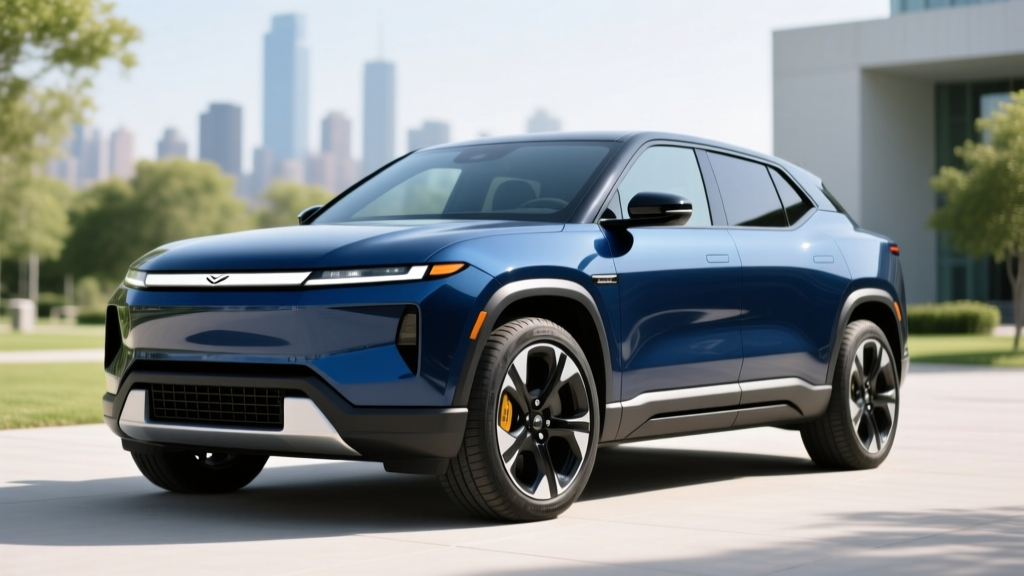
The Rivian R2 is the automaker's most consequential vehicle yet. Smaller and more affordable than the R1S and R1T, the R2 targets the heart of the EV market: compact electric SUVs currently dominated by the Tesla Model Y and Hyundai Ioniq 5. But for buyers considering this vehicle, practical questions go well beyond range and price. One of the most searched specs is the Rivian R2 height — a dimension that affects everything from garage fitment and roof-rack cargo to driver visibility and aerodynamic efficiency.
As of early 2026, the R2 is in production ramp-up at Rivian's Normal, Illinois facility, with first customer deliveries beginning mid-2026. Below, we compile everything confirmed about the R2's dimensions, powertrain, charging architecture, pricing, and ownership profile — separating published specs from estimates where necessary.
Rivian R2 Height and Exterior Dimensions
Rivian has confirmed the R2 rides on a completely new mid-size platform, shorter and narrower than the R1S. The Rivian R2 height is approximately 65.6 inches (without roof rails), making it notably lower than the R1S (~73.0 inches) and competitive with other compact crossover EVs. This lower roofline contributes to improved aerodynamics and helps the R2 achieve its targeted EPA range figures.
| Dimension | Rivian R2 | Rivian R1S (Gen 2) | Tesla Model Y |
|---|---|---|---|
| Height | ~65.6 in | ~73.0 in | 63.9 in |
| Length | ~180.0 in | ~200.8 in | 187.0 in |
| Width (excl. mirrors) | ~75.0 in | ~81.8 in | 75.6 in |
| Wheelbase | ~113.0 in | ~121.1 in | 113.8 in |
| Ground Clearance | ~8.0 in (est.) | ~8.7 in (max) | 6.6 in |
Garage fitment note: At 65.6 inches (~5 feet 5.6 inches), the R2 fits comfortably in standard US residential garages with 7-foot or 8-foot ceilings. If you plan to add a roof box or crossbars, factor in an additional 4–8 inches. Buyers with low-clearance parking structures should measure carefully, especially with optional larger wheel/tire packages that may slightly alter ride height.
The R2's lower height compared to the R1S also translates to a lower step-in height, which improves daily usability for families with young children and older passengers. Rivian has designed the R2 with a more car-like driving position rather than the commanding, truck-like perch of the R1S.
Range, Battery, and Efficiency
Real-World Expectation: Plan for roughly 260–290 miles on sustained highway driving at 70–75 mph. In cold weather (below 32°F), expect a 20–30% reduction — meaning winter highway range could drop to 200–240 miles depending on conditions and cabin heating demands. City driving with regenerative braking recovers some efficiency.
The R2 uses a new, smaller battery pack than the R1 platform. Rivian has confirmed the base Standard Range model will use a ~75 kWh usable lithium iron phosphate (LFP) battery, while the Dual-Motor variants will likely use a higher-energy ~90 kWh NMC (nickel manganese cobalt) pack. The LFP chemistry in the base model is a significant detail: LFP cells tolerate daily charging to 100% without accelerated degradation, making them ideal for commuters who want maximum available range every morning. The trade-off is slightly lower energy density and somewhat slower DC fast-charging speeds compared to NMC.
| Spec | Standard Range (RWD) | Dual-Motor AWD | Performance AWD (est.) |
|---|---|---|---|
| Battery Capacity (usable) | ~75 kWh (LFP) | ~90 kWh (NMC) | ~90 kWh (NMC) |
| EPA Range (est.) | ~330 mi | ~315 mi | ~290 mi |
| Horsepower | ~335 hp | ~500 hp | ~600 hp |
| 0–60 mph | ~6.0 sec | ~4.5 sec | ~3.5 sec |
| Drivetrain | RWD | AWD (dual-motor) | AWD (dual-motor) |
| Efficiency (est.) | ~120 MPGe | ~110 MPGe | ~100 MPGe |
Rivian has not yet published final MPGe or kWh/100-mile figures as confirmed by fueleconomy.gov, so the efficiency numbers above are estimates based on the vehicle's weight class, aerodynamic profile, and comparable EVs. We'll update this review once EPA certification data is available.
Charging Speed: DC Fast Charge and Home Level 2
Charging speed is a defining ownership factor for any EV, and the R2 brings meaningful capability — though with important nuances tied to battery chemistry.
| Charging Level | Standard Range (LFP) | Dual-Motor (NMC) | Miles Added per Hour |
|---|---|---|---|
| Level 1 (120V, 12A) | ~1.4 kW | ~1.4 kW | ~4–5 mi/hr |
| Level 2 (240V, 48A) | ~11.5 kW | ~11.5 kW | ~35–40 mi/hr |
| DC Fast Charge (peak) | ~175 kW | ~225 kW | — |
| 10–80% DCFC Time | ~30 min (est.) | ~22 min (est.) | — |
The LFP-equipped Standard Range model will charge at a lower peak DC rate than the NMC Dual-Motor variants — this is a well-understood characteristic of LFP chemistry. Peak charge rate is not sustained rate: the NMC pack will hit ~225 kW at a low state of charge, but the charge curve will taper significantly above 60–70% SoC, which is why the 10–80% metric is the most useful real-world benchmark.
Preconditioning matters. The R2 includes battery preconditioning when you navigate to a DC fast charger. Without preconditioning — especially in cold weather — peak charge rates may be cut by 40–50%. Always route through the vehicle's navigation to a fast charger to activate thermal prep.
For home charging, a 48-amp Level 2 wall connector on a 60-amp circuit will fully replenish the R2 overnight in roughly 7–9 hours depending on pack size. Installation costs for a Level 2 home setup typically range from $500 to $2,500 depending on whether your electrical panel needs an upgrade. We recommend getting a quote from a licensed electrician before purchase.
Interior Space, Cargo, and Practicality
The R2's compact exterior footprint belies a surprisingly spacious cabin, thanks to its dedicated EV skateboard platform with no transmission tunnel or engine bay intrusion. Rivian has confirmed seating for five adults, with a focus on maximizing rear-seat legroom relative to the vehicle's overall length.
| Measurement | Rivian R2 | Tesla Model Y | Hyundai Ioniq 5 |
|---|---|---|---|
| Front Headroom | ~40.0 in | 41.0 in | 39.6 in |
| Rear Legroom | ~38.0 in | 41.6 in | 39.4 in |
| Cargo (rear seats up) | ~28 cu ft | 30.2 cu ft | 27.2 cu ft |
| Cargo (rear seats folded) | ~65 cu ft | 72.0 cu ft | 59.3 cu ft |
| Front Trunk (Frunk) | ~10 cu ft | 4.1 cu ft | 2.0 cu ft |
Rivian's signature frunk (front trunk) carries over to the R2, though in a smaller form factor. It remains a practical feature for stowing charging cables, groceries, or gear you want separated from the main cabin. The R2 also features Rivian's Gear Tunnel concept adapted for the smaller platform — integrated storage solutions that maximize the compact footprint.
Towing: Rivian has indicated the R2 will offer a towing capacity of approximately 3,300 pounds when properly equipped — sufficient for small campers, jet skis, or utility trailers but well below the R1T's 11,000-pound rating.
Pricing, Trims, and Federal Tax Credit Eligibility
The R2's pricing is its headline act. Rivian has positioned it to undercut the R1S significantly and compete directly with the Model Y and Ioniq 5 on price, especially after federal incentives.
| Trim | Base MSRP | Est. §30D Credit | Effective Price |
|---|---|---|---|
| Standard Range (RWD) | ~$45,000 | Up to $7,500* | ~$37,500 |
| Dual-Motor AWD | ~$52,000 | Up to $7,500* | ~$44,500 |
| Performance AWD | ~$58,000 | Up to $7,500* | ~$50,500 |
*Federal tax credit caveats (IRS §30D): The $7,500 credit is not automatic. Under current IRS rules, eligibility depends on:
- MSRP cap: SUVs must have an MSRP at or below $80,000 — the R2 clears this easily across all trims.
- Buyer income cap: Modified adjusted gross income must not exceed $150,000 (single), $225,000 (head of household), or $300,000 (joint filers).
- Battery sourcing: Critical minerals and battery components must meet phased-in percentage thresholds from US or free-trade-agreement partners. Rivian has been working to qualify its supply chain, but the specific credit amount ($3,750 for minerals, $3,750 for components) may vary by build date.
- Point-of-sale transfer: Buyers can elect to transfer the credit to the dealer at purchase, reducing the upfront price rather than waiting for a tax refund.
Always verify current-year eligibility on irs.gov or consult a tax professional before making a purchase decision based on credit assumptions.
Technology, Driver Assistance, and Software
The R2 inherits Rivian's vertically integrated software stack, which has been one of the brand's strongest differentiators. The cabin features a large central touchscreen (estimated 15+ inches), a digital driver display, and over-the-air update capability that continuously adds features post-purchase.
Driver assistance: The R2 ships with Rivian Driver+, a Level 2 SAE driver-assistance system offering adaptive cruise control, lane-centering, and automatic emergency braking. Rivian has also announced plans for a hands-free highway driving feature, though availability at launch remains unconfirmed.
Rivian Driver+ requires the driver to remain fully engaged, with hands on or near the wheel and eyes on the road at all times. This is the same automation level as Tesla Autopilot, Ford BlueCruise, and GM Super Cruise. It does not replace the driver.
Other notable tech features include:
- Native NACS (Tesla-style) charge port — no adapter needed at Superchargers
- Vehicle-to-load (V2L) capability for powering accessories or devices
- Digital key via smartphone, with no traditional key fob required
- Camp Kitchen and adventure accessory compatibility (scaled for R2)
- Integrated trail mapping and off-road navigation for adventure use
Drawbacks to note: Rivian's service center network remains smaller than legacy automakers or Tesla, meaning owners in rural areas may face longer service wait times. The R2's pricing, while competitive after credits, still sits above budget EVs. And as a first-year model on a new platform, early production vehicles may experience teething issues common to any new launch.
Warranty Coverage
Rivian is expected to carry over its warranty structure from the R1 platform to the R2:
- Battery & Drive Unit: 8 years / 100,000 miles (whichever comes first), with a capacity retention threshold typically set at 70% of original capacity.
- Bumper-to-Bumper: 5 years / 60,000 miles.
- Roadside Assistance: 5 years / 60,000 miles.
The 8-year battery warranty is industry-standard and aligns with Tesla, Hyundai, and Ford EV coverage. LFP battery owners may find their packs outlast the warranty period with minimal degradation, as LFP chemistry is known for superior cycle life compared to NMC.
Pros, Cons, and Who the R2 Is For
- Strong EPA range (~315–330 mi) in a compact SUV footprint
- LFP option allows daily 100% charging without degradation worry
- Native NACS port — full Supercharger network access
- Generous frunk and adventure-ready design
- Competitive pricing after federal tax credit
- Excellent software and OTA update track record
- First model year on a new platform — early production risk
- Limited service center network vs. legacy OEMs
- DC fast-charge speed on LFP trim is modest (~175 kW peak)
- Rear legroom may trail the segment-leading Model Y
- Towing capacity limited to ~3,300 lbs
Look elsewhere if: Maximum rear-seat space and cargo volume are your top priorities (consider the Model Y), you need the fastest possible DC charging speeds (consider the Ioniq 5 or Kia EV6 at ~350 kW), or you live far from a Rivian service center and want dealer-proximity convenience.
Frequently Asked Questions
What is the Rivian R2 height?
The Rivian R2 height is approximately 65.6 inches without roof accessories. This is roughly 7.4 inches shorter than the R1S and about 1.7 inches taller than the Tesla Model Y, giving it a crossover profile that balances aerodynamics with interior headroom.
What is the real-world range of the Rivian R2?
With an estimated EPA range of 315–330 miles, expect real-world highway range of approximately 260–290 miles in moderate temperatures. In cold weather (below 32°F), range may drop to 200–240 miles depending on speed, terrain, and cabin heating. LFP battery owners should plan around the lower end of these estimates in winter.
How fast does the Rivian R2 charge?
On a DC fast charger, the Dual-Motor NMC variant peaks at approximately 225 kW, achieving a 10–80% charge in roughly 22 minutes under ideal conditions. The Standard Range LFP model peaks at ~175 kW with a 10–80% time of approximately 30 minutes. At home on a 48-amp Level 2 charger, expect a full charge overnight in 7–9 hours.
Does the Rivian R2 qualify for the federal EV tax credit?
The R2 is expected to qualify for up to $7,500 under IRS §30D, subject to buyer income limits ($150K single / $300K joint), the $80K SUV MSRP cap (which the R2 meets), and battery sourcing requirements that vary by build date. The credit can be applied at point of sale. Always verify eligibility on irs.gov or with a tax professional.
Is the Rivian R2 worth buying vs. the Tesla Model Y?
The R2 offers a more adventure-oriented design, a larger frunk, Rivian's strong software experience, and an LFP battery option. The Model Y still leads in rear-seat space, Supercharger network maturity, and service center density. If you prioritize outdoor utility and brand identity, the R2 is compelling. If you prioritize maximum interior volume and service convenience, the Model Y remains a benchmark.
When can I buy the Rivian R2?
Rivian began R2 production in the first half of 2026, with customer deliveries starting mid-2026. Reservation holders receive priority. Check rivian.com for current availability and reservation status.