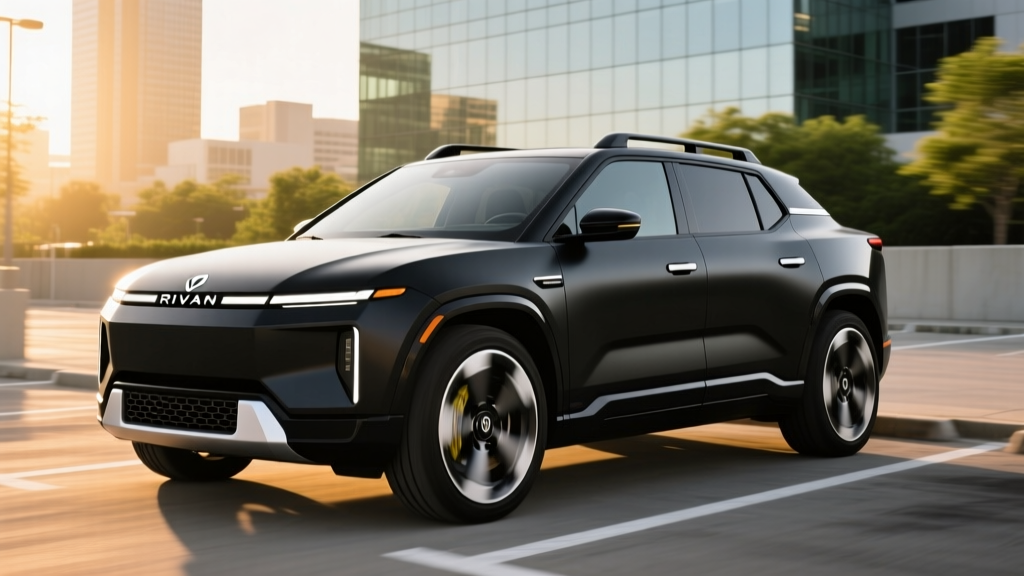
The Rivian R2 is the compact electric SUV the Illinois-based automaker designed to bring its adventure-ready formula to a broader audience. Sitting below the R1S in size and price, the R2 targets buyers who want genuine off-road capability, usable range, and modern EV tech without the $80,000-plus sticker of Rivian's flagship. With production underway at Rivian's Normal, Illinois facility and the first customer deliveries expected in mid-2026, the R2 is generating serious search interest — particularly around its EPA-estimated range, charging speed, and whether it will qualify for the federal EV tax credit.
Below, we break down every confirmed and estimated spec, contextualize real-world performance expectations, and evaluate where the R2 fits against its closest competitors. Because the R2 is just now entering production, several figures are based on Rivian's published preliminary data and our analysis of the company's existing powertrain architecture. We'll flag estimates clearly and update this profile as EPA certification data becomes available on fueleconomy.gov.
2026 Rivian R2 Estimated Specs at a Glance
| Spec | R2 Standard (Dual-Motor AWD) | R2 Max Battery (Dual-Motor AWD) |
|---|---|---|
| Battery Capacity (usable) | ~75 kWh (LFP est.) | ~105 kWh (NMC est.) |
| EPA Range (est.) | ~275 mi | ~340 mi |
| Efficiency | ~110 MPGe / 30 kWh/100mi | ~105 MPGe / 32 kWh/100mi |
| Peak DC Fast Charge | ~175 kW | ~200 kW |
| 10–80% DCFC Time | ~28 min | ~30 min |
| Level 2 Home Charge | 11.5 kW (~33 mi/hr) | 11.5 kW (~33 mi/hr) |
| 0–60 mph | ~5.5 sec | ~4.5 sec |
| Horsepower | ~400 hp | ~500 hp |
| Drivetrain | Dual-Motor AWD | Dual-Motor AWD |
| Towing Capacity | ~3,300 lbs | ~3,300 lbs |
| Cargo Volume (rear seats up) | ~32 cu ft | ~32 cu ft |
| Cargo Volume (rear seats folded) | ~65 cu ft | ~65 cu ft |
| Front Trunk (Frunk) | ~11 cu ft | ~11 cu ft |
| Base MSRP | $45,000 | $52,000 |
| Battery/Powertrain Warranty | 8 yr / 100,000 mi | 8 yr / 100,000 mi |
Note: Specs marked "est." are based on Rivian's preliminary disclosures and engineering analysis of the R2 platform. Final EPA certification figures will be published before customer deliveries. This profile will be updated when official data drops.
EPA Range vs. Real-World Expectations
Real-World Expectations: Plan for approximately 240–255 highway miles in the Standard configuration and 295–315 miles in the Max Battery variant at sustained 70–75 mph speeds. In cold weather (below 30°F), expect a further 15–25% reduction, bringing the Standard pack down to roughly 200–220 miles of usable highway range and the Max Battery to around 240–270 miles. Rivian's heat pump system should mitigate some winter losses compared to resistive-heating competitors, but physics still governs lithium-ion cells in the cold.
Rivian has targeted the 300+ mile mark for its top-trim R2, consistent with CEO RJ Scaringe's public statements. The Standard pack, likely using LFP (lithium iron phosphate) chemistry for cost optimization, trades some range for a lower entry price. LFP cells offer excellent cycle life and tolerate regular 100% charging — a practical advantage for daily commuting — but carry lower energy density than the NMC (nickel manganese cobalt) chemistry expected in the Max Battery variant.
For context, our real-world projections draw on the R1S's behavior: the R1S with its Large Pack typically achieves 85–92% of its EPA sticker on mixed highway driving, and Rivian's aerodynamic profile on the smaller R2 should produce similar or slightly better ratios. The R2's shorter wheelbase and lighter curb weight (estimated ~4,800 lbs) work in its favor versus the 6,000+ lb R1S.
Charging Speed and Infrastructure
Charging speed is where compact SUV buyers scrutinize the numbers, and the R2 needs to perform well to compete with the Hyundai Ioniq 5's blistering 800V architecture. Here's what Rivian's preliminary data suggests:
| Charging Level | Power / Rate | Miles Added per Hour | Notes |
|---|---|---|---|
| Level 1 (120V household) | ~1.4 kW | ~4 mi/hr | Emergency/trickle only |
| Level 2 (240V home, 48A) | 11.5 kW | ~33 mi/hr | Full overnight charge in ~8–10 hrs |
| DC Fast Charge (Standard) | Peak ~175 kW | ~500+ mi/hr (peak) | 10–80% in ~28 min; taper above 80% |
| DC Fast Charge (Max Battery) | Peak ~200 kW | ~550+ mi/hr (peak) | 10–80% in ~30 min; taper above 80% |
Rivian has confirmed the R2 will ship with the NACS (North American Charging Standard) connector natively, giving it plug-and-pull access to Tesla's Supercharger network — now the largest and most reliable DC fast-charging network in the US. This is a significant competitive advantage over CCS-equipped rivals that still require adapters for Supercharger access.
A critical nuance: the 10–80% time of ~28–30 minutes assumes battery preconditioning is active (the R2 will precondition automatically when a charger is set in the navigation). Without preconditioning — say, pulling into a charger with a cold-soaked battery in winter — peak charge rates may be limited to 50–80 kW until the cells warm. Plan your road-trip charging stops accordingly.
The R2's peak charge rate of ~175–200 kW is competitive but not class-leading. The Ioniq 5 can sustain 230+ kW thanks to its 800V architecture, while the Tesla Model Y peaks around 250 kW on V3 Superchargers. For most owners who charge at home overnight, this difference is academic — but road-trippers covering 300+ miles daily will notice the extra 5–8 minutes per stop.
Performance and Drivetrain
Rivian's dual-motor AWD system is a proven quantity in the R1T and R1S, and the R2 inherits a version of it scaled for its lighter platform. The Standard configuration is expected to deliver approximately 400 hp with a 0–60 mph time around 5.5 seconds — genuinely quick for a compact SUV and more than adequate for highway merging and passing. The Max Battery variant bumps output to an estimated 500 hp, dropping the sprint to roughly 4.5 seconds.
Rivian's torque-vectoring dual-motor system provides individual wheel torque control, which translates to confident all-weather traction and genuine off-road capability. The R2 is expected to offer around 8.5 inches of ground clearance, approach/departure angles suitable for forest service roads and moderate trails, and Rivian's suite of drive modes (Snow, Sand, Rock, All-Purpose). This isn't a crossover pretending to be rugged — Rivian's engineering DNA is rooted in adventure utility.
Towing capacity is estimated at 3,300 lbs, enough for a small camper trailer, a pair of jet skis, or a utility trailer. Keep in mind that towing will cut range significantly — expect a 35–50% reduction depending on trailer weight and aerodynamics.
Pricing, Trims, and Federal Tax Credit Eligibility
| Configuration | Base MSRP | Est. After §30D Credit | Credit Amount |
|---|---|---|---|
| R2 Standard (Dual-Motor AWD) | $45,000 | ~$37,500 | Up to $7,500* |
| R2 Max Battery (Dual-Motor AWD) | $52,000 | ~$44,500 | Up to $7,500* |
*Federal tax credit eligibility under IRS §30D is subject to multiple requirements. The credit is available as a point-of-sale reduction beginning in 2024, but you must meet all of the following:
- MSRP Cap: SUVs must have a manufacturer's suggested retail price at or below $80,000. Both R2 trims clear this threshold comfortably.
- Buyer Income Cap: Modified adjusted gross income must not exceed $150,000 (single), $225,000 (head of household), or $300,000 (joint filers).
- Battery Component Sourcing: A percentage of battery components must be manufactured or assembled in North America, and critical minerals must be sourced from the US or free-trade-agreement countries. These thresholds tighten annually through 2029.
- FEOC Restriction: Vehicles with battery components from a "foreign entity of concern" (primarily Chinese supply chain) are disqualified. Rivian's supply chain decisions here will determine eligibility.
Rivian has not yet confirmed the R2's battery cell supplier or critical-mineral sourcing chain. This is the single biggest unknown for buyers counting on the full $7,500 credit. We recommend checking the official DOE/EPA tax credit lookup tool and consulting IRS.gov guidance on §30D before placing a deposit if credit eligibility is a dealbreaker for your budget. The credit can be transferred to the dealer at point of sale as a price reduction, so you don't need to wait until tax filing to benefit — but only if the vehicle qualifies at the time of delivery.
Interior, Tech, and Driver Assistance
The R2's cabin follows Rivian's design philosophy: minimalist, durable, and oriented toward outdoor use. Expect a 15.6-inch center touchscreen running Rivian's in-house software (no Apple CarPlay or Android Auto — Rivian builds its own navigation, media, and phone integration), a 10.25-inch digital instrument cluster, and a head-up display. The gear selector is a column-mounted stalk, freeing up console space for storage.
Rivian's Rivian Driver+ system is a Level 2 driver-assistance suite (per SAE classification) offering adaptive cruise control, lane-centering steering, and automatic lane changes on divided highways. This is not a self-driving system — the driver must remain engaged, hands on or near the wheel, and eyes on the road at all times. Rivian has not announced plans for a hands-off, eyes-off Level 3 or Level 4 system on the R2 at launch.
Notable tech features include Rivian's Camp Kitchen integration (optional slide-out kitchen for the gear tunnel), a powered frunk with drain plug for ice storage, over-the-air software updates, and the Rivian Waypoints community platform for sharing adventure routes. The R2 also supports V2L (vehicle-to-load) capability, allowing you to power external devices — camping gear, power tools, or even a home circuit during an outage — from the vehicle's traction battery.
Pros, Cons, and Who the R2 Suits Best
- Native NACS connector — direct Tesla Supercharger access
- Genuine off-road capability in a compact package
- Useful 3,300-lb towing capacity
- Spacious frunk + gear tunnel options
- Competitive pricing, especially with §30D credit
- LFP option allows daily 100% charging without degradation concern
- Over-the-air updates and growing feature set
- First model-year production — expect early-build quirks
- DC fast-charge speed is good, not class-leading
- No Apple CarPlay / Android Auto support
- Tax credit eligibility not yet confirmed (sourcing dependent)
- Limited service center network vs. legacy automakers
- Rear visibility may require camera reliance (narrow rear glass)
- You want a compact electric SUV with real off-road chops and outdoor-oriented features (frunk, V2L, gear tunnel)
- You value Tesla Supercharger network access without an adapter
- Your daily commute is under 60 miles round-trip and you can charge at home
- You need moderate towing (small trailers, boats) without stepping up to a full-size SUV
- You prioritize maximum DC fast-charge speed for frequent 400+ mile road trips (consider Ioniq 5 or Model Y)
- You require Apple CarPlay or Android Auto integration
- You want a proven, multi-year production track record (the R2 is a first-year model)
- You need third-row seating (the R2 is strictly a two-row, five-passenger SUV)
How the R2 Stacks Up Against Key Competitors
The R2 enters one of the most competitive segments in the EV market. Here's how its estimated specs compare to the three vehicles it will most frequently be cross-shopped against:
| Spec | Rivian R2 Max (est.) | Tesla Model Y LR | Hyundai Ioniq 5 LR AWD | Ford Mustang Mach-E ER AWD |
|---|---|---|---|---|
| EPA Range | ~340 mi | 320 mi | 290 mi | 312 mi |
| Battery (usable) | ~105 kWh | 75 kWh | 77.4 kWh | 88 kWh |
| Peak DCFC | ~200 kW | ~250 kW | ~233 kW | ~150 kW |
| 0–60 mph | ~4.5 sec | 4.8 sec | 5.1 sec | 5.1 sec |
| NACS Native | Yes | Yes | No (adapter req.) | No (adapter req.) |
| Off-Road Capability | High | Moderate | Low | Low |
| Towing | 3,300 lbs | 3,500 lbs | 2,300 lbs | 2,200 lbs |
| Base MSRP | $52,000 | $48,990 | $50,850 | $50,995 |
The R2's advantage lies in its combination of range, genuine off-road capability, native Supercharger access, and adventure features. The Model Y offers faster charging and a more established service network. The Ioniq 5 delivers the quickest DC charging in the segment. The Mach-E is a strong all-rounder but trails in charging speed and towing. Your pick depends on which attributes matter most to your lifestyle.
Warranty and Long-Term Ownership
Rivian is expected to carry over its R1S warranty structure to the R2:
- Battery & Drive Unit: 8 years / 100,000 miles (whichever comes first), with coverage triggered if the battery drops below 70% of original capacity — consistent with industry standards.
- Vehicle Limited Warranty: 5 years / 60,000 miles bumper-to-bumper.
- Roadside Assistance: 5 years / unlimited miles.
For the LFP-equipped Standard pack, long-term degradation should be minimal — LFP chemistry is known for retaining 90%+ capacity over 1,000+ full charge cycles. The NMC Max Battery may show slightly faster initial degradation (typically 5–8% in the first 50,000 miles before leveling off), but Rivian's thermal management system is well-proven from the R1 fleet.
One ownership consideration: Rivian's service center network is growing but still limited compared to Ford, Hyundai, or Tesla. If you live in a rural area far from a Rivian service hub, factor in potential mobile-service wait times or the need to ship the vehicle for major repairs. Rivian's mobile service vans handle many routine issues, but structural or high-voltage work requires a facility.
Frequently Asked Questions
What is the real-world range of the Rivian R2?
Based on preliminary estimates, expect approximately 240–255 highway miles from the Standard pack (~275 mi EPA) and 295–315 highway miles from the Max Battery (~340 mi EPA). Cold weather will reduce these figures by 15–25%. City and mixed driving with regenerative braking typically yields results closer to the EPA sticker.
How fast does the Rivian R2 charge at home and on the road?
At home on a 240V Level 2 charger (48A circuit), the R2 charges at 11.5 kW, adding roughly 33 miles of range per hour — enough for a full overnight charge. On DC fast chargers, it peaks at approximately 175–200 kW (depending on pack size), reaching 10–80% in about 28–30 minutes with proper battery preconditioning.
Does the Rivian R2 qualify for the $7,500 federal EV tax credit?
The R2's MSRP is well below the $80,000 SUV cap, so it clears the price requirement. However, the full $7,500 credit under §30D also depends on battery component sourcing and critical mineral requirements, which tighten each year. Rivian has not confirmed the R2's supply chain compliance as of early 2026. Check the official DOE lookup tool and IRS §30D guidance before purchasing.
Is the Rivian R2 worth buying over the Tesla Model Y or Hyundai Ioniq 5?
The R2 is the strongest choice if you prioritize off-road capability, adventure features (frunk, V2L, tow rating), and native Supercharger access in a compact SUV. The Model Y charges faster and has a more established service network. The Ioniq 5 offers the quickest DC charging in the segment. If your lifestyle skews outdoor/adventure, the R2 is worth the wait; if you prioritize charging speed and service infrastructure, the Model Y or Ioniq 5 may be a better fit today.
When can I actually buy the Rivian R2?
Rivian began initial R2 production in the first half of 2026 at its Normal, Illinois plant, with customer deliveries expected to ramp through mid-to-late 2026. Reservation holders are being fulfilled first. Check Rivian's configurator for current availability and estimated delivery windows.