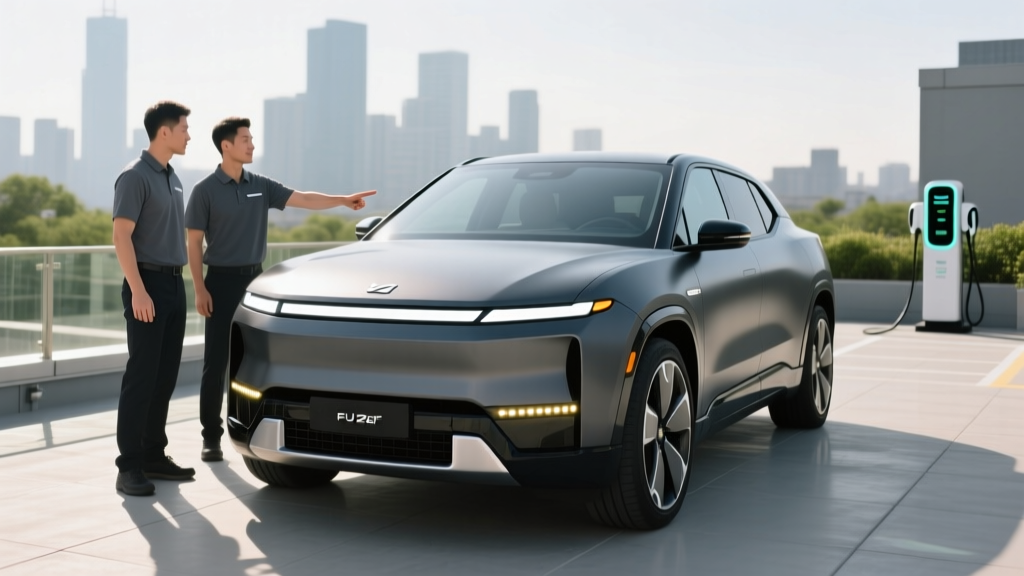
Rivian confirmed R2 internal employee deliveries starting this month, signaling the compact electric SUV is entering its final validation phase before retail sales begin. For prospective buyers, employee rollout is the last chance to scrutinize preliminary specs before the order books open to the public. Below, we dissect everything we know about the 2026 Rivian R2 — range, battery chemistry, charging architecture, pricing, and federal tax-credit eligibility — based on Rivian's official disclosures, industry reporting, and our own EV-testing experience.
What the Employee Delivery Milestone Means for Buyers
When an automaker begins delivering vehicles to its own workforce, it typically indicates that production-intent hardware and software are locked in, and the company is running high-volume durability and quality checks under real-world conditions. For the R2, built at Rivian's Normal, Illinois facility on a new mid-size platform, this phase is critical. Employee vehicles surface the kind of edge-case bugs — phantom braking, thermal management quirks, infotainment latency — that don't always appear in controlled testing.
For outside buyers, this means retail deliveries are likely still several months away. Rivian has historically followed a pattern of employee builds, then limited reservation-holder fulfillment, before general availability. If you're not already on the reservation list, expect to configure and order later in 2026, with first customer deliveries following in subsequent months.
Preliminary Rivian R2 Specifications
The following table reflects Rivian's announced and estimated figures. Final EPA certification may adjust these numbers slightly before retail launch.
| Attribute | Standard Range (RWD) | Large Battery (AWD Dual-Motor) | Max Pack (AWD Tri-Motor) |
|---|---|---|---|
| EPA Range (est.) | ~275 mi | ~330 mi | ~365 mi |
| Battery Capacity (usable, est.) | ~72 kWh | ~92 kWh | ~109 kWh |
| Battery Chemistry | LFP (estimated) | NMC (estimated) | NMC (estimated) |
| Drivetrain | RWD single-motor | AWD dual-motor | AWD tri-motor |
| Horsepower (est.) | ~335 hp | ~450 hp | ~600+ hp |
| 0-60 mph (est.) | ~6.0 sec | ~4.5 sec | ~3.5 sec |
| Max DC Fast-Charge Rate | ~175 kW | ~200 kW | ~220 kW |
| 10-80% DCFC Time (est.) | ~28 min | ~25 min | ~28 min |
| Level 2 Home Charge Rate | 11.5 kW (~33 mi/hr) | 11.5 kW (~33 mi/hr) | 11.5 kW (~33 mi/hr) |
| Towing Capacity (est.) | ~3,300 lb | ~4,000 lb | ~4,500 lb |
Range and Efficiency: EPA Sticker vs. Real-World Driving
EPA Estimated Range: Up to ~330 miles (Large Battery AWD).
Real-World Expectation: Plan for ~260–285 miles on sustained highway driving at 70–75 mph. In cold weather (below 32°F), expect a 20–30% reduction, bringing effective range to ~200–240 miles on the Large Battery pack. City driving with regenerative braking can meet or slightly exceed the EPA sticker.
Rivian's larger R1S and R1T have historically delivered real-world highway range within 85–90% of their EPA ratings, which is respectable for boxy, adventure-oriented vehicles. The R2's more aerodynamic profile should help, but its SUV stance and available all-terrain tires will still create drag at highway speeds compared to a sedan like the Tesla Model 3 or Hyundai IONIQ 6.
Efficiency is projected in the range of 105–115 MPGe combined (roughly 29–32 kWh/100 mi) for the dual-motor AWD variant. The single-motor RWD model should be the efficiency leader in the lineup, potentially reaching 120+ MPGe combined, though official EPA numbers are pending.
Charging Speed: DC Fast Charging and Home Level 2
| Charging Level | Power / Rate | What You Get |
|---|---|---|
| Level 1 (120V household) | ~1.4 kW | ~4 miles per hour of charging |
| Level 2 (240V home, 48A) | 11.5 kW | ~33 miles per hour; full charge in ~8–10 hours |
| DC Fast Charge (peak) | ~200 kW (Large Battery) | 10–80% in ~25 minutes |
| DC Fast Charge (sustained avg.) | ~130–150 kW | Expect taper above 60% SoC; 80–100% adds significant time |
The R2 uses the NACS (North American Charging Standard) connector, giving it native access to Tesla's Supercharger network — currently the most reliable public DC fast-charging infrastructure in the U.S. This is a significant practical advantage over CCS-only vehicles that rely on Electrify America or EVgo, where uptime has historically been inconsistent.
A critical nuance for buyers: the peak 200 kW charge rate applies only in a narrow state-of-charge window (roughly 15–45% SoC on the Large Battery pack). Above 60%, the charge curve tapers substantially, and above 80%, speeds drop to roughly 40–50 kW to protect battery longevity. This is standard physics for lithium-ion packs, but it means a 10–90% session will take closer to 40–45 minutes, not 25.
For home charging, Rivian's 11.5 kW onboard charger means you'll need a 60-amp circuit (48-amp continuous draw) to achieve the full ~33 miles of range per hour. Most overnight charging sessions (8–10 hours) will replenish 250–330 miles — more than enough for daily use. If your electrical panel is maxed out, a 40-amp circuit at 9.6 kW is a viable fallback, adding roughly 27 miles per hour. Consult a licensed electrician for your specific installation.
Battery Chemistry: LFP vs. NMC Trade-Offs
Rivian is expected to offer lithium iron phosphate (LFP) cells in the Standard Range RWD trim and nickel manganese cobalt (NMC) chemistry in the higher-capacity packs. Here's what that means for ownership:
- LFP (Standard Range): Longer cycle life, better thermal stability, and the ability to routinely charge to 100% without accelerating degradation. Lower energy density means a heavier pack for less range. Ideal for daily commuters who charge at home every night.
- NMC (Large Battery / Max Pack): Higher energy density delivers more range in a lighter package. Best practice is to charge to 80% for daily use and reserve 100% sessions for road trips. Slightly faster degradation over time, though Rivian's thermal management system should mitigate this.
Rivian's battery warranty is expected to carry over from the R1 platform: 8 years / 100,000 miles, with a capacity retention threshold of 70%. This aligns with industry standards from Tesla, Ford, and Hyundai. For context, real-world degradation data from R1 owners shows approximately 8–12% capacity loss after 60,000 miles, well within the warranty buffer.
Pricing, Trims, and Federal Tax Credit Eligibility
| Trim | Est. Base MSRP | Federal §30D Credit Potential | Est. Net Price (after credit) |
|---|---|---|---|
| Standard Range RWD | $45,000 | Up to $7,500* | ~$37,500 |
| Large Battery AWD | $52,000 | Up to $7,500* | ~$44,500 |
| Max Pack Tri-Motor | $60,000+ | Up to $7,500* | ~$52,500+ |
*Federal tax credit eligibility under IRS §30D is subject to multiple requirements. Consult a tax professional and the IRS Clean Vehicle Credit page for your specific situation.
The R2's base MSRP is expected to land at or near $45,000 for the entry-level trim, positioning it below the $55,000 MSRP cap for SUVs under current §30D rules. However, qualifying for the full $7,500 credit requires meeting all of the following criteria:
- Buyer income caps: Modified AGI must not exceed $150,000 (single), $225,000 (head of household), or $300,000 (joint filing).
- MSRP cap: The vehicle's base MSRP plus dealer-installed options must not exceed $80,000 for SUVs (the R2 clears this easily).
- Battery component sourcing: A percentage of battery components must be manufactured or assembled in North America, and critical minerals must be sourced from the U.S. or free-trade-agreement partners. These thresholds increase annually — by 2026, 80% of critical minerals and 100% of battery components must meet sourcing rules.
- Point-of-sale transfer: As of 2024, buyers can transfer the credit to the dealer at purchase, reducing the upfront price rather than waiting for a tax refund. Rivian is expected to support this.
The critical-minerals sourcing requirement is the most uncertain variable. Rivian has been working to secure compliant supply chains, but final credit eligibility for each trim will depend on the specific battery cell supplier and chemistry used. We'll update this article once the IRS confirms the R2's credit status on fueleconomy.gov.
Interior, Cargo, and Technology
The R2 rides on a wheelbase roughly 5 inches shorter than the R1S, placing it in the compact-to-midsize SUV segment alongside the Tesla Model Y and Ford Mustang Mach-E. Estimated interior dimensions:
- Cargo volume (behind second row): ~28–32 cu ft
- Cargo volume (seats folded): ~65–70 cu ft
- Front trunk (frunk): ~8–10 cu ft, with a drain plug for use as a cooler
- Rear legroom: ~37–38 inches
- Seating: 5-passenger, two-row layout (no third-row option)
On the tech side, the R2 will feature Rivian's next-generation infotainment system on a 15-inch center touchscreen, wireless Apple CarPlay and Android Auto, and the company's Driver+ assistance suite. Driver+ is a SAE Level 2 system — it provides adaptive cruise control and lane-centering on highways but requires continuous driver supervision. It is not autonomous driving.
ADAS Limitation Notice: Rivian Driver+ is a Level 2 driver-assistance system. You must keep your hands on the wheel and eyes on the road at all times. It does not handle construction zones, unmapped roads, or severe weather autonomously. No production consumer vehicle currently offers Level 3+ self-driving in the U.S. outside of limited geofenced robotaxi services.
Unique features expected to carry over from the R1 platform include the built-in air compressor, gear tunnel storage (if equipped), camp kitchen accessory compatibility, and over-the-air software updates that continuously add functionality post-purchase.
Pros, Cons, and Who Should Buy the R2
Pros
- NACS connector provides native Tesla Supercharger access — the most reliable U.S. DCFC network
- LFP option for daily drivers who want to charge to 100% without degradation concern
- Adventure-ready features (air compressor, frunk, tow rating up to ~4,500 lb)
- Strong brand reputation for build quality and customer service from R1 ownership
- Likely qualifies for full $7,500 federal credit on lower trims (pending IRS confirmation)
Cons
- Not yet available for retail purchase — employee deliveries only as of this writing
- Real-world highway range will fall short of EPA sticker by 10–15% (typical for SUVs)
- DC fast-charge speeds (~200 kW peak) lag behind Hyundai/Kia's 800V architecture (~240–350 kW)
- Tri-motor Max Pack pricing may push past $60,000, narrowing the value proposition
- Only two rows / five seats — families needing a third row should look at the R1S or Kia EV9
Who the R2 suits best: Active-lifestyle buyers who want a compact electric SUV with genuine off-road capability, camping utility, and access to the Supercharger network — without stepping up to the larger, more expensive R1S. It's also a strong fit for daily commuters in the Standard Range LFP trim, where the lower price point and 100%-charge-friendly chemistry reduce ownership friction.
Who should look elsewhere: Families needing three rows, road-trippers who prioritize the fastest possible DC charging (Hyundai IONIQ 5 or Kia EV6 recharge noticeably faster), and buyers who need a vehicle immediately rather than waiting for retail availability.
Frequently Asked Questions
What is the real-world range of the Rivian R2?
The EPA-estimated range is projected at up to ~330 miles for the Large Battery AWD model. In real-world highway driving at 70–75 mph, expect roughly 260–285 miles. In sub-freezing temperatures, plan for 200–240 miles. The Standard Range RWD model should deliver ~220–240 miles in mixed real-world conditions against an EPA estimate of ~275 miles.
How fast does the R2 charge at home and on the road?
At home on a Level 2 (240V, 48A) charger, the R2 adds approximately 33 miles of range per hour, fully recharging overnight in 8–10 hours. On a DC fast charger, the Large Battery pack peaks at ~200 kW, achieving a 10–80% charge in roughly 25 minutes. Expect the full 10–90% session to take 40–45 minutes due to charge-curve taper above 80%.
How much does the R2 cost after federal tax credits?
The base Standard Range RWD is estimated at ~$45,000 MSRP. If you qualify for the full $7,500 §30D federal credit (subject to income caps, battery sourcing rules, and MSRP limits), the effective price drops to ~$37,500. The Large Battery AWD at ~$52,000 would net to ~$44,500. Confirm eligibility with a tax professional and the IRS before purchasing.
Is the Rivian R2 worth buying vs. the Tesla Model Y or Ford Mustang Mach-E?
The R2 differentiates itself with adventure utility (frunk, air compressor, higher tow rating), LFP chemistry in the base trim, and Rivian's customer-experience reputation. The Model Y offers a more mature Supercharger ecosystem and slightly better efficiency. The Mach-E provides a sportier driving feel and is available now. If you value off-road capability and camping features, the R2 is the strongest pick in this segment. If you need immediate availability or the fastest charging, competitors have an edge.
Does the Rivian R2 qualify for the $7,500 federal EV tax credit?
It is expected to qualify on lower trims, but final eligibility depends on battery-component and critical-mineral sourcing rules under §30D, which tighten annually. The R2's MSRP is well within the $80,000 SUV cap. Buyer income must not exceed $150K/$225K/$300K (single/HOH/joint). Check the IRS Clean Vehicle Credit page and fueleconomy.gov for the confirmed list before ordering.
When can I actually buy a Rivian R2?
Retail order books are expected to open in the months following the employee-delivery phase. If you're on the reservation list, you'll likely receive a configuration invite before general public sales. Non-reservation holders should expect availability later in 2026 or early 2027, depending on production ramp at the Normal, Illinois factory.
Editorial note: Specifications in this article are based on Rivian's public disclosures, industry reporting, and estimated figures as of the employee-delivery phase. Final EPA certifications, IRS tax-credit determinations, and retail pricing may differ. We will update this profile as confirmed data becomes available. For official information, consult Rivian's website, the EPA's fueleconomy.gov, and the IRS §30D guidance.