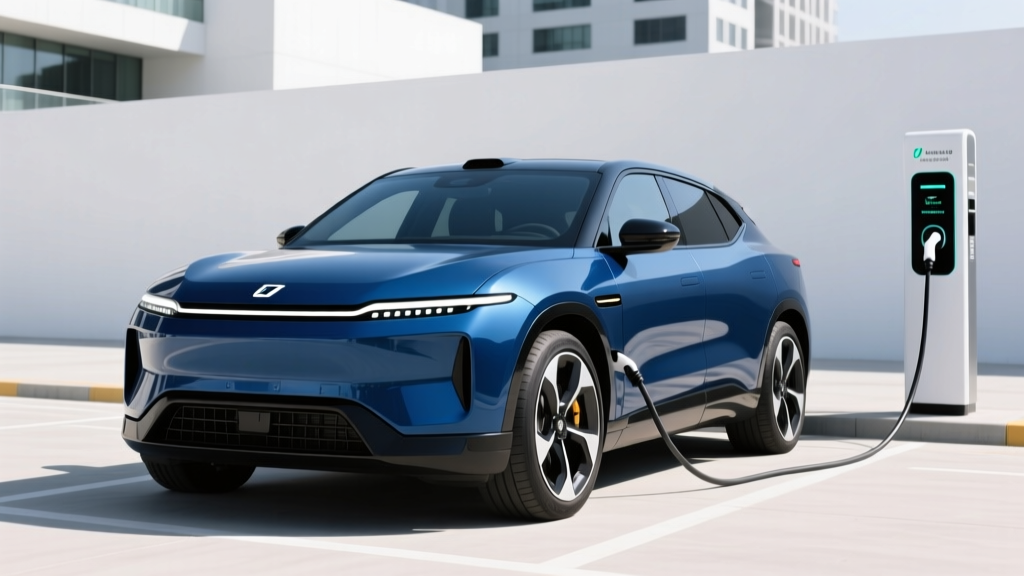
The Rivian R2 arrives in the first half of 2026 as the smaller, more affordable sibling to the R1S and R1T. Built at Rivian's Normal, Illinois plant on a new midsize platform, the R2 targets the highest-volume segment in the EV market: compact electric crossovers priced in the mid-$40,000s. Below, we break down every confirmed and estimated Rivian R2 detail — from battery chemistry and charging speed to pricing, tax-credit eligibility, and how it stacks up against the Tesla Model Y and Ford Mustang Mach-E.
Real-World Range Expectations
EPA Estimated Range: ~330 miles (Dual-Motor, largest battery)
Real-World Highway (70 mph): ~270–290 miles
Cold-Weather (below 30°F): ~230–260 miles
Rivian's 330-mile target assumes mixed driving. Sustained highway speeds, headwinds, and cold temperatures will reduce usable range by 10–20%. The available heat pump should mitigate winter losses compared to resistive-heating EVs.
Battery Chemistry, Capacity, and Degradation
Rivian has confirmed the R2 will use lithium iron phosphate (LFP) cells in its standard-range configuration and a higher-energy NMC (nickel manganese cobalt) chemistry for the larger battery pack. This dual-chemistry approach mirrors what Tesla and Ford have adopted: LFP for cost and longevity on the entry trim, NMC for maximum range on higher trims.
| Pack | Chemistry | Usable Capacity (est.) | EPA Range (est.) |
|---|---|---|---|
| Standard | LFP | ~65 kWh | ~260 mi |
| Large | NMC | ~80 kWh | ~330 mi |
| Max (future) | NMC | ~100 kWh | ~400+ mi |
LFP chemistry trades energy density for cycle life and thermal stability. Expect the standard-range pack to tolerate daily 100% charging with minimal degradation — a significant advantage for owners who want full range available every morning without babysitting state-of-charge limits. The NMC packs should be charged to 80% for daily use and 100% only before long trips.
Charging Speed: DC Fast Charging and Home Level 2
Charging speed is where the R2's new platform shows its engineering priorities. Rivian has targeted a peak DC fast-charge rate of approximately 200 kW on the large NMC pack, with the LFP standard pack peaking around 175 kW. These numbers won't match the Hyundai Ioniq 5's 240 kW peak, but they're competitive for the segment.
| Level | Power | Speed / Time |
|---|---|---|
| Level 1 (120V) | ~1.4 kW | ~4–5 mi/hr |
| Level 2 (240V, 48A) | 11.5 kW | ~35 mi/hr / ~9 hr (full) |
| DC Fast Charge | Peak 200 kW | 10–80% in ~25 min (est.) |
The R2 uses the NACS (Tesla-style) connector natively, granting access to Tesla Supercharger V3 and V4 stalls via Rivian's integrated navigation preconditioning. On a 250 kW Supercharger, expect the R2 to sustain roughly 150–170 kW through the 20–60% state-of-charge window before tapering above 80%, as is typical with NMC cells. LFP cells generally accept charge more linearly, so the standard-range pack may hold peak rate slightly longer.
Home charging on a 48-amp Level 2 circuit (requiring a 60-amp breaker) will replenish the large pack overnight. Most owners will need a 200-amp electrical panel; older homes may require a panel upgrade costing $1,500–$3,000 before installing a wall connector.
Performance and Drivetrain
The R2 launches with a dual-motor AWD configuration as the volume seller, with a single-motor RWD variant expected to follow for the base price point. Rivian's new drive units are smaller, lighter, and more power-dense than the R1T's original quad-motor setup.
| Config | Drivetrain | Horsepower (est.) | 0–60 mph (est.) | Towing (est.) |
|---|---|---|---|---|
| Single Motor | RWD | ~300 hp | ~6.5 sec | ~3,300 lb |
| Dual Motor | AWD | ~500 hp | ~4.5 sec | ~4,500 lb |
| Performance (future) | AWD | ~600+ hp | ~3.5 sec | ~4,500 lb |
Rivian's torque vectoring and software-defined suspension carry over from the R1 platform in revised form. Expect adjustable ride height via an available air suspension on higher trims — useful for both ground clearance on trails and aero efficiency on the highway. The R2's shorter wheelbase than the R1T should make it more maneuverable in urban environments while retaining genuine off-road capability on the Adventure trim.
Pricing, Trims, and Federal Tax Credit Eligibility
Rivian CEO RJ Scaringe has repeatedly stated a starting MSRP of $45,000 for the R2, positioning it directly against the Tesla Model Y Long Range and undercutting many luxury compact EV crossovers. Here's the projected trim ladder:
| Trim | Est. MSRP | Battery | Drivetrain |
|---|---|---|---|
| Base (RWD) | $45,000 | Standard (LFP) | Single Motor RWD |
| Adventure (AWD) | $52,000 | Large (NMC) | Dual Motor AWD |
| Adventure Max | $58,000+ | Max (NMC) | Dual Motor AWD |
Does the R2 Qualify for the §30D Federal Tax Credit?
The R2 is positioned to qualify for the full $7,500 federal EV tax credit under current IRS §30D rules, though final eligibility depends on battery sourcing at time of delivery. Here's the checklist:
- MSRP cap: The R2's ~$45,000–$58,000 pricing falls well under the $80,000 SUV/truck cap. ✓
- Buyer income cap: AGI must not exceed $150,000 (single), $225,000 (head of household), or $300,000 (joint). ✓ (buyer-dependent)
- North American assembly: Built in Normal, Illinois. ✓
- Critical minerals requirement ($3,750): Must meet escalating percentage thresholds for US/FTA-sourced minerals. Rivian is working to secure compliant supply chains. (Pending final 2026 sourcing verification)
- Battery components requirement ($3,750): Must meet escalating percentage thresholds for US-manufactured components. (Pending final 2026 sourcing verification)
- Point-of-sale transfer: If eligible, the $7,500 credit can be transferred to the dealer at purchase, reducing the out-of-pocket price immediately.
If the R2 qualifies for the full credit, the effective base price drops to approximately $37,500 — a compelling entry point for a 260-mile AWD electric crossover. Consult a tax professional to confirm your personal eligibility, and check fueleconomy.gov for the IRS's official qualifying vehicle list closer to launch.
Interior, Cargo, and Technology
The R2 seats five (no third row, unlike the three-row R1S) and prioritizes practicality over luxury spectacle. Key interior details include:
- Cargo volume: ~30 cu ft behind rear seats (est.), ~65 cu ft with seats folded, plus a front trunk (frunk) of ~5 cu ft
- Rear legroom: ~38 inches (est.), competitive with the Model Y
- Infotainment: 15.6-inch center touchscreen running Rivian's in-house OS, with native NACS navigation and Supercharger routing
- Driver display: Compact digital cluster behind the wheel, no heads-up display on base trim
- Driver assistance: Rivian's Driver+ suite (SAE Level 2) with adaptive cruise, lane centering, and automated lane changes on highways. This is a hands-on-wheel, eyes-on-road system — not autonomous driving.
- Unique features: Built-in flashlight in door panel (Rivian signature), camp kitchen accessory compatibility, gear tunnel pass-through on select trims
Driver Assist Clarification
Rivian's Driver+ is an SAE Level 2 system. The driver must remain engaged, with hands on the wheel and eyes on the road at all times. It does not permit napping, phone use, or inattention. Only Level 4 services (e.g., Waymo) operate without a human driver.
Warranty Coverage
Rivian is expected to mirror its existing warranty structure for the R2, which provides strong battery protection:
| Coverage | Term |
|---|---|
| Basic Vehicle | 5 years / 60,000 miles |
| Battery & Drive Units | 8 years / 120,000 miles (≥70% capacity retention) |
| Roadside Assistance | 5 years / 60,000 miles |
The 8-year/120,000-mile battery warranty with a 70% capacity retention threshold is standard for the segment. LFP packs in the standard-range R2 are expected to degrade more slowly than NMC, potentially retaining 85%+ capacity at the 120,000-mile mark based on industry data from similar chemistries.
Rivian R2 vs. Key Competitors
| Spec | Rivian R2 (Dual Motor) | Tesla Model Y LR | Ford Mach-E Premium |
|---|---|---|---|
| Base MSRP | ~$52,000 | ~$48,000 | ~$46,000 |
| EPA Range | ~330 mi | ~320 mi | ~300 mi |
| Battery | ~80 kWh NMC | ~75 kWh NMC | ~72 kWh NMC |
| Peak DC Charge | ~200 kW | ~250 kW | ~150 kW |
| 0–60 mph | ~4.5 sec | ~5.0 sec | ~5.1 sec |
| NACS Native | Yes | Yes | Adapter required |
| Off-Road Capability | High (Adventure trim) | Low | Low (Rally limited) |
| Towing | ~4,500 lb | ~3,500 lb | ~2,200 lb |
The R2's differentiation comes down to off-road credibility, towing capacity, and Rivian's brand cachet among outdoor-oriented buyers. The Model Y wins on charging speed and Supercharger network maturity. The Mach-E offers the lowest entry price but trails in range and charging performance. For buyers who prioritize adventure utility — camping, skiing, light towing — the R2 has no direct rival at this price point.
Pros
- 330-mile EPA range competitive with segment leaders
- Native NACS connector — full Supercharger access
- Genuine off-road capability on Adventure trim
- 4,500-lb towing capacity (class-leading for compact EVs)
- LFP option for buyers who want daily 100% charging without degradation worry
- Likely qualifies for full $7,500 federal tax credit
Cons
- 200 kW peak DC charging trails Model Y's 250 kW
- Rivian service center network still limited in many states
- Base $45,000 RWD trim may not launch until late 2026 or 2027
- No third-row option (families needing 7 seats must look at R1S)
- Driver+ is competent but behind Tesla FSD in lane-change fluidity
Who Should Buy the Rivian R2?
The R2 is best suited for:
- Outdoor-active commuters who need a daily driver that can also handle dirt roads, ski trips, and weekend towing
- Two-adult households (or families with one or two children) who don't need a third row
- Current R1T/R1S owners who want a smaller, more affordable second Rivian for daily use
- Tesla-curious buyers who want Supercharger access but prefer a more rugged, less minimalist interior
Look elsewhere if you need maximum fast-charge speed for frequent 400+ mile road trips (the Model Y or Ioniq 5 are better), if you need three rows (R1S, Kia EV9), or if you want the absolute lowest price in the segment (base Mach-E or Chevy Equinox EV).
Frequently Asked Questions
When can I order the Rivian R2?
Rivian began accepting refundable reservations in early 2024. Production at the Normal, Illinois facility is scheduled to begin in the first half of 2026, with first deliveries expected mid-2026. Reservation holders will receive build invitations in order of placement.
What is the real-world range of the Rivian R2?
Expect approximately 270–290 miles on the highway at 70 mph in moderate weather with the large NMC pack, and 230–260 miles in freezing temperatures. The standard LFP pack's real-world range will be closer to 210–230 miles highway. These figures assume typical driving without aggressive acceleration or heavy cargo loads.
How fast does the R2 charge at home?
On a 48-amp Level 2 home charger (240V), the R2 adds approximately 35 miles of range per hour, fully charging the large pack in roughly 9 hours. A standard 120V outlet (Level 1) adds only 4–5 miles per hour — suitable for overnight top-offs but not for depleted batteries.
Does the Rivian R2 qualify for the $7,500 federal EV tax credit?
The R2 meets the MSRP cap, North American assembly requirement, and most buyers will fall within the income caps. The remaining variable is battery component and critical mineral sourcing, which must meet 2026 thresholds under IRS §30D rules. Rivian has stated it is working to ensure full compliance. If eligible, the credit can be applied as a point-of-sale discount.
Is the R2 worth buying over a Tesla Model Y?
Choose the R2 if you value off-road capability, higher towing capacity, Rivian's adventure brand identity, and a more tactile interior. Choose the Model Y if you prioritize the fastest DC charging, the most mature Supercharger network, and the lowest starting price in the segment. Both are strong vehicles; the decision comes down to lifestyle fit.
Will the R2 have a frunk?
Yes. Rivian has confirmed a front trunk (frunk) with approximately 5 cubic feet of storage, suitable for charging cables, a small grocery run, or a weekend bag.