Rivian R2: Everything We Know Ahead of First Deliveries
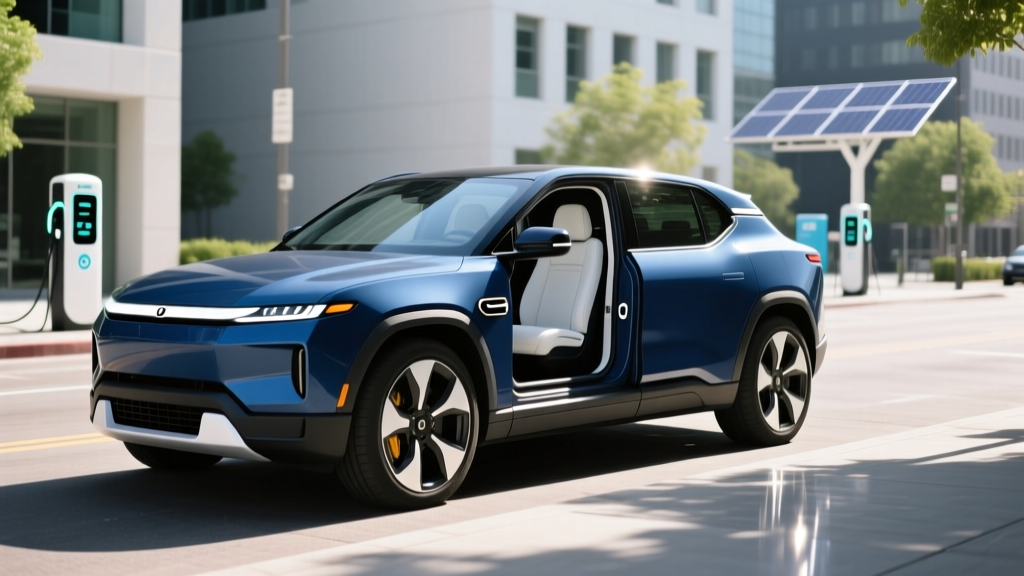
The compact electric SUV segment is about to get significantly more competitive. Rivian has officially confirmed the Rivian R2 delivery date window for the first half of 2026, with production beginning at the company's Normal, Illinois facility in early 2026 before expanding to the new Georgia plant. After years of teasers, concept appearances, and pre-order queues, the R2 is finally transitioning from announcement to asphalt.
As a smaller, more affordable sibling to the R1S, the R2 targets the heart of the EV market: buyers who want a capable electric SUV but find the R1S's $75,000+ starting price out of reach. Below, we compile every confirmed and estimated specification, contextualize what the numbers mean for real-world ownership, and evaluate whether the R2 deserves a spot on your shortlist.
| Spec | Standard Range (Est.) | Large / Max Range (Est.) |
|---|---|---|
| EPA Range | ~275 mi | ~330+ mi |
| Battery Capacity (Usable) | ~72 kWh | ~95 kWh |
| Battery Chemistry | LFP (Lithium Iron Phosphate) | NMC (Nickel Manganese Cobalt) |
| Peak DC Fast Charge | ~175 kW | ~225 kW |
| 10–80% DC Charge Time | ~28 min | ~24 min |
| Level 2 Home Charge Rate | 11.5 kW (~30 mi/hr) | 11.5 kW (~34 mi/hr) |
| 0–60 mph | ~5.5 sec (Single Motor RWD) | ~3.5 sec (Dual Motor AWD) |
| Horsepower | ~285 hp | ~500+ hp (Dual Motor) |
| Drivetrain | Rear-Wheel Drive | Dual Motor AWD |
| Starting MSRP (Est.) | $45,000 | $52,500–$57,000 |
Note: The Rivian R2 is announced and in pre-production as of early 2026. Specifications above are based on Rivian's published targets and industry analysis. Final EPA-certified figures will be confirmed closer to the on-sale date.
When Does the Rivian R2 Actually Arrive?
Rivian CEO RJ Scaringe has repeatedly targeted a first-half 2026 delivery timeline for the R2, with initial units rolling off the Normal, Illinois assembly line. The company began accepting refundable reservations in 2024, and those deposit holders are expected to receive configuration access in late 2025 or early 2026, with deliveries following shortly after production ramps.
A second production line at Rivian's planned Stanton, Georgia facility will follow, though that timeline extends into 2027 or later depending on construction progress. For most reservation holders, the Illinois-built units represent the realistic delivery window.
If you haven't reserved yet, expect availability to non-reservation buyers to open in mid-to-late 2026, contingent on Rivian's production ramp speed. The company has historically been conservative with ramp timelines — the R1T and R1S both took several quarters to reach steady-state output — so patience may be required.
Range, Battery Chemistry, and Real-World Expectations
Rivian has confirmed the R2 will use a new, smaller battery pack architecture compared to the R1 platform. The Standard Range variant is expected to use LFP (lithium iron phosphate) cells, while the Large and Max Range variants will use NMC (nickel manganese cobalt) chemistry for higher energy density.
EPA Estimated: ~275 mi (Standard) / ~330+ mi (Large)
Real-World Expectation: Expect roughly 240–260 mi from the Standard Range in mixed highway driving at 70–75 mph. The Large pack should deliver 280–310 mi under the same conditions. In cold weather (below 32°F), plan for a 15–25% reduction — bringing the Standard Range down to roughly 200–220 mi and the Large to 240–270 mi. LFP chemistry in the Standard pack is more tolerant of daily 100% charging, which partially offsets the shorter range.
The LFP chemistry choice for the base model is a deliberate trade-off. LFP cells are heavier and less energy-dense than NMC, which limits range, but they offer superior cycle life, lower degradation over time, and can be charged to 100% daily without accelerating wear. For a daily commuter who charges at home every night, this is arguably the more practical chemistry — you'll use more of the battery's total capacity day-to-day.
The NMC-equipped Large and Max Range variants will carry the traditional recommendation of charging to 80% for daily use and reserving 100% for road trips. Rivian's thermal management system, carried over and refined from the R1 generation, should keep degradation modest — expect roughly 8–12% capacity loss over 100,000 miles based on R1 fleet data.
Charging Speed: DC Fast Charging and Home Setup
The R2 is expected to adopt the NACS (North American Charging Standard) connector natively, giving it direct access to Tesla's Supercharger network without an adapter — a significant advantage over CCS-equipped competitors still relying on adapter dongles.
| Charging Level | Power / Rate | Miles Added per Hour | Notes |
|---|---|---|---|
| Level 1 (120V Standard Outlet) | ~1.4 kW | ~3–4 mi/hr | Emergency/trickle only |
| Level 2 (240V Home Charger) | 11.5 kW | ~30–34 mi/hr | Full charge overnight (~8–10 hrs) |
| DC Fast Charge (Standard Range) | Peak ~175 kW | ~500+ mi/hr at peak | 10–80% in ~28 min; tapers above 80% |
| DC Fast Charge (Large Range) | Peak ~225 kW | ~600+ mi/hr at peak | 10–80% in ~24 min; tapers above 80% |
The charge curve matters more than the peak number. Rivian's R1 vehicles historically peaked high but tapered aggressively above 60–70% state of charge. The R2's newer architecture is expected to sustain higher power longer, but you should still plan road-trip charging stops around the 10–80% window. Charging from 80–100% on DC fast chargers can add another 15–20 minutes for relatively few miles — it's almost always faster to stop twice for shorter sessions than to wait for a full charge.
For home charging, a 48-amp Level 2 wall connector on a 60-amp circuit will deliver the full 11.5 kW. Expect a professional installation to cost between $800 and $2,500 depending on your electrical panel's capacity and the run distance from panel to charger location. If your home has a 100-amp main panel, you may need a panel upgrade ($1,500–$3,000) to support a dedicated 60-amp EV circuit — factor this into your purchase budget.
Performance and Drivetrain Options
Rivian has confirmed the R2 will launch with a single-motor rear-wheel-drive configuration for the Standard Range base model, with a dual-motor all-wheel-drive option on higher trims. A single-motor AWD variant may follow later in the production cycle.
The single-motor RWD is expected to produce around 285 horsepower with a 0–60 mph time in the mid-5-second range — adequate for daily driving and highway merging, if not thrilling. The dual-motor AWD variant, with an estimated 500+ horsepower, should hit 60 mph in roughly 3.5 seconds, putting it in the same performance bracket as the Tesla Model Y Performance and well ahead of the Ford Mustang Mach-E GT on paper.
Rivian's quad-motor setup, available on the R1, is not expected for the R2 — the smaller platform and cost targets make it impractical. However, the dual-motor system should still offer Rivian's torque vectoring and traction management, which proved capable in off-road scenarios during R1 testing. The R2's smaller dimensions and lower weight should make it more agile on pavement than the R1S, though ground clearance and approach/departure angles will be slightly reduced.
Pricing, Trims, and Federal Tax Credit Eligibility
Rivian has targeted a starting MSRP of approximately $45,000 for the base Standard Range R2, with the dual-motor Large Range expected between $52,500 and $57,000 depending on options. A fully loaded R2 with the Max Range pack and premium options could approach $62,000–$65,000.
| Trim | Est. MSRP | §30D Credit (Max) | Effective Price (Best Case) |
|---|---|---|---|
| Standard Range (RWD) | $45,000 | $7,500 | ~$37,500 |
| Large Range (AWD) | $52,500 | $7,500 | ~$45,000 |
| Max Range (AWD) | $57,000+ | $7,500 | ~$49,500+ |
Federal tax credit eligibility under IRS §30D is not guaranteed for every buyer or every configuration. Key requirements include:
- MSRP Cap: SUVs must have an MSRP at or below $80,000 — the R2 clears this easily across all trims.
- Buyer Income Cap: Modified adjusted gross income must not exceed $150,000 (single), $225,000 (head of household), or $300,000 (joint filing).
- Battery Sourcing: A percentage of critical minerals and battery components must be sourced from the U.S. or free-trade-agreement countries. These thresholds increase annually. Rivian's supply chain for the R2 battery is still being finalized, and the credit amount ($3,750 for minerals, $3,750 for components, or the full $7,500) may vary by build date and pack supplier.
- Point-of-Sale Transfer: Under current rules, you can transfer the credit to the dealer at purchase, reducing your out-of-pocket cost immediately rather than waiting to claim it on your tax return.
Because battery sourcing requirements tighten each year, the credit amount available at the R2's launch may differ from what's available six months later. We recommend consulting a tax professional and checking the fueleconomy.gov tax credit tracker for the specific VIN before finalizing your order.
Interior, Cargo, and Technology
The R2 rides on a shorter wheelbase than the R1S, but Rivian has designed the interior to maximize usable space. Expect approximately:
- Cargo volume (behind second row): ~30–33 cu ft
- Cargo volume (seats folded): ~65–70 cu ft
- Front trunk (frunk): ~8–10 cu ft — larger than the Model Y's frunk, smaller than the R1T's gear tunnel
- Rear legroom: ~37–39 inches
These dimensions place the R2 squarely in competition with the Tesla Model Y (30.2 cu ft rear cargo, 72 cu ft folded) and the Ford Mustang Mach-E (29.7 cu ft rear, 59.7 cu ft folded). The R2's boxier SUV shape should offer a practical advantage for taller cargo and pet transport.
On the technology front, the R2 will feature Rivian's next-generation infotainment system with a 15.4-inch center display, wireless Apple CarPlay and Android Auto (a notable addition — Rivian's R1 initially launched without phone projection), and the company's Driver+ ADAS suite. Driver+ is a SAE Level 2 system, meaning it provides lane-centering and adaptive cruise control but requires continuous driver supervision. It is not autonomous driving.
Unique features expected to carry over from the R1 platform include the built-in air compressor, camp kitchen readiness, and Rivian's Waypoints navigation system that integrates charging stops into trip planning. Whether the R2 will include the R1's distinctive removable door panels or the camp speaker remains unconfirmed — these may be reserved for higher trims or dropped to control costs.
Warranty and Ownership Costs
Rivian's current warranty structure for the R1 series provides a strong baseline for what R2 buyers should expect:
- Battery & Drive Unit: 8 years / 175,000 miles (whichever comes first), with a capacity retention threshold of 70%
- Bumper-to-Bumper: 5 years / 60,000 miles
- Corrosion Perforation: 5 years / unlimited miles
The 175,000-mile battery warranty is among the most generous in the segment — Tesla offers 8 years / 120,000 miles on the Model Y, while Ford provides 8 years / 100,000 miles on the Mach-E. If Rivian maintains this coverage for the R2, it meaningfully reduces long-term ownership risk.
Insurance costs for the R2 are difficult to estimate before the vehicle is on the road, but R1 owners have reported premiums 15–25% higher than comparable gas SUVs, driven by repair costs and limited collision-shop familiarity with Rivian's structure. Budget accordingly.
How the R2 Stacks Up Against Competitors
The R2 enters a segment already populated by strong contenders. Here's how it compares on paper against the two most direct rivals:
| Attribute | Rivian R2 (Large AWD) | Tesla Model Y LR AWD | Ford Mach-E Premium AWD |
|---|---|---|---|
| EPA Range | ~330 mi | 310 mi | 290 mi |
| Battery (Usable) | ~95 kWh | 75 kWh | 75.7 kWh |
| Peak DC Charge | ~225 kW | 250 kW | 150 kW |
| 0–60 mph | ~3.5 sec | 4.8 sec | 5.1 sec |
| Cargo (Rear) | ~32 cu ft | 30.2 cu ft | 29.7 cu ft |
| Base MSRP | ~$52,500 | $44,990 | $43,995 |
| NACS Native | Yes | Yes | No (CCS, adapter avail.) |
The Model Y remains the price leader and benefits from the most mature Supercharger network, though the R2's native NACS connector largely closes that gap. The Mach-E offers a lower entry price but trails on charging speed and range. The R2's differentiation will come down to build quality, off-road capability, and Rivian's software experience — areas where the R1 has generally outperformed early Tesla interiors but lagged in software iteration speed.
- Native NACS charging — full Supercharger access from day one
- LFP option for daily-driven Standard Range (100% charging friendly)
- Class-leading 175,000-mile battery warranty (if carried from R1)
- Practical SUV packaging with generous frunk and cargo space
- Strong off-road capability for the segment (dual-motor AWD)
- Wireless CarPlay/Android Auto expected
- Base price higher than Model Y and Mach-E before credits
- Unproven production ramp — delays are possible
- Standard Range limited to ~275 mi (real-world ~240–260 mi)
- Insurance costs likely above segment average
- Rivian's service center network still expanding
- Final tax credit eligibility depends on battery sourcing at time of delivery
Who Should Buy the Rivian R2?
The R2 is best suited for buyers who want a capable, adventure-oriented electric SUV without stepping up to the R1S's full-size footprint and price tag. If you regularly drive on unpaved roads, carry outdoor gear, or need genuine AWD traction in snow and mud, the R2's dual-motor system and Rivian's terrain management will differentiate it from the more pavement-focused Model Y and Mach-E.
For pure commuters prioritizing lowest cost per mile, the Tesla Model Y remains the more economical choice — it's cheaper, lighter, and has a longer track record. But if you value build quality, distinctive design, and a brand that's investing heavily in the ownership experience, the R2 is worth the wait.
Reservation holders should configure early and monitor battery sourcing announcements closely — the difference between a $7,500 and $3,750 tax credit is substantial at this price point. Non-reservation buyers should plan to check availability in Q3 2026 and be prepared for limited initial inventory.
What is the confirmed Rivian R2 delivery date?
Rivian has targeted first-half 2026 for initial R2 deliveries, with production starting at the Normal, Illinois facility. Reservation holders are expected to receive configuration access in late 2025 or early 2026. Non-reservation buyers will likely gain access in mid-to-late 2026 as production ramps.
What is the real-world range of the Rivian R2?
The Standard Range R2 is estimated at ~275 miles EPA, with real-world highway driving yielding roughly 240–260 miles. The Large Range variant targets 330+ miles EPA, translating to approximately 280–310 miles in mixed highway use. Cold weather (below 32°F) reduces these figures by 15–25%.
How fast does the R2 charge at home and on the road?
At home on a Level 2 (240V, 48-amp) charger, the R2 adds roughly 30–34 miles of range per hour, fully charging overnight in 8–10 hours. On DC fast chargers, the Standard Range peaks at ~175 kW (10–80% in ~28 minutes) and the Large Range at ~225 kW (10–80% in ~24 minutes). The R2 uses the NACS connector natively for direct Supercharger access.
Does the Rivian R2 qualify for the federal EV tax credit?
The R2 is expected to qualify for up to $7,500 under IRS §30D, but eligibility depends on the buyer's income (capped at $150K/$225K/$300K by filing status), the vehicle's MSRP (must be under $80,000 for SUVs — the R2 clears this), and battery component/critical mineral sourcing at the time of manufacture. The credit can be transferred at point of sale. Confirm eligibility for your specific VIN on fueleconomy.gov before purchase.
Is the Rivian R2 worth buying over the Tesla Model Y?
It depends on your priorities. The Model Y is cheaper, has a proven production and service network, and offers marginally faster DC charging. The R2 offers a more premium interior, stronger off-road capability, a longer battery warranty, and native NACS access. If adventure use and build quality matter more than lowest price, the R2 is compelling. If cost-per-mile and immediate availability are paramount, the Model Y still wins.
What is the R2's battery warranty?
Rivian is expected to carry over its R1 battery warranty of 8 years / 175,000 miles with a 70% capacity retention threshold. This would be among the longest battery warranties in the compact EV SUV segment, exceeding Tesla's 120,000-mile and Ford's 100,000-mile coverage.