The 2026 Rivian R2 is the compact electric SUV that finally puts Rivian's engineering chops within reach of mainstream buyers. Priced to undercut the R1S by a wide margin, the R2 enters a fiercely competitive segment occupied by the Tesla Model Y, Ford Mustang Mach-E, and Hyundai Ioniq 5. But beyond pricing and styling, one of the most-searched questions from early reservation holders centers on a surprisingly practical detail: where exactly is the Rivian R2 charge port located, and how does it affect daily charging and road trips?
This review covers the R2's charge port placement and connector compatibility, alongside the complete spec sheet — EPA range, battery chemistry, DC fast-charge performance, pricing, federal tax credit eligibility, and real-world ownership considerations. We'll cut through the marketing and give you the numbers that matter.
Rivian R2 Charge Port: Location, Connector & Compatibility
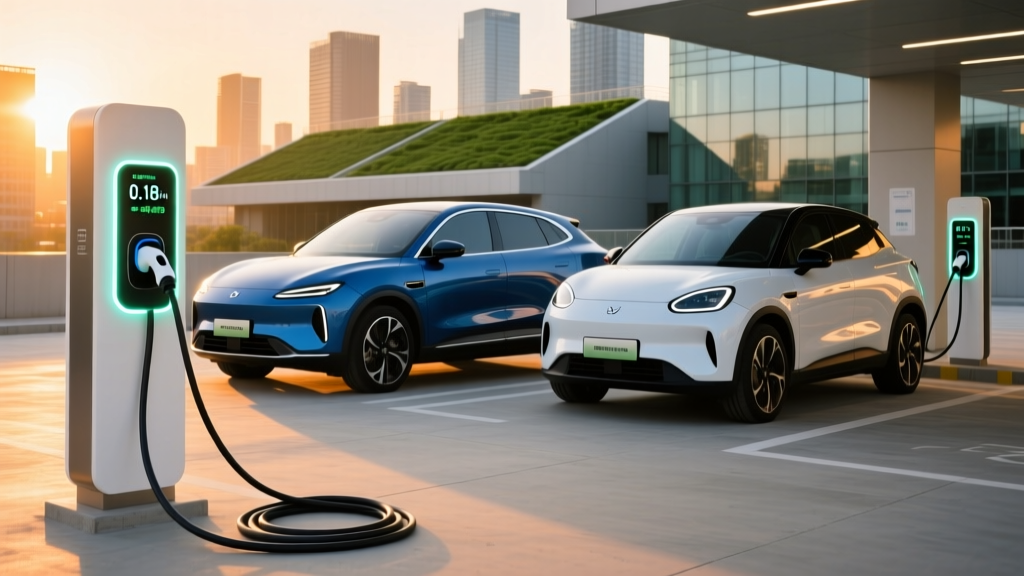
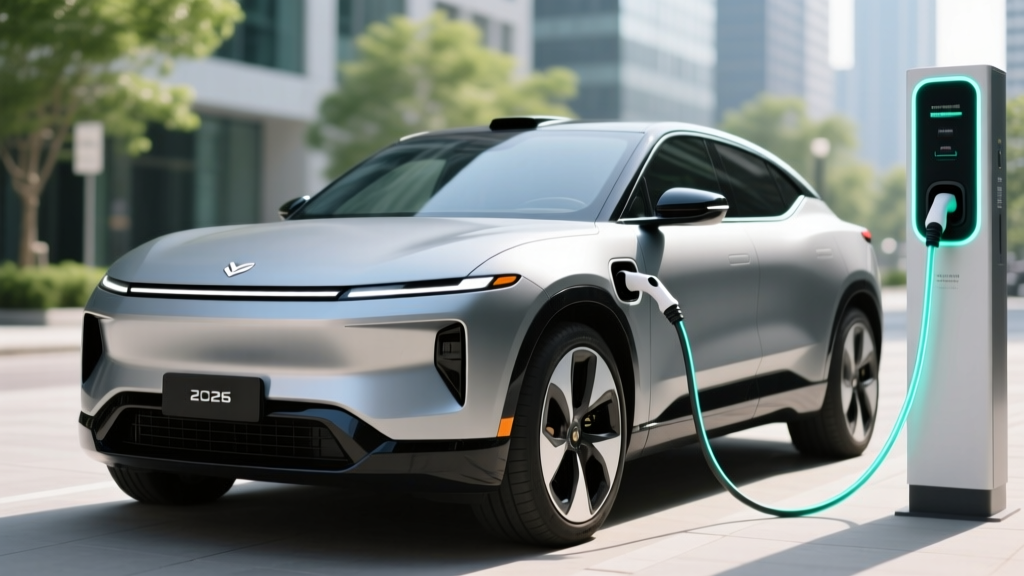
The 2026 Rivian R2 charge port is located on the rear driver-side quarter panel — a deliberate design choice shared with the larger R1T and R1S. This placement has real-world implications depending on how you charge:
- Home garage charging: If your Level 2 wall connector is mounted on the wall nearest the driver-side rear, the R2's port aligns naturally. Backing into a garage with the port side facing the charger is ideal. A wall mount on the passenger side means stretching a cable across the rear of the vehicle.
- Public DC fast charging: At pull-through Supercharger-style stalls (like Tesla's V4 or Electrify America's latest layouts), the rear-quarter placement works well — you simply back in. At older perpendicular CCS stalls with short cables, you may need to park with the driver side facing the dispenser, which can mean blocking an adjacent spot in tight lots.
- Curbside/Level 1 charging: The rear-quarter location is generally convenient for street-side charging since the port is accessible from the sidewalk without walking around the vehicle.
Rivian has adopted the NACS (North American Charging Standard) connector as the native port on the R2 for 2026. This means direct access to Tesla's Supercharger network — over 25,000 stalls in North America — without an adapter. For legacy CCS1 chargers (found at many Electrify America, EVgo, and ChargePoint stations), Rivian includes a NACS-to-CCS adapter in the vehicle.
| Attribute | Specification |
|---|---|
| Port Location | Rear driver-side quarter panel |
| Native Connector | NACS (Tesla-style) |
| CCS1 Compatibility | Via included NACS-to-CCS adapter |
| CHAdeMO Support | No (network effectively sunset in US) |
| J1772 Level 2 | Via NACS-to-J1772 adapter (included) |
EPA Range, Battery & Real-World Efficiency
The 2026 Rivian R2 launches with a Standard battery pack rated by the EPA at an estimated 330 miles on the combined cycle for the single-motor RWD configuration. The dual-motor AWD variant drops to approximately 300 miles EPA combined due to the added weight and mechanical drag of the front motor.
The battery uses a ~75 kWh usable capacity with LFP (lithium iron phosphate) chemistry in the Standard pack. LFP is a strategic choice for the R2: it offers a longer cycle life, greater thermal stability, and lower cost than NMC, though with a slight energy-density trade-off that contributes to the R2's modestly heavier curb weight versus some rivals. Rivian has indicated a larger Max battery pack (NMC chemistry, ~105 kWh usable) will follow, targeting 400+ miles, but it is not yet available at launch.
The EPA 330-mile figure assumes mixed driving at moderate temperatures. In real-world conditions:
• Highway (70-75 mph sustained): Expect ~270–290 miles in the RWD, ~250–270 miles in the AWD.
• Cold weather (below 32°F): Range drops 15–25%, putting the AWD at roughly 225–255 miles on a full charge.
• City/commute driving: You may slightly exceed the EPA estimate thanks to regenerative braking at low speeds.
Always plan road-trip charging stops with a 20% buffer below EPA figures.
| Configuration | EPA Range | Battery (Usable) | Chemistry | MPGe (Combined) | kWh/100mi |
|---|---|---|---|---|---|
| Single-Motor RWD | 330 mi | ~75 kWh | LFP | 130 MPGe (est.) | ~26 kWh |
| Dual-Motor AWD | 300 mi | ~75 kWh | LFP | 118 MPGe (est.) | ~29 kWh |
Source: Preliminary figures based on Rivian's official R2 page and EPA estimation methodology. Final fueleconomy.gov ratings to be confirmed at delivery.
Charging Speed: DC Fast Charge & Home Level 2
Charging speed is where the R2's LFP battery reveals both a strength and a limitation. LFP cells can accept aggressive charging profiles, but their energy density means fewer total miles added per minute of charging compared to a larger NMC pack.
| Charging Level | Max Power | Time / Rate | Notes |
|---|---|---|---|
| DC Fast Charge (NACS Supercharger) | ~175 kW peak | 10–80% in ~28 minutes | Charge curve tapers above 80%; sustained avg ~130 kW |
| DC Fast Charge (CCS via adapter) | ~150 kW peak | 10–80% in ~32 minutes | Adapter overhead slightly reduces throughput |
| Level 2 Home (11.5 kW / 48A) | 11.5 kW | ~30 miles of range per hour | Full 0–100% in ~7.5 hours |
| Level 2 Home (7.7 kW / 32A) | 7.7 kW | ~20 miles of range per hour | Common for NEMA 14-50 outlets on 40A circuits |
| Level 1 (120V) | ~1.4 kW | ~3–4 miles per hour | Emergency/top-up only |
Charging curve reality: The R2's peak 175 kW rate is achievable from roughly 10% to 45% State of Charge. After 60%, the rate tapers to around 90–100 kW, and above 80% it drops sharply to protect the LFP cells. For road trips, plan to charge from 10–80% and skip the slow final 20% unless you're stopping overnight.
Home charging setup: Rivian recommends a hardwired Level 2 wall connector on a 60-amp circuit for the full 11.5 kW rate. A NEMA 14-50 outlet on a 50-amp breaker delivers 7.7–9.6 kW depending on the EVSE. Installation costs typically range from $800 to $2,500 depending on panel capacity and conduit run length — budget for a potential panel upgrade if your home has a 100-amp service.
Performance, Drivetrain & Driving Dynamics
The R2 is built on Rivian's second-generation skateboard platform, lighter and more cost-efficient than the R1 architecture. Two drivetrain configurations are available at launch:
- Single-Motor RWD: ~285 horsepower, 0–60 mph in approximately 6.5 seconds. This is the efficiency-focused variant and the one that achieves the 330-mile EPA rating.
- Dual-Motor AWD: ~450 horsepower combined, 0–60 mph in approximately 4.5 seconds. The dual-motor setup provides torque vectoring and genuine off-road capability — a Rivian hallmark — with ground clearance of 8.4 inches and approach/departure angles that outclass most compact SUVs.
Both variants feature regenerative braking with one-pedal driving modes, adaptive damping, and Rivian's latest thermal management system with a heat pump for efficient cabin heating in cold weather — a feature that meaningfully preserves range in winter conditions compared to resistive heating.
| Spec | Single-Motor RWD | Dual-Motor AWD |
|---|---|---|
| Horsepower | ~285 hp | ~450 hp |
| 0–60 mph | ~6.5 sec | ~4.5 sec |
| Drivetrain | Rear-wheel drive | All-wheel drive |
| Ground Clearance | 8.4 in | 8.4 in |
| Towing Capacity | 3,300 lbs (est.) | 3,300 lbs (est.) |
Interior, Cargo Space & Technology
The R2 seats five passengers and prioritizes a practical, adventure-ready interior. Rivian has simplified the cabin compared to the R1S while retaining the brand's signature minimalist design language.
- Cargo volume: ~28 cubic feet behind the second row, ~65 cubic feet with the rear seats folded flat.
- Front trunk (frunk): ~10 cubic feet — useful for charging cables, groceries, or a small cooler. The frunk includes a drain plug for easy cleaning.
- Rear legroom: ~38 inches, competitive with the Model Y and Ioniq 5.
- Infotainment: 15.4-inch center touchscreen running Rivian's latest software, wireless Apple CarPlay and Android Auto, integrated navigation with automatic charge-stop routing.
- Driver assistance: Rivian's Driver+ system (SAE Level 2) includes adaptive cruise control, lane-centering, automatic emergency braking, and blind-spot monitoring. Hands-on-wheel supervision is required at all times — this is not a self-driving system.
- Unique features: Built-in air compressor (for tires and gear), camp kitchen accessory compatibility, gear tunnel pass-through for long items like skis or surfboards.
Rivian Driver+ is an SAE Level 2 driver-assistance system. The driver must remain engaged, keep hands on the wheel, and maintain awareness. It does not permit hands-off or eyes-off operation. Only Level 4 robotaxi services (e.g., Waymo in designated zones) operate without a human driver.
Pricing, Trim Levels & Federal Tax Credit Eligibility
The 2026 Rivian R2 launches in two primary trims, with a Performance variant expected later in the model year:
| Trim | Base MSRP | Est. After §30D Credit | Drivetrain |
|---|---|---|---|
| R2 Standard (RWD) | $45,000 | ~$37,500* | Single-Motor RWD |
| R2 Adventure (AWD) | $52,000 | ~$44,500* | Dual-Motor AWD |
*Federal tax credit estimate. Eligibility is not guaranteed and depends on multiple factors under IRS §30D rules:
- MSRP cap: SUVs must have an MSRP at or below $80,000 — both R2 trims qualify.
- Buyer income cap: Modified AGI must not exceed $150,000 (single), $225,000 (head of household), or $300,000 (joint). Exceed these thresholds and the credit phases out to zero.
- Battery sourcing: A percentage of critical minerals and battery components must be sourced from the US or free-trade-agreement countries. These thresholds increase annually. Rivian's LFP cells for the R2 are expected to meet 2026 requirements, but final certification is confirmed per VIN at purchase.
- Point-of-sale transfer: Eligible buyers can apply the up-to-$7,500 credit as an immediate price reduction at the dealership/direct-sale point, rather than waiting for a tax refund.
Always verify your personal eligibility with a tax professional and confirm the vehicle's VIN qualification on the IRS clean vehicle portal before finalizing your purchase.
Warranty Coverage
Rivian provides warranty coverage competitive with the EV segment standard:
- Battery pack: 8 years / 100,000 miles (whichever comes first), covering defects and capacity loss below 70% of original capacity.
- Powertrain: 8 years / 100,000 miles, covering motors, inverter, and reduction gear.
- Bumper-to-bumper: 5 years / 60,000 miles.
- Roadside assistance: 5 years / unlimited miles.
The 70% capacity retention threshold is industry-standard. Real-world LFP degradation data from other manufacturers suggests the R2's battery should retain 85–90% of its original capacity after 100,000 miles under normal use patterns — well above the warranty floor.
Who the Rivian R2 Is For — and Who Should Look Elsewhere
- You want a compact EV SUV with genuine off-road capability and adventure-ready features (air compressor, gear tunnel, camp kitchen compatibility).
- NACS native charging and direct Supercharger access are priorities for road-trip convenience.
- You value LFP battery chemistry for its longevity and the ability to charge to 100% daily without accelerated degradation concerns.
- You need a frunk plus a competitive cargo area for family gear.
- Maximum DC fast-charge speed is your top priority — the Hyundai Ioniq 5 charges at up to 240 kW (10–80% in ~18 min) versus the R2's ~175 kW and ~28 minutes.
- You need three rows of seating — the R2 seats five only; the R1S or Kia EV9 are three-row alternatives.
- You want the lowest possible starting price — the base Tesla Model Y undercuts the R2 by a small margin and benefits from the same Supercharger network natively.
Pros and Cons
- NACS native — full Supercharger access without an adapter
- LFP battery: long cycle life, safe for daily 100% charging
- Off-road capability rare in the compact EV SUV segment
- Heat pump standard — better cold-weather range preservation
- Frunk + gear tunnel + built-in air compressor
- Under $80K MSRP — qualifies for §30D tax credit (if eligible)
- DC fast-charge speed (~175 kW) trails the Ioniq 5 and EV6 (~240 kW)
- Only five seats — no three-row option
- Rear driver-side charge port can be awkward at some public CCS stalls
- Rivian's service center network is still expanding in rural areas
- Max battery pack (400+ mi) not yet available at launch
Frequently Asked Questions
Where is the Rivian R2 charge port located?
The R2's charge port is on the rear driver-side quarter panel. It uses the NACS connector natively, and Rivian includes a CCS1 adapter for legacy fast-charging stations.
What is the real-world range of the Rivian R2?
The EPA rates the single-motor RWD at 330 miles combined. Expect 270–290 miles on sustained highway driving and 225–255 miles in freezing temperatures. The AWD variant rates at 300 miles EPA with proportionally lower real-world figures.
How fast does the R2 charge at home and on the road?
On a DC fast charger, the R2 peaks at ~175 kW and charges from 10–80% in approximately 28 minutes. At home on a Level 2 (11.5 kW) connection, it adds about 30 miles of range per hour, reaching a full charge overnight in roughly 7.5 hours.
Does the 2026 Rivian R2 qualify for the $7,500 federal EV tax credit?
Both trims fall under the $80,000 SUV MSRP cap. However, your personal eligibility depends on income limits ($150K single / $300K joint), and the vehicle must meet 2026 battery-sourcing requirements, which are confirmed per VIN. The credit can be transferred at point of sale for an immediate price reduction. Consult IRS §30D guidelines and a tax professional.
Is the Rivian R2 worth buying over the Tesla Model Y or Hyundai Ioniq 5?
The R2 excels for buyers who want adventure-ready features (off-road clearance, air compressor, gear tunnel), NACS Supercharger access, and LFP battery longevity. The Model Y offers slightly more cargo space and a lower base price. The Ioniq 5 charges significantly faster on DC and has a more spacious rear seat. Your priority — adventure utility vs. charging speed vs. price — should drive the decision.
What is the Rivian R2's battery warranty?
Rivian covers the R2 battery pack for 8 years or 100,000 miles, guaranteeing at least 70% capacity retention. The powertrain receives the same 8-year/100,000-mile coverage.