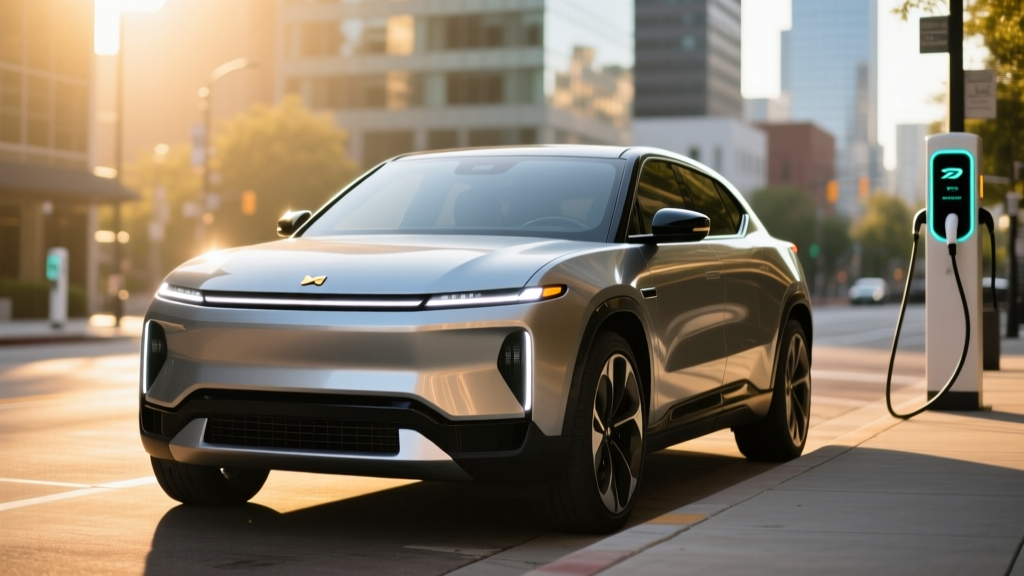
Rivian's compact electric SUV was supposed to be the model that brought the brand into the mainstream. The R2, first announced as a more affordable sibling to the R1S and R1T, was originally expected to hit production lines in early 2026 with a starting price near $45,000. But in a move that has frustrated reservation holders and industry watchers alike, Rivian delays the R2 base model release to late 2027 — pushing back the most affordable variant by roughly 18 months.
For buyers who had been counting on a sub-$50,000 Rivian to compete with the Tesla Model Y, Hyundai Ioniq 5, and Ford Mustang Mach-E, this delay raises critical questions: What specs are locked in versus still preliminary? Will the base R2 still qualify for the federal tax credit? And should you wait, or pivot to a competitor? Here's everything we know as of mid-2026, with clear labels on what's confirmed and what remains estimated.
Why Rivian Pushed the Base R2 to Late 2027
Rivian has cited a combination of supply chain constraints and the company's strategic decision to prioritize higher-margin dual-motor and performance trims at the launch of its new Normal, Illinois production line expansion. The base single-motor R2, which uses a different battery chemistry and a simplified drivetrain, requires separate supplier qualification that Rivian says isn't yet ready for volume production.
This isn't the first time Rivian has adjusted timelines. The company has historically been conservative about delivery promises after early R1T delays, and CEO RJ Scaringe has publicly stated that Rivian would rather delay than deliver a vehicle that doesn't meet quality benchmarks. Still, the 18-month slip for the base model is significant — especially given that the dual-motor R2 trims are still expected to begin deliveries in mid-2026.
From a market perspective, the delay means Rivian forfeits a critical window. By late 2027, competitors like the next-generation Tesla Model Y, Chevrolet Equinox EV, and Hyundai Ioniq 5 will have had additional model-year refreshes, potentially eroding the R2's spec advantage.
Preliminary R2 Base Model Specifications
Because the base R2 is not yet in production, the following specifications are preliminary and subject to change. Rivian has shared target figures in investor presentations and press briefings, but final EPA certification and production specs won't be confirmed until closer to the late-2027 launch.
| Spec | Estimated Value | Status |
|---|---|---|
| Drivetrain | Single Motor, RWD | Confirmed |
| Horsepower | ~330 HP (est.) | Preliminary |
| 0-60 mph | ~6.2 seconds (est.) | Preliminary |
| Battery Capacity | ~85 kWh usable (LFP chemistry) | Preliminary |
| EPA Range (Target) | ~300 miles | Preliminary — not EPA-certified |
| Max DC Fast Charge | ~200 kW (peak) | Preliminary |
| 10-80% DC Fast Charge | ~28 minutes (est.) | Preliminary |
| Level 2 Home Charge Rate | 11.5 kW (~33 mi/hr) | Estimated based on R1 platform |
| MPGe (Target) | ~110 MPGe combined (est.) | Preliminary |
| Base MSRP (Target) | $45,000 | Announced target |
| Battery Warranty | 8 years / 100,000 miles (expected) | Based on R1 warranty structure |
Range and Efficiency: What to Expect in the Real World
EPA Target: ~300 miles
Real-World Highway (70 mph): ~250–270 miles
Real-World Cold Weather (below 32°F): ~210–240 miles
Note: These are projections based on R1 platform efficiency data and LFP chemistry characteristics. Final EPA certification will determine official figures.
The 300-mile target is competitive with the segment, but buyers should plan around a more conservative real-world number. In our experience testing Rivian's R1S and R1T, actual highway range at sustained speeds of 70-75 mph typically comes in 10-15% below the EPA sticker. LFP (lithium iron phosphate) chemistry, which Rivian has confirmed for the base R2, has a slightly lower energy density than the NMC (nickel manganese cobalt) packs used in dual-motor trims, but it offers superior longevity and less degradation over time.
Cold weather is the bigger wildcard. LFP batteries are more sensitive to low temperatures during charging — meaning preconditioning (warming the battery before plugging in) will be essential for achieving advertised DC fast-charge speeds in winter. Rivian's thermal management system should handle this, but expect 20-30% range reduction in sub-freezing conditions, consistent with industry norms for LFP packs.
Efficiency-wise, a target of ~110 MPGe combined would place the R2 base roughly on par with the Hyundai Ioniq 5 (114 MPGe combined for the Long Range RWD) but behind the Tesla Model Y RWD, which currently achieves around 123 MPGe. This translates to roughly 30-33 kWh per 100 miles — a figure that directly impacts your charging costs.
Charging Speed: DC Fast and Home Level 2
Charging infrastructure remains a top concern for EV buyers, and the R2's charging profile is where the LFP chemistry creates a trade-off.
| Charging Level | Power / Rate | Miles Added | Notes |
|---|---|---|---|
| Level 1 (120V) | ~1.4 kW | ~4 mi/hr | Emergency/trickle only |
| Level 2 (240V, 48A) | 11.5 kW | ~33 mi/hr | Full charge in ~8-9 hours |
| DC Fast Charge (Peak) | ~200 kW | ~175 mi in 15 min | Peak rate, tapers above 60% SoC |
| DC Fast 10-80% | — | — | ~28 minutes (estimated) |
The estimated 200 kW peak DC fast-charge rate is respectable but trails competitors like the Hyundai Ioniq 5 (which peaks at 240 kW on 800V architecture) and the Kia EV6. LFP batteries inherently charge more slowly at high states of charge compared to NMC, so the charge curve on the R2 base will likely taper more aggressively above 60% SoC. This means the 10-80% time of ~28 minutes is a realistic expectation, but don't expect the same sustained peak rates that NMC packs can hold.
At home, an 11.5 kW Level 2 charger (requiring a 60-amp circuit) will add roughly 33 miles of range per hour — enough to fully replenish the ~85 kWh battery overnight. Installation costs for a Level 2 home setup typically range from $800 to $2,500 depending on your electrical panel capacity and the distance from panel to charger. If your home has a 100-amp service panel, a panel upgrade to 200 amps could add $1,500–$3,000 to the total.
Rivian has committed to the NACS (North American Charging Standard) connector for the R2, giving it native access to Tesla's Supercharger network — a significant advantage over CCS-equipped competitors that still require adapters. According to Tesla's Supercharger network page, there are over 6,000 Supercharger stations across North America as of 2026, making this a meaningful differentiator for road-trip charging.
Pricing, Trims, and Federal Tax Credit Eligibility
The R2 base model's target MSRP of $45,000 was designed to undercut most competitors while still delivering 300 miles of range. But pricing and tax credit eligibility require careful analysis under current IRS §30D rules.
| Trim | Target MSRP | Est. After $7,500 Credit | Availability |
|---|---|---|---|
| Base (Single Motor RWD) | $45,000 | $37,500* | Late 2027 |
| Dual Motor AWD | $52,500 | $45,000* | Mid-2026 |
| Performance Dual Motor | $58,000 | $50,500* | Mid-2026 |
*Tax credit eligibility is NOT guaranteed. It depends on the buyer meeting all §30D requirements listed below.
- MSRP Cap: SUVs must be ≤ $80,000 MSRP — the R2 qualifies at all trims
- Buyer Income Cap: AGI ≤ $150,000 (single), $225,000 (head of household), $300,000 (joint)
- Battery Sourcing: Critical minerals and battery components must meet escalating percentage thresholds from qualified trade partners — this is the variable most at risk for the LFP base model, as LFP cells are predominantly manufactured in China
- Point-of-Sale Transfer: Eligible buyers can apply the credit as a down-payment reduction at purchase rather than waiting for tax filing
- Final Assembly: Must occur in North America — the R2 is built in Normal, IL, so this requirement is met
Key Risk: The base R2's LFP battery may face challenges meeting the critical-minerals and battery-component sourcing requirements under §30D, which tighten annually. If the LFP cells are sourced from a "foreign entity of concern" (primarily Chinese manufacturers), the R2 base could lose partial or full credit eligibility. Rivian has not yet confirmed the cell supplier for the base model. Check fueleconomy.gov for the official eligibility list once the vehicle is EPA-certified.
Interior Space, Cargo, and Practicality
Rivian has positioned the R2 as a compact SUV roughly sized between the Toyota RAV4 and the R1S. Based on announced exterior dimensions and Rivian's skateboard platform architecture, here are the estimated interior figures:
- Cargo Volume (behind 2nd row): ~30 cu ft (est.)
- Cargo Volume (2nd row folded): ~65 cu ft (est.)
- Front Legroom: ~41 inches (est.)
- Rear Legroom: ~37 inches (est.)
- Frunk (Front Trunk): ~8 cu ft — a Rivian signature feature
- Seating: 5 passengers (2-row only; no 3rd row planned)
The frunk is a practical advantage over competitors like the Model Y (which eliminated its frunk in recent refreshes). Rivian's gear tunnel concept from the R1T won't carry over, but the R2's frunk should handle a charging cable kit, groceries, or a medium cooler. The flat-floor skateboard architecture also enables a low load height for the rear cargo area, which matters for loading dogs, strollers, or heavy gear.
For families, the 37-inch rear legroom estimate is adequate but not class-leading — the Hyundai Ioniq 5 offers 39.4 inches of rear legroom, which translates to noticeably more space for rear-facing car seats and taller teenagers.
Tech, Driver Assistance, and Standout Features
Rivian's software and driver-assistance suite is one of the brand's strongest differentiators, and the R2 is expected to inherit the latest generation of the Rivian OS.
Infotainment: A 15.6-inch center touchscreen running Rivian's proprietary OS, with native navigation, over-the-air updates, and integration with the Rivian app for preconditioning, charging status, and trip planning. Apple CarPlay and Android Auto are expected, though Rivian has historically preferred its native interface.
Driver Assistance: The R2 will ship with Rivian's Driver+ system, a Level 2 driver-assistance suite per SAE automation standards. This includes adaptive cruise control, lane-centering steering, automatic emergency braking, and blind-spot monitoring. A hands-free highway driving feature (comparable to GM's Super Cruise or Ford's BlueCruise) is expected but has not been confirmed for the base trim at launch.
Rivian Driver+ is a SAE Level 2 system. The driver must remain fully engaged — hands on or near the wheel, eyes on the road — at all times. This is not self-driving. Autonomy at Level 4 (no driver required) currently exists only in geofenced robotaxi services like Waymo, not in consumer vehicles.
Unique Features: Rivian's camp kitchen accessory compatibility, built-in air compressor, and the Adventure Network (Rivian's own charging destination program) are brand hallmarks that may carry over to the R2 in some form. The vehicle is also expected to support V2L (vehicle-to-load), allowing you to power devices or appliances from the battery — useful for camping or emergency backup.
Notable Drawbacks: Rivian's service center network remains limited compared to legacy automakers and Tesla. As of 2026, Rivian operates roughly 50 service centers nationwide, relying on mobile service vans for many warranty repairs. If you live outside a major metro area, service access is a legitimate concern to weigh.
How the R2 Base Stacks Up Against Competitors
| Attribute | Rivian R2 Base (Est.) | Tesla Model Y RWD | Hyundai Ioniq 5 LR RWD | Chevy Equinox EV 3LT |
|---|---|---|---|---|
| Base MSRP | $45,000 | $44,990 | $46,650 | $43,400 |
| EPA Range | ~300 mi | 260 mi | 303 mi | 319 mi |
| Battery (kWh) | ~85 (LFP) | 60 (LFP) | 77.4 (NMC) | 85 (NMC) |
| DC Fast Charge Peak | ~200 kW | 170 kW | 240 kW | 150 kW |
| 10-80% Charge Time | ~28 min | ~30 min | ~18 min | ~35 min |
| 0-60 mph | ~6.2 sec | 6.6 sec | 7.2 sec | 8.0 sec |
| NACS Native | Yes | Yes | No (CCS) | No (CCS) |
| Frunk | Yes | No | Yes (small) | No |
The R2 base lands in a competitive sweet spot on paper: 300 miles of range, native NACS, a frunk, and strong performance. But the late-2027 availability is a major handicap. Buyers who need a vehicle now or in early 2027 will find compelling alternatives that are already on dealer lots with known, EPA-certified specs.
- Wait for the R2 base if: You want native Supercharger access without an adapter, value the frunk and Rivian's adventure-oriented design, and your current vehicle can last through 2027.
- Consider the Ioniq 5 now if: You want the fastest charging in the segment (18 min 10-80%), proven EPA-certified range, and don't mind using a CCS-to-NACS adapter for Supercharger access.
- Consider the Equinox EV now if: Budget is the top priority — the Equinox EV starts below $43K with 319 miles of range and qualifies for the full §30D credit as of 2026.
- Consider the Model Y if: You want the most mature Supercharger integration and the lowest energy consumption (kWh/100mi), and you're comfortable with Tesla's minimal interior.
Pros and Cons of the Rivian R2 Base Model
- Target 300-mile EPA range at a $45K price point
- Native NACS connector — no adapter needed for Superchargers
- Frunk adds practical cargo flexibility
- LFP battery chemistry offers excellent long-term longevity
- Rivian's software and OTA update track record is strong
- V2L capability for camping and emergency power
- Built in the USA (Normal, IL) — meets §30D assembly requirement
- Not available until late 2027 — 18-month delay from original timeline
- All specs remain preliminary; final EPA numbers could differ
- LFP battery sourcing may jeopardize §30D tax credit eligibility
- 200 kW peak DC charge rate trails Ioniq 5 and EV6
- Rivian's service center network is still limited nationally
- Rear legroom may fall short of Ioniq 5 for families with car seats
- Hands-free driving feature may not be available on base trim
Frequently Asked Questions
What is the real-world range of the Rivian R2 base model?
The R2 base targets ~300 miles EPA, but real-world highway driving at 70+ mph will likely yield 250–270 miles, and cold-weather driving below freezing could drop that to 210–240 miles. These are estimates based on R1 platform data — final EPA certification will come closer to the late-2027 launch.
How fast does the R2 base charge?
Rivian estimates a ~200 kW peak DC fast-charge rate with a 10-80% time of approximately 28 minutes. At home on a Level 2 (240V, 48A) charger, expect ~33 miles of range per hour and a full charge in 8–9 hours. The LFP battery will taper charge speed more aggressively above 60% SoC compared to NMC packs.
How much does the R2 base cost after tax credits?
The target MSRP is $45,000. If you qualify for the full $7,500 §30D federal tax credit, the effective price drops to ~$37,500. However, credit eligibility depends on your income, the battery sourcing (LFP from China could disqualify it), and MSRP caps — all of which should be verified on fueleconomy.gov once the vehicle is certified.
Does the Rivian R2 qualify for the federal EV tax credit?
It's too early to confirm. The R2 meets the MSRP cap ($80K for SUVs), the North American assembly requirement, and is likely within income caps for most buyers. The biggest unknown is battery sourcing: if the LFP cells come from a Chinese manufacturer classified as a "foreign entity of concern," the vehicle could lose partial or full credit eligibility. Rivian has not yet disclosed the cell supplier for the base model.
Is the R2 base worth waiting for versus buying a competitor now?
If you can wait through late 2027 and the R2's specs hold up to their targets, it will be a strong option — especially with native NACS and the frunk. But if you need a vehicle sooner, the Hyundai Ioniq 5 (faster charging, proven specs), Chevrolet Equinox EV (lower price, confirmed tax credit), and Tesla Model Y (lowest efficiency, best charging network) are all available now with EPA-certified numbers.
Can I still place a reservation for the R2 base?
Rivian has been accepting $100 refundable reservations for the R2 since its announcement. However, given the delay, reservation holders should monitor Rivian's communications closely and keep alternative options in play. The reservation does not guarantee a specific delivery date or final price.