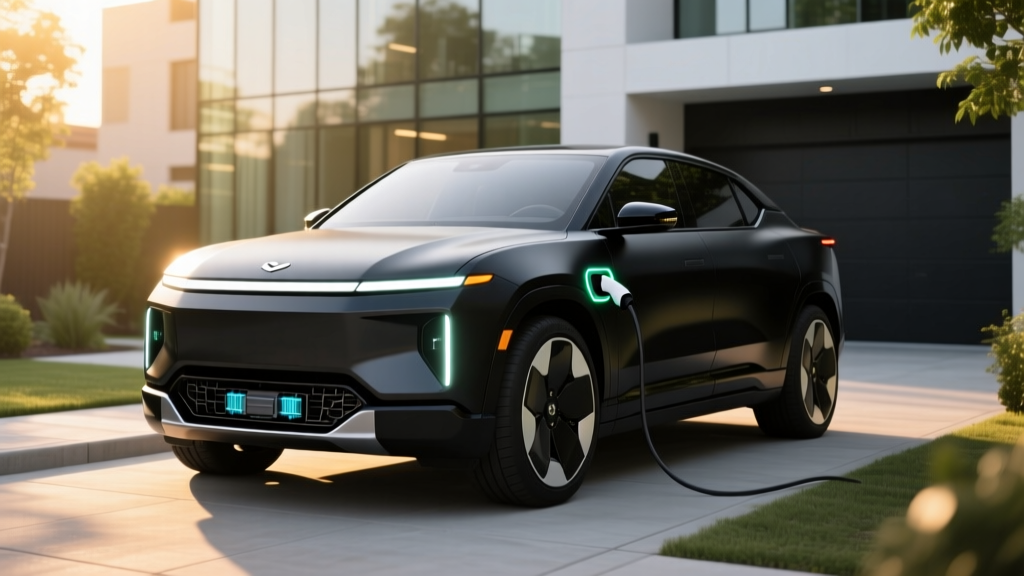
The Rivian R2 is the compact electric SUV the company is betting will finally move it from niche adventure brand to volume automaker. As the new R2 assembly line at Rivian's Normal, Illinois factory enters its production ramp phase in 2026, we now have enough preliminary data to evaluate the vehicle's specs, pricing strategy, and real-world viability against established competitors like the Tesla Model Y, Hyundai Ioniq 5, and Ford Mustang Mach-E.
This profile covers what we know from Rivian's official disclosures and early production data. Because the R2 is still in its initial manufacturing rollout, some figures remain preliminary and are marked accordingly. We will update this review as EPA certification and independent testing data become available.
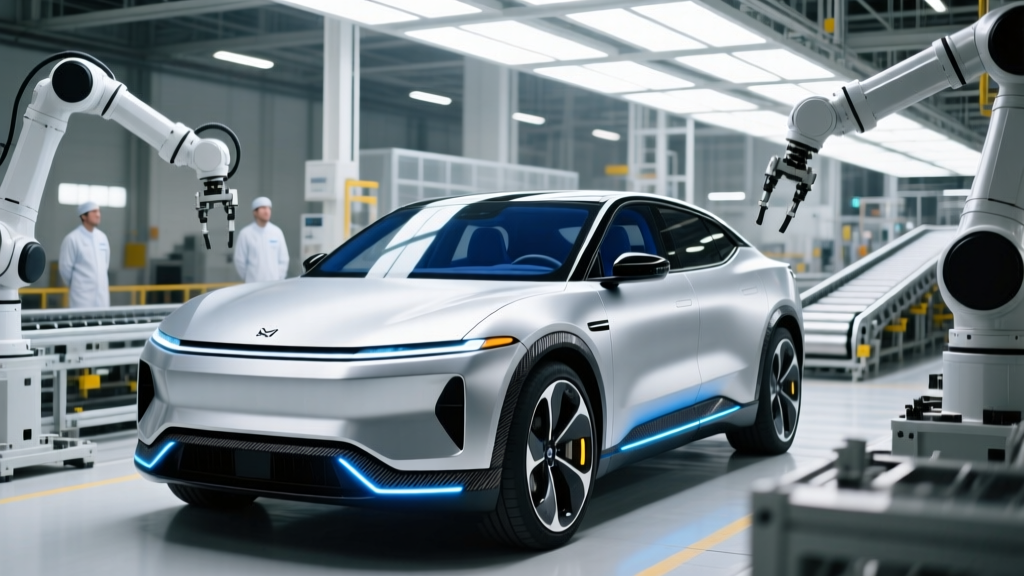
The Rivian R2 Assembly Line: What Changed at Normal
Rivian invested heavily in retooling its Normal, Illinois facility to accommodate the R2 alongside the larger R1S and R1T. The R2 assembly line represents a fundamental shift in manufacturing philosophy for the company — moving from low-volume, high-complexity builds (the R1 platform has thousands of configuration combinations) to a streamlined, higher-throughput process targeting mainstream price points.
Key changes to the factory include a new body shop optimized for the R2's smaller unibody platform, updated paint-shop capacity, and a revised final-assembly sequence designed to reduce build time per vehicle. Rivian has stated publicly that the R2 assembly line is engineered for an eventual annual capacity well above the R1 platform's output, though exact figures depend on demand and supply-chain stability.
For buyers, the manufacturing story matters because production efficiency directly affects delivery timelines, build quality consistency, and ultimately whether Rivian can sustain the R2's aggressive starting price. The R1T and R1S launched with well-documented early-production quality issues that took years to fully resolve. The R2 assembly line's maturity will be a factor to watch through 2026 and into 2027.
Preliminary Specs: Range, Battery, and Efficiency
| Specification | Value |
|---|---|
| EPA Est. Range (preliminary) | ~330 miles |
| Battery Capacity (usable, est.) | ~75 kWh |
| Battery Chemistry | LFP (Lithium Iron Phosphate) |
| Drivetrain | Dual-Motor AWD |
| Horsepower (est.) | ~450 hp |
| 0-60 mph (est.) | ~4.5 seconds |
| Efficiency (est.) | ~105 MPGe / ~32 kWh/100 mi |
| Max DC Fast Charge Rate | ~200 kW (peak) |
| 10-80% DC Fast Charge (est.) | ~25 minutes |
| Level 2 Home Charging (est.) | ~11.5 kW / ~33 mi/hr |
| Base MSRP | $45,000 |
| Battery/Powertrain Warranty | 8 years / 100,000 miles |
Note: Specs above reflect Rivian's published estimates and early production data. Final EPA certification figures may differ. Source: Rivian R2 official page.
Rivian targets approximately 330 miles of EPA-estimated range for the dual-motor AWD configuration. In real-world driving, expect:
- Highway (70-75 mph, moderate temps): ~265-285 miles before needing to charge
- City/suburban mixed driving: ~300-320 miles, closer to the EPA sticker
- Cold weather (below 30°F): ~220-260 miles, depending on cabin heating demands and whether the R2 includes a heat pump (expected but not yet confirmed for base trim)
LFP chemistry typically maintains a more linear discharge curve than NMC, meaning range predictions on the dash tend to stay more accurate as the battery depletes. However, LFP cells are heavier per kWh, which partly explains why the R2's efficiency may trail lighter competitors.
Charging: DC Fast Charge and Home Level 2 Speeds
Charging speed is where the R2's LFP battery chemistry presents a trade-off worth understanding.
| Charging Level | Power (kW) | Speed / Time |
|---|---|---|
| Level 1 (120V household) | ~1.4 kW | ~4 miles per hour |
| Level 2 (240V home, 48A) | ~11.5 kW | ~33 miles per hour |
| DC Fast Charge (peak) | ~200 kW | 10-80% in ~25 min |
| DC Fast Charge (sustained avg) | ~140-160 kW | Expect taper above 60% SoC |
The estimated 200 kW peak DC fast-charge rate is competitive but not class-leading. The Hyundai Ioniq 5, for example, peaks at 240 kW on its 800V architecture and can hit 10-80% in roughly 18 minutes. The R2's ~25-minute 10-80% estimate is respectable, but on long road trips that difference compounds across multiple stops.
Charge curve reality: Like all EVs, the R2 will not sustain its peak 200 kW rate for the entire session. LFP batteries tend to have a slightly more aggressive taper above 60-70% state of charge compared to NMC cells. Plan your road-trip charging stops around the 10-60% window where charge rates are highest, and avoid charging past 80% unless it's your final stop.
For home charging, an 11.5 kW Level 2 setup (requiring a 60-amp circuit and hardwired installation by a licensed electrician) will replenish roughly 33 miles of range per hour — enough to fully recharge overnight from near-empty. Budget $800-$1,500 for a quality Level 2 home charger plus professional installation, depending on your electrical panel's capacity and distance from the panel to your parking spot.
Performance, Drivetrain, and Cargo
The R2 launches with a dual-motor all-wheel-drive powertrain producing an estimated 450 horsepower. A single-motor rear-wheel-drive variant is expected to follow, likely with lower output and slightly extended range, though Rivian has not confirmed timing or specs for that configuration.
The estimated 4.5-second 0-60 mph time places the R2 in quick-but-not-extreme territory — comparable to a Ford Mustang Mach-E Premium AWD and slightly behind the Tesla Model Y Performance. For a compact family SUV, this is more than adequate for highway merging and passing.
Cargo and passenger space are where the R2 aims to punch above its class. Rivian has targeted the following interior dimensions:
- Cargo volume (rear seats up): ~28 cu ft
- Cargo volume (rear seats folded): ~65 cu ft
- Front trunk (frunk): ~11 cu ft — a signature Rivian feature carried over from the R1 platform
- Rear legroom: ~38 inches
- Seating: 5-passenger, two rows
The frunk is a genuine differentiator. Most competitors in this segment (Model Y, Ioniq 5) offer minimal or no front trunk space. Rivian's ~11 cu ft frunk adds meaningful utility for groceries, charging cables, or gear you want separated from the main cargo area.
Pricing, Trims, and Federal Tax Credit Eligibility
| Trim | Base MSRP | Est. After §30D Credit* |
|---|---|---|
| Standard (Dual-Motor AWD) | $45,000 | $37,500 |
| Standard (Single-Motor RWD, upcoming) | ~$40,000 (est.) | ~$32,500 |
| Adventure / Upgraded Trim (est.) | ~$52,000 | ~$44,500 |
*Tax credit figures assume full $7,500 eligibility under IRS §30D. Actual eligibility depends on multiple factors — see checklist below.
The $45,000 starting price for the dual-motor R2 is aggressive and positions it directly against the Tesla Model Y Long Range (approximately $44,990 MSRP in 2026) and below many AWD configurations of the Ford Mustang Mach-E and Hyundai Ioniq 5.
- Vehicle MSRP cap: SUVs must be at or below $80,000 — the R2 qualifies on price.
- Buyer income cap: AGI must not exceed $150,000 (single), $225,000 (head of household), or $300,000 (joint). Check your modified AGI against IRS §30D rules.
- Battery component sourcing: A percentage of battery components must be manufactured or assembled in North America. Rivian's US-built battery packs are expected to meet this threshold, but final determination depends on the specific model year and supply-chain composition.
- Critical minerals requirement: A percentage of critical minerals must be sourced from the US or free-trade-agreement countries. This is the most volatile requirement and changes annually.
- Point-of-sale transfer: As of 2024+, buyers can transfer the credit to the dealer at purchase, reducing the upfront price rather than waiting for a tax refund. Confirm with your Rivian delivery advisor.
Always verify eligibility with a tax professional and the latest IRS guidance before purchasing. Rules change and vehicle eligibility lists are updated periodically.
Tech, Driver Assistance, and Software
Rivian has built its reputation on software-forward vehicle design, and the R2 carries that philosophy into a more accessible price point.
Infotainment: The R2 features a 15.6-inch central touchscreen running Rivian's proprietary operating system, with integrated navigation, over-the-air update capability, and native support for trip planning that factors in charging stops. Wireless Apple CarPlay and Android Auto are expected, though Rivian has historically preferred its native interface.
Driver assistance (Rivian Driver+): The R2 will ship with Rivian's Level 2 driver-assistance suite, including adaptive cruise control, lane-centering, automatic emergency braking, and blind-spot monitoring. A hands-free highway driving feature (similar in concept to GM's Super Cruise or Ford's BlueCruise) is planned for over-the-air delivery, but it is not available at launch.
Rivian Driver+ is an SAE Level 2 driver-assistance system. The driver must remain fully engaged — hands on or near the wheel, eyes on the road — at all times. This is not autonomous or "self-driving" capability. Only Level 4 robotaxi services (Waymo, Zoox) operate without a human driver in defined areas.
Notable tech features:
- Over-the-air software updates for performance, range optimization, and feature additions
- Integrated camp kitchen and gear tunnel accessories (Rivian's adventure-brand heritage)
- Vehicle-to-load (V2L) capability for powering external devices — expected but not confirmed at base trim
- Digital key via smartphone
How the R2 Compares to Key Competitors
| Spec | Rivian R2 (AWD) | Tesla Model Y LR (AWD) | Hyundai Ioniq 5 (AWD) |
|---|---|---|---|
| EPA Range (est.) | ~330 mi | ~320 mi | ~290 mi |
| Battery (kWh, usable) | ~75 kWh (LFP) | ~75 kWh (NMC) | ~77.4 kWh (NMC) |
| Peak DC Charge | ~200 kW | ~250 kW | ~240 kW (800V) |
| 10-80% Charge Time | ~25 min | ~22 min | ~18 min |
| 0-60 mph | ~4.5 sec | ~4.8 sec | ~4.5 sec |
| Base MSRP (AWD) | $45,000 | ~$44,990 | ~$50,250 |
| Frunk | ~11 cu ft | ~4.1 cu ft | ~0.85 cu ft |
| Charging Network | NACS (Supercharger access) | NACS (Supercharger) | CCS → NACS adapter |
The R2's competitive positioning is strong on paper. Its estimated 330-mile range and massive frunk are genuine advantages. The trade-off is DC fast-charging speed — both the Model Y and Ioniq 5 charge noticeably faster on road trips, which matters if you regularly drive routes longer than 300 miles.
Rivian has confirmed the R2 will use the NACS (Tesla) charging connector natively, granting access to the Supercharger network from day one. This eliminates the adapter dependency that CCS-equipped competitors currently face.
- Choose the R2 if: You want a compact AWD electric SUV with standout cargo versatility (frunk + generous rear cargo), you prioritize native Supercharger access, and you value Rivian's adventure-oriented design ethos and over-the-air improvement track record.
- Choose the Tesla Model Y if: Fastest possible DC charging and the most mature Supercharger network experience are your top priorities, or you want the most proven high-volume production platform.
- Choose the Hyundai Ioniq 5 if: Ultra-fast 800V charging (18-min 10-80%) matters for your road-trip habits, and you prefer a more conventional dealership service network.
Pros, Cons, and Ownership Considerations
- Estimated 330-mile EPA range is competitive or class-leading
- Massive ~11 cu ft frunk — best in segment by a wide margin
- Native NACS connector with Tesla Supercharger access
- $45,000 AWD starting price undercuts many competitors
- LFP battery chemistry offers long cycle life and less degradation concern
- Rivian's over-the-air update track record is strong
- ~200 kW peak DC charge rate trails Model Y and Ioniq 5
- Early-production quality risk — R2 assembly line is new and unproven at volume
- Hands-free driving feature not available at launch
- Service center network still expanding — may be sparse in some regions
- LFP battery is heavier; cold-weather range loss may be more pronounced
- Final EPA figures and pricing not yet locked — specs may shift
Warranty coverage is expected at 8 years / 100,000 miles for the battery pack and drive unit, with a 5-year / 60,000-mile bumper-to-bumper limited warranty. These figures align with industry norms, though Rivian's relatively short track record means long-term reliability data is still limited compared to legacy automakers. The LFP battery chemistry should ease degradation concerns — LFP cells typically retain capacity better over high cycle counts than NMC, though they are more sensitive to extreme cold during charging.
Frequently Asked Questions
What is the real-world range of the Rivian R2?
Rivian targets approximately 330 miles of EPA-estimated range. In real-world highway driving at 70-75 mph, expect roughly 265-285 miles. In cold weather (below 30°F), that figure may drop to 220-260 miles depending on heating use and whether a heat pump is equipped.
How fast does the R2 charge at home and on the road?
At home on a 240V Level 2 charger (~11.5 kW), the R2 adds approximately 33 miles of range per hour, fully recharging overnight. On DC fast chargers, it peaks at roughly 200 kW and can charge from 10-80% in an estimated 25 minutes, with charge speed tapering above 60-70% state of charge.
How much does the Rivian R2 cost after the federal tax credit?
The base dual-motor AWD R2 starts at $45,000 MSRP. If you qualify for the full $7,500 federal tax credit under IRS §30D (subject to income caps, battery sourcing rules, and MSRP limits), the effective price drops to approximately $37,500. Verify eligibility with the IRS and a tax professional before purchase.
Does the Rivian R2 qualify for the federal EV tax credit?
The R2 is expected to qualify based on its MSRP (well under the $80,000 SUV cap), US assembly, and anticipated battery sourcing compliance. However, eligibility depends on your personal income (AGI caps apply), the specific battery component and critical-mineral sourcing for your production batch, and current-year IRS rules. Always confirm before purchasing.
Is the Rivian R2 worth buying over the Tesla Model Y or Hyundai Ioniq 5?
The R2 is compelling if you value cargo versatility (that frunk is unmatched), native Supercharger access without an adapter, and Rivian's adventure-oriented design. Choose the Model Y if charging speed and production maturity matter most. Choose the Ioniq 5 if 800V ultra-fast charging is your priority for frequent road trips.
When can I actually buy and take delivery of the R2?
Rivian began initial R2 production on its new assembly line in the first half of 2026, with customer deliveries ramping through the year. Reservation holders are being fulfilled first. Check Rivian's official R2 page for current delivery timelines in your region.
What battery chemistry does the R2 use, and why does it matter?
The R2 is expected to use LFP (lithium iron phosphate) battery cells. LFP offers longer cycle life, less degradation over time, and lower cost compared to NMC chemistry. The trade-off is slightly higher weight per kWh and more pronounced performance loss in very cold temperatures. For most owners, LFP's longevity benefits outweigh these downsides.
This article will be updated as final EPA certification data, independent testing results, and confirmed pricing become available. Last updated: 2026.