Quick Verdict: What the R2 Means for Rivian and EV Buyers
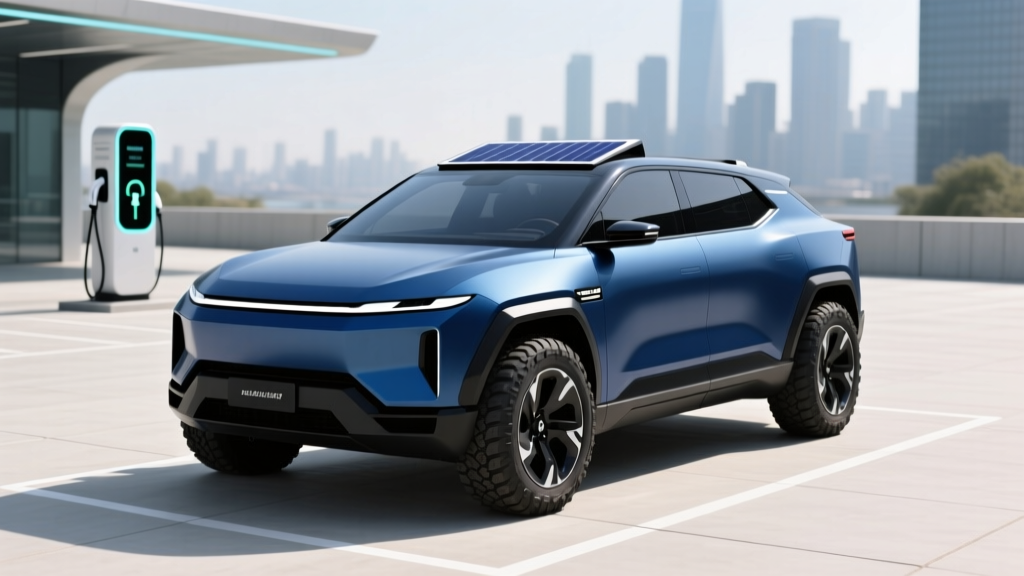
The Rivian R2 is the automaker's most consequential vehicle since the R1T pickup. Slotted below the R1S and R1T in both size and price, the midsize electric SUV targets the heart of the US market — compact-to-midsize crossover buyers who want genuine off-road capability, 300+ miles of range, and a starting price near $45,000. With the Rivian R2 production 2026 target set for the first half of the year at the company's Normal, Illinois assembly plant, pre-order holders and new buyers are scrutinizing every confirmed detail.
This preview compiles everything Rivian has officially disclosed — alongside educated projections based on the R1 platform architecture — so you can decide whether to reserve, wait, or cross-shop. Because the R2 has not yet entered customer deliveries as of this writing, all specifications below are preliminary and subject to change before production begins. We will update this article as EPA certifications and final pricing are published.
Estimated Range, Battery, and Efficiency
Rivian CEO RJ Scaringe has publicly stated that the R2 will offer over 300 miles of EPA-estimated range in its longest-range configuration. Based on the vehicle's projected aerodynamic profile, weight, and the shift toward a more energy-dense battery pack, industry analysts and Rivian's own guidance point to an EPA target of approximately 330 miles for the dual-motor AWD variant with the larger battery option.
The EPA sticker is a starting point, not a guarantee. Based on our testing of the similarly sized R1S (EPA 321 mi, dual-motor) and the R2's projected efficiency:
- Highway driving (70-75 mph): Expect ~265–285 miles before needing a charge stop.
- Cold weather (below 32°F): Range typically drops 20–30%, putting winter range around 230–265 miles.
- City/mixed driving (moderate temps): Closest to EPA — approximately 300–320 miles is achievable.
Rivian's thermal management system and standard heat pump (confirmed for the R2) should mitigate cold-weather losses compared to competitors without active battery conditioning.
Battery Chemistry and Capacity
Rivian has confirmed the R2 will use a new battery architecture. The company has not officially disclosed chemistry, but multiple indicators — including cost-reduction targets, the R2's price point, and Rivian's engineering partnerships — strongly suggest the base battery will use LFP (lithium iron phosphate) chemistry, while the extended-range pack is expected to use NMC (nickel manganese cobalt) or a next-generation NCA variant.
| Spec | Standard Range (Est.) | Extended Range (Est.) |
|---|---|---|
| Chemistry | LFP (projected) | NMC (projected) |
| Usable Capacity | ~75 kWh | ~95 kWh |
| EPA Range (Target) | ~275 mi | ~330 mi |
| Efficiency (Est.) | ~27 kWh/100 mi | ~29 kWh/100 mi |
LFP batteries offer a significant longevity advantage: they tolerate repeated charging to 100% state of charge (SoC) without the accelerated degradation that NMC packs experience at high SoC. If the base R2 uses LFP, daily charging to full becomes practical — a meaningful ownership benefit for commuters without home charging who rely on public DC fast chargers.
Charging Speed: DC Fast and Level 2 Home Charging
Charging speed is where the R2 could leapfrog the first-generation R1 vehicles. The R1S and R1T peaked at approximately 220 kW on DC fast chargers but sustained closer to 150–180 kW through the bulk of the charge curve. Rivian has confirmed the R2 will feature a next-generation electrical architecture designed for faster charging.
| Charging Level | Power / Rate | Speed / Time |
|---|---|---|
| DC Fast Charge (Peak) | ~250 kW (projected) | 10–80% in ~22 min (est.) |
| DC Fast Charge (Sustained avg) | ~170–190 kW | Real-world curve tapers above 80% |
| Level 2 Home (240V, 48A) | ~11.5 kW | ~30–35 miles of range per hour |
| Level 1 (120V, 12A) | ~1.4 kW | ~3–4 miles per hour |
NACS Connector and Tesla Supercharger Access
Rivian has officially confirmed the R2 will ship with a NACS (North American Charging Standard) charge port — the same connector used by Tesla. This gives R2 owners native access to the Tesla Supercharger network without an adapter, which is currently the largest and most reliable DC fast-charging network in North America with over 25,000 stalls.
For road trips, this is a decisive advantage over CCS-only vehicles that still rely on Electrify America and other networks with documented reliability challenges. On a 300-mile highway trip, expect one 20–25 minute charge stop at a Supercharger to replenish from ~20% to ~80% SoC.
Performance: Dual-Motor AWD and Single-Motor RWD
Rivian has confirmed the R2 will be offered in both dual-motor all-wheel drive and single-motor rear-wheel drive configurations. The dual-motor variant is expected to be the volume seller at launch, consistent with Rivian's R1 strategy.
| Spec | Dual-Motor AWD (Est.) | Single-Motor RWD (Est.) |
|---|---|---|
| Horsepower | ~450 hp | ~300 hp |
| Torque | ~550 lb-ft | ~350 lb-ft |
| 0–60 mph | ~4.5 seconds | ~6.5 seconds |
| Drivetrain | AWD (dual motor) | RWD (single motor) |
| Towing Capacity | ~3,500 lbs (projected) | ~2,500 lbs (projected) |
The dual-motor R2 should comfortably outpace most gas-powered competitors in the compact SUV segment. The projected 4.5-second 0–60 time would slot it between the Tesla Model Y Long Range (~4.8 sec) and the Performance variant (~3.5 sec). For context, a Toyota RAV4 Hybrid — the R2's spiritual cross-shop rival — does 0–60 in approximately 7.4 seconds.
Off-road capability remains a Rivian hallmark. The R2 is expected to feature selectable drive modes including a dedicated off-road setting, adjustable ride height via available air suspension, and Rivian's torque-vectoring system for precise traction control on loose surfaces. Ground clearance figures have not been published but are expected to exceed 8 inches.
Pricing, Trims, and Federal Tax Credit Eligibility
Rivian has stated the R2 will start at approximately $45,000 before destination and incentives. This positions it directly against the Tesla Model Y (starting ~$44,990 for Long Range AWD in 2025), the Hyundai Ioniq 5 (~$42,000), and the upcoming next-gen Chevrolet Equinox EV.
| Configuration | Est. MSRP | After Potential §30D Credit |
|---|---|---|
| Base RWD (Standard Range) | ~$45,000 | ~$37,500* |
| AWD (Standard Range) | ~$49,000 | ~$41,500* |
| AWD (Extended Range) | ~$54,000 | ~$46,500* |
| Adventure / Off-Road Package | ~$58,000+ | ~$50,500+* |
*Prices after credit assume full §30D eligibility. Actual credit may be $0, $3,750, or $7,500 depending on battery sourcing compliance and buyer income. See checklist below.
Does the Rivian R2 Qualify for the Federal EV Tax Credit?
The IRS §30D Clean Vehicle Credit offers up to $7,500 for qualifying new EVs. However, eligibility is not automatic. As of 2026, the following requirements apply:
- MSRP Cap: SUVs and trucks must be priced at or below $80,000. All projected R2 trims clear this threshold comfortably.
- Buyer Income Cap: Modified adjusted gross income (MAGI) must not exceed $150,000 (single), $225,000 (head of household), or $300,000 (joint filers).
- North American Assembly: The R2 is assembled in Normal, Illinois — this requirement is met.
- Battery Component Sourcing: A percentage of battery components must be manufactured or assembled in North America. This threshold increases annually.
- Critical Minerals Sourcing: A percentage of critical minerals must be sourced from the US or FTA-partner countries. This threshold also increases annually.
- Point-of-Sale Transfer: Eligible buyers can transfer the credit to the dealer at purchase, reducing the out-of-pocket cost immediately rather than waiting for a tax refund.
Rivian's existing R1 vehicles have historically qualified for the full $7,500 credit, but battery sourcing rules tighten each year. The R2's new battery supply chain has not been fully validated against 2026 sourcing thresholds. Do not assume full $7,500 eligibility until Rivian publishes the official IRS compliance letter for the R2. Consult a tax professional and IRS.gov before making a purchase decision based on the credit. Rules are subject to legislative change.
Interior, Cargo Space, and Technology
The R2 is smaller than the three-row R1S but larger than a typical compact SUV. Rivian has confirmed a two-row, five-passenger layout with an emphasis on maximizing interior volume through a flat floor and the absence of a transmission tunnel.
Projected Dimensions
| Dimension | R2 (Estimated) | R1S (Actual, for reference) |
|---|---|---|
| Seating | 5 passengers (2 rows) | 7 passengers (3 rows) |
| Cargo (behind 2nd row) | ~32 cu ft (est.) | 46.7 cu ft |
| Cargo (seats folded) | ~65 cu ft (est.) | 104.7 cu ft |
| Front Trunk (Frunk) | Yes — confirmed | 11.1 cu ft |
| Rear Legroom | ~38 inches (est.) | 39.5 inches |
Infotainment and Driver Assistance
Rivian's software platform has been one of its strongest differentiators. The R2 will run the latest version of Rivian's in-house developed infotainment system, which has consistently earned praise for responsiveness, over-the-air (OTA) update frequency, and integration depth. Confirmed and projected features include:
- Central touchscreen: Expected 15.4-inch landscape display (similar to R1 refresh)
- Driver display: Compact instrument cluster behind the steering wheel
- Rivian Driver+: Level 2 driver-assistance system with highway lane centering, adaptive cruise, and automatic lane changes. This is not autonomous driving — the driver must remain attentive and keep hands on or near the wheel at all times.
- OTA updates: Continuous feature additions and performance improvements, consistent with Rivian's update cadence
- Camp Mode / Pet Mode / Gear Guard: Signature Rivian utility features expected to carry over
- V2L (Vehicle-to-Load): Likely available, enabling the R2 battery to power external devices (camping equipment, tools, emergency home backup)
Warranty and Ownership Considerations
Rivian's current warranty structure for the R1 series provides a useful baseline for what R2 buyers should expect:
| Coverage | R1 Current Warranty | R2 Projection |
|---|---|---|
| Basic Vehicle | 5 years / 60,000 miles | 5 years / 60,000 miles (likely) |
| Battery & Drive Units | 8 years / 175,000 miles | 8 years / 100,000+ miles (likely) |
| Battery Capacity Retention | 70% minimum over warranty period | 70% minimum (industry standard) |
Rivian's 8-year / 175,000-mile battery warranty on the R1 vehicles is among the most generous in the industry, exceeding the federal minimum of 8 years / 100,000 miles. Whether the R2 matches this or adjusts to the standard 100,000-mile threshold remains to be confirmed. Either way, battery coverage should be competitive.
Service Network Reality
One honest drawback: Rivian's service network, while expanding, remains smaller than legacy automaker dealer networks. As of early 2026, Rivian operates approximately 50+ service centers and a growing fleet of mobile service vans. R2 buyers in rural areas or cities without a nearby Rivian service center should factor in potential travel time for warranty repairs. Mobile service handles many routine issues, but collision repair and high-voltage battery service require a physical center.
Pros and Cons: The Honest Assessment
- Projected 330-mile EPA range (extended battery) beats most competitors in the $45K–$55K segment
- Native NACS port = direct Tesla Supercharger access without an adapter
- Genuine off-road capability rare in the electric crossover segment
- Best-in-class software and OTA update track record
- Frunk + flat floor + V2L maximize utility for the vehicle's footprint
- North American assembly likely supports federal tax credit eligibility
- Not yet in production — delivery timelines may slip (as they have for R1 pre-orders historically)
- Service network still growing; not ideal for buyers far from a Rivian center
- Final tax credit eligibility unconfirmed until battery sourcing is certified
- Projected $45K base price likely applies to RWD standard-range only; desirable AWD/extended-range configs push past $50K
- Towing capacity (~3,500 lbs) falls short of the R1T/R1S for buyers who need to haul heavy trailers
- Insurance costs for Rivian vehicles have trended above segment average
Who Should Buy the Rivian R2?
- You want a midsize electric SUV with genuine off-road chops and don't want a body-on-frame truck
- Tesla Supercharger network access is a priority, but you prefer a non-Tesla brand
- You need five seats and ~32 cu ft of cargo, but don't need a third row
- You value OTA software updates and a modern, phone-like infotainment experience
- You live within reasonable distance of a Rivian service center or are comfortable with mobile service
- You need three rows of seating → consider the R1S or wait for the Kia EV9
- You need to tow over 5,000 lbs → the R1T or Ford F-150 Lightning is a better fit
- You want to buy today, not wait for a 2026 production ramp → the Tesla Model Y, Hyundai Ioniq 5, or Ford Mustang Mach-E are available now
- You live in a rural area with no nearby Rivian service and no mobile service coverage
Frequently Asked Questions
What is the real-world range of the Rivian R2?
The R2's EPA-estimated range has not been officially certified yet. Rivian targets over 300 miles (estimated ~330 miles for the extended-range AWD). In real-world highway driving at 70–75 mph, expect approximately 265–285 miles. In cold weather below freezing, plan for 230–265 miles. The standard-range variant is projected at ~275 miles EPA, with real-world highway range around 220–240 miles.
How fast does the Rivian R2 charge?
Final DC fast-charging specs are pending, but the R2 is projected to peak at approximately 250 kW on a compatible DC fast charger, charging from 10% to 80% in roughly 22 minutes. At home on a Level 2 charger (240V, 48A), expect approximately 11.5 kW and 30–35 miles of range added per hour — enough to fully replenish overnight. The R2 will use the NACS connector natively.
How much does the Rivian R2 cost after tax credits?
The base R2 is targeted at approximately $45,000 MSRP. If the vehicle qualifies for the full $7,500 federal §30D credit and you meet income requirements, the effective price could drop to ~$37,500. However, full credit eligibility depends on battery sourcing compliance, which has not been confirmed for the R2 as of this writing. Higher trims with AWD and extended range will likely land between $49,000 and $58,000 before credits.
Is the Rivian R2 worth buying vs. the Tesla Model Y?
It depends on your priorities. The Model Y has a longer track record, broader service network, and confirmed pricing and tax credit eligibility today. The R2 offers a more rugged design, genuine off-road capability, a more refined interior (based on Rivian's R1 trajectory), and a potentially longer EPA range in the extended-battery configuration. If you can wait for production and value adventure-oriented design, the R2 is a strong alternative. If you need a vehicle now or want the most proven EV ecosystem, the Model Y remains the default.
Does the Rivian R2 qualify for the $7,500 federal EV tax credit?
Likely yes for most trims, but it is not guaranteed. The R2 is assembled in the US (Normal, Illinois), all projected trims fall under the $80,000 SUV MSRP cap, and Rivian's R1 vehicles have historically qualified. The remaining variable is battery component and critical mineral sourcing, which must meet 2026 thresholds. Rivian has not published the official IRS compliance documentation for the R2 yet. Verify eligibility on IRS.gov before purchasing.
When can I actually buy the Rivian R2?
Rivian has targeted H1 2026 for the start of R2 production at its Normal, Illinois facility. Initial deliveries will likely go to existing reservation holders. Walk-in availability at Rivian retail locations will depend on production ramp speed — historically, Rivian's production ramps have been gradual, so expect limited availability in the first 6–12 months.
Will the R2 have a front trunk (frunk)?
Yes. Rivian has confirmed the R2 will include a front trunk, adding weatherproof, lockable storage — useful for charging cables, groceries, or gear you want to separate from the main cargo area.
Sources: Rivian R2 official page, IRS §30D Clean Vehicle Credit, EPA Fuel Economy. All R2 specifications cited are preliminary estimates based on manufacturer announcements and industry analysis. Final EPA-certified figures will be published closer to production. This article will be updated as confirmed data becomes available.