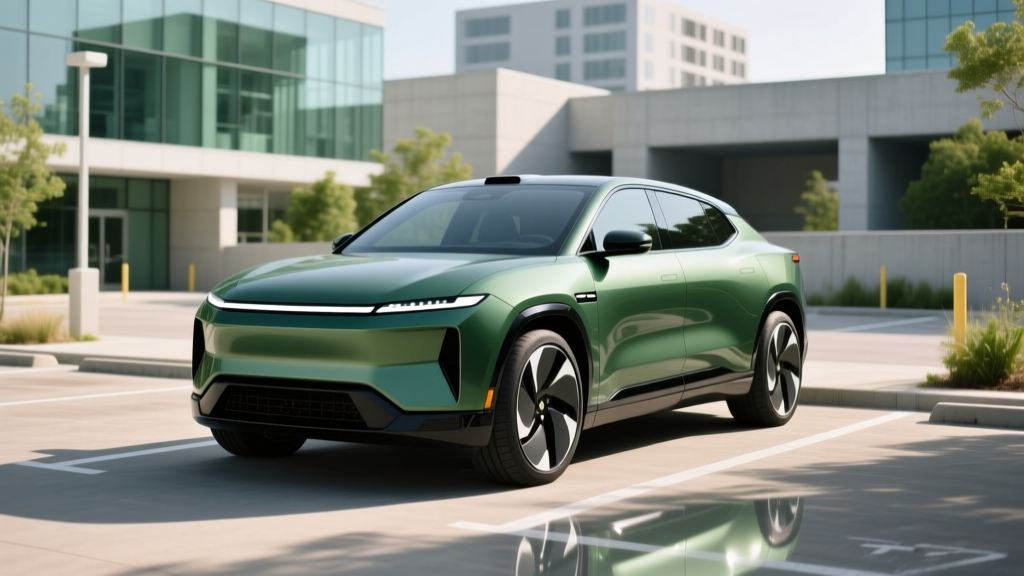
The Rivian R2 is the automaker's most consequential vehicle since the R1T and R1S. Slotted below the R1 platform in both size and price, the R2 is a compact electric SUV aimed squarely at the Tesla Model Y, Hyundai Ioniq 5, and Ford Mustang Mach-E buyer — but with Rivian's signature adventure DNA and a new, more manufacturable architecture. After years of anticipation, Rivian's R2 production timeline has been the dominant question for reservation holders and EV shoppers alike. Here's what we know as the R2 moves into its initial build and delivery phase from the Normal, Illinois facility.
Rivian R2 Production Status and Delivery Timeline
Rivian confirmed the R2 would be built at its existing Normal, Illinois plant rather than the previously planned Georgia facility, a strategic move that accelerated the timeline and reduced capital expenditure. The company targeted a first-half 2026 production start, with initial deliveries flowing to reservation holders who placed deposits as far back as the March 2024 reveal event. Early builds have focused on the dual-motor AWD configuration with the larger battery pack, a pattern consistent with how Rivian ramped the R1 — starting with higher-margin, higher-spec variants before expanding the lineup.
Deliveries are being prioritized by reservation timestamp and configuration, with Rivian employees and fleet partners receiving early units. If you're on the reservation list without a firm delivery window, expect communication to accelerate as production cadence stabilizes through mid-2026. For buyers not yet on the list, walk-in availability at Rivian's retail locations is unlikely until late 2026 or early 2027 based on current ramp projections.
Range, Battery, and Efficiency
Real-World Expectation: Plan for 260–290 miles on sustained highway driving at 70–75 mph. In sub-freezing temperatures, expect a 15–25% reduction, bringing effective range to roughly 220–260 miles. City and mixed driving with regen braking will push closer to or slightly above the EPA sticker.
Rivian has targeted the R2 at up to 330 miles of EPA-estimated range for the dual-motor AWD variant equipped with the larger battery pack. The exact usable battery capacity has been reported in the range of 85–95 kWh, though Rivian has kept final chemistry and gross/net figures under wraps. Industry analysis and supply-chain reporting suggest the R2 will use a mix of NMC (nickel manganese cobalt) cells for higher energy density in the larger pack, with a potential LFP (lithium iron phosphate) option for a future standard-range variant — a strategy also used by Tesla to segment its Model Y lineup.
Efficiency-wise, expect the R2 to land in the neighborhood of 100–115 MPGe combined, translating to roughly 29–33 kWh per 100 miles. That's competitive with the Model Y Long Range but slightly less efficient than the aerodynamically optimized Ioniq 5. The R2's boxier, adventure-oriented shape trades some highway efficiency for interior volume and ground clearance — a deliberate choice for the target buyer.
| Specification | Value |
|---|---|
| EPA Est. Range | Up to 330 miles |
| Battery Capacity (est.) | ~85–95 kWh usable |
| Battery Chemistry | NMC (Large Battery); LFP possible (Standard) |
| Drivetrain | Dual-Motor AWD |
| Horsepower (est.) | ~450–500 hp |
| 0–60 mph | ~4.5 seconds (est.) |
| Max DC Fast Charge | Up to ~250 kW (800V architecture) |
| 10–80% DC Charge Time | ~20–25 minutes (est.) |
| Level 2 Home Charge Rate | ~11.5 kW / ~30–35 mi/hr |
| Efficiency (est.) | ~100–115 MPGe / 29–33 kWh/100mi |
| Towing Capacity | Up to ~4,500 lbs (est.) |
Charging Speed: DC Fast Charging and Home Level 2
The R2 is built on a new 800-volt electrical architecture — a significant upgrade over the R1's 400V system and a direct response to the Hyundai/Kia E-GMP platform's charging-speed advantage. On a compatible 350 kW DC fast charger, the R2 is expected to peak at approximately 250 kW, enabling a 10–80% charge in roughly 20–25 minutes under ideal conditions.
As with any EV, peak charge rate is not sustained across the entire session. Expect the R2 to hold its highest charge rate (200–250 kW) between approximately 10% and 40% state of charge, then taper progressively. Above 80%, charging slows significantly — a characteristic of lithium-ion chemistry, not a Rivian-specific limitation. For road trips, plan your stops around the 10–80% window; charging from 80–100% at a DC fast charger is rarely time-efficient.
| Charging Level | Power (kW) | Approx. Miles Added per Hour | Notes |
|---|---|---|---|
| Level 1 (120V household) | ~1.4 kW | ~4–5 mi/hr | Emergency/trickle only |
| Level 2 (240V home) | ~11.5 kW | ~30–35 mi/hr | Full charge overnight (~9–10 hrs) |
| DC Fast Charge (peak) | ~250 kW | ~700+ mi/hr (peak) | 10–80% in ~20–25 min |
For home charging, the R2 supports up to 11.5 kW on a Level 2 (240V) connection using the NACS (North American Charging Standard) connector — Rivian adopted Tesla's NACS plug for the R2, giving it native access to the Tesla Supercharger network without an adapter. A full home charge from empty will take approximately 9–10 hours, meaning most owners will wake up to a full battery every morning with a standard overnight charging routine.
Performance and Drivetrain
Rivian's dual-motor AWD system on the R2 is expected to deliver in the range of 450–500 horsepower, propelling the compact SUV to 60 mph in approximately 4.5 seconds. A single-motor rear-wheel-drive variant has been announced for a later production phase, likely targeting a lower MSRP and slightly higher range at the cost of acceleration and all-weather traction.
The R2 retains Rivian's focus on capability beyond pavement. Ground clearance, approach/departure angles, and available all-terrain tires position the R2 as the most off-road-competent vehicle in its class — a meaningful differentiator against the Model Y and Ioniq 5, which prioritize on-road refinement. Estimated towing capacity of up to 4,500 pounds (when properly equipped) also outpaces most compact electric SUVs, though it falls short of the R1T/R1S and won't match ICE midsize trucks.
Interior, Cargo, and Technology
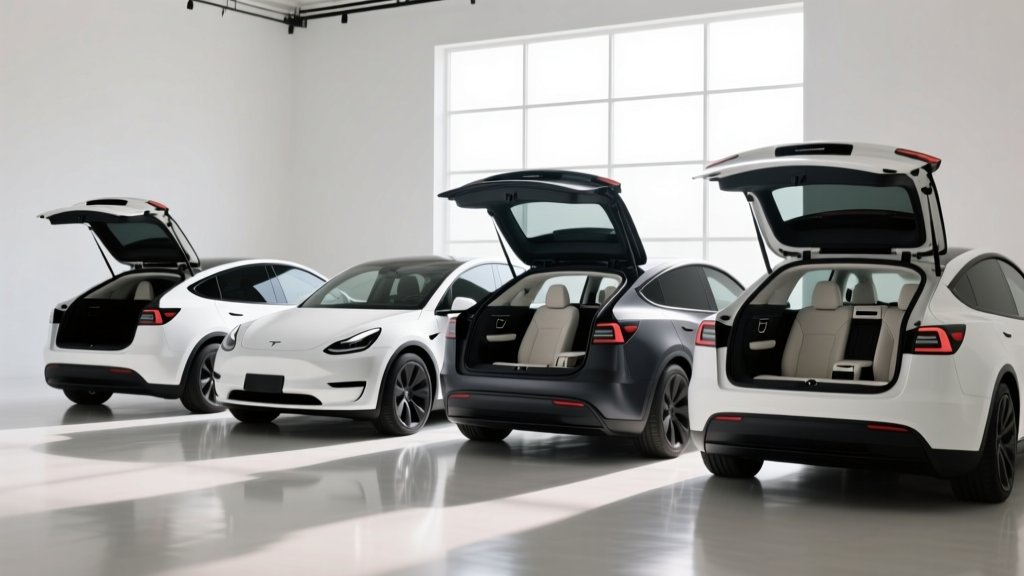
The R2's interior represents a more mainstream design language than the R1's utilitarian cabin, with a focus on material quality and family-friendly practicality. Rivian has emphasized a flat floor, generous rear legroom (estimated 38+ inches), and a cargo area expected to offer approximately 28–32 cubic feet behind the rear seats — competitive with the Model Y's ~30 cu ft and significantly more than the Ioniq 5's ~27 cu ft.
A front trunk (frunk) is included, adding roughly 5–8 cubic feet of sealed, weatherproof storage — ideal for charging cables, groceries, or muddy gear. Rivian's signature gear tunnel from the R1T is not expected on the R2 due to the unibody SUV form factor, but the overall cargo versatility should satisfy most adventure-oriented families.
The infotainment system runs on Rivian's proprietary software with a large central touchscreen (estimated 15+ inches), over-the-air update capability, and integrated navigation with charging-route planning. The R2 is expected to feature Rivian's latest ADAS suite — branded as an evolution of its Driver+ system — offering adaptive cruise control, lane-centering, and automated lane changes on mapped highways. This is an SAE Level 2 driver-assistance system, meaning the driver must remain engaged with hands on the wheel and eyes on the road at all times. It is not autonomous driving.
Pricing, Trims, and Federal Tax Credit Eligibility
Rivian has positioned the R2 with a starting MSRP in the range of approximately $45,000–$52,000 depending on configuration, with higher-spec variants (Adventure, larger battery, premium packages) expected to push into the mid-$50,000s. This pricing places the R2 in direct competition with the Tesla Model Y Long Range, Ford Mustang Mach-E Premium, and Hyundai Ioniq 5 Long Range AWD.
| Configuration | Est. MSRP | §30D Credit Potential | Est. Net Price |
|---|---|---|---|
| Dual-Motor AWD (Large Battery) | ~$48,000–$52,000 | Up to $7,500 | ~$40,500–$44,500 |
| Single-Motor RWD (announced) | ~$45,000 | Up to $7,500 | ~$37,500 |
| Fully Loaded (Adventure/Premium) | ~$55,000–$58,000 | Up to $7,500 | ~$47,500–$50,500 |
Federal tax credit eligibility under IRS §30D is subject to several requirements that buyers must verify before counting on the full $7,500 credit:
- MSRP Cap: SUVs must have an MSRP at or below $80,000. The R2 clears this threshold comfortably across all expected trims.
- Buyer Income Limits: Modified adjusted gross income (MAGI) must not exceed $150,000 (single), $225,000 (head of household), or $300,000 (joint filers).
- Battery Sourcing: The credit is split into two $3,750 halves — one tied to critical minerals sourcing and one to battery component manufacturing, both with escalating domestic-content requirements that tighten annually. Rivian's supply chain for the R2 has been structured to maximize credit eligibility, but final determination depends on the specific model year and production batch.
- Point-of-Sale Transfer: Eligible buyers can transfer the credit to the dealer at purchase, reducing the upfront cost rather than waiting for a tax refund.
Because §30D rules evolve and are subject to legislative changes, always confirm eligibility with a tax professional and check the latest IRS guidance before finalizing a purchase. State and local incentives may also apply — consult your state's energy office or AFDC incentive database for details.
Warranty Coverage
Rivian is expected to offer the R2 with warranty terms consistent with its R1 lineup and industry norms for electric vehicles:
- Battery & Drive Unit: 8 years / 100,000 miles (minimum), with a capacity-retention threshold typically set at 70% of original capacity.
- Limited Vehicle Warranty: 4 years / 50,000 miles (bumper-to-bumper).
- Corrosion Perforation: Additional coverage expected, consistent with Rivian's existing terms.
The 8-year/100,000-mile battery warranty is standard for the segment and aligns with federal requirements for emissions-related component warranties, which EV battery packs fall under. Rivian's track record with R1 battery durability has been encouraging, with minimal reports of significant degradation in early vehicles — though the R2's new cell suppliers and pack architecture will need to establish their own long-term reliability data.
Pros, Cons, and Buyer Decision Framework
- Up to 330 miles EPA range — competitive with segment leaders
- 800V architecture enables ~250 kW DC fast charging
- NACS connector provides native Supercharger access
- Best-in-class off-road capability for compact EV SUVs
- Generous cargo space with frunk
- Under $80K MSRP — qualifies for §30D SUV cap
- Rivian's OTA update track record and brand loyalty
- Early production ramp may mean long wait times
- Single-motor RWD variant not yet available
- Real-world highway range likely 260–290 mi, not 330
- Rivian service center network still expanding
- Insurance costs for EVs remain above segment average
- Final battery sourcing details affect tax credit certainty
- No third-row seating (by design — compact SUV)
Look elsewhere if: You need maximum on-road efficiency and the lowest possible cost-per-mile (Hyundai Ioniq 5 or Tesla Model Y are more aerodynamic), require third-row seating (Kia EV9), or want immediate dealer-lot availability without a reservation wait.
How the R2 Stacks Up Against Competitors
The R2 enters a crowded and competitive compact electric SUV segment. Its closest rivals include:
- Tesla Model Y Long Range: The sales-volume benchmark with ~310 miles EPA range, extensive Supercharger infrastructure, and aggressive pricing. The R2 offers more character, better off-road chops, and potentially fresher design, but the Model Y's efficiency and availability remain hard to beat.
- Hyundai Ioniq 5 Long Range AWD: A charging-speed leader (800V, ~20-min 10–80%) with a distinctive design and strong value. The R2 trades some efficiency for more cargo space and adventure capability.
- Ford Mustang Mach-E Premium AWD: A proven performer with strong driving dynamics and an established dealer network. The Mach-E's range and tech are competitive, but its CCS connector (without adapter) limits charging-network flexibility compared to NACS-native vehicles.
Frequently Asked Questions
What is the real-world range of the Rivian R2?
The EPA estimates up to 330 miles for the dual-motor AWD with the large battery. In real-world highway driving at 70–75 mph, expect 260–290 miles. Cold weather (below 32°F) can reduce range by 15–25%, so plan for 220–260 miles in winter conditions. City driving with regenerative braking will push range closer to or slightly above the EPA figure.
How fast does the Rivian R2 charge?
On a 350 kW DC fast charger, the R2 is expected to peak at approximately 250 kW thanks to its 800V architecture, achieving a 10–80% charge in roughly 20–25 minutes. At home on a Level 2 (240V) charger at 11.5 kW, expect approximately 30–35 miles of range added per hour, or a full charge in about 9–10 hours.
How much does the Rivian R2 cost after tax credits?
With a starting MSRP estimated between $45,000 and $52,000 for the dual-motor AWD, and a potential §30D federal tax credit of up to $7,500 (subject to income, MSRP, and battery-sourcing requirements), the effective net price could range from approximately $37,500 to $44,500. Final credit eligibility depends on your income, the specific vehicle configuration, and current IRS rules at the time of purchase.
Does the Rivian R2 qualify for the federal EV tax credit?
The R2 is expected to qualify for some or all of the $7,500 §30D credit, as its MSRP falls well below the $80,000 SUV cap. However, the full credit depends on battery critical-mineral sourcing and component manufacturing requirements, which tighten each year. Buyer income limits also apply ($300K joint, $150K single). Always verify with the IRS and a tax professional before assuming eligibility.
Is the Rivian R2 worth buying over the Tesla Model Y?
The R2 is worth considering if you prioritize off-road capability, a more distinctive design, native NACS/Supercharger access, and Rivian's adventure-focused brand identity. The Model Y remains the efficiency and availability leader with a mature service network. Neither is objectively "better" — the right choice depends on your use case, aesthetic preference, and tolerance for waiting on a production ramp.
What are the biggest pros and cons of the Rivian R2?
The R2's biggest strengths are its competitive range (~330 mi EPA), 800V fast-charging architecture, NACS connector, off-road capability, and cargo versatility with a frunk. Its main drawbacks include early-production wait times, an expanding (but not yet mature) service network, real-world highway range falling short of the EPA sticker, and above-average EV insurance costs.
Can I tow with the Rivian R2?
Yes. The R2 is expected to offer up to approximately 4,500 pounds of towing capacity when properly equipped — sufficient for a small camper, utility trailer, or pair of dirt bikes. Note that towing will significantly reduce range, potentially by 30–50% depending on trailer weight and aerodynamics. Plan charging stops accordingly when towing.