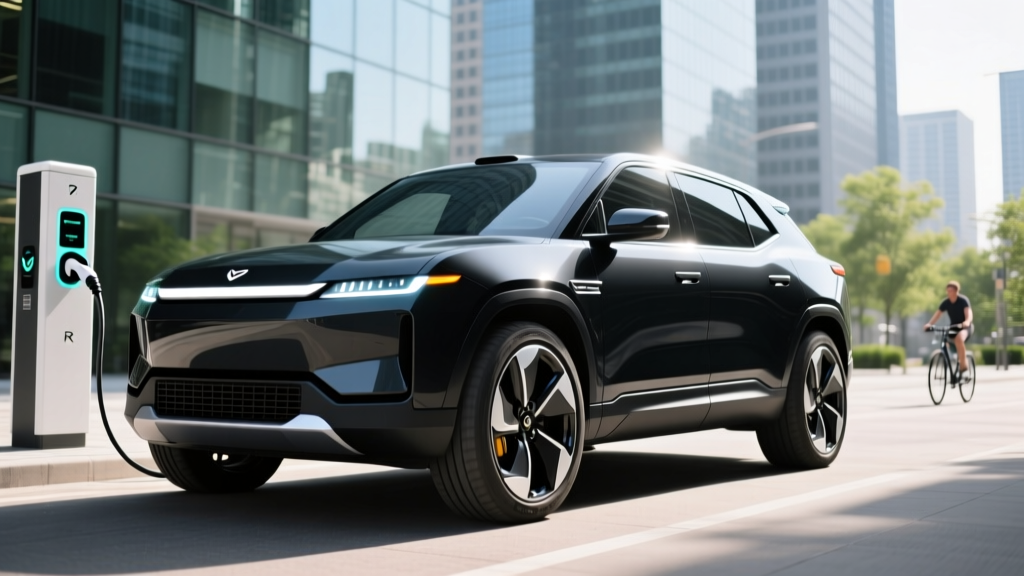
The Rivian R2 has been one of the most anticipated compact electric SUVs since its announcement, and with 2026 marking its first full model year on sale, buyers are asking the obvious question: how much is the Rivian R2 once you factor in trims, options, and federal tax credits? The short answer is that the R2 starts at $45,000 MSRP for the Standard dual-motor AWD, climbs to roughly $52,500 for the Tri-Motor Performance, and may qualify for the $7,500 federal EV tax credit — bringing the effective entry price to around $37,500 for eligible buyers.
But pricing is only part of the equation. The R2 competes in the hottest segment of the EV market against the Tesla Model Y, Hyundai Ioniq 5, Ford Mustang Mach-E, and upcoming Chevrolet Equinox EV. Below, we break down every number that matters — range, charging, performance, cargo, warranty — and tell you whether the R2 earns its spot in your garage.
Rivian R2 Pricing, Trims & Tax Credit Eligibility
Rivian has structured the R2 lineup to undercut its larger R1S sibling significantly while keeping the adventure-oriented brand identity intact. Here is the 2026 pricing matrix by trim:
| Trim | Drivetrain | MSRP | Est. After §30D Credit |
|---|---|---|---|
| Standard (Dual-Motor AWD) | Dual-Motor AWD | $45,000 | $37,500 |
| Premium (Dual-Motor AWD) | Dual-Motor AWD | $48,500 | $41,000 |
| Tri-Motor Performance | Tri-Motor AWD | $52,500 | $45,000 |
Federal tax credit (§30D) caveats: The $7,500 credit is not automatic. To qualify, buyers must meet IRS income caps (modified AGI ≤ $150,000 single / $300,000 joint), the vehicle MSRP must be ≤ $80,000 for SUVs (all R2 trims clear this), and the battery must satisfy critical-mineral and battery-component sourcing thresholds that tighten annually. Rivian has stated its intent to source R2 battery cells and minerals domestically, but buyers should verify current-year eligibility at the point of sale — the credit can now be transferred to the dealer for an upfront price reduction. Always confirm with your tax professional before relying on the credit.
Range, Battery & Efficiency
The R2 uses a new, smaller skateboard platform compared to the R1T/R1S, with a battery pack Rivian has confirmed at approximately 85 kWh usable. The Standard and Premium dual-motor trims use LFP (lithium iron phosphate) chemistry — a first for Rivian — chosen for its lower cost, longer cycle life, and tolerance for regular 100% charging. The Tri-Motor Performance steps up to NMC (nickel manganese cobalt) for higher energy density and sustained power delivery.
- Standard / Premium (Dual-Motor, LFP): EPA est. 300 miles — expect ~255–275 mi highway, ~220–240 mi in sub-30°F cold weather.
- Tri-Motor Performance (NMC): EPA est. 280 miles — expect ~240–255 mi highway, ~200–220 mi in sub-30°F cold.
LFP's heavier cell weight slightly reduces the Tri-Motor's range advantage despite its larger energy budget. Cold-weather losses of 20–30% are typical for any EV without consistent preconditioning.
| Spec | Standard / Premium | Tri-Motor Performance |
|---|---|---|
| Battery (usable) | 85 kWh (LFP) | 85 kWh (NMC) |
| EPA Range | 300 mi | 280 mi |
| Efficiency | 115 MPGe / 29 kWh/100mi | 108 MPGe / 31 kWh/100mi |
| Horsepower | 450 hp | 665 hp |
| 0–60 mph | 4.5 sec | 3.0 sec (est.) |
| Drivetrain | Dual-Motor AWD | Tri-Motor AWD |
| Towing Capacity | 4,500 lb | 4,500 lb |
Charging Speed: DC Fast & Home Level 2
Charging is where the R2's new platform shows its generational leap over the first-generation R1 vehicles. Rivian quotes a peak DC fast-charge rate of 200 kW on NACS-equipped R2 models (all 2026 R2s ship with the native NACS port, granting direct access to Tesla Supercharger stalls without an adapter).
| Level | Power / Rate | Time or Miles Added |
|---|---|---|
| Level 1 (120V) | ~1.4 kW | ~4 mi/hr |
| Level 2 (240V, 48A) | 11.5 kW | ~34 mi/hr / full in ~8.5 hr |
| DC Fast (peak) | 200 kW | 10–80% in ~25 min |
| DC Fast (sustained avg) | ~145 kW | 80–100% tapers significantly |
Charging-curve reality check: The 200 kW peak is achievable between roughly 10–40% State of Charge. Above 60%, the curve tapers to ~100 kW, and above 80% it drops further to protect the battery. Plan road-trip stops around the 10–80% window for the fastest throughput. LFP packs tolerate routine 100% charging better than NMC, so Standard/Premium owners can safely charge to full more often without accelerated degradation.
Performance, Ride & Drivetrain
The dual-motor R2 delivers 450 hp and a 4.5-second 0–60 time — brisk for a compact SUV and comfortably ahead of base Tesla Model Y Long Range. The Tri-Motor's 665 hp and estimated 3.0-second sprint put it in sports-car territory, though the performance premium costs you 20 miles of EPA range and roughly $7,500 in MSRP.
Rivian's trademark quad-motor tank turns are not available on the R2 (reserved for the R1 platform), but the dual- and tri-motor setups still offer torque vectoring across axles for confident trailering and light off-road work. Ground clearance stands at 8.5 inches, with an available air suspension on the Premium and Tri-Motor trims that adds 1.5 inches for rough terrain. The 4,500-lb tow rating is best-in-class for the compact EV SUV segment and sufficient for a small camper or pair of jet skis.
Interior, Cargo & Technology
The R2 seats five on a 113-inch wheelbase — shorter than the R1S but competitive with the Model Y. Interior dimensions place it firmly in the compact-crossover category:
- Cargo (rear seats up): 28 cu ft
- Cargo (rear seats folded): 63 cu ft
- Frunk: 11 cu ft (lockable, drainable — a Rivian signature)
- Rear legroom: 38.2 inches
- Front headroom: 40.8 inches
The infotainment system runs on a 15.4-inch center touchscreen with Rivian's latest software stack, wireless Apple CarPlay/Android Auto, and over-the-air updates. A new Driver+ Level 2 ADAS suite includes adaptive cruise, lane-centering, and hands-on-wheel monitoring — it is a driver-assist system, not autonomous driving, and requires continuous driver engagement per SAE Level 2 standards. An optional camp kitchen accessory and integrated gear tunnel (scaled down from the R1T) reinforce Rivian's outdoor-lifestyle positioning.
Notable drawbacks: the rear visibility is compromised by thick C-pillars (a surround-view camera mitigates this), and the base Standard trim uses synthetic leather rather than the Premium's upgraded upholstery. The panoramic glass roof, while beautiful, lacks a retractable shade — an issue in hot climates.
Warranty & Ownership Costs
Rivian backs the R2 with competitive warranty coverage:
- Battery & Powertrain: 8 years / 100,000 miles (minimum 70% capacity retention)
- Bumper-to-Bumper: 5 years / 60,000 miles
- Roadside Assistance: 5 years / unlimited miles
The 8-year/100,000-mile battery warranty aligns with federal minimums and matches Tesla, Hyundai, and Ford. Rivian's 70% capacity-retention threshold is standard — if your pack degrades below that within the warranty period, Rivian will repair or replace it. LFP chemistry in the Standard/Premium trims is expected to show slower calendar degradation than NMC, potentially yielding stronger long-term State of Health for daily-charging commuters.
Insurance premiums for the R2 are projected in line with the Model Y and Mach-E — expect $1,800–$2,400 annually depending on trim, driving record, and state. Maintenance costs are minimal: cabin air filter, wiper fluid, brake fluid checks, and tire rotations. No oil changes, transmission fluid, or spark plugs.
Who the Rivian R2 Is For — and Who Should Look Elsewhere
- You want a compact EV SUV with genuine light-off-road capability and class-leading tow rating.
- You value a frunk, drainable cargo solutions, and outdoor-oriented accessories.
- You prefer LFP chemistry for daily 100% charging without degradation anxiety.
- You want direct NACS access to the Supercharger network without an adapter.
- You need three-row seating (consider the R1S, Kia EV9, or Tesla Model X).
- Maximum range is your top priority — the Hyundai Ioniq 5 and Chevy Equinox EV offer longer EPA figures.
- You want the lowest possible entry price — the Equinox EV and base Model Y undercut the R2 Standard.
Pros & Cons at a Glance
- Native NACS — no adapter needed at Superchargers
- LFP option for longevity-minded daily drivers
- 4,500-lb tow rating leads the compact EV SUV class
- Frunk + drainable storage for outdoor use
- Competitive pricing after §30D credit
- Rear visibility limited by thick C-pillars
- No retractable shade on panoramic glass roof
- 200 kW peak DC rate trails Hyundai's 800V architecture (~240 kW)
- Tri-Motor range penalty vs. Dual-Motor
- Service center network still expanding vs. Tesla/Ford
Frequently Asked Questions
What is the real-world range of the Rivian R2?
The EPA estimates 300 miles for the Dual-Motor Standard/Premium and 280 miles for the Tri-Motor Performance. In real-world highway driving at 70 mph, expect 255–275 miles (Dual-Motor) and 240–255 miles (Tri-Motor). In sub-30°F winter conditions, range drops 20–30% — plan for roughly 220 miles (Dual-Motor) on cold road trips. Preconditioning the battery before fast charging helps recover some efficiency.
How fast does the R2 charge at home and on the road?
On a 48-amp Level 2 home charger (11.5 kW), the R2 adds about 34 miles of range per hour, fully recharging in roughly 8.5 hours — ideal for overnight top-ups. On DC fast chargers, it peaks at 200 kW and charges from 10–80% in approximately 25 minutes, though sustained average power is closer to 145 kW due to taper above 60% SoC.
How much does the Rivian R2 cost after tax credits?
If you qualify for the full $7,500 §30D federal credit (income ≤ $150K single / $300K joint, battery sourcing requirements met), the Standard trim drops from $45,000 to an effective $37,500. The Premium falls to ~$41,000, and the Tri-Motor to ~$45,000. The credit can now be applied as a point-of-sale discount through participating dealers. State and local incentives may stack on top — check IRS.gov and your state energy office for current rules.
Is the Rivian R2 worth buying vs. the Tesla Model Y or Hyundai Ioniq 5?
The R2 wins on tow rating (4,500 lb vs. Model Y's 3,500 lb), outdoor utility (frunk, drainable cargo, camp accessories), and LFP chemistry availability. The Model Y wins on Supercharger network maturity, software polish, and slightly higher range. The Ioniq 5 wins on DC charging speed (800V architecture, ~240 kW peak) and interior space efficiency. Your choice depends on whether outdoor capability (R2), charging infrastructure (Model Y), or charging speed (Ioniq 5) tops your priority list.
Does the Rivian R2 qualify for the federal EV tax credit?
All R2 trims are under the $80,000 SUV MSRP cap, and Rivian has designed the R2 with North American battery assembly and critical-mineral sourcing in mind. However, §30D eligibility depends on your income, the specific battery lot's sourcing compliance, and annual rule updates. Verify eligibility with your dealer and a tax professional before purchase. Details are published at fueleconomy.gov.
What are the biggest drawbacks of the Rivian R2?
Thick C-pillars hurt rear visibility (the surround-view camera is essential). The panoramic roof lacks a retractable shade, making the cabin hot in summer. The 200 kW peak DC charge rate, while adequate, trails Hyundai/Kia's 800V platforms. And Rivian's service center network, while growing, is still thinner than Tesla's or legacy automakers' dealer networks in rural areas.
Sources: Rivian official specifications (rivian.com), fueleconomy.gov for EPA estimates, IRS.gov §30D clean vehicle credit guidance. All figures reflect 2026 model-year data available at time of publication; verify trim pricing and credit eligibility at point of sale.