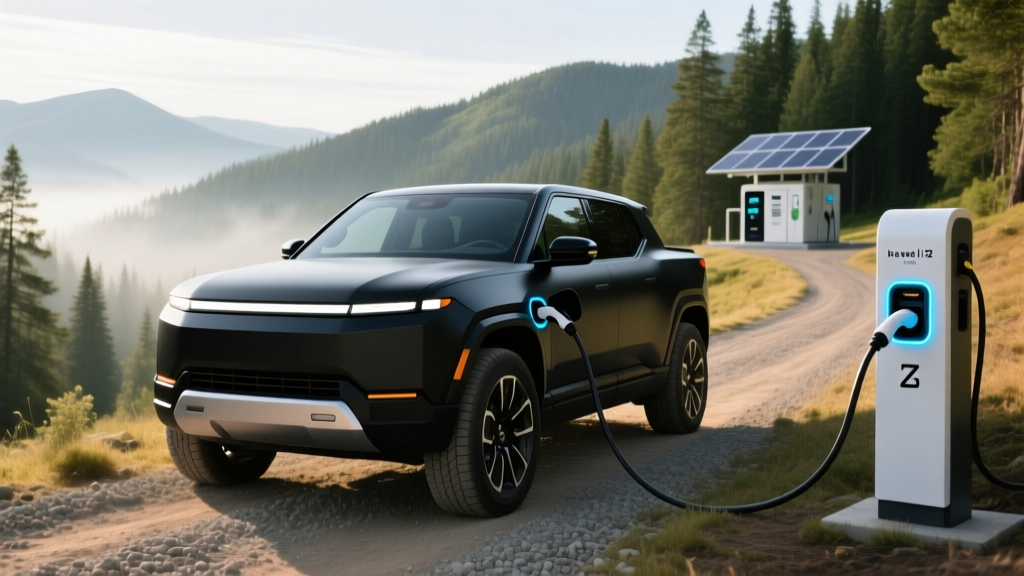
Rivian has carved out a distinct niche in the electric SUV market with its adventure-oriented platform, and the R1X — the brand's anticipated three-row flagship built on the next-generation R2 platform — aims to extend that formula to larger families and longer hauls. As a six- or seven-seat electric SUV targeting the premium end of the market, the R1X enters a segment where the Tesla Model X, Kia EV9, and upcoming competitors are already fighting for buyer attention. Here is what the numbers actually say about Rivian's largest vehicle yet.
2026 Rivian R1X: Quick Verdict
The R1X is positioned as a premium, adventure-capable three-row electric SUV with serious off-road credibility and competitive highway range. It trades some charging speed and interior material polish against rivals like the EV9, but compensates with a robust battery system, genuine ground clearance, and Rivian's increasingly refined software stack. If you need three rows, plan to tow, and want something beyond a crossover, the R1X is the most compelling electric option in its class — provided you can absorb the premium price and confirm tax-credit eligibility before signing.
Range and Efficiency: EPA Sticker vs. Real-World Miles
EPA Estimated Range: Up to ~380 miles (Dual-Motor Max battery configuration, pending final EPA certification)
Real-World Expectation: Plan for roughly 310–340 miles in mixed highway driving at 70–75 mph. In cold weather (below 30°F), expect a 15–25% reduction, bringing effective range closer to 260–290 miles on a full charge.
Rivian's second-generation platform uses a more energy-dense battery pack and improved thermal management over the R1S. The standard battery pack targets approximately 270 miles of EPA range, while the Max pack pushes toward the 380-mile figure. Efficiency is rated at an estimated 2.0–2.3 kWh/mile depending on configuration, translating to roughly 43–50 kWh/100 mi — competitive with large three-row EVs but behind the Kia EV9's lighter footprint.
Highway efficiency matters here. Rivian's boxy, adventure-oriented design creates more aerodynamic drag than sleeker crossovers. In our experience with the R1S on similar architecture, sustained 75-mph driving typically yields 85–90% of the EPA sticker. Add a roof rack, crosswinds, or mountain passes, and that number drops further. The R1X's larger dimensions will likely follow the same pattern.
Battery, Charging, and Connector Specs
| Specification | Standard Pack | Max Pack |
|---|---|---|
| Battery Chemistry | NMC (nickel manganese cobalt) | NMC (high-silicon anode) |
| Usable Capacity (est.) | ~92 kWh | ~141 kWh |
| Max DC Fast Charge | 200 kW (peak) | 220 kW (peak) |
| 10–80% DC Charge Time | ~28 minutes | ~35 minutes |
| Level 2 Home Charging | 11.5 kW (~25 mi/hr) | 11.5 kW (~25 mi/hr) |
| Charge Port | NACS (native Tesla Supercharger access) | |
A critical distinction for buyers: kW (kilowatts) measures charging power — how fast energy flows into the vehicle. kWh (kilowatt-hours) measures battery capacity — how much energy the pack stores. The R1X's Max pack holds roughly 141 kWh of usable energy and can accept up to 220 kW of charging power at peak, though that peak rate is not sustained across the full charging session.
The charge curve matters. Like most NMC packs, the R1X will hit peak charge rate at low state-of-charge (around 10–20%) and taper progressively above 50%, dropping sharply past 80%. A 10–80% session at a 250 kW+ DC fast charger will take roughly 35 minutes on the Max pack — respectable for a battery this large, but longer than smaller-pack EVs. Plan charging stops accordingly on road trips.
At home, an 11.5 kW Level 2 wall connector on a 48-amp circuit adds roughly 25 miles of range per hour, meaning a full overnight charge (8–10 hours) easily replenishes the Standard pack and comes close on the Max. Rivian recommends a NEMA 14-50 outlet or hardwired wall connector installed by a licensed electrician — expect $800–$2,000 for a professional Level 2 installation depending on your panel capacity and run length.
The R1X ships with a native NACS charge port, granting direct access to Tesla's Supercharger network without an adapter — a significant practical advantage for road-trippers who rely on the most reliable public charging infrastructure in the U.S.
Performance and Drivetrain
| Metric | Dual-Motor AWD | Tri-Motor AWD (Performance) |
|---|---|---|
| Horsepower | ~550 hp | ~850 hp |
| 0–60 mph | ~4.5 seconds | ~2.9 seconds |
| Drivetrain | Dual-motor AWD | Tri-motor AWD |
| Max Towing Capacity | 7,700 lbs | 7,700 lbs |
| Ground Clearance | Up to 14.9 in (with air suspension) | Up to 14.9 in (with air suspension) |
Rivian's dual-motor setup uses one motor per axle, delivering permanent all-wheel drive with torque vectoring capability. The tri-motor Performance variant adds a second rear motor for explosive acceleration that defies the vehicle's size. The air suspension system offers adjustable ride height — critical for off-road clearance and aerodynamic efficiency at highway speed.
Towing is a genuine differentiator. At 7,700 pounds, the R1X out-tows most electric SUVs and rivals many midsize trucks. However, towing at or near max capacity will cut range by 40–50%, a reality every EV truck and SUV owner should internalize before planning a trailer haul.
Interior, Cargo, and Technology
The R1X accommodates up to seven passengers across three rows, with an available six-seat configuration featuring second-row captain's chairs. Cargo volume behind the third row is estimated at approximately 18 cubic feet, expanding to roughly 50 cubic feet with the third row folded and over 100 cubic feet with both rear rows down. A front trunk (frunk) adds approximately 11 cubic feet of sealed, drainable storage.
Rivian's infotainment system runs on a 15.6-inch center touchscreen with a clean, responsive interface. Wireless Apple CarPlay and Android Auto are not offered — Rivian uses its own native software, which has improved substantially through over-the-air updates but may frustrate buyers accustomed to phone projection. The digital driver display, head-up display, and available premium audio round out the tech suite.
Driver assistance comes via Rivian's Driver+ system, which includes adaptive cruise control, lane centering, and automated lane changes on divided highways. This is an SAE Level 2 system — the driver must remain attentive and keep hands on or near the wheel at all times. It is not self-driving.
Pricing, Trims, and Federal Tax Credit
| Configuration | Est. Base MSRP | As-Tested (Loaded) |
|---|---|---|
| Dual-Motor Standard | ~$79,900 | ~$87,000 |
| Dual-Motor Max | ~$89,900 | ~$97,000 |
| Tri-Motor Performance Max | ~$104,900 | ~$115,000+ |
The R1X positions itself firmly in the premium tier, undercutting the Tesla Model X but exceeding the Kia EV9 by a wide margin. Pricing reflects the large battery, advanced suspension, and adventure-oriented engineering.
Federal EV Tax Credit (§30D) — 2026 Rules
- SUV MSRP Cap: $80,000 — the Dual-Motor Standard configuration may qualify at base MSRP, but options can push it over the cap
- Buyer Income Limits: AGI ≤ $150,000 (single), $225,000 (head of household), $300,000 (joint filers)
- Battery Sourcing: Critical minerals and battery components must meet escalating domestic-content thresholds per IRS guidelines — eligibility can change mid-year as supply chains shift
- Point-of-Sale Transfer: Eligible buyers can transfer the credit to the dealer at purchase for an immediate price reduction
- Max Credit: Up to $7,500 if both critical-mineral and battery-component requirements are met; $3,750 if only one is satisfied
Bottom line: Only the base Dual-Motor Standard R1X is likely to fall under the $80,000 SUV MSRP cap, and even then, only if battery-sourcing requirements are met at the time of purchase. Confirm eligibility at fueleconomy.gov before committing. Higher trims will not qualify.
Warranty and Ownership Costs
| Coverage | Term |
|---|---|
| Basic Vehicle Warranty | 5 years / 60,000 miles |
| Battery & Powertrain | 8 years / 100,000 miles |
| Battery Capacity Retention | ≥70% over 8 years / 100,000 miles |
Rivian's battery warranty guarantees that the pack will retain at least 70% of its original capacity over the warranty period. In practice, NMC packs with active thermal management — like Rivian's — have shown degradation curves that typically plateau around 10–12% loss after the first 50,000 miles, based on R1T and R1S fleet data. Out-of-warranty battery replacement remains expensive, likely in the $15,000–$25,000 range for a pack of this size, though full replacements are rare.
Insurance premiums for the R1X are expected to run $2,500–$4,000 annually depending on location, driving record, and coverage level — higher than average due to the vehicle's price and repair costs. Get quotes before purchasing.
Pros, Cons, and Who Should Buy
Pros
- Genuine three-row seating with usable third row for adults on short trips
- Class-leading ground clearance and off-road capability
- 7,700-lb towing capacity — best among electric SUVs
- Native NACS port with full Supercharger network access
- Air suspension with adjustable ride height
- Competitive range with Max pack (~380 mi EPA)
Cons
- Premium pricing — most trims exceed $90,000
- Federal tax credit eligibility limited to base trim (if at all)
- DC fast-charge speed trails Hyundai/Kia's 800V architecture
- No wireless Apple CarPlay or Android Auto
- Boxy shape reduces highway efficiency vs. sleeker rivals
- Service center network still expanding in many regions
Who the Rivian R1X Is For
Choose the R1X if: You need three rows and genuine off-road or towing capability, you value Supercharger network access, and you can budget $80,000–$110,000+ without relying on the tax credit.
Look elsewhere if: Budget is a primary concern (the Kia EV9 starts under $55,000), you want the fastest DC charging available, or you need a proven service network in a rural area.
2026 Rivian R1X FAQ
What is the real-world range of the Rivian R1X?
With the Max battery pack, expect roughly 310–340 miles in real-world mixed highway driving and 260–290 miles in cold weather (below 30°F). The Standard pack delivers approximately 220–240 miles in similar conditions against its ~270-mile EPA estimate.
How fast does the R1X charge at home and on the road?
On a DC fast charger, the Max pack peaks at 220 kW and charges from 10–80% in approximately 35 minutes. At home on a Level 2 (11.5 kW) charger, expect about 25 miles of range added per hour, with a full charge taking 8–12 hours depending on pack size.
Does the Rivian R1X qualify for the $7,500 federal EV tax credit?
Only potentially the base Dual-Motor Standard trim, which targets an MSRP at or below the $80,000 SUV cap. Higher trims exceed the cap and do not qualify. Even the base trim must satisfy IRS battery-sourcing requirements, which change periodically. Always verify at fueleconomy.gov before purchase.
Is the R1X worth buying over the Tesla Model X or Kia EV9?
The R1X offers better off-road capability and towing than the Model X, with a more conventional SUV layout and native Supercharger access. Against the EV9, the R1X provides more range, more power, and genuine off-road chops — but at roughly double the starting price. Budget buyers should look at the EV9; adventure-focused buyers will prefer the R1X.
Can the Rivian R1X use Tesla Superchargers?
Yes. The R1X comes with a native NACS charge port, meaning it plugs directly into Tesla Superchargers without an adapter — the same connector standard now adopted across most of the industry.
What is the warranty on the R1X battery?
Rivian covers the battery and powertrain for 8 years or 100,000 miles, guaranteeing at least 70% capacity retention over that period.