Quick Verdict: The R1T Warranty in Context
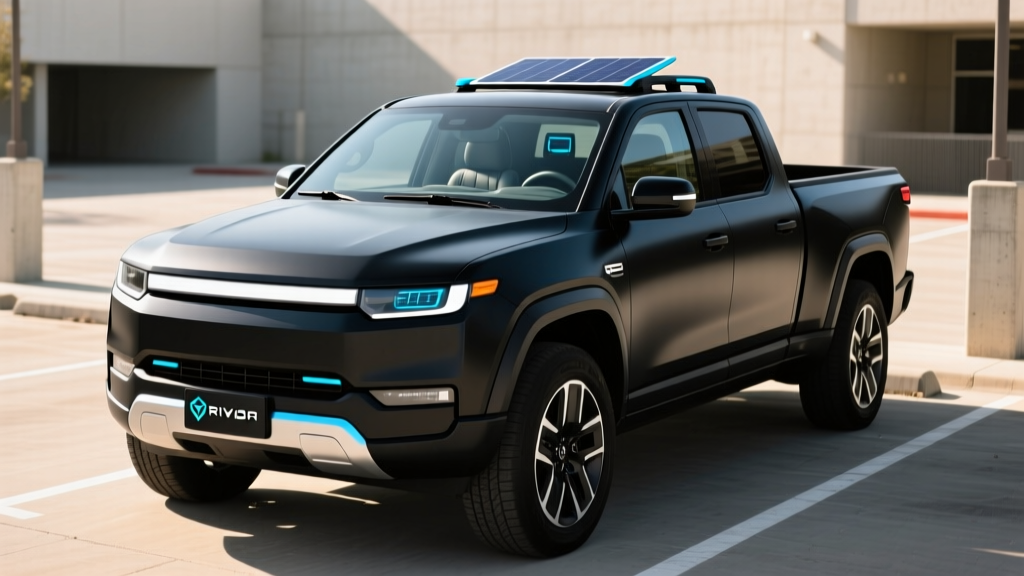
The 2026 Rivian R1T is a dual-motor (or quad-motor) electric pickup that blends legitimate truck capability with SUV-level refinement. But for buyers dropping $70,000–$100,000+ on an EV from a company that began deliveries in 2022, the warranty is a critical piece of the purchase equation. Rivian's warranty package is competitive with legacy automakers on powertrain coverage and slightly below Tesla on bumper-to-bumper duration. Here's every layer of protection, the real-world ownership picture, and whether the R1T earns its price tag.
| Spec | Value |
|---|---|
| EPA Range (Dual-Motor Standard) | 352 miles |
| EPA Range (Dual-Motor Max) | 420 miles |
| Battery Capacity (Standard) | 106 kWh usable (NMC) |
| Battery Capacity (Max) | 141 kWh usable (NMC) |
| Max DC Fast Charge | 200 kW (Dual-Motor) |
| 10–80% DC Fast Charge | ~27 minutes |
| Level 2 Home Charge Rate | 11.5 kW (~25 mi/hr) |
| 0–60 mph (Dual-Motor) | 4.5 seconds |
| Horsepower (Dual-Motor) | 533 hp |
| Drivetrain | AWD (Dual-Motor); AWD (Quad-Motor) |
| MPGe (Dual-Motor Standard) | 70 MPGe combined |
| Efficiency | 48 kWh/100 mi |
| Max Towing Capacity | 11,000 lbs |
| Base MSRP (Dual-Motor Adventure) | $69,900 |
| Bumper-to-Bumper Warranty | 5 years / 60,000 miles |
| Battery & Drive Unit Warranty | 8 years / 175,000 miles |
Rivian R1T Warranty: Full Coverage Breakdown
The Rivian R1T warranty is split into several distinct coverage tiers. Understanding where protection starts and stops is essential for any buyer — especially those planning to hold the truck past the initial ownership period.
Bumper-to-Bumper (Limited Vehicle Warranty)
Rivian covers the R1T with a 5-year/60,000-mile limited vehicle warranty. This covers defects in materials or workmanship on virtually every non-wear component: suspension, electronics, interior trim, HVAC, the 15.6-inch infotainment display, power windows, and the powered tonneau cover (if equipped). For comparison, Tesla offers 4 years/50,000 miles on the Model S and Cybertruck, while Ford provides 3 years/36,000 miles on the F-150 Lightning. Rivian's 5-year window is among the better base warranties in the EV truck segment.
Battery and Drive Unit Warranty
This is the coverage tier that matters most for long-term ownership peace of mind. Rivian provides an 8-year/175,000-mile warranty on the high-voltage battery pack and all drive units (motors, inverters, and associated power electronics). If the battery's state of health (SoH) degrades below 70% of its original capacity within that window, Rivian will repair or replace it. The 175,000-mile threshold is notably generous — Tesla's Model S/X battery warranty covers 8 years/150,000 miles, and the F-150 Lightning's battery warranty is 8 years/100,000 miles. Rivian's 175,000-mile figure reflects confidence in their NMC cell durability and thermal management system.
Corrosion Perforation Warranty
Rivian includes a 5-year/unlimited-mile warranty against body panel corrosion perforation (rust-through). This matters for truck owners in snow-belt states where road salt is common. Surface rust or cosmetic paint issues are not covered.
Roadside Assistance
Complimentary roadside assistance runs for 5 years/60,000 miles, covering flat tires, lockouts, towing (to the nearest Rivian service center or authorized repair facility), and dead 12V auxiliary battery jump-starts. Note: running the traction battery to 0% SoC and needing a tow to a charger is covered, but Rivian notes in their owner manual that repeated deep discharges may be flagged as owner negligence.
Wear Items and Exclusions
As with every automaker, the warranty does not cover normal wear items: tires (covered by the tire manufacturer's warranty), brake pads, wiper blades, cabin air filters, and 12V auxiliary batteries. The R1T's regenerative braking system substantially extends brake pad life — many EV owners report original pads lasting 80,000+ miles — but eventual replacement is an out-of-pocket cost.
Real-World Range: What the EPA Number Doesn't Tell You
The EPA rates the 2026 R1T Dual-Motor with the Standard battery at 352 miles. The Max Pack (141 kWh) pushes that to 420 miles. But real-world results depend heavily on conditions:
- Highway (75 mph, 70°F): Expect ~300–320 miles (Standard) or ~360–380 miles (Max). Aerodynamic drag dominates at speed in a truck form factor.
- City/commute driving: Closer to EPA or slightly above, thanks to aggressive regen and low-speed efficiency.
- Cold weather (20°F, highway): Range drops 20–30% — figure ~230–260 miles for the Standard pack. The R1T's heat pump helps, but physics wins in deep cold.
- Towing (loaded trailer, ~8,000 lbs): Expect roughly 50% range loss — about 170–180 miles on the Standard pack. Plan charging stops accordingly.
Charging Speed: DC Fast, Level 2, and the Charge Curve Reality
The R1T Dual-Motor peaks at 200 kW on a DC fast charger using its NACS connector (native access to the Tesla Supercharger network). Quad-Motor variants share the same peak rate. Here's what charging actually looks like:
| Charging Level | Power | Speed | Notes |
|---|---|---|---|
| Level 1 (120V household) | 1.4 kW | ~3 mi/hr | Emergency/trickle only |
| Level 2 (240V home, 48A) | 11.5 kW | ~25 mi/hr | Full charge overnight (~14 hrs from 10%) |
| Level 2 (240V home, 32A) | 7.7 kW | ~17 mi/hr | Common with lower-amperage circuits |
| DC Fast Charge (NACS) | Up to 200 kW | 10–80% in ~27 min | Peak rate sustained to ~55% SoC, then tapers |
Charge curve reality check: The 200 kW peak is not sustained across the entire session. The R1T holds peak rate roughly from 10% to 55% SoC, then tapers progressively. A 10–80% session takes about 27 minutes under ideal conditions (preconditioned battery, warm ambient temperature, V3 Supercharger or comparable 250+ kW station). A 10–90% session stretches to roughly 42 minutes. Always precondition the battery via the Rivian app's departure-time feature before arriving at a DC charger — cold batteries accept charge far more slowly.
Home charging on a Level 2 wall connector (48A, hardwired, 60A circuit) adds about 25 miles of range per hour. For most owners, an overnight session from 20% to 80% takes roughly 8–10 hours, perfectly suited for daily replenishment. Expect home installation by a licensed electrician to cost $800–$2,500 depending on panel proximity and whether a panel upgrade to 200A service is needed.
Performance, Efficiency, and Truck Capability
The dual-motor R1T produces 533 horsepower and 610 lb-ft of torque, reaching 60 mph in 4.5 seconds — startling acceleration for a 7,000-lb pickup. The Quad-Motor variant (available in higher trims) bumps output to 1,025 hp and drops the 0–60 to approximately 3.0 seconds, though at a significant price and efficiency penalty.
Efficiency lands at 70 MPGe combined (48 kWh/100 mi) for the Dual-Motor Standard — typical for a heavy, aerodynamically challenged truck body. The F-150 Lightning Extended Range achieves 70 MPGe as well, while the GMC Sierra EV trails slightly. If efficiency is a priority, a smaller crossover like the Hyundai Ioniq 5 (114 MPGe) will cost far less per mile, but it can't tow 11,000 pounds.
Cargo and Passenger Space
- Bed length: 54.3 inches (with midgate closed); 82.6 inches with midgate open
- Gear Tunnel: 11.7 cu ft of lockable, pass-through storage between the cab and bed — a Rivian-exclusive feature ideal for camping gear or long items
- Frunk (front trunk): 11.1 cu ft, drainable, with a powered latch
- Rear-seat legroom: 38.2 inches — comfortable for adults on longer trips
- Rear-seat cargo (behind seats): Limited, but under-seat storage compartments add utility
Pricing, Trims, and Federal Tax Credit Eligibility
The 2026 R1T lineup spans multiple trims and battery configurations:
| Trim | Battery | MSRP |
|---|---|---|
| Dual-Motor Adventure | Standard (106 kWh) | $69,900 |
| Dual-Motor Adventure | Max (141 kWh) | $79,900 |
| Dual-Motor Ascend | Standard | $75,900 |
| Quad-Motor Adventure | Max (141 kWh) | $89,900 |
| Tri-Motor Ascend | Max (141 kWh) | $99,900 |
Does the R1T Qualify for the §30D Federal Tax Credit?
This is where Rivian R1T buyers need to pay close attention. Under current IRS §30D rules, the federal clean vehicle credit offers up to $7,500 — but eligibility hinges on three hard requirements:
- MSRP cap: The vehicle's MSRP must not exceed $80,000 for trucks, vans, and SUVs. The R1T Dual-Motor Adventure Standard ($69,900) and Ascend Standard ($75,900) qualify. Max Pack and Quad/Tri-Motor variants above $80,000 do not qualify.
- Buyer income cap: Modified adjusted gross income (MAGI) must not exceed $300,000 (married filing jointly), $225,000 (head of household), or $150,000 (single). Income is checked against the current or prior tax year — whichever is lower.
- Battery sourcing: A percentage of critical minerals and battery components must be sourced from the US or free-trade-agreement partners. Rivian has progressively shifted sourcing, but the exact credit amount (up to $7,500, split into two $3,750 halves for minerals and components) varies by build date and supply chain status. Verify current eligibility on fueleconomy.gov before purchasing.
- Point-of-sale transfer: Since 2024, buyers can transfer the credit to the dealer at purchase, reducing the upfront cost rather than waiting for a tax refund. Rivian supports this at delivery.
Bottom line: If you're buying a Dual-Motor Standard or Ascend Standard below $80,000, and your income is within limits, you may capture up to $7,500 off the purchase price at delivery. Confirm with a tax professional — rules can shift, and individual circumstances vary.
Standout Tech and Notable Drawbacks
What Sets the R1T Apart
- Gear Tunnel: The 11.7 cu ft lockable pass-through is genuinely useful — it fits snowboards, camping chairs, or a week's worth of groceries out of sight.
- Rivian Driver+ (Level 2 ADAS): Combines adaptive cruise control and lane centering on divided highways. Competent for long-distance cruising, but this is a supervised SAE Level 2 system — you must keep your hands on the wheel and eyes on the road. It is not self-driving.
- Over-the-air updates: Rivian pushes meaningful software updates that add features, improve efficiency, and refine driving dynamics post-purchase.
- Camp Kitchen accessory: Available slide-out kitchen system integrates with the Gear Tunnel for overlanding (premium option, ~$5,000).
- Native NACS: Full Tesla Supercharger network access without an adapter — a major road-trip advantage.
Where the R1T Falls Short
- Service center density: Rivian's service network is growing but still sparse in rural and some metro areas. Mobile service vans handle minor repairs, but body work or major drivetrain issues may require travel.
- Efficiency under load: Towing or hauling near the 11,000-lb max cuts range roughly in half. This is physics, not a Rivian flaw — but plan accordingly.
- No rear-seat fold-flat: The rear seats fold forward but don't create a flat load floor, limiting interior cargo flexibility compared to some competitors.
- Insurance costs: EV truck insurance premiums run 15–30% higher than comparable gas trucks. Get quotes before committing.
Pros
- Best-in-class 8-yr/175,000-mi battery warranty
- Gear Tunnel storage is a genuinely innovative feature
- Native NACS / Supercharger access
- Strong 0–60 performance (4.5s Dual-Motor)
- Competitive 5-yr/60,000-mi bumper-to-bumper coverage
- Over-the-air updates add features post-purchase
Cons
- Service network still limited outside major metros
- Higher trims exceed $80K tax credit MSRP cap
- Towing halves real-world range
- Insurance premiums above segment average
- Rear seat doesn't fold fully flat
- Level 2 ADAS requires constant driver attention
Who Should Buy the Rivian R1T?
The R1T is best suited for buyers who need a daily-drivable truck with weekend adventure capability — overlanding, towing a boat or camper, hauling gear to a trailhead — and who want EV running costs for their commute. If you tow frequently over long distances, the Max Pack's 420-mile EPA range provides a critical buffer. If you primarily commute and rarely tow, the Standard Pack keeps the price under the tax credit cap while delivering 352 EPA miles.
The R1T is not the right choice if you need a dedicated work truck for daily heavy towing on remote routes (charging infrastructure gaps matter), or if your budget is firmly under $50,000 (consider the Ford Maverick Hybrid or a used F-150 Lightning instead).
Frequently Asked Questions
What is the real-world range of the Rivian R1T?
The EPA rates the Dual-Motor Standard at 352 miles and the Max Pack at 420 miles. In real-world highway driving at 75 mph, expect roughly 300–320 miles (Standard) or 360–380 miles (Max). Cold weather (below 30°F) reduces range by 20–30%. Towing a loaded trailer cuts range approximately in half.
How fast does the R1T charge at home and on the road?
On a Level 2 home charger (11.5 kW / 48A), the R1T gains about 25 miles of range per hour — a full overnight session easily replenishes daily driving. On a DC fast charger, it peaks at 200 kW and charges from 10–80% in approximately 27 minutes, though the charge rate tapers significantly above 55% SoC.
How much does the R1T cost after the federal tax credit?
The Dual-Motor Adventure Standard starts at $69,900. If you qualify for the full $7,500 §30D credit (income and sourcing requirements met), the effective price drops to approximately $62,400. Only trims priced at or below $80,000 MSRP are eligible. Always verify current eligibility on fueleconomy.gov and consult a tax professional.
Is the Rivian R1T worth buying vs. the F-150 Lightning or Silverado EV?
The R1T wins on driving dynamics, the innovative Gear Tunnel, native Supercharger access, and its generous 175,000-mile battery warranty. The F-150 Lightning offers a larger service network, Pro Power Onboard for job-site use, and a lower starting price. The Silverado EV provides more rear-seat space and a 4WT (4-wheel steering) option. If adventure lifestyle and warranty depth matter most, the R1T has the edge. If fleet serviceability or rock-bottom pricing is the priority, the Lightning is the safer bet.
What does the Rivian R1T battery warranty actually cover?
The 8-year/175,000-mile battery warranty covers defects and capacity loss below 70% of original state of health. If degradation crosses that threshold within the warranty period, Rivian will repair or replace the battery pack at no cost. This is one of the most generous mileage limits in the EV truck segment.
Does the R1T qualify for the federal EV tax credit?
Trims at or below $80,000 MSRP (Dual-Motor Adventure Standard at $69,900 and Ascend Standard at $75,900) are potentially eligible, provided the buyer meets income caps ($300K joint / $150K single) and the battery meets current critical-mineral and component-sourcing thresholds. The credit can be transferred at point of sale. Verify on IRS.gov and fueleconomy.gov before purchase.